Schlecht G et al. (OCT 2001)
Journal of immunology (Baltimore,Md. : 1950) 167 8 4215--21
Induction of CTL and nonpolarized Th cell responses by CD8alpha(+) and CD8alpha(-) dendritic cells.
Two distinct dendritic cell (DC) subpopulations have been evidenced in mice on the basis of their differential CD8alpha expression and their localization in lymphoid organs. Several reports suggest that CD8alpha(+) and CD8alpha(-) DC subsets could be functionally different. In this study,using a panel of MHC class I- and/or class II-restricted peptides,we analyzed CD4(+) and CD8(+) T cell responses obtained after i.v. injection of freshly purified peptide-pulsed DC subsets. First,we showed that both DC subsets efficiently induce specific CTL responses and Th1 cytokine production in the absence of CD4(+) T cell priming. Second,we showed that in vivo activation of CD4(+) T cells by CD8alpha(+) or CD8alpha(-) DC,injected i.v.,leads to a nonpolarized Th response with production of both Th1 and Th2 cytokines. The CD8alpha(-) subset induced a higher production of Th2 cytokines such as IL-4 and IL-10 than the CD8alpha(+) subset. However,IL-5 was produced by CD4(+) T cells activated by both DC subsets. When both CD4(+) and CD8(+) T cells were primed by DC injected i.v.,a similar pattern of cytokines was observed,but,under these conditions,Th1 cytokines were mainly produced by CD8(+) T cells,while Th2 cytokines were produced by CD4(+) T cells. Thus,this study clearly shows that CD4(+) T cell responses do not influence the development of specific CD8(+) T cell cytotoxic responses induced either by CD8alpha(+) or CD8alpha(-) DC subsets.
View Publication
产品类型:
产品号#:
09600
09650
产品名:
StemSpan™ SFEM
StemSpan™ SFEM
Lyssiotis CA et al. (JUN 2009)
Proceedings of the National Academy of Sciences of the United States of America 106 22 8912--7
Reprogramming of murine fibroblasts to induced pluripotent stem cells with chemical complementation of Klf4.
Ectopic expression of defined transcription factors can reprogram somatic cells to induced pluripotent stem (iPS) cells,but the utility of iPS cells is hampered by the use of viral delivery systems. Small molecules offer an alternative to replace virally transduced transcription factors with chemical signaling cues responsible for reprogramming. In this report we describe a small-molecule screening platform applied to identify compounds that functionally replace the reprogramming factor Klf4. A series of small-molecule scaffolds were identified that activate Nanog expression in mouse fibroblasts transduced with a subset of reprogramming factors lacking Klf4. Application of one such molecule,kenpaullone,in lieu of Klf4 gave rise to iPS cells that are indistinguishable from murine embryonic stem cells. This experimental platform can be used to screen large chemical libraries in search of novel compounds to replace the reprogramming factors that induce pluripotency. Ultimately,such compounds may provide mechanistic insight into the reprogramming process.
View Publication
产品类型:
产品号#:
72782
产品名:
Kenpaullone
Chen AY et al. (DEC 2010)
Journal of virology 84 23 12385--96
Role of erythropoietin receptor signaling in parvovirus B19 replication in human erythroid progenitor cells.
Parvovirus B19 (B19V) infection is highly restricted to human erythroid progenitor cells. Although previous studies have led to the theory that the basis of this tropism is receptor expression,this has been questioned by more recent observation. In the study reported here,we have investigated the basis of this tropism,and a potential role of erythropoietin (Epo) signaling,in erythroid progenitor cells (EPCs) expanded ex vivo from CD34(+) hematopoietic cells in the absence of Epo (CD36(+)/Epo(-) EPCs). We show,first,that CD36(+)/Epo(-) EPCs do not support B19V replication,in spite of B19V entry,but Epo exposure either prior to infection or after virus entry enabled active B19V replication. Second,when Janus kinase 2 (Jak2) phosphorylation was inhibited using the inhibitor AG490,phosphorylation of the Epo receptor (EpoR) was also inhibited,and B19V replication in ex vivo-expanded erythroid progenitor cells exposed to Epo (CD36(+)/Epo(+) EPCs) was abolished. Third,expression of constitutively active EpoR in CD36(+)/Epo(-) EPCs led to efficient B19V replication. Finally,B19V replication in CD36(+)/Epo(+) EPCs required Epo,and the replication response was dose dependent. Our findings demonstrate that EpoR signaling is absolutely required for B19V replication in ex vivo-expanded erythroid progenitor cells after initial virus entry and at least partly accounts for the remarkable tropism of B19V infection for human erythroid progenitors.
View Publication
产品类型:
产品号#:
09600
09650
产品名:
StemSpan™ SFEM
StemSpan™ SFEM
Tay SS et al. (MAR 2003)
Journal of immunology (Baltimore,Md. : 1950) 170 6 3315--22
IFN-gamma reverses the stop signal allowing migration of antigen-specific T cells into inflammatory sites.
In humans the majority of endothelial cells (EC) constitutively express MHC class II Ags. We know that in vitro ECs can activate CD45RO(+) B7-independent CD4(+) T cells to proliferate and produce IL-2. The in vivo correlate of this T cell response is not known,and here we have explored whether endothelial expression of MHC class II Ags affects the transendothelial migration of alloreactive CD4(+) CD45RO(+) B7-independent T cells. Alloreactive CD4(+) T cell clones and lines were generated against HLA-DR11,DR13,DR4,and DR1 MHC Ags,and their rates of migration across untreated EC line Eahy.926 (MHC class II negative) or Eahy.926 transfected with CIITA (EahyCIITA) to express DR11 and DR13 were investigated. The migrations of EahyCIITA-specific T cell clones and lines were retarded in a DR-specific manner,and retardation was reversed in the presence of mAb to DR Ag. When investigating the ability of T cells to proliferate in response to EahyCIITA before and after transmigration,migrated cells were still able to proliferate,but the frequency of EahyCIITA-specific cells was much reduced compared with that of nonmigrated cells. The use of fluorescently labeled T cells revealed that specific cells become trapped within the endothelial monolayer. Pretreatment of EahyCIITA with IFN-gamma restored the ability of DR11- or DR13-specific T cells to transmigrate and proliferate,thus abrogating DR-specific retardation. We conclude that cognate interaction between T cells and endothelial MHC class II initiates a stop signal possibly similar to an immunological synapse,but this is overcome in an inflammatory milieu.
View Publication
产品类型:
产品号#:
15022
15062
产品名:
RosetteSep™人CD4+ T细胞富集抗体混合物
RosetteSep™人CD4+ T细胞富集抗体混合物
Ou X et al. (MAY 2014)
Stem Cells 32 5 1183--1194
SIRT1 positively regulates autophagy and mitochondria function in embryonic stem cells under oxidative stress
SIRT1,an NAD-dependent deacetylase,plays a role in regulation of autophagy. SIRT1 increases mitochondrial function and reduces oxidative stress,and has been linked to age-related reactive oxygen species (ROS) generation,which is highly dependent on mitochondrial metabolism. H2O2 induces oxidative stress and autophagic cell death through interference with Beclin 1 and the mTOR signaling pathways. We evaluated connections between SIRT1 activity and induction of autophagy in murine (m) and human (h) embryonic stem cells (ESCs) upon ROS challenge. Exogenous H2O2 (1 mM) induced apoptosis and autophagy in wild-type (WT) and Sirt1-/- mESCs. High concentrations of H2O2 (1 mM) induced more apoptosis in Sirt1-/-,than in WT mESCs. However,addition of 3-methyladenine,a widely used autophagy inhibitor,in combination with H2O2 induced more cell death in WT than in Sirt1-/- mESCs. Decreased induction of autophagy in Sirt1-/- mESCs was demonstrated by decreased conversion of LC3-I to LC3-II,lowered expression of Beclin-1,and decreased LC3 punctae and LysoTracker staining. H2O2 induced autophagy with loss of mitochondrial membrane potential and disruption of mitochondrial dynamics in Sirt1-/- mESCs. Increased phosphorylation of P70/85-S6 kinase and ribosomal S6 was noted in Sirt1-/- mESCs,suggesting that SIRT1 regulates the mTOR pathway. Consistent with effects in mESCs,inhibition of SIRT1 using Lentivirus-mediated SIRT1 shRNA in hESCs demonstrated that knockdown of SIRT1 decreased H2O2-induced autophagy. This suggests a role for SIRT1 in regulating autophagy and mitochondria function in ESCs upon oxidative stress,effects mediated at least in part by the class III PI3K/Beclin 1 and mTOR pathways. Stem Cells 2014;32:1183-1194
View Publication
产品类型:
产品号#:
05850
05857
05870
05875
85850
85857
85870
85875
产品名:
mTeSR™1
mTeSR™1
Courtot A-M et al. (OCT 2014)
BioResearch open access 3 5 206--216
Morphological analysis of human induced pluripotent stem cells during induced differentiation and reverse programming.
The fine analysis of cell components during the generation of pluripotent cells and their comparison to bone fide human embryonic stem cells (hESCs) are valuable tools to understand their biological behavior. In this report,human mesenchymal cells (hMSCs) generated from the human ES cell line H9,were reprogrammed back to induced pluripotent state using Oct-4,Sox2,Nanog,and Lin28 transgenes. Human induced pluripotent stem cells (hIPSCs) were analyzed using electron microscopy and compared with regard to the original hESCs and the hMSCs from which they were derived. This analysis shows that hIPSCs and the original hESCs are morphologically undistinguishable but differ from the hMSCs with respect to the presence of several morphological features of undifferentiated cells at both the cytoplasmic (ribosomes,lipid droplets,glycogen,scarce reticulum) and nuclear levels (features of nuclear plasticity,presence of euchromatin,reticulated nucleoli). We show that hIPSC colonies generated this way presented epithelial aspects with specialized junctions highlighting morphological criteria of the mesenchymal-epithelial transition in cells engaged in a successful reprogramming process. Electron microscopic analysis revealed also specific morphological aspects of partially reprogrammed cells. These results highlight the valuable use of electron microscopy for a better knowledge of the morphological aspects of IPSC and cellular reprogramming.
View Publication
产品类型:
产品号#:
05850
05857
05870
05875
85850
85857
85870
85875
产品名:
mTeSR™1
mTeSR™1
Son M-Y et al. (JUL 2015)
Proteomics 15 13 2220--2229
Proteomic and network analysis of proteins regulated by REX1 in human embryonic stem cells.
Recent studies have suggested that REX1 (reduced expression 1) plays an important role in pluripotency,proliferation,and differentiation. However,the molecular mechanisms involved in REX1-dependent regulation of diverse cellular processes remain unclear. To elucidate the regulatory functions of REX1 in human embryonic stem cells (hESCs),comparative proteomic analysis was performed on REX1 RNAi specifically silenced hESCs. Analysis of the proteome via nano-LC-MS/MS identified 140 differentially expressed proteins (DEPs) displaying a textgreater2-fold difference in expression level between control and REX1 knockdown (KD) hESCs,which were then compared with transcriptome data and validated by quantitative real-time RT-PCR and Western blotting. These DEPs were analyzed by GO,pathway,and functional clustering analyses to determine the molecular functions of the proteins and pathways regulated by REX1. The REX1 KD-mediated DEPs mapped to major biological processes involved in the regulation of ribosome-mediated translation and mitochondrial function. Functional network analysis revealed a highly interconnected network among these DEPs and indicated that these interconnected proteins are predominantly involved in translation and the regulation of mitochondrial organization. These findings regarding REX1-mediated regulatory network have revealed the contributions of REX1 to maintaining the status of hESCs and have improved our understanding of the molecular events that underlie the fundamental properties of hESCs.
View Publication
产品类型:
产品号#:
05850
05857
05870
05875
85850
85857
85870
85875
产品名:
mTeSR™1
mTeSR™1
Radan L et al. ( 2016)
1341 133--142
Delivering antisense morpholino oligonucleotides to target telomerase splice variants in human embryonic stem cells
Morpholino oligonucleotides (MO) are an innovative tool that provides a means for examining and modifying gene expression outcomes by antisense interaction with targeted RNA transcripts. The site-specific nature of their binding facilitates focused modulation to alter splice variant expression patterns. Here we describe the steric-blocking of human telomerase reverse transcriptase (hTERT) $$$$ and $$$$ splice variants using MO to examine cellular outcomes related to pluripotency and differentiation in human embryonic stem cells.
View Publication
产品类型:
产品号#:
05850
05857
05870
05875
85850
85857
85870
85875
产品名:
mTeSR™1
mTeSR™1
Kanninen LK et al. (FEB 2016)
Experimental cell research 341 2 207--217
Hepatic differentiation of human pluripotent stem cells on human liver progenitor HepaRG-derived acellular matrix.
Human hepatocytes are extensively needed in drug discovery and development. Stem cell-derived hepatocytes are expected to be an improved and continuous model of human liver to study drug candidates. Generation of endoderm-derived hepatocytes from human pluripotent stem cells (hPSCs),including human embryonic stem cells and induced pluripotent stem cells,is a complex,challenging process requiring specific signals from soluble factors and insoluble matrices at each developmental stage. In this study,we used human liver progenitor HepaRG-derived acellular matrix (ACM) as a hepatic progenitor-specific matrix to induce hepatic commitment of hPSC-derived definitive endoderm (DE) cells. The DE cells showed much better attachment to the HepaRG ACM than other matrices tested and then differentiated towards hepatic cells,which expressed hepatocyte-specific makers. We demonstrate that Matrigel overlay induced hepatocyte phenotype and inhibited biliary epithelial differentiation in two hPSC lines studied. In conclusion,our study demonstrates that the HepaRG ACM,a hepatic progenitor-specific matrix,plays an important role in the hepatic differentiation of hPSCs.
View Publication
产品类型:
产品号#:
05850
05857
05870
05875
07923
10215
85850
85857
85870
85875
产品名:
Dispase (1 U/mL)
mTeSR™1
mTeSR™1
Henrich D et al. (NOV 2010)
Injury 41 Suppl 2 S62--8
RIA reamings and hip aspirate: a comparative evaluation of osteoprogenitor and endothelial progenitor cells.
Autologous bone grafting represents the gold standard modality to treat atrophic non-unions by virtue of its osteoinductive and osteoconductive properties. The common harvest site is the iliac crest,but there are major concerns due to limited volume and considerable donor site morbidity. Alternative autologous bone graft can be harvested from the femoral bone cavity using a newly developed 'Reamer Irrigator Aspirator' (RIA). Osseous aspirated particles can be recovered with a filter and used as auto-graft. The purpose of this study was to compare the concentration and differentiation potential of mesenchymal stem cells (MSC) and endothelial progenitor cells (EPC) harvested with the RIA technique or from the iliac crest,respectively. RIA aspirate was collected from 26 patients undergoing intramedullary nailing of femur fractures. Iliac crest aspirate was collected from 38 patients undergoing bone graft transplantation. Concentration of MSC and EPC were assessed by means of the MSC colony assay,EPC culture assay and flowcytometry (CD34,CD133,VEGF-R2),respectively. Osteogenic differentiation of MSC's was measured by von Kossa staining. Patients in both groups did not significantly differ regarding their age,gender or pre-existing health conditions. In comparison to aspirates obtained from iliac crest the RIA aspirates from the femur contained a significantly higher percentage of CD34+ progenitor cells,a significantly higher concentration of MSC and a significantly higher concentration of early EPC. The percentage of late EPC did not differ between both sites. Moreover,the capability of MSC for calcium deposition was significantly enhanced in MSC obtained with RIA. Our results show that RIA aspirate is a rich source for different types of autologous progenitor cells,which can be used to accelerate healing of bone and other musculoskeletal tissues.
View Publication
产品类型:
产品号#:
05401
05402
05411
产品名:
MesenCult™ MSC 基础培养基(人)
MesenCult™ MSC刺激添加物(人)
MesenCult™ 增殖试剂盒(人)
Bogomazova AN et al. (JUN 2011)
Aging 3 6 584--596
Error-prone nonhomologous end joining repair operates in human pluripotent stem cells during late G2.
Genome stability of human embryonic stem cells (hESC) is an important issue because even minor genetic alterations can negatively impact cell functionality and safety. The incorrect repair of DNA double-stranded breaks (DSBs) is the ultimate cause of the formation of chromosomal aberrations. Using G2 radiosensitivity assay,we analyzed chromosomal aberrations in pluripotent stem cells and somatic cells. The chromatid exchange aberration rates in hESCs increased manifold 2 hours after irradiation as compared with their differentiated derivatives,but the frequency of radiation-induced chromatid breaks was similar. The rate of radiation-induced chromatid exchanges in hESCs and differentiated cells exhibited a quadratic dose response,revealing two-hit mechanism of exchange formation suggesting that a non-homologous end joining (NHEJ) repair may contribute to their formation. Inhibition of DNA-PK,a key NHEJ component,by NU7026 resulted in a significant decrease in radiation-induced chromatid exchanges in hESCs but not in somatic cells. In contrast,NU7026 treatment increased the frequency of radiation-induced breaks to a similar extent in pluripotent and somatic cells. Thus,DNA-PK dependent NHEJ efficiently participates in the elimination of radiation-induced chromatid breaks during the late G2 in both cell types and DNA-PK activity leads to a high level of misrejoining specifically in pluripotent cells.
View Publication


 EasySep™小鼠TIL(CD45)正选试剂盒




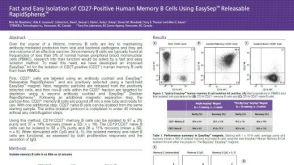 科学海报Fast and Easy Isolation of CD27-Positive Human Memory B Cells Using EasySep™ Releasable RapidSpheres™

 沪公网安备31010102008431号