Liprin-? proteins are master regulators of human presynapse assembly
The formation of mammalian synapses entails the precise alignment of presynaptic release sites with postsynaptic receptors but how nascent cell–cell contacts translate into assembly of presynaptic specializations remains unclear. Guided by pioneering work in invertebrates,we hypothesized that in mammalian synapses,liprin-? proteins directly link trans-synaptic initial contacts to downstream steps. Here we show that,in human neurons lacking all four liprin-? isoforms,nascent synaptic contacts are formed but recruitment of active zone components and accumulation of synaptic vesicles is blocked,resulting in ‘empty’ boutons and loss of synaptic transmission. Interactions with presynaptic cell adhesion molecules of either the LAR-RPTP family or neurexins via CASK are required to localize liprin-? to nascent synaptic sites. Liprin-? subsequently recruits presynaptic components via a direct interaction with ELKS proteins. Thus,assembly of human presynaptic terminals is governed by a hierarchical sequence of events in which the recruitment of liprin-? proteins by presynaptic cell adhesion molecules is a critical initial step. This paper identifies the evolutionarily conserved liprin-? protein family as key mediators of presynaptic assembly in human neurons. Their recruitment to sites formed by contacting neurons is the critical initial step that triggers presynaptic differentiation.
View Publication
产品类型:
产品号#:
100-0276
100-1130
产品名:
mTeSR™ Plus
mTeSR™ Plus
(May 2025)
Scientific Reports 15 5391
ATR regulates OCT4 phosphorylation and safeguards human naïve pluripotency
Under specific conditions,cultured human embryonic stem cells (hESCs) corresponding to primed post-implantation epiblasts can be converted back to a ‘naïve pluripotency’ state that resembles the pre-implantation epiblasts. The core pluripotency factor OCT4 is known to be crucial in regulating different states of pluripotency,but its potential regulatory role in human naïve pluripotency remains unexplored. In this study,we systematically mapped out phosphorylation sites in OCT4 protein that are differentially phosphorylated between two states of pluripotency,and further identified ATR as a key kinase that phosphorylated OCT4 in naïve but not primed hESCs. The kinase activity levels of ATR in naïve hESCs were higher than those in primed hESCs. Ablating cellular ATR activity significantly halted the induction of naïve hESCs from their primed counterparts,and increased early apoptotic death of naïve hESCs upon UV and CPT treatment. Thus,our work reveals the importance of ATR activity in safeguarding human naïve pluripotency,and implicates a potential association of OCT4 phosphorylation,DNA damage sensing and repairing system in regulating different states of pluripotency during early development.
View Publication
产品类型:
产品号#:
85850
85857
产品名:
mTeSR™1
mTeSR™1
(Sep 2024)
International Journal of Molecular Sciences 25 18
Neutrophil Extracellular Traps Affect Human Inner Ear Vascular Permeability
The integrity of the blood–labyrinth barrier (BLB) is essential for inner ear homeostasis,regulating the ionic composition of endolymph and perilymph and preventing harmful substance entry. Endothelial hyperpermeability,central in inflammatory and immune responses,is managed through complex intercellular communication and molecular signaling pathways. Recent studies link BLB permeability dysregulation to auditory pathologies like acoustic trauma,autoimmune inner ear diseases,and presbycusis. Polymorphonuclear granulocytes (PMNs),or neutrophils,significantly modulate vascular permeability,impacting endothelial barrier properties. Neutrophil extracellular traps (NETs) are involved in diseases with autoimmune and autoinflammatory bases. The present study evaluated the impact of NETs on a BLB cellular model using a Transwell® setup. Our findings revealed a concentration-dependent impact of NETs on human inner ear-derived endothelial cells. In particular,endothelial permeability markers increased,as indicated by reduced transepithelial electrical resistance,enhanced dextran permeability,and downregulated junctional gene expression (ZO1,OCL,and CDH5). Changes in cytoskeletal architecture were also observed. These preliminary results pave the way for further research into the potential involvement of NETs in BLB impairment and implications for auditory disorders.
View Publication
Muthuswamy R et al. (JUL 2008)
Cancer research 68 14 5972--8
Ability of mature dendritic cells to interact with regulatory T cells is imprinted during maturation.
Preferential activation of regulatory T (Treg) cells limits autoimmune tissue damage during chronic immune responses but can also facilitate tumor growth. Here,we show that tissue-produced inflammatory mediators prime maturing dendritic cells (DC) for the differential ability of attracting anti-inflammatory Treg cells. Our data show that prostaglandin E(2) (PGE(2)),a factor overproduced in chronic inflammation and cancer,induces stable Treg-attracting properties in maturing DC,mediated by CCL22. The elevated production of CCL22 by PGE(2)-matured DC persists after the removal of PGE(2) and is further elevated after secondary stimulation of DC in a neutral environment. This PGE(2)-induced overproduction of CCL22 and the resulting attraction of FOXP3(+) Tregs are counteracted by IFN alpha,a mediator of acute inflammation,which also restores the ability of the PGE(2)-exposed DC to secrete the Th1-attracting chemokines: CXCL9,CXCL10,CXCL11,and CCL5. In accordance with these observations,different DCs clinically used as cancer vaccines show different Treg-recruiting abilities,with PGE(2)-matured DC,but not type 1-polarized DC,generated in the presence of type I and type II IFNs,showing high Treg-attracting activity. The current data,showing that the ability of mature DC to interact with Treg cells is predetermined at the stage of DC maturation,pave the way to preferentially target the regulatory versus proinflammatory T cells in autoimmunity and transplantation,as opposed to intracellular infections and cancer.
View Publication
产品类型:
产品号#:
19052
19052RF
产品名:
EasySep™人CD4+ T细胞富集试剂盒
RoboSep™ 人CD4+ T细胞富集试剂盒含滤芯吸头
S. Fan et al. ( 2019)
NPJ vaccines 4 14
Role of innate lymphoid cells and dendritic cells in intradermal immunization of the enterovirus antigen.
Enterovirus type 71 (EV71) and coxsackievirus A 16 (CA16) are the major pathogens of human hand,foot,and mouth disease (HFMD). In our previous study,intramuscular immunization with the inactivated EV71 vaccine elicited effective immunity,while immunization with the inactivated CA16 vaccine did not. In this report,we focused on innate immune responses elicited by inactivated EV71 and CA16 antigens administered intradermally or intramuscularly. The distributions of the EV71 and CA16 antigens administered intradermally or intramuscularly were not obviously different,but the antigens were detected for a shorter period of time when administered intradermally. The expression levels of NF-kappaB pathway signaling molecules,which were identified as being capable of activating DCs,ILCs,and T cells,were higher in the intradermal group than in the intramuscular group. Antibodies for the EV71 and CA16 antigens colocalized with ILCs and DCs in skin and muscle tissues under fluorescence microscopy. Interestingly,ILC colocalization decreased over time,while DC colocalization increased over time. ELISpot analysis showed that coordination between DCs and ILCs contributed to successful adaptive immunity against vaccine antigens in the skin. EV71 and/or CA16 antigen immunization via the intradermal route was more capable of significantly increasing neutralizing antibody titers and activating specific T cell responses than immunization via the intramuscular route. Furthermore,neonatal mice born to mothers immunized with the EV71 and CA16 antigens were 100{\%} protected against wild-type EV71 or CA16 viral challenge. Together,our results provide new insights into the development of vaccines for HFMD.
View Publication
产品类型:
产品号#:
19851
19851RF
产品名:
EasySep™小鼠T细胞分选试剂盒
RoboSep™ 小鼠T细胞分选试剂盒
Bemark M et al. ( 2016)
Nature communications 7 12698
Limited clonal relatedness between gut IgA plasma cells and memory B cells after oral immunization.
Understanding how memory B cells are induced and relate to long-lived plasma cells is important for vaccine development. Immunity to oral vaccines has been considered short-lived because of a poor ability to develop IgA B-cell memory. Here we demonstrate that long-lived mucosal IgA memory is readily achieved by oral but not systemic immunization in mouse models with NP hapten conjugated with cholera toxin and transfer of B1-8(high)/GFP(+) NP-specific B cells. Unexpectedly,memory B cells are poorly related to long-lived plasma cells and less affinity-matured. They are α4β7-integrin(+)CD73(+)PD-L2(+)CD80(+) and at systemic sites mostly IgM(+),while 80% are IgA(+) in Peyer's patches. On reactivation,most memory B cells in Peyer's patches are GL7(-),but expand in germinal centres and acquire higher affinity and more mutations,demonstrating strong clonal selection. CCR9 expression is found only in Peyer's patches and appears critical for gut homing. Thus,gut mucosal memory possesses unique features not seen after systemic immunization.
View Publication
产品类型:
产品号#:
19854
19854RF
产品名:
EasySep™小鼠B细胞分选试剂盒
RoboSep™ 小鼠B细胞分选试剂盒
iPSC Consortium H (MAY 2017)
Nature neuroscience 20 5 648--660
Developmental alterations in Huntington's disease neural cells and pharmacological rescue in cells and mice.
Neural cultures derived from Huntington's disease (HD) patient-derived induced pluripotent stem cells were used for 'omics' analyses to identify mechanisms underlying neurodegeneration. RNA-seq analysis identified genes in glutamate and GABA signaling,axonal guidance and calcium influx whose expression was decreased in HD cultures. One-third of gene changes were in pathways regulating neuronal development and maturation. When mapped to stages of mouse striatal development,the profiles aligned with earlier embryonic stages of neuronal differentiation. We observed a strong correlation between HD-related histone marks,gene expression and unique peak profiles associated with dysregulated genes,suggesting a coordinated epigenetic program. Treatment with isoxazole-9,which targets key dysregulated pathways,led to amelioration of expanded polyglutamine repeat-associated phenotypes in neural cells and of cognitive impairment and synaptic pathology in HD model R6/2 mice. These data suggest that mutant huntingtin impairs neurodevelopmental pathways that could disrupt synaptic homeostasis and increase vulnerability to the pathologic consequence of expanded polyglutamine repeats over time.
View Publication
产品类型:
产品号#:
05850
05857
05870
05875
85850
85857
85870
85875
产品名:
mTeSR™1
mTeSR™1
D. Park et al. (may 2019)
Scientific reports 9 1 7094
Differences in the molecular signatures of mucosal-associated invariant T cells and conventional T cells.
Mucosal-associated invariant T (MAIT) cells exhibit different characteristics from those of TCRalpha7.2- conventional T cells. They play important roles in various inflammatory diseases,including rheumatoid arthritis and inflammatory bowel disease. MAIT cells express a single T cell receptor alpha chain,TCRalpha7.2 segment associated with Jalpha33 and CDR3 with fixed length,which recognizes bacteria-derived vitamin B metabolites. However,the characteristics of MAIT cells and TCRalpha7.2+ CD161- T cells have never been compared. Here,we performed RNA sequencing to compare the properties of MAIT cells,TCRalpha7.2- conventional T cells and TCRalpha7.2+ CD161- T cells. Genome-wide transcriptomes of MAIT cells,TCRalpha7.2- conventional T cells,and TCRalpha7.2+ CD161- T cells were compared and analyzed using causal network analysis. This is the first report comparing the transcriptomes of MAIT cells,TCRalpha7.2- conventional T cells and TCRalpha7.2+ CD161- T cells. We also identified the predominant signaling pathways of MAIT cells,which differed from those of TCRalpha7.2- conventional T cells and TCRalpha7.2+ CD161- T cells,through a gene set enrichment test and upstream regulator analysis and identified the genes responsible for the characteristic MAIT cell phenotypes. Our study advances the complete understanding of MAIT biology.
View Publication
产品类型:
产品号#:
15021
15061
产品名:
RosetteSep™人T细胞富集抗体混合物
RosetteSep™人T细胞富集抗体混合物
Kasbia G et al. (NOV 2008)
Transfusion 48 11 2421--8
Reduced hemoglobin on day of peripheral blood progenitor cell collection is associated with low graft content of vascular progenitors and increased toxicity after autologous hematopoietic stem cell transplantation.
BACKGROUND: Tissue damage after hematopoietic stem cell transplantation (HSCT) occurs as a result of high-dose chemotherapy and radiation. The aim was to determine the importance of pretransplant anemia on toxicity and red blood cell (RBC) transfusion requirements after autologous HSCT. STUDY DESIGN AND METHODS: A total of 350 patients undergoing autologous HSCT were included in the analysis. Patient factors and pretransplant laboratory values of possible relevance were assessed in multivariate regression analysis. RESULTS: Reduced hemoglobin (Hb) on the first day of peripheral blood progenitor cell (PBPC) collection was significantly associated with increased organ toxicity after HSCT,as measured by the Seattle criteria. Lower Hb levels at baseline before transplantation,but not at PBPC collection,were significantly associated with increased RBC transfusion requirements. In a second cohort of 28 patients,higher Hb levels on the day of PBPC collection were significantly associated with increased levels of endothelial-like vascular progenitor cells in PBPC grafts. CONCLUSION: Our observations suggest that higher Hb levels on the day of PBPC collection may be a marker of reduced toxicity associated with HSCT and increased vascular progenitors in PBPC collections. Further,baseline anemia before transplant may reflect an unfavorable hematopoietic microenvironment that leads to increased RBC transfusion requirements.
View Publication
产品类型:
产品号#:
05900
05950
产品名:
J. Li et al. (aug 2019)
Aging Cell e13026
Long‐term repopulation of aged bone marrow stem cells using young Sca‐1 cells promotes aged heart rejuvenation
Reduced quantity and quality of stem cells in aged individuals hinders cardiac repair and regeneration after injury. We used young bone marrow (BM) stem cell antigen 1 (Sca-1) cells to reconstitute aged BM and rejuvenate the aged heart,and examined the underlying molecular mechanisms. BM Sca-1+ or Sca-1- cells from young (2-3 months) or aged (18-19 months) GFP transgenic mice were transplanted into lethally irradiated aged mice to generate 4 groups of chimeras: young Sca-1+,young Sca-1-,old Sca-1+,and old Sca-1- . Four months later,expression of rejuvenation-related genes (Bmi1,Cbx8,PNUTS,Sirt1,Sirt2,Sirt6) and proteins (CDK2,CDK4) was increased along with telomerase activity and telomerase-related protein (DNA-PKcs,TRF-2) expression,whereas expression of senescence-related genes (p16INK4a,P19ARF,p27Kip1 ) and proteins (p16INK4a,p27Kip1 ) was decreased in Sca-1+ chimeric hearts,especially in the young group. Host cardiac endothelial cells (GFP- CD31+ ) but not cardiomyocytes were the primary cell type rejuvenated by young Sca-1+ cells as shown by improved proliferation,migration,and tubular formation abilities. C-X-C chemokine CXCL12 was the factor most highly expressed in homed donor BM (GFP+ ) cells isolated from young Sca-1+ chimeric hearts. Protein expression of Cxcr4,phospho-Akt,and phospho-FoxO3a in endothelial cells derived from the aged chimeric heart was increased,especially in the young Sca-1+ group. Reconstitution of aged BM with young Sca-1+ cells resulted in effective homing of functional stem cells in the aged heart. These young,regenerative stem cells promoted aged heart rejuvenation through activation of the Cxcl12/Cxcr4 pathway of cardiac endothelial cells.
View Publication
产品类型:
产品号#:
18756
18756RF
产品名:
EasySep™小鼠SCA1正选试剂盒
RoboSep™ 小鼠SCA1正选试剂盒含滤芯吸头
Yu C et al. ( )
In vivo (Athens,Greece) 25 1 69--76
ALDH activity indicates increased tumorigenic cells, but not cancer stem cells, in prostate cancer cell lines.
BACKGROUND: Cancer stem cells (CSCs) have been shown to be a small stem cell-like cell population which appears to drive tumorigenesis,tumor recurrence and metastasis. Thus,identification and characterization of CSCs may be critical to defining effective anticancer therapies. In prostate cancer (PCa),the CD44(+) cell population appears to have stem cell-like properties including being tumorigenic. The enzyme aldehyde dehydrogenase (ALDH) has been found to identify hematopoietic stem cells and our aim was to determine the utility of ALDH activity and CD44 in identifying PCa stem cell-like cells in PCa cell lines. MATERIALS AND METHODS: LNCaP cells and PC-3 cells were sorted based on their expression of CD44 and ALDH activity. The cell populations were investigated using colony-forming assays,invasion assays,sphere formation experiments in a non-adherent environment and 3-D Matrigel matrix culture to observe the in vitro stem-cell like properties. Different sorted cell populations were injected subcutaneously into NOD/SCID mice to determine the corresponding tumorigenic capacities. RESULTS: ALDH(hi) CD44(+) cells exhibit a higher proliferative,clonogenic and metastatic capacity in vitro and demonstrate higher tumorigenicity capacity in vivo than did ALDH(lo) CD44(-) cells. The tumors recapitulated the population of the original cell line. However,ALDHlo CD44(-) cells were able to develop tumors,albeit with longer latency periods. CONCLUSION: ALDH activity and CD44 do not appear to identify PCa stem cells; however,they do indicate increased tumorigenic and metastatic potential,indicating their potential importance for further exploration.
View Publication


 EasySep™小鼠TIL(CD45)正选试剂盒





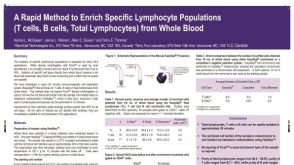 科学海报Cell Enrichment of Specific Lymphocyte Populations (T Cells, B Cells, Total Lymphocytes) from Whole Blood
 沪公网安备31010102008431号