Binda E et al. (DEC 2012)
Cancer cell 22 6 765--80
The EphA2 receptor drives self-renewal and tumorigenicity in stem-like tumor-propagating cells from human glioblastomas.
In human glioblastomas (hGBMs),tumor-propagating cells with stem-like characteristics (TPCs) represent a key therapeutic target. We found that the EphA2 receptor tyrosine kinase is overexpressed in hGBM TPCs. Cytofluorimetric sorting into EphA2(High) and EphA2(Low) populations demonstrated that EphA2 expression correlates with the size and tumor-propagating ability of the TPC pool in hGBMs. Both ephrinA1-Fc,which caused EphA2 downregulation in TPCs,and siRNA-mediated knockdown of EPHA2 expression suppressed TPCs self-renewal ex vivo and intracranial tumorigenicity,pointing to EphA2 downregulation as a causal event in the loss of TPCs tumorigenicity. Infusion of ephrinA1-Fc into intracranial xenografts elicited strong tumor-suppressing effects,suggestive of therapeutic applications.
View Publication
产品类型:
产品号#:
05751
产品名:
NeuroCult™ NS-A 扩增试剂盒(人)
D. Duluc et al. ( 2014)
The Journal of Immunology 192 5776-88
Induction and activation of human Th17 by targeting antigens to dendritic cells via dectin-1
Recent compelling evidence indicates that Th17 confer host immunity against a variety of microbes,including extracellular and intracellular pathogens. Therefore,understanding mechanisms for the induction and activation of Ag-specific Th17 is important for the rational design of vaccines against pathogens. To study this,we employed an in vitro system in which influenza hemagglutinin (HA) 1 was delivered to dendritic cells (DCs) via Dectin-1 using anti-human Dectin-1 (hDectin-1)-HA1 recombinant fusion proteins. We found that healthy individuals maintained broad ranges of HA1-specific memory Th17 that were efficiently activated by DCs targeted with anti-hDectin-1-HA1. Nonetheless,these DCs were not able to induce a significant level of HA1-specific Th17 responses even in the presence of the Th17-promoting cytokines IL-1? and IL-6. We further found that the induction of surface IL-1R1 expression by signals via TCRs and common ?-chain receptors was essential for naive CD4(+) T cell differentiation into HA1-specific Th17. This process was dependent on MyD88,but not IL-1R-associated kinase 1/4. Thus,interruptions in STAT3 or MyD88 signaling led to substantially diminished HA1-specific Th17 induction. Taken together,the de novo generation of pathogen-specific human Th17 requires complex,but complementary,actions of multiple signals. Data from this study will help us design a new and effective vaccine strategy that can promote Th17-mediated immunity against microbial pathogens.
View Publication
产品类型:
产品号#:
19052
19052RF
产品名:
EasySep™人CD4+ T细胞富集试剂盒
RoboSep™ 人CD4+ T细胞富集试剂盒含滤芯吸头
J. Zhang et al. ( 2022)
Frontiers in immunology 13 931740
Characterization of the Immunologic Phenotype of Dendritic Cells Infected With Herpes Simplex Virus 1.
Due to viral envelope glycoprotein D binding to cellular membrane HVEM receptor,HSV-1 can infect certain dendritic cells,which becomes an event in the viral strategy to interfere with the host's immune system. We previously generated the HSV-1 mutant strain M6,which produced an attenuated phenotype in mice and rhesus monkeys. The attenuated M6 strain was used to investigate how HSV-1 infection of dendritic cells interferes with both innate and adaptive immunity. Our study showed that dendritic cells membrane HVEM receptors could mediate infection of the wild-type strain and attenuated M6 strain and that dendritic cells infected by both viruses in local tissues of animals exhibited changes in transcriptional profiles associated with innate immune and inflammatory responses. The infection of pDCs and cDCs by the two strains promoted cell differentiation to the CD103+ phenotype,but varied transcriptional profiles were observed,implying a strategy that the HSV-1 wild-type strain interferes with antiviral immunity,probably due to viral modification of the immunological phenotype of dendritic cells during processing and presentation of antigen to T cells,leading to a series of deviations in immune responses,ultimately generating the deficient immune phenotype observed in infected individuals in the clinical.
View Publication
产品类型:
产品号#:
18780
18954
18954RF
18781
18781RF
18780RF
产品名:
EasySep™小鼠CD11c正选试剂盒II
EasySep™小鼠CD19正选试剂盒II
RoboSep™ 小鼠CD19正选试剂盒II
EasySep™小鼠CD11c正选试剂盒II及脾脏解离液
RoboSep™ 小鼠CD11c正选试剂盒II及脾脏解离液
RoboSep™ 小鼠CD11c正选试剂盒II
M. Jacobs et al. (oct 2022)
Respiratory research 23 1 287
IL-10 producing regulatory B cells are decreased in blood from smokers and COPD patients.
BACKGROUND Two opposing B cell subsets have been defined based on their cytokine profile: IL-6 producing effector B cells (B-effs) versus IL-10 producing regulatory B cells (B-regs) that respectively positively or negatively regulate immune responses. B-regs are decreased and/or impaired in many autoimmune diseases and inflammatory conditions. Since there is increasing evidence that links B cells and B cell-rich lymphoid follicles to the pathogenesis of COPD,the aim of this study was to investigate the presence and function of B-regs in COPD. METHODS First,presence of IL-10 producing regulatory B cells in human lung tissue was determined by immunohistochemistry. Secondly,quantification of IL-10??+??B-regs and IL-6??+??B-effs in peripheral blood mononuclear cells (PBMCs) from healthy controls,smokers without airflow limitation,and COPD patients (GOLD stage I-IV) was performed by flow cytometry. Thirdly,we exposed blood-derived B cells from COPD patients in vitro to cigarette smoke extract (CSE) and quantified IL-10??+??B-regs and IL-6??+??B-effs. Furthermore,we aimed at restoring the perturbed IL10 production by blocking BAFF. Fourthly,we determined mRNA expression of transcription factors involved in IL-10 production in FACS sorted memory- and naive B cells upon exposure to medium or CSE. RESULTS The presence of IL-10 producing regulatory B cells in parenchyma and lymphoid follicles in lungs was confirmed by immunohistochemistry. The percentage of IL-10??+??B-regs was significantly decreased in blood-derived memory B cell subsets from smokers without airflow limitation and patients with COPD,compared to never smokers. Furthermore,the capacity of B cells to produce IL-10 was reduced upon in vitro exposure to CSE and this could not be restored by BAFF-blockade. Finally,upon CSE exposure,mRNA levels of the transcription factors IRF4 and HIF-1$\alpha$,were decreased in memory B cells. CONCLUSION Decreased numbers and impaired function of B-regs in smokers and patients with COPD might contribute to the initiation and progression of the disease.
View Publication
产品类型:
产品号#:
19054
19054RF
产品名:
EasySep™人B细胞富集试剂盒
RoboSep™ 人B细胞富集试剂盒含滤芯吸头
B. Ndreshkjana et al. ( 2019)
Cell death {\&} disease 10 6 379
Combination of 5-fluorouracil and thymoquinone targets stem cell gene signature in colorectal cancer cells.
Cancer stem cells (CSCs) residing in colorectal cancer tissues have tumorigenic capacity and contribute to chemotherapeutic resistance and disease relapse. It is well known that the survival of colorectal CSCs after 5-fluorouracil (5-FU)-based therapy leads to cancer recurrence. Thus CSCs represent a promising drug target. Here,we designed and synthesized novel hybrid molecules linking 5-FU with the plant-derived compound thymoquinone (TQ) and tested the potential of individual compounds and their combination to eliminate colorectal CSCs. Both,Combi and SARB hybrid showed augmented cytotoxicity against colorectal cancer cells,but were non-toxic to organoids prepared from healthy murine small intestine. NanoString analysis revealed a unique signature of deregulated gene expression in response to the combination of TQ and 5-FU (Combi) and SARB treatment. Importantly,two principle stem cell regulatory pathways WNT/{\ss}-Catenin and PI3K/AKT were found to be downregulated after Combi and hybrid treatment. Furthermore,both treatments strikingly eliminated CD133+ CSC population,accompanying the depleted self-renewal capacity by eradicating long-term propagated 3D tumor cell spheres at sub-toxic doses. In vivo xenografts on chicken eggs of SARB-treated HCT116 cells showed a prominent nuclear {\ss}-Catenin and E-cadherin staining. This was in line with the reduced transcriptional activity of {\ss}-Catenin and diminished cell adhesion under SARB exposure. In contrast to 5-FU,both,Combi and SARB treatment effectively reduced the angiogenic capacity of the remaining resistant tumor cells. Taken together,combination or hybridization of single compounds target simultaneously a broader spectrum of oncogenic pathways leading to an effective eradication of colorectal cancer cells.
View Publication
产品类型:
产品号#:
15309
产品名:
RosetteSep™人定制抗体混合物
(Apr 2024)
PLOS Pathogens 20 4
CD39 expression by regulatory T cells participates in CD8+ T cell suppression during experimental
An imbalance between suppressor and effector immune responses may preclude cure in chronic parasitic diseases. In the case of Trypanosoma cruzi infection,specialized regulatory Foxp3+ T (Treg) cells suppress protective type-1 effector responses. Herein,we investigated the kinetics and underlying mechanisms behind the regulation of protective parasite-specific CD8+ T cell immunity during acute T. cruzi infection. Using the DEREG mouse model,we found that Treg cells play a role during the initial stages after T. cruzi infection,restraining the magnitude of CD8+ T cell responses and parasite control. Early Treg cell depletion increased the frequencies of polyfunctional short-lived,effector T cell subsets,without affecting memory precursor cell formation or the expression of activation,exhaustion and functional markers. In addition,Treg cell depletion during early infection minimally affected the antigen-presenting cell response but it boosted CD4+ T cell responses before the development of anti-parasite effector CD8+ T cell immunity. Crucially,the absence of CD39 expression on Treg cells significantly bolstered effector parasite-specific CD8+ T cell responses,preventing increased parasite replication in T. cruzi infected mice adoptively transferred with Treg cells. Our work underscores the crucial role of Treg cells in regulating protective anti-parasite immunity and provides evidence that CD39 expression by Treg cells represents a key immunomodulatory mechanism in this infection model. Author summaryChagas disease,caused by Trypanosoma cruzi,can result in severe health complications. While the exact mechanisms underlying the disease’s pathogenesis remain incompletely understood,the host’s inflammatory immune response is believed to play a critical role. To shed light on disease mechanisms and potential treatments,we investigated the impact of regulatory T (Treg) cells on the development of effector immune responses against T. cruzi. Our findings reveal that Treg cells dampen parasite-specific CD8+ T cells,a crucial arm of the immune response in counteracting the parasite. Notably,this regulatory influence occurs primarily during the early stages of T. cruzi infection. Furthermore,we observed that while Treg cells have minimal effects on antigen-presenting cells,they modulate the magnitude and phenotype of conventional CD4+ T cells. Importantly,we identified CD39,a molecule involved in the purinergic pathway,as essential for the suppressive functions of Treg cells during T. cruzi infection. Our findings enhance the understanding of the regulatory response during the acute phase of T. cruzi infection and may have implications for the development of novel therapeutic strategies.
View Publication
产品类型:
产品号#:
19852
19852RF
产品名:
EasySep™小鼠CD4+ T细胞分选试剂盒
RoboSep™ 小鼠CD4+ T细胞分选试剂盒
(May 2024)
Nature Communications 15
Tlr9 deficiency in B cells leads to obesity by promoting inflammation and gut dysbiosis
Toll-like receptor 9 (TLR9) recognizes bacterial,viral and self DNA and play an important role in immunity and inflammation. However,the role of TLR9 in obesity is less well-studied. Here,we generate B-cell-specific Tlr9-deficient (Tlr9fl/fl/Cd19Cre+/-,KO) B6 mice and model obesity using a high-fat diet. Compared with control mice,B-cell-specific-Tlr9-deficient mice exhibited increased fat tissue inflammation,weight gain,and impaired glucose and insulin tolerance. Furthermore,the frequencies of IL-10-producing-B cells and marginal zone B cells were reduced,and those of follicular and germinal center B cells were increased. This was associated with increased frequencies of IFNγ-producing-T cells and increased follicular helper cells. In addition,gut microbiota from the KO mice induced a pro-inflammatory state leading to immunological and metabolic dysregulation when transferred to germ-free mice. Using 16 S rRNA gene sequencing,we identify altered gut microbial communities including reduced Lachnospiraceae,which may play a role in altered metabolism in KO mice. We identify an important network involving Tlr9,Irf4 and Il-10 interconnecting metabolic homeostasis,with the function of B and T cells,and gut microbiota in obesity. Although the function of Toll-like receptor 9 (TLR9) in immunity and inflammation is well-established,its role in obesity is less well-studied. In this study,the authors demonstrate that TLR9 deficiency in B cells is associated with obesity in mice and results in altered frequencies of T and B lymphocyte subsets and gut microbiome dysbiosis.
View Publication
产品类型:
产品号#:
19854
19854RF
产品名:
EasySep™小鼠B细胞分选试剂盒
RoboSep™ 小鼠B细胞分选试剂盒
Y. Dong et al. (Jan 2025)
Journal of Translational Medicine 23 1
PRDX2 induces tumor immune evasion by modulating the HDAC3-Galectin-9 axis in lung adenocarcinoma cells
PRDX2 is significantly expressed in various cancers and is associated with the proliferation of tumor cells. Nonetheless,the precise mechanism of PRDX2 in tumor immunity remains incompletely understood. This study aims to investigate the impact of PRDX2,which is highly expressed in lung adenocarcinoma,on T cells in the tumor immune microenvironment,and its immune action target to promote the immune escape of lung cancer cells,to provide a theoretical basis for lung adenocarcinoma treatment with PRDX2 as the target. Mouse animal models to verify the effect of Conoidin A treatment on tumor growth and T cell infiltration. Flow cytometry and Western blot verified tumor cell apoptosis in the in vitro co-culture system as well as granzyme B and perforin expression in T cells. RNA-Seq was used to obtain the downstream immune molecule. si-RNA knockdown of Galectin-9 was co-cultured with T cells in vitro. Immunofluorescence and Western blot verified that PRDX2 regulates Galectin-9 expression through HDAC3. PRDX2 expression was negatively correlated with CD8 + T cell expression in LUAD patients. Inhibition of PRDX2 significantly enhanced T-cell killing of LUAD cells and reduced tumor load in both in vitro and in vivo models. Mechanistically,Conoidin A or shRNA_PRDX2 decreased Galectin-9 expression by down-regulating the phosphorylation of HDAC3,consequently enhancing the infiltration and function of CD8 + T cells. This study reveals the role of the PRDX2/HDAC3/Galectin-9 axis in LUAD immune escape and indicates Galectin-9 as a promising target for immunotherapy. The online version contains supplementary material available at 10.1186/s12967-024-05888-z.
View Publication
产品类型:
产品号#:
100-0785
10970
10990
产品名:
ImmunoCult™ 人CD3/CD28/CD2 T细胞激活剂
ImmunoCult™ 人CD3/CD28/CD2 T细胞激活剂
ImmunoCult™ 人CD3/CD28/CD2 T细胞激活剂
Kitajima K et al. (JAN 2016)
Experimental hematology 44 1 10--68
GSK3$\$ activates the CDX/HOX pathway and promotes hemogenic endothelial progenitor differentiation from human pluripotent stem cells.
WNT/$\$-CATENIN signaling promotes the hematopoietic/endothelial differentiation of human embryonic stem cells and human induced pluripotent stem cells (hiPSCs). The transient addition of a GSK3$\$ (GSKi) has been found to facilitate in vitro endothelial cell differentiation from hESCs/hiPSCs. Because hematopoietic and endothelial cells are derived from common progenitors (hemogenic endothelial progenitors [HEPs]),we examined the effect of transient GSKi treatment on hematopoietic cell differentiation from hiPSCs. We found that transient GSKi treatment at the start of hiPSC differentiation induction altered the gene expression profile of the cells. Multiple CDX/HOX genes,which are expressed in the posterior mesoderm of developing embryos,were significantly upregulated by GSKi treatment. Further,inclusion of the GSKi in a serum- and stroma-free culture with chemically defined medium efficiently induced HEPs,and the HEPs gave rise to various lineages of hematopoietic and endothelial cells. Therefore,transient WNT/$\$-CATENIN signaling triggers activation of the CDX/HOX pathway,which in turn confers hemogenic posterior mesoderm identity to differentiating hiPSCs. These data enhance our understanding of human embryonic hematopoietic/endothelial cell development and provide a novel in vitro system for inducing the differentiation of hematopoietic cells from hiPSCs.
View Publication
产品类型:
产品号#:
05850
05857
05870
05875
04034
04044
85850
85857
85870
85875
05270
05275
产品名:
MethoCult™ H4034 Optimum
MethoCult™ H4034 Optimum
mTeSR™1
mTeSR™1
STEMdiff™ APEL™2 培养基
STEMdiff™ APEL™2 培养基
J. Paris et al. (jul 2019)
Cell stem cell 25 1 137--148.e6
Targeting the RNA m6A Reader YTHDF2 Selectively Compromises Cancer Stem Cells in Acute Myeloid Leukemia.
Acute myeloid leukemia (AML) is an aggressive clonal disorder of hematopoietic stem cells (HSCs) and primitive progenitors that blocks their myeloid differentiation,generating self-renewing leukemic stem cells (LSCs). Here,we show that the mRNA m6A reader YTHDF2 is overexpressed in a broad spectrum of human AML and is required for disease initiation as well as propagation in mouse and human AML. YTHDF2 decreases the half-life of diverse m6A transcripts that contribute to the overall integrity of LSC function,including the tumor necrosis factor receptor Tnfrsf2,whose upregulation in Ythdf2-deficient LSCs primes cells for apoptosis. Intriguingly,YTHDF2 is not essential for normal HSC function,with YTHDF2 deficiency actually enhancing HSC activity. Thus,we identify YTHDF2 as a unique therapeutic target whose inhibition selectively targets LSCs while promoting HSC expansion.
View Publication
He X-S et al. (DEC 2004)
The Journal of clinical investigation 114 12 1812--9
T cell-dependent production of IFN-gamma by NK cells in response to influenza A virus.
The role of human NK cells in viral infections is poorly understood. We used a cytokine flow-cytometry assay to simultaneously investigate the IFN-gamma response of NK and T lymphocytes to influenza A virus (fluA). When PBMCs from fluA-immune adult donors were incubated with fluA,IFN-gamma was produced by both CD56(dim) and CD56(bright) subsets of NK cells,as well as by fluA-specific T cells. Purified NK cells did not produce IFN-gamma in response to fluA,while depletion of T lymphocytes reduced to background levels the fluA-induced IFN-gamma production by NK cells,which indicates that T cells are required for the IFN-gamma response of NK cells. The fluA-induced IFN-gamma production of NK cells was suppressed by anti-IL-2 Ab,while recombinant IL-2 replaced the helper function of T cells for IFN-gamma production by NK cells. This indicates that IL-2 produced by fluA-specific T cells is involved in the T cell-dependent IFN-gamma response of NK cells to fluA. Taken together,these results suggest that at an early stage of recurrent viral infection,NK-mediated innate immunity to the virus is enhanced by preexisting virus-specific T cells.
View Publication


 EasySep™小鼠TIL(CD45)正选试剂盒





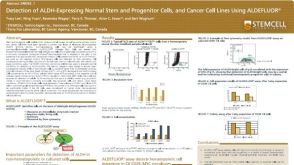 科学海报Detection of ALDH-Expressing Normal Stem and Progenitor Cells, and Cancer Cell Lines Using ALDEFLUOR™
 沪公网安备31010102008431号