Koehler KR et al. (AUG 2013)
Nature 500 7461 217--21
Generation of inner ear sensory epithelia from pluripotent stem cells in 3D culture.
The inner ear contains sensory epithelia that detect head movements,gravity and sound. It is unclear how to develop these sensory epithelia from pluripotent stem cells,a process that will be critical for modelling inner ear disorders or developing cell-based therapies for profound hearing loss and balance disorders. So far,attempts to derive inner ear mechanosensitive hair cells and sensory neurons have resulted in inefficient or incomplete phenotypic conversion of stem cells into inner-ear-like cells. A key insight lacking from these previous studies is the importance of the non-neural and preplacodal ectoderm,two critical precursors during inner ear development. Here we report the stepwise differentiation of inner ear sensory epithelia from mouse embryonic stem cells (ESCs) in three-dimensional culture. We show that by recapitulating in vivo development with precise temporal control of signalling pathways,ESC aggregates transform sequentially into non-neural,preplacodal and otic-placode-like epithelia. Notably,in a self-organized process that mimics normal development,vesicles containing prosensory cells emerge from the presumptive otic placodes and give rise to hair cells bearing stereocilia bundles and a kinocilium. Moreover,these stem-cell-derived hair cells exhibit functional properties of native mechanosensitive hair cells and form specialized synapses with sensory neurons that have also arisen from ESCs in the culture. Finally,we demonstrate how these vesicles are structurally and biochemically comparable to developing vestibular end organs. Our data thus establish a new in vitro model of inner ear differentiation that can be used to gain deeper insight into inner ear development and disorder.
View Publication
产品类型:
产品号#:
72142
72144
产品名:
Garreta E et al. (APR 2016)
Biomaterials 98 64--78
Myocardial commitment from human pluripotent stem cells: Rapid production of human heart grafts
Genome editing on human pluripotent stem cells (hPSCs) together with the development of protocols for organ decellularization opens the door to the generation of autologous bioartificial hearts. Here we sought to generate for the first time a fluorescent reporter human embryonic stem cell (hESC) line by means of Transcription activator-like effector nucleases (TALENs) to efficiently produce cardiomyocyte-like cells (CLCs) from hPSCs and repopulate decellularized human heart ventricles for heart engineering. In our hands,targeting myosin heavy chain locus (MYH6) with mCherry fluorescent reporter by TALEN technology in hESCs did not alter major pluripotent-related features,and allowed for the definition of a robust protocol for CLCs production also from human induced pluripotent stem cells (hiPSCs) in 14 days. hPSCs-derived CLCs (hPSCs-CLCs) were next used to recellularize acellular cardiac scaffolds. Electrophysiological responses encountered when hPSCs-CLCs were cultured on ventricular decellularized extracellular matrix (vdECM) correlated with significant increases in the levels of expression of different ion channels determinant for calcium homeostasis and heart contractile function. Overall,the approach described here allows for the rapid generation of human cardiac grafts from hPSCs,in a total of 24 days,providing a suitable platform for cardiac engineering and disease modeling in the human setting.
View Publication
产品类型:
产品号#:
05850
05857
05870
05875
85850
85857
85870
85875
产品名:
mTeSR™1
mTeSR™1
Belle K et al. (JAN 2017)
Neuroscience letters 637 201--206
Generation of disease-specific autopsy-confirmed iPSCs lines from postmortem isolated Peripheral Blood Mononuclear Cells
Understanding the molecular mechanisms that underlie neurodegenerative disorders has been hampered by a lack of readily available model systems that replicate the complexity of the human disease. Recent advances in stem cell technology have facilitated the derivation of patient-specific stem cells from a variety of differentiated cell types. These induced pluripotent stem cells (iPSCs) are attractive disease models since they can be grown and differentiated to produce large numbers of disease-relevant cell types. However,most iPSC lines are derived in advance of,and without the benefit of,neuropathological confirmation of the donor - the gold standard for many disease classifications and measurement of disease severity. While others have reported the generation of autopsy-confirmed iPSC lines from patient explants,these methods require outgrowth of cadaver tissue,which require additional time and is often only successul 50% of the time. Here we report the rapid generation of autopsy-confirmed iPSC lines from peripheral blood mononuclear cells (PBMCs) drawn postmortem. Since this approach doesn't require the propagation of previously frozen cadaver tissue,iPSC can be rapidly and efficiently produced from patients with autopsy-confirmed pathology. These matched iPSC-derived patient-specific neurons and postmortem brain tissue will support studies of specific mechanisms that drive the pathogenesis of neurodegenerative diseases.
View Publication
产品类型:
产品号#:
05833
05850
05857
05870
05875
07801
07811
07851
07861
85450
85460
85850
85857
85870
85875
86450
86460
05835
05839
18060
18061
产品名:
STEMdiff™神经前体细胞培养基
Lymphoprep™
Lymphoprep™
SepMate™-50 (IVD)
SepMate™-50 (IVD)
mTeSR™1
mTeSR™1
SepMate™-50 (RUO)
SepMate™-50 (RUO)
STEMdiff™ 神经诱导培养基
STEMdiff™ 神经诱导培养基
Lymphoprep™
Lymphoprep™
Narla RK et al. ( 1998)
Clinical cancer research : an official journal of the American Association for Cancer Research 4 6 1405--1414
4-(3'-Bromo-4'hydroxylphenyl)-amino-6,7-dimethoxyquinazoline: a novel quinazoline derivative with potent cytotoxic activity against human glioblastoma cells.
The novel quinazoline derivative 4-(3'-bromo-4'-hydroxylphenyl)-amino-6,7-dimethoxyquinazoline (WHI-P154) exhibited significant cytotoxicity against U373 and U87 human glioblastoma cell lines,causing apoptotic cell death at micromolar concentrations. The in vitro antiglioblastoma activity of WHI-P154 was amplified textgreater 200-fold and rendered selective by conjugation to recombinant human epidermal growth factor (EGF). The EGF-P154 conjugate was able to bind to and enter target glioblastoma cells within 10-30 min via receptor (R)-mediated endocytosis by inducing internalization of the EGF-R molecules. In vitro treatment with EGF-P154 resulted in killing of glioblastoma cells at nanomolar concentrations with an IC50 of 813 +/- 139 nM,whereas no cytotoxicity against EGF-R-negative leukemia cells was observed,even at concentrations as high as 100 microM. The in vivo administration of EGF-P154 resulted in delayed tumor progression and improved tumor-free survival in a severe combined immunodeficient mouse glioblastoma xenograft model. Whereas none of the control mice remained alive tumor-free beyond 33 days (median tumor-free survival,19 days) and all control mice had tumors that rapidly progressed to reach an average size of textgreater 500 mm3 by 58 days,40% of mice treated for 10 consecutive days with 1 mg/kg/day EGF-P154 remained alive and free of detectable tumors for more than 58 days with a median tumor-free survival of 40 days. The tumors developing in the remaining 60% of the mice never reached a size textgreater 50 mm3. Thus,targeting WHI-P154 to the EGF-R may be useful in the treatment of glioblastoma multiforme.
View Publication
产品类型:
产品号#:
73542
73544
73552
产品名:
WHI-P131
WHI-P131 , 10 mg
WHI-P154
M. D. Cheung et al. (jan 2022)
Kidney360 3 1 28--36
Single-Cell RNA Sequencing of Urinary Cells Reveals Distinct Cellular Diversity in COVID-19-Associated AKI.
BACKGROUND AKI is a common sequela of infection with SARS-CoV-2 and contributes to the severity and mortality from COVID-19. Here,we tested the hypothesis that kidney alterations induced by COVID-19-associated AKI could be detected in cells collected from urine. METHODS We performed single-cell RNA sequencing (scRNAseq) on cells recovered from the urine of eight hospitalized patients with COVID-19 with (n=5) or without AKI (n=3) as well as four patients with non-COVID-19 AKI (n=4) to assess differences in cellular composition and gene expression during AKI. RESULTS Analysis of 30,076 cells revealed a diverse array of cell types,most of which were kidney,urothelial,and immune cells. Pathway analysis of tubular cells from patients with AKI showed enrichment of transcripts associated with damage-related pathways compared with those without AKI. ACE2 and TMPRSS2 expression was highest in urothelial cells among cell types recovered. Notably,in one patient,we detected SARS-CoV-2 viral RNA in urothelial cells. These same cells were enriched for transcripts associated with antiviral and anti-inflammatory pathways. CONCLUSIONS We successfully performed scRNAseq on urinary sediment from hospitalized patients with COVID-19 to noninvasively study cellular alterations associated with AKI and established a dataset that includes both injured and uninjured kidney cells. Additionally,we provide preliminary evidence of direct infection of urinary bladder cells by SARS-CoV-2. The urinary sediment contains a wealth of information and is a useful resource for studying the pathophysiology and cellular alterations that occur in kidney diseases.
View Publication
产品类型:
产品号#:
18000
产品名:
EasySep™磁极
E. Erikson et al. (may 2022)
Cellular immunology 375 104516
Impaired plasma cell differentiation associates with increased oxidative metabolism in I$\kappa$BNS-deficient B cells.
Mutations causing loss of the NF-$\kappa$B regulator I$\kappa$BNS,result in impaired development of innate-like B cells and defective plasma cell (PC) differentiation. Since productive PC differentiation requires B cell metabolic reprogramming,we sought to investigate processes important for this transition using the bumble mouse strain,deficient for I$\kappa$BNS. We report that LPS-activated bumble B cells exhibited elevated mTOR activation levels,mitochondrial accumulation,increased OXPHOS and mROS production,along with a reduced capacity for autophagy,compared to wildtype B cells. Overall,our results demonstrate that PC differentiation in the absence of I$\kappa$BNS is characterized by excessive activation during early rounds of B cell division,increased mitochondrial metabolism and decreased autophagic capacity,thus improving our understanding of the role of I$\kappa$BNS in PC differentiation.
View Publication
Glutamine promotes human CD8 + T cells and counteracts imiquimod-induced T cell hyporesponsiveness
T cells protect tissues from cancer. Although investigations in mice showed that amino acids (AA) critically regulate T cell immunity,this remains poorly understood in humans. Here,we describe the AA composition of interstitial fluids in keratinocyte-derived skin cancers (KDSCs) and study the effect of AA on T cells using models of primary human cells and tissues. Gln contributed to ∼15% of interstitial AAs and promoted interferon gamma (IFN-γ),but not granzyme B (GzB) expression,in CD8 + T cells. Furthermore,the Toll-like receptor 7 agonist imiquimod (IMQ),a common treatment for KDSCs,down-regulated the metabolic gatekeepers c-MYC and mTORC1,as well as the AA transporter ASCT2 and intracellular Gln,Asn,Ala,and Asp in T cells. Reduced proliferation and IFN-γ expression,yet increased GzB,paralleled IMQ effects on AA. Finally,Gln was sufficient to promote IFN-γ-production in IMQ-treated T cells. Our findings indicate that Gln metabolism can be harnessed for treating KDSCs. Subject areas: Dermatology,Immunology
View Publication
产品类型:
产品号#:
100-0785
10970
10990
产品名:
ImmunoCult™ 人CD3/CD28/CD2 T细胞激活剂
ImmunoCult™ 人CD3/CD28/CD2 T细胞激活剂
ImmunoCult™ 人CD3/CD28/CD2 T细胞激活剂
L. Castagnoli et al. (Jan 2025)
Journal of Experimental & Clinical Cancer Research : CR 44
CD36 enrichment in HER2-positive mesenchymal stem cells drives therapy refractoriness in breast cancer
Growing evidence shows that the reprogramming of fatty acid (FA) metabolism plays a key role in HER2-positive (HER2 +) breast cancer (BC) aggressiveness,therapy resistance and cancer stemness. In particular,HER2 + BC has been defined as a "lipogenic disease" due to the functional and bi-directional crosstalk occurring between HER2-mediated oncogenic signaling and FA biosynthesis via FA synthase activity. In this context,the functional role exerted by the reprogramming of CD36-mediated FA uptake in HER2 + BC poor prognosis and therapy resistance remains unclear. In this study,we aimed to elucidate whether enhanced CD36 in mesenchymal HER2 + cancer stem cells (CSCs) is directly involved in anti-HER2 treatment refractoriness in HER2 + BC and to design future metabolism-based approaches targeting both FA reprogramming and the “root” of cancer. Molecular,biological and functional characterization of CD36-mediated FA uptake was investigated in HER2 + BC patients,cell lines,epithelial and mesenchymal CSCs. Cell proliferation was analyzed by SRB assay upon treatment with lapatinib,CD36 inhibitor,or Wnt antagonist/agonist. Engineered cell models were generated via lentivirus infection and transient silencing. CSC-like properties and tumorigenesis of HER2 + BC cells with or without CD36 depletion were examined by mammosphere forming efficiency assay,flow cytometry,cell sorting,ALDH activity assay and xenograft mouse model. FA uptake was examined by flow cytometry with FA BODIPY FL C16. Intratumor expression of CSC subsets was evaluated via multiplex immunostaining and immunolocalization analysis. Molecular data demonstrated that CD36 is significantly upmodulated on treatment in therapy resistant HER2 + BC patients and its expression levels in BC cells is correlated with FA uptake. We provided evidence of a consistent enrichment of CD36 in HER2 + epithelial-mesenchymal transition (EMT)-like CSCs from all tested resistant cell models that mechanistically occurs via Wnt signaling pathway activation. Consistently,both in vitro and in vivo dual blockade of CD36 and HER2 increased the anti-CSC efficacy of anti-HER2 drugs favoring the transition of the therapy resistant mesenchymal CSCs into therapy-sensitive mesenchymal-epithelial transition (MET)-like epithelial state. In addition,expression of CD36 in intratumor HER2 + mesenchymal CSCs is significantly associated with resistance to trastuzumab in HER2 + BC patients. These results support the metabolo-oncogenic nature of CD36-mediated FA uptake in HER2 + therapy-refractory BC. Our study provides evidence that targeting CD36 might be an effective metabolic therapeutic strategy in the treatment of this malignancy. The online version contains supplementary material available at 10.1186/s13046-025-03276-z.
View Publication
产品类型:
产品号#:
01702
产品名:
ALDEFLUOR™检测缓冲液
Q. Li et al. ( 2018)
Scientific reports 8 1 3531
Scalable Culturing of Primary Human Glioblastoma Tumor-Initiating Cells with a Cell-Friendly Culture System.
Glioblastoma is the most aggressive and deadly brain cancer. There is growing interest to develop drugs that specifically target to glioblastoma tumor-initiating cells (TICs). However,the cost-effective production of large numbers of high quality glioblastoma TICs for drug discovery with current cell culturing technologies remains very challenging. Here,we report a new method that cultures glioblastoma TICs in microscale alginate hydrogel tubes (or AlgTubes). The AlgTubes allowed long-term culturing ({\~{}}50 days,10 passages) of glioblastoma TICs with high growth rate ({\~{}}700-fold expansion/14 days),high cell viability and high volumetric yield ({\~{}}3.0 × 10⁸ cells/mL) without losing the stem cell properties,all offered large advancements over current culturing methods. This method can be applied for the scalable production of glioblastoma TICs at affordable cost for drug discovery.
View Publication
产品类型:
产品号#:
05750
05751
产品名:
NeuroCult™ NS-A 基础培养基(人)
NeuroCult™ NS-A 扩增试剂盒(人)
S. Lukassen et al. ( 2020)
The EMBO journal 39 10 e105114
SARS-CoV-2 receptor ACE2 and TMPRSS2 are primarily expressed in bronchial transient secretory cells.
The SARS-CoV-2 pandemic affecting the human respiratory system severely challenges public health and urgently demands for increasing our understanding of COVID-19 pathogenesis,especially host factors facilitating virus infection and replication. SARS-CoV-2 was reported to enter cells via binding to ACE2,followed by its priming by TMPRSS2. Here,we investigate ACE2 and TMPRSS2 expression levels and their distribution across cell types in lung tissue (twelve donors,39,778 cells) and in cells derived from subsegmental bronchial branches (four donors,17,521 cells) by single nuclei and single cell RNA sequencing,respectively. While TMPRSS2 is strongly expressed in both tissues,in the subsegmental bronchial branches ACE2 is predominantly expressed in a transient secretory cell type. Interestingly,these transiently differentiating cells show an enrichment for pathways related to RHO GTPase function and viral processes suggesting increased vulnerability for SARS-CoV-2 infection. Our data provide a rich resource for future investigations of COVID-19 infection and pathogenesis.
View Publication
产品类型:
产品号#:
05001
05021
05022
产品名:
PneumaCult™-ALI 培养基
PneumaCult™-ALI 培养基含12 mm Transwell®插件
PneumaCult™-ALI 培养基含6.5 mm Transwell®插件
C. J. Hanley et al. (nov 2020)
Molecular cancer research : MCR 18 11 1615--1622
Tumor-Resident Stromal Cells Promote Breast Cancer Invasion through Regulation of the Basal Phenotype.
Collective invasion can be led by breast cancer cells expressing basal epithelial markers,typified by keratin-14 (KRT14). We analyzed gene expression data from The Cancer Genome Atlas and demonstrated a significant correlation between a KRT14+ invasion signature and a stromal-mediated extracellular matrix (ECM) organization module. We then developed a novel coculture model of tumor organoids with autologous stromal cells. Coculture significantly increased KRT14 expression and invasion of organoids from both luminal and basal murine breast cancer models. However,stromal cell conditioned medium induced invasion but not KRT14 expression. Cancer cells released TGF$\beta$ and that signaling pathway was required for stromal cell-induced invasion and KRT14 expression. Mechanistically,TGF$\beta$ induced NOX4 expression in stromal cells and NOX4 inhibition reduced invasion and KRT14 expression. In summary,we developed a novel coculture model and revealed dynamic molecular interactions between stromal cells and cancer cells that regulate both basal gene expression and invasive behavior. IMPLICATIONS: Fibroblasts within mammary tumors can regulate the molecular phenotype and invasive behavior of breast cancer cells. VISUAL OVERVIEW: http://mcr.aacrjournals.org/content/molcanres/18/11/1615/F1.large.jpg.
View Publication


 EasySep™小鼠TIL(CD45)正选试剂盒





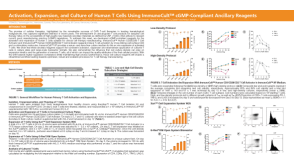 科学海报Activation, Expansion, and Culture of Human T Cells Using ImmunoCult™ cGMP-Compliant Ancillary Reagents
 沪公网安备31010102008431号