Beloti M et al. (JUL 2005)
Cell biology international 29 7 537--41
Purmorphamine enhances osteogenic activity of human osteoblasts derived from bone marrow mesenchymal cells.
Purmorphamine is a novel small molecule with osteogenesis-inducing activity in multipotent mesenchymal progenitor cells,but there has been no evaluation of its effect on human cells to date. The aim of this study was to investigate the induction of osteogenic activity by purmorphamine in human osteoblasts differentiated from bone marrow mesenchymal cells. Cells were cultured in 24-well plates at a density of 2x10(4)/well in medium containing 1,2 or 3 microM purmorphamine,or vehicle. At 7,14 and 21 days,cell proliferation,viability,and alkaline phosphatase (ALP) activity were evaluated. Bone-like nodule formation was evaluated at 21 days. Purmorphamine did not affect cell proliferation or viability,but increased ALP activity and bone-like nodule formation. These results indicate that events related to osteoblast differentiation,including increased ALP activity and bone-like nodule formation,are enhanced by purmorphamine.
View Publication
产品类型:
产品号#:
72202
72204
100-1049
产品名:
Purmorphamine
Purmorphamine
Purmorphamine
Tsang JY-S et al. (JUL 2006)
Journal of leukocyte biology 80 1 145--51
Altered proximal T cell receptor (TCR) signaling in human CD4+CD25+ regulatory T cells.
CD4+CD25+ regulatory T cells play an important role in peripheral tolerance. Upon T cell receptor (TCR)-mediated activation,the cells fail to proliferate but are induced to have a suppressor function. The intracellular signaling events that lead to their responses have not been elucidated. In this study,we have examined the proximal TCR signaling events in freshly isolated human CD4+CD25+ regulatory T cells after TCR ligation. In contrast to CD4+CD25- T cells,TCR ligation of CD4+CD25+ regulatory T cells by anti-CD3 cross-linking resulted in a lower calcium influx and extracellular signal-regulated kinase 1/2 phosphorylation. Examination of the CD3zeta chain phosphorylation status indicated that CD4+CD25+ regulatory T cells have poor phosphorylation of the protein and consequently,reduced recruitment of zeta-associated protein-70 to the TCR immunoreceptor tyrosine motif. The adaptor protein,Src homology 2 domain-containing leukocyte phosphoprotein of 76 kDa,which relays signals to downstream signaling components,also showed reduced phosphorylation,which correlated with reduced VAV guanine nucleotide exchange factors association. Consistent with other findings,the defect is accompanied with impaired actin cap formation,implicating a failure of actin remodeling of the cells. Together,our results demonstrate that CD4+CD25+ regulatory T cells have altered TCR proximal signaling pathways,which could be critical for inducing the distinct behavior of these cells.
View Publication
产品类型:
产品号#:
15022
15062
产品名:
RosetteSep™人CD4+ T细胞富集抗体混合物
RosetteSep™人CD4+ T细胞富集抗体混合物
Darce JR et al. (MAY 2007)
Journal of immunology (Baltimore,Md. : 1950) 178 9 5612--22
Divergent effects of BAFF on human memory B cell differentiation into Ig-secreting cells.
B cell-activating factor belonging to the TNF family (BAFF) plays a critical role in B cell maturation,yet its precise role in B cell differentiation into Ig-secreting cells (ISCs) remains unclear. In this study,we find that upon isolation human naive and memory B (MB) cells have prebound BAFF on their surface,whereas germinal center (GC) B cells lack detectable levels of prebound BAFF. We attribute their lack of prebound BAFF to cell activation,because we demonstrate that stimulation of naive and MB cells results in the loss of prebound BAFF. Furthermore,the absence of prebound BAFF on GC B cells is not related to a lack of BAFF-binding receptors or an inability to bind exogenous BAFF. Instead,our data suggest that accessibility to soluble BAFF is limited within GCs,perhaps to prevent skewing of the conventional B cell differentiation program. In support of this concept,whereas BAFF significantly enhances ISC differentiation in response to T cell-dependent activation,we report for the first time the ability of BAFF to considerably attenuate ISC differentiation of MB cells in response to CpG stimulation,a form of T cell-independent activation. Our data suggest that BAFF may be providing regulatory signals during specific T cell-independent events,which protect the balance between MB cells and ISCs outside GCs. Taken together,these data define a complex role for BAFF in humoral immune responses and show for the first time that BAFF can also play an inhibitory role in B cell differentiation.
View Publication
产品类型:
产品号#:
21000
20119
20155
19054
19054RF
产品名:
RoboSep™- S
RoboSep™ 吸头组件抛光剂
RoboSep™分选管套装(9个塑料管)
EasySep™人B细胞富集试剂盒
RoboSep™ 人B细胞富集试剂盒含滤芯吸头
Li Z et al. (JUN 2010)
Journal of cellular and molecular medicine 14 6A 1338--46
Mechanical load modulates chondrogenesis of human mesenchymal stem cells through the TGF-beta pathway.
This study investigated the effect of mechanical load on human mesenchymal stem cell (hMSC) differentiation under different exogenous transforming growth factor-beta1 (TGF-beta(1)) concentrations (0,1 or 10 ng/ml).The role of the TGF-beta signalling pathway in this process was also studied. Human MSCs were seeded into fibrin-biodegradable polyurethane scaffolds at a cell density of 5 x 10(6) cells per scaffold and stimulated using our bioreactor. One hour of surface motion superimposed on cyclic compression was applied once a day over seven consecutive days. Scaffolds were analysed for gene expression,DNA content and glycosaminoglycan amount. Addition of TGF-beta(1) in the culture medium was sufficient to induce chondrogenesis of hMSCs. Depending on the TGF-beta(1) concentration of the culture medium,mechanical load stimulated chondrogenesis of hMSCs compared to the unloaded scaffolds,with a much stronger effect on gene expression at lower TGF-beta(1) concentrations. With TGF-beta(1) absent in the culture medium,mechanical load stimulated gene transcripts and protein synthesis of TGF-beta(1) and TGF-beta(3). TGF-beta type I receptor inhibitor LY364947 blocked the up-regulation on TGF-beta(1) and TGF-beta(3) production stimulated by mechanical load,and also blocked the chondrogenesis of hMSCs. Taken together,these findings suggest that mechanical load promotes chondrogenesis of hMSCs through TGF-beta pathway by up-regulating TGF-beta gene expression and protein synthesis.
View Publication
产品类型:
产品号#:
72592
产品名:
LY364947
Yamaji D et al. (OCT 2009)
Genes & development 23 20 2382--7
Development of mammary luminal progenitor cells is controlled by the transcription factor STAT5A.
Mammary alveologenesis is abrogated in the absence of the transcription factors STAT5A/5B,which mediate cytokine signaling. To reveal the underlying causes for this developmental block,we studied mammary stem and progenitor cells. While loss of STAT5A/5B did not affect the stem cell population and its ability to form mammary ducts,luminal progenitors were greatly reduced and unable to form alveoli during pregnancy. Temporally controlled expression of transgenic STAT5A in mammary epithelium lacking STAT5A/5B restored the luminal progenitor population and rescued alveologenesis in a reversible fashion in vivo. Thus,STAT5A is necessary and sufficient for the establishment of luminal progenitor cells.
View Publication
产品类型:
产品号#:
05610
产品名:
EpiCult™-B 小鼠培养基
Wilson KD et al. (JUL 2010)
Cancer research 70 13 5539--48
Effects of ionizing radiation on self-renewal and pluripotency of human embryonic stem cells
Human embryonic stem cells (hESC) present a novel platform for in vitro investigation of the early embryonic cellular response to ionizing radiation. Thus far,no study has analyzed the genome-wide transcriptional response to ionizing radiation in hESCs,nor has any study assessed their ability to form teratomas,the definitive test of pluripotency. In this study,we use microarrays to analyze the global gene expression changes in hESCs after low-dose (0.4 Gy),medium-dose (2 Gy),and high-dose (4 Gy) irradiation. We identify genes and pathways at each radiation dose that are involved in cell death,p53 signaling,cell cycling,cancer,embryonic and organ development,and others. Using Gene Set Enrichment Analysis,we also show that the expression of a comprehensive set of core embryonic transcription factors is not altered by radiation at any dose. Transplantation of irradiated hESCs to immune-deficient mice results in teratoma formation from hESCs irradiated at all doses,definitive proof of pluripotency. Further,using a bioluminescence imaging technique,we have found that irradiation causes hESCs to initially die after transplantation,but the surviving cells quickly recover by 2 weeks to levels similar to control. To conclude,we show that similar to somatic cells,irradiated hESCs suffer significant death and apoptosis after irradiation. However,they continue to remain pluripotent and are able to form all three embryonic germ layers. Studies such as this will help define the limits for radiation exposure for pregnant women and also radiotracer reporter probes for tracking cellular regenerative therapies.
View Publication
产品类型:
产品号#:
05850
05857
05870
05875
85850
85857
85870
85875
产品名:
mTeSR™1
mTeSR™1
Fischer Y et al. (JAN 2010)
PLoS ONE 5 9 1--11
NANOG reporter cell lines generated by gene targeting in human embryonic stem cells
Pluripotency and self-renewal of human embryonic stem cells (hESCs) is mediated by a complex interplay between extra- and intracellular signaling pathways,which regulate the expression of pluripotency-specific transcription factors. The homeodomain transcription factor NANOG plays a central role in maintaining hESC pluripotency,but the precise role and regulation of NANOG are not well defined.
View Publication
产品类型:
产品号#:
05850
05857
05870
05875
85850
85857
85870
85875
产品名:
mTeSR™1
mTeSR™1
Fusi A et al. (MAR 2011)
The Journal of investigative dermatology 131 2 487--94
Expression of the stem cell markers nestin and CD133 on circulating melanoma cells.
Different molecular markers have been identified for melanoma-initiating cells including CD133 and nestin. Assuming that metastasis requires a dissemination of tumor-initiating cells,presence of circulating tumor-initiating cells should be associated with worse patient outcome. In this study,20 ml blood was collected from 32 consecutive patients affected by metastatic melanoma and blood was enriched for circulating melanoma cells (CMCs) by CD45 depletion of the non-melanoma cell fraction. Multiparameter cytometry was carried out to co-stain with combinations of CD133 and nestin (NES). Six tissue samples from metastatic lesions of six different patients were stained with the same antibodies by immunohistochemistry. Percentage of NES-positive CMCs correlated with tumor burden and number of metastatic sites. Cox regression analysis revealed levels of lactate dehydrogenase (LDH; hazard ratio: 12.8 (1.35-121.5); P=0.02),number of metastatic sites (hazard ratio 3.87 (1.66-9.03); P=0.02),tumor burden (hazard ratio 5.72 (1.57-20.9); P=0.01),and percentage of NES-expressing CMCs ≥ 35% (hazard ratio 5.73 (1.66-19.7); P=0.006) to be factors related to shorter overall survival. CD133- and NES-expression profiles on CMCs were similar to matched metastatic tissue. These findings show that CMCs expressed stem cell-associated markers NES and CD133. Higher expression of NES on CMCs might represent an index of poor prognosis.
View Publication
产品类型:
产品号#:
18259
18259RF
产品名:
Dienelt A and zur Nieden NI (MAR 2011)
Stem cells and development 20 3 465--474
Hyperglycemia impairs skeletogenesis from embryonic stem cells by affecting osteoblast and osteoclast differentiation.
High maternal blood glucose levels caused by diabetes mellitus can irreversibly lead to maldevelopment of the growing fetus with specific effects on the skeleton. To date,it remains controversial at which stage embryonic development is affected. Specifically during embryonic bone development,it is unclear whether diminished bone mineral density is caused by reduced osteoblast or rather enhanced osteoclast function. Therefore,the aim of this study was to characterize the growth as well as the skeletal differentiation capability of pluripotent embryonic stem cells (ESCs),which may serve as an in vitro model for all stages of embryonic development,when cultured in diabetic levels of D-glucose (4.5 g/L) versus physiological levels (1.0 g/L). Results showed that cells cultivated in physiological glucose gave rise to a higher number of colonies with an undifferentiated character as compared to cells grown in diabetic glucose concentrations. In contrast,these cultures were characterized by slightly decreased expression of proteins associated with the stem cell state. Furthermore,differentiation of ESCs into osteoblasts and osteoclasts was favored in physiological glucose concentrations,demonstrated by an increased matrix calcification,enhanced expression of cell-type-specific mRNAs,as well as activity of the cell-type-specific enzymes,alkaline,and tartrate resistant acidic phosphatase. In fact,this pattern was noted in murine as well as in primate ESCs. Our study suggests that an interplay between both the osteoblast and the osteoclast lineage is needed for proper skeletal development to occur,which seems impaired in hyperglycemic conditions.
View Publication
产品类型:
产品号#:
05850
05857
05870
05875
85850
85857
85870
85875
产品名:
mTeSR™1
mTeSR™1
Maestre-Batlle D et al. (FEB 2017)
Scientific reports 7 42214
Novel flow cytometry approach to identify bronchial epithelial cells from healthy human airways.
Sampling various compartments within the lower airways to examine human bronchial epithelial cells (HBEC) is essential for understanding numerous lung diseases. Conventional methods to identify HBEC in bronchoalveolar lavage (BAL) and wash (BW) have throughput limitations in terms of efficiency and ensuring adequate cell numbers for quantification. Flow cytometry can provide high-throughput quantification of cell number and function in BAL and BW samples,while requiring low cell numbers. To date,a flow cytometric method to identify HBEC recovered from lower human airway samples is unavailable. In this study we present a flow cytometric method identifying HBEC as CD45 negative,EpCAM/pan-cytokeratin (pan-CK) double-positive population after excluding debris,doublets and dead cells from the analysis. For validation,the HBEC panel was applied to primary HBEC resulting in 98.6% of live cells. In healthy volunteers,HBEC recovered from BAL (2.3% of live cells),BW (32.5%) and bronchial brushing samples (88.9%) correlated significantly (p = 0.0001) with the manual microscopy counts with an overall Pearson correlation of 0.96 across the three sample types. We therefore have developed,validated,and applied a flow cytometric method that will be useful to interrogate the role of the respiratory epithelium in multiple lung diseases.
View Publication
W. Lin et al. (JAN 2018)
Oncotarget 9 2 1992--2001
CD34- human placenta-derived mesenchymal stem cells protect against heat stroke mortality in rats.
CD34 is a transmembrane phosphoglycoprotein used to selectively enrich bone marrow in hematopoietic stem cells for transplantation. Treating rats with CD34+ cells derived from human umbilical cord blood before or after heat stroke has been shown to promote survival. We investigated whether CD34- human placenta-derived stem cells (PDMSCs) could improve survival following heat stroke in rats. Rats were subjected to heat stress (42°C for 98 min) to induce heat stroke. Intravenous administration of PDMSCs 1 day before or immediately after the onset of heat stroke improved survival by 60{\%} and 20{\%},respectively. Pre-treatment with CD34- PDMSCs protected against heat stroke injury more effectively than that treatment after injury. PDMSCs treatment attenuated cerebrovascular dysfunction,the inflammatory response,and lipid peroxidation. These data suggest human PDMSCs protect against heat stroke injury in rats. Moreover,these effects do not require the presence of CD34+ cells.
View Publication


 EasySep™小鼠TIL(CD45)正选试剂盒





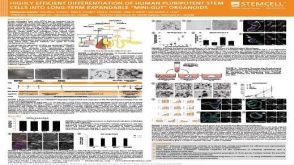 科学海报Highly Efficient Differentiation of Human Pluripotent Stem Cells into Long-term Expandable “Mini-gut” Organoids
 沪公网安备31010102008431号