Dienelt A and zur Nieden NI (MAR 2011)
Stem cells and development 20 3 465--474
Hyperglycemia impairs skeletogenesis from embryonic stem cells by affecting osteoblast and osteoclast differentiation.
High maternal blood glucose levels caused by diabetes mellitus can irreversibly lead to maldevelopment of the growing fetus with specific effects on the skeleton. To date,it remains controversial at which stage embryonic development is affected. Specifically during embryonic bone development,it is unclear whether diminished bone mineral density is caused by reduced osteoblast or rather enhanced osteoclast function. Therefore,the aim of this study was to characterize the growth as well as the skeletal differentiation capability of pluripotent embryonic stem cells (ESCs),which may serve as an in vitro model for all stages of embryonic development,when cultured in diabetic levels of D-glucose (4.5 g/L) versus physiological levels (1.0 g/L). Results showed that cells cultivated in physiological glucose gave rise to a higher number of colonies with an undifferentiated character as compared to cells grown in diabetic glucose concentrations. In contrast,these cultures were characterized by slightly decreased expression of proteins associated with the stem cell state. Furthermore,differentiation of ESCs into osteoblasts and osteoclasts was favored in physiological glucose concentrations,demonstrated by an increased matrix calcification,enhanced expression of cell-type-specific mRNAs,as well as activity of the cell-type-specific enzymes,alkaline,and tartrate resistant acidic phosphatase. In fact,this pattern was noted in murine as well as in primate ESCs. Our study suggests that an interplay between both the osteoblast and the osteoclast lineage is needed for proper skeletal development to occur,which seems impaired in hyperglycemic conditions.
View Publication
产品类型:
产品号#:
05850
05857
05870
05875
85850
85857
85870
85875
产品名:
mTeSR™1
mTeSR™1
Maestre-Batlle D et al. (FEB 2017)
Scientific reports 7 42214
Novel flow cytometry approach to identify bronchial epithelial cells from healthy human airways.
Sampling various compartments within the lower airways to examine human bronchial epithelial cells (HBEC) is essential for understanding numerous lung diseases. Conventional methods to identify HBEC in bronchoalveolar lavage (BAL) and wash (BW) have throughput limitations in terms of efficiency and ensuring adequate cell numbers for quantification. Flow cytometry can provide high-throughput quantification of cell number and function in BAL and BW samples,while requiring low cell numbers. To date,a flow cytometric method to identify HBEC recovered from lower human airway samples is unavailable. In this study we present a flow cytometric method identifying HBEC as CD45 negative,EpCAM/pan-cytokeratin (pan-CK) double-positive population after excluding debris,doublets and dead cells from the analysis. For validation,the HBEC panel was applied to primary HBEC resulting in 98.6% of live cells. In healthy volunteers,HBEC recovered from BAL (2.3% of live cells),BW (32.5%) and bronchial brushing samples (88.9%) correlated significantly (p = 0.0001) with the manual microscopy counts with an overall Pearson correlation of 0.96 across the three sample types. We therefore have developed,validated,and applied a flow cytometric method that will be useful to interrogate the role of the respiratory epithelium in multiple lung diseases.
View Publication
W. Lin et al. (JAN 2018)
Oncotarget 9 2 1992--2001
CD34- human placenta-derived mesenchymal stem cells protect against heat stroke mortality in rats.
CD34 is a transmembrane phosphoglycoprotein used to selectively enrich bone marrow in hematopoietic stem cells for transplantation. Treating rats with CD34+ cells derived from human umbilical cord blood before or after heat stroke has been shown to promote survival. We investigated whether CD34- human placenta-derived stem cells (PDMSCs) could improve survival following heat stroke in rats. Rats were subjected to heat stress (42°C for 98 min) to induce heat stroke. Intravenous administration of PDMSCs 1 day before or immediately after the onset of heat stroke improved survival by 60{\%} and 20{\%},respectively. Pre-treatment with CD34- PDMSCs protected against heat stroke injury more effectively than that treatment after injury. PDMSCs treatment attenuated cerebrovascular dysfunction,the inflammatory response,and lipid peroxidation. These data suggest human PDMSCs protect against heat stroke injury in rats. Moreover,these effects do not require the presence of CD34+ cells.
View Publication
产品类型:
产品号#:
07930
07931
07940
07955
07959
07952
100-1061
产品名:
CryoStor® CS10
CryoStor® CS10
CryoStor® CS10
CryoStor® CS10
CryoStor® CS10
CryoStor® CS10
CryoStor® CS10
Abaci HE et al. (JUN 2016)
Advanced healthcare materials 5 14 1800--1807
Human Skin Constructs with Spatially Controlled Vasculature Using Primary and iPSC-Derived Endothelial Cells.
Vascularization of engineered human skin constructs is crucial for recapitulation of systemic drug delivery and for their long-term survival,functionality,and viable engraftment. In this study,the latest microfabrication techniques are used and a novel bioengineering approach is established to micropattern spatially controlled and perfusable vascular networks in 3D human skin equivalents using both primary and induced pluripotent stem cell (iPSC)-derived endothelial cells. Using 3D printing technology makes it possible to control the geometry of the micropatterned vascular networks. It is verified that vascularized human skin equivalents (vHSEs) can form a robust epidermis and establish an endothelial barrier function,which allows for the recapitulation of both topical and systemic delivery of drugs. In addition,the therapeutic potential of vHSEs for cutaneous wounds on immunodeficient mice is examined and it is demonstrated that vHSEs can both promote and guide neovascularization during wound healing. Overall,this innovative bioengineering approach can enable in vitro evaluation of topical and systemic drug delivery as well as improve the potential of engineered skin constructs to be used as a potential therapeutic option for the treatment of cutaneous wounds.
View Publication
产品类型:
产品号#:
05850
05857
05870
05875
85850
85857
85870
85875
产品名:
mTeSR™1
mTeSR™1
Park S et al. (APR 2017)
Stem cell reports 8 4 1076--1085
A Comprehensive, Ethnically Diverse Library of Sickle Cell Disease-Specific Induced Pluripotent Stem Cells.
Sickle cell anemia affects millions of people worldwide and is an emerging global health burden. As part of a large NIH-funded NextGen Consortium,we generated a diverse,comprehensive,and fully characterized library of sickle-cell-disease-specific induced pluripotent stem cells (iPSCs) from patients of different ethnicities,β-globin gene (HBB) haplotypes,and fetal hemoglobin (HbF) levels. iPSCs stand to revolutionize the way we study human development,model disease,and perhaps eventually,treat patients. Here,we describe this unique resource for the study of sickle cell disease,including novel haplotype-specific polymorphisms that affect disease severity,as well as for the development of patient-specific therapeutics for this phenotypically diverse disorder. As a complement to this library,and as proof of principle for future cell- and gene-based therapies,we also designed and employed CRISPR/Cas gene editing tools to correct the sickle hemoglobin (HbS) mutation.
View Publication
产品类型:
产品号#:
05850
05857
05870
05875
85850
85857
85870
85875
产品名:
mTeSR™1
mTeSR™1
Velasquez-Mao AJ et al. ( 2017)
PloS one 12 5 e0177824
Differentiation of spontaneously contracting cardiomyocytes from non-virally reprogrammed human amniotic fluid stem cells.
Congenital heart defects are the most common birth defect. The limiting factor in tissue engineering repair strategies is an autologous source of functional cardiomyocytes. Amniotic fluid contains an ideal cell source for prenatal harvest and use in correction of congenital heart defects. This study aims to investigate the potential of amniotic fluid-derived stem cells (AFSC) to undergo non-viral reprogramming into induced pluripotent stem cells (iPSC) followed by growth-factor-free differentiation into functional cardiomyocytes. AFSC from human second trimester amniotic fluid were transfected by non-viral vesicle fusion with modified mRNA of OCT4,KLF4,SOX2,LIN28,cMYC and nuclear GFP over 18 days,then differentiated using inhibitors of GSK3 followed 48 hours later by inhibition of WNT. AFSC-derived iPSC had high expression of OCT4,NANOG,TRA-1-60,and TRA-1-81 after 18 days of mRNA transfection and formed teratomas containing mesodermal,ectodermal,and endodermal germ layers in immunodeficient mice. By Day 30 of cardiomyocyte differentiation,cells contracted spontaneously,expressed connexin 43 and β-myosin heavy chain organized in sarcomeric banding patterns,expressed cardiac troponin T and β-myosin heavy chain,showed upregulation of NKX2.5,ISL-1 and cardiac troponin T with downregulation of POU5F1,and displayed calcium and voltage transients similar to those in developing cardiomyocytes. These results demonstrate that cells from human amniotic fluid can be differentiated through a pluripotent state into functional cardiomyocytes.
View Publication
产品类型:
产品号#:
05850
05857
05870
05875
85850
85857
85870
85875
产品名:
mTeSR™1
mTeSR™1
Suzuki DE et al. (JUN 2014)
Stem cells and development 23 11 1266--1274
Knockdown of E2F2 inhibits tumorigenicity, but preserves stemness of human embryonic stem cells.
Tumorigenicity of human pluripotent stem cells is a major threat limiting their application in cell therapy protocols. It remains unclear,however,whether suppression of tumorigenic potential can be achieved without critically affecting pluripotency. A previous study has identified hyperexpressed genes in cancer stem cells,among which is E2F2,a gene involved in malignant transformation and stem cell self-renewal. Here we tested whether E2F2 knockdown would affect the proliferative capacity and tumorigenicity of human embryonic stem cells (hESC). Transient E2F2 silencing in hESC significantly inhibited expression of the proto-oncogenes BMI1 and HMGA1,in addition to proliferation of hESC,indicated by a higher proportion of cells in G1,fewer cells in G2/M phase,and a reduced capacity to generate hESC colonies in vitro. Nonetheless,E2F2-silenced cells kept expression of typical pluripotency markers and displayed differentiation capacity in vitro. More importantly,E2F2 knockdown in hESC significantly inhibited tumor growth in vivo,which was considerably smaller than tumors generated from control hESC,although displaying typical teratoma traits,a major indicator of pluripotency retention in E2F2-silenced cells. These results suggest that E2F2 knockdown can inhibit hESC proliferation and tumorigenicity without significantly harming stemness,providing a rationale to future protocols aiming at minimizing risks related to therapeutic application of cells and/or products derived from human pluripotent cells.
View Publication
产品类型:
产品号#:
05850
05857
05870
05875
07920
85850
85857
85870
85875
07922
产品名:
ACCUTASE™
mTeSR™1
mTeSR™1
ACCUTASE™
Bartel MA and Schaffer DV ( 2014)
1114 169--179
Enhanced gene targeting of adult and pluripotent stem cells using evolved adeno-Associated virus
Efficient approaches for the precise genetic engineering of stem cells can enhance both basic and applied stem cell research. Adeno-associated virus (AAV) vectors have demonstrated high-efficiency gene delivery and gene targeting to numerous cell types,and AAV vectors developed specifically for gene delivery to stem cells have further increased gene targeting frequency compared to plasmid construct techniques. This chapter details the production and purification techniques necessary to generate adeno-associated viral vectors for use in high-efficiency gene targeting of adult or pluripotent stem cell applications. Culture conditions used to achieve high gene targeting frequencies in rat neural stem cells and human pluripotent stem cells are also described.
View Publication
产品类型:
产品号#:
05850
05857
05870
05875
85850
85857
85870
85875
产品名:
mTeSR™1
mTeSR™1
Thomas TE et al. (JUN 1989)
Journal of immunological methods 120 2 221--31
Specific binding and release of cells from beads using cleavable tetrameric antibody complexes.
A two-step separation procedure is described for the positive selection of cells based on their reactivity with mouse monoclonal antibodies. In the first step cells are specifically cross-linked to hapten-modified glass beads using tetrameric monoclonal antibody complexes. In the second step bound cells are selectively eluted by reductive cleavage of the tetrameric antibody complexes. The latter are comprised of two mouse IgG1 monoclonal antibodies (one recognizing a cell surface antigen on target cells and the other a hapten coupled to the glass beads) bound together by two F(ab')2 fragments of rat anti-mouse IgG1 monoclonal antibody. The complexes provide a specific cleavable cross-link between cell and bead because the disulfide bonds between the two Fab' arms of the F(ab')2 fragments can be broken under relatively mild conditions using dithiothreitol. This specific cleavage of the cross-linker allows elution of the specifically absorbed cells without co-elution of non-specifically bound cells. This is shown in the purification of CD3+ T cells from human peripheral blood,where the removed fractions were over 90% pure and approximately 50% of the positive cells were recovered. Separation of cells labelled with limiting amounts of tetrameric antibody complexes demonstrated that this separation technique was also effective for the purification of cells expressing low amounts of antigens. This was confirmed by the purification of CD34-positive cells from human bone marrow. With this approach,colony-forming cells were enriched 15-24-fold over density separated marrow.
View Publication
产品类型:
产品号#:
14050
产品名:
Li Y et al. (MAR 2015)
PLoS ONE 10 3 e0118266
A comprehensive library of familial human amyotrophic lateral sclerosis induced pluripotent stem cells
Amyotrophic lateral sclerosis is a progressive disease characterized by the loss of upper and lower motor neurons,leading to paralysis of voluntary muscles. About 10% of all ALS cases are familial (fALS),among which 15-20% are linked to Cu/Zn superoxide dismutase (SOD1) mutations,usually inherited in an autosomal dominant manner. To date only one FDA approved drug is available which increases survival moderately. Our understanding of ALS disease mechanisms is largely derived from rodent model studies,however due to the differences between rodents and humans,it is necessary to have humanized models for studies of disease pathogenesis as well as drug development. Therefore,we generated a comprehensive library of a total 22 of fALS patient-specific induced pluripotent stem cell (iPSC) lines. These cells were thoroughly characterized before being deposited into the library. The library of cells includes a variety of C9orf72 mutations,sod1 mutations,FUS,ANG and FIG4 mutations. Certain mutations are represented with more than one line,which allows for studies of variable genetic backgrounds. In addition,these iPSCs can be successfully differentiated to astroglia,a cell type known to play a critical role in ALS disease progression. This library represents a comprehensive resource that can be used for ALS disease modeling and the development of novel therapeutics.
View Publication
产品类型:
产品号#:
05850
05857
05870
05875
07923
85850
85857
85870
85875
产品名:
Dispase (1 U/mL)
mTeSR™1
mTeSR™1
Duan S et al. (DEC 2015)
Nature communications 6 10068
PTEN deficiency reprogrammes human neural stem cells towards a glioblastoma stem cell-like phenotype.
PTEN is a tumour suppressor frequently mutated in many types of cancers. Here we show that targeted disruption of PTEN leads to neoplastic transformation of human neural stem cells (NSCs),but not mesenchymal stem cells. PTEN-deficient NSCs display neoplasm-associated metabolic and gene expression profiles and generate intracranial tumours in immunodeficient mice. PTEN is localized to the nucleus in NSCs,binds to the PAX7 promoter through association with cAMP responsive element binding protein 1 (CREB)/CREB binding protein (CBP) and inhibits PAX7 transcription. PTEN deficiency leads to the upregulation of PAX7,which in turn promotes oncogenic transformation of NSCs and instates 'aggressiveness' in human glioblastoma stem cells. In a large clinical database,we find increased PAX7 levels in PTEN-deficient glioblastoma. Furthermore,we identify that mitomycin C selectively triggers apoptosis in NSCs with PTEN deficiency. Together,we uncover a potential mechanism of how PTEN safeguards NSCs,and establish a cellular platform to identify factors involved in NSC transformation,potentially permitting personalized treatment of glioblastoma.
View Publication


 EasySep™小鼠TIL(CD45)正选试剂盒





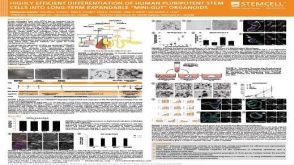 科学海报Highly Efficient Differentiation of Human Pluripotent Stem Cells into Long-term Expandable “Mini-gut” Organoids
 沪公网安备31010102008431号