J. Feng et al. (May 2024)
Nucleic Acids Research 52 12
PHF2 regulates genome topology and DNA replication in neural stem cells via cohesin
Cohesin plays a crucial role in the organization of topologically-associated domains (TADs),which influence gene expression and DNA replication timing. Whether epigenetic regulators may affect TADs via cohesin to mediate DNA replication remains elusive. Here,we discover that the histone demethylase PHF2 associates with RAD21,a core subunit of cohesin,to regulate DNA replication in mouse neural stem cells (NSC). PHF2 loss impairs DNA replication due to the activation of dormant replication origins in NSC. Notably,the PHF2/RAD21 co-bound genomic regions are characterized by CTCF enrichment and epigenomic features that resemble efficient,active replication origins,and can act as boundaries to separate adjacent domains. Accordingly,PHF2 loss weakens TADs and chromatin loops at the co-bound loci due to reduced RAD21 occupancy. The observed topological and DNA replication defects in PHF2 KO NSC support a cohesin-dependent mechanism. Furthermore,we demonstrate that the PHF2/RAD21 complex exerts little effect on gene regulation,and that PHF2’s histone-demethylase activity is dispensable for normal DNA replication and proliferation of NSC. We propose that PHF2 may serve as a topological accessory to cohesin for cohesin localization to TADs and chromatin loops,where cohesin represses dormant replication origins directly or indirectly,to sustain DNA replication in NSC.
View Publication
产品类型:
产品号#:
100-0483
100-0484
产品名:
Hausser Scientificᵀᴹ 明线血球计数板
ReLeSR™
M. Ou et al. (Nov 2024)
Frontiers in Pharmacology 15 4
Mechanism of Apigenin against breast cancer stem cells: network pharmacology and experimental validation
Apigenin (API),a traditionally sourced flavonoid,is recognized for its anti-neoplastic properties. Despite well-documented effects on tumorigenesis,the detailed therapeutic impact on breast cancer stem cells (BCSCs) and the associated molecular mechanisms are yet to be clarified. The objective of this study is to elucidate the therapeutic effects of API on BCSCs and to uncover its molecular mechanisms through network pharmacology and experimental validation. Interactions of API with candidate targets were examined through target screening,enrichment analysis,construction of protein-protein interaction networks,and molecular docking. MCF-7-derived BCSCs were utilized as a model system to investigate and substantiate the anti-BCSC effects of API and the underlying mechanism. Molecular docking studies have shown that API and TP53 exhibit favorable binding affinity. Compared with the negative control group,API effectively suppressed the expression of BCSC-related proteins such as ALDH1A1,NANOG,EpCAM,and MYC,downregulated p-PI3K and p-AKT,and upregulated p53. This study demonstrates that API can play an anti-BCSC role by regulating the PI3K/AKT/p53 pathway in BCSCs of MCF-7 cells,highlighting its potential as a therapeutic agent for targeting BCSCs.
View Publication
产品类型:
产品号#:
01700
01702
产品名:
ALDEFLUOR™ 试剂盒
ALDEFLUOR™检测缓冲液
Z. Wang et al. (Apr 2025)
European Journal of Medical Research 30 1
Inducing mononuclear cells of patients with CADASIL to construct a CSVD disease model
To produce pluripotent stem cells from peripheral blood mononuclear cells (PBMCs) of a patient with cerebral autosomal dominant arteriopathy with subcortical infarcts and leukoencephalopathy (CADASIL) and culture and differentiate them into vascular organoids,producing a disease model for cerebral small vessel disease (CSVD). (1) PMBCs from patients clinically diagnosed with CADASIL ( NOTCH3 p.R141C) were induced to differentiate into pluripotent stem cells (iPSCs); the quality and differentiation ability of the iPSCs were determined. (2) CADASIL-derived iPSCs and control iPSCs were cultured and differentiated into vascular organoids. The differences in the morphological structure of the two differentiated groups of vascular organoids were observed,and both were identified. (1) No mycoplasma infections were detected in the iPSCs prepared from the PBMCs of patients with CADASIL. The short tandem repeat (STR) identification verified that the iPSCs originated from the patient,and the karyotype was normal. Flow cytometry and immunofluorescence detection revealed that the iPSCs expressed SSEA4,OCT4,and NANOG stem proteins. Tri-germ differentiation testing confirmed that the iPSCs expressed the endoderm markers SOX17 and FOXA2,the mesoderm markers Brachyury and α-SMA,and the ectoderm markers Pax6 and β-III Tubulin. (2) CADASIL-derived iPSCs and control iPSCs were induced to differentiate and produce endothelial networks and vascular networks,ultimately forming vascular organoids. Compared with control vascular organoids,CADASIL vascular organoids exhibited lower growth density,earlier blood vessel sprouting,longer and thinner vascular filaments,and smaller final vascular organoids. The vascular organoids from the two sources expressed the endothelial cell marker CD31,the vascular smooth muscle marker α-SMA,and the pericyte marker PDGFR-β. Reprogramming technology can be used to induce PBMCs to become iPSCs,and a CSVD disease model can be successfully constructed by culturing and differentiating the iPSCs into CADASIL vascular organoids. The NOTCH3 p.R141C mutation suppresses the vascular differentiation process in CADASIL.
View Publication
产品类型:
产品号#:
05230
05893
产品名:
STEMdiff™ 三胚层分化试剂盒
AggreWell™ EB形成培养基
Q. Guo et al. (Jul 2025)
Nucleic Acids Research 53 14
PPARG-centric transcriptional re-wiring during differentiation of human trophoblast stem cells into extravillous trophoblasts
Peroxisome proliferator-activated receptor gamma (PPARG) is a nuclear receptor family transcription factor (TF) critical for adipogenesis,lipid metabolism,insulin sensitivity,and inflammation. It has also been known to play essential roles in trophoblast development and placentation. Dysregulation of PPARG in trophoblast differentiation has been implicated in pregnancy complications,such as pre-eclampsia and gestational diabetes. However,the molecular mechanisms of PPARG-dependent target gene regulation and its interactions with other regulatory factors during human trophoblast differentiation remain unclear. Using human trophoblast stem cells (TSCs),mimicking placental cytotrophoblasts (CTs),and their differentiation into extravillous trophoblasts (EVTs) as our models,we reveal that PPARG has cell-type-specific targets in TSCs and EVTs. We also find that while PPARG is essential for both TSC self-renewal and EVT differentiation,only its role in EVT differentiation is ligand sensitive and requires ligand-binding domain (LBD)-mediated transcriptional activity,whereas its function in TSC self-renewal appears to be ligand insensitive. Combined analysis with chromosomal targets of previously defined key TFs in TSCs and EVTs shows that PPARG forms trophoblast cell-type-specific regulatory circuitries,leading to differential target gene regulation via transcriptional re-wiring during EVT differentiation. Additionally,the enhanced invasiveness of EVTs treated with a PPARG agonist suggests a potential connection between PPARG pathways and human placenta accreta.
View Publication
产品类型:
产品号#:
34811
34815
34821
34825
34850
34860
产品名:
AggreWell™ 800 24孔板,1个
AggreWell™ 800 24孔板,5个
AggreWell™ 800 6孔板,1个
AggreWell™ 800 6孔板,5个
AggreWell™ 800 24孔板启动套装
AggreWell™ 800 6孔板启动套装
T. Catchpole et al. ( 2020)
PloS one 15 2 e0229504
A profile of circulating vascular progenitor cells in human neovascular age-related macular degeneration.
BACKGROUND/OBJECTIVE A subset of neovascular age-related macular degeneration (nvAMD) subjects appears to be refractory to the effects of anti-VEGF treatment and require frequent intravitreal injections. The vascular phenotype of the choroidal neovascular (CNV) lesions may contribute to the resistance. Animal studies of CNV lesions have shown that cells originating from bone marrow are capable of forming varying cell types in the lesions. This raised the possibility of a similar cell population in human nvAMD subjects. MATERIALS AND METHODS Blood draws were obtained from subjects with active nvAMD while patients were receiving standard of care anti-VEGF injections. Subjects were classified as refractory or non-refractory to anti-VEGF treatment based on previous number of injections in the preceding 12 months. Peripheral blood mononuclear cells (PBMCs) were isolated and CD34-positive cells purified using magnetic bead sorting. The isolated cells were expanded in StemSpan SFEM media to increase cell numbers. After expansion,the cells were split and plated in either endothelial or mesenchymal promoting conditions. Phenotype analysis was performed via qPCR. RESULTS There was no significant difference in the number of PBMCs and CD34-positive cells between refractory and non-refractory nvAMD subjects. The growth pattern distribution between endothelial and mesenchymal media conditions were very similar between refractory and non-refractory subjects. qPCR and immunostaining demonstrated positive expression of endothelial markers in endothelial media,and markers such as NG2 and $\alpha$SMA in mesenchymal media. However,analysis of subsequent samples from AMD subjects demonstrated high variability in both the numbers and differentiation properties of this cell population. CONCLUSIONS CD34+ cells can be isolated from nvAMD subjects and show both endothelial and pericyte-like characteristics after differentiation in certain media conditions. However,nvAMD subjects show high variability in both numbers of cells and differentiation characteristics in repeat sampling. This variability highlights the importance of taking multiple samples from nvAMD subjects for any clinical trials focused on biomarkers for the disease.
View Publication
产品类型:
产品号#:
02690
09600
09650
产品名:
StemSpan™ CC100
StemSpan™ SFEM
StemSpan™ SFEM
(May 2025)
Communications Biology 8
Loss of UBE3A impacts both neuronal and non-neuronal cells in human cerebral organoids
Angelman syndrome is a neurodevelopmental disorder caused by (epi)genetic lesions of maternal UBE3A. Research has focused largely on the role of UBE3A in neurons due to its imprinting in that cell type. Yet,evidence suggests there may be broader neurodevelopmental impacts of UBE3A dysregulation. Human cerebral organoids might reveal these understudied aspects of UBE3A as they recapitulate diverse cell types of the developing human brain. In this study,scRNAseq on organoids reveals the effects of UBE3A disruption on cell type-specific compositions and transcriptomic alterations. In the absence of UBE3A,progenitor proliferation and structures are disrupted while organoid composition shifts away from proliferative cell types. We observe impacts on non-neuronal cells,including choroid plexus enrichment. Furthermore,EMX1+ cortical progenitors are negatively impacted; potentially disrupting corticogenesis and delaying excitatory neuron maturation. This work reveals impacts of UBE3A on understudied cell types and related neurodevelopmental processes and elucidates potential therapeutic targets. Human cerebral organoids exhibit compositional and transcriptomic alterations in both neuronal and non-neuronal cells in the absence of UBE3A.
View Publication
产品类型:
产品号#:
100-0276
100-1130
05990
产品名:
mTeSR™ Plus
mTeSR™ Plus
用于hESC/hiPSC维持培养的TeSR™-E8™
(Jul 2024)
Cell Reports Medicine 5 7
PARP11 inhibition inactivates tumor-infiltrating regulatory T cells and improves the efficacy of immunotherapies
SummaryTumor-infiltrating regulatory T cells (TI-Tregs) elicit immunosuppressive effects in the tumor microenvironment (TME) leading to accelerated tumor growth and resistance to immunotherapies against solid tumors. Here,we demonstrate that poly-(ADP-ribose)-polymerase-11 (PARP11) is an essential regulator of immunosuppressive activities of TI-Tregs. Expression of PARP11 correlates with TI-Treg cell numbers and poor responses to immune checkpoint blockade (ICB) in human patients with cancer. Tumor-derived factors including adenosine and prostaglandin E2 induce PARP11 in TI-Tregs. Knockout of PARP11 in the cells of the TME or treatment of tumor-bearing mice with selective PARP11 inhibitor ITK7 inactivates TI-Tregs and reinvigorates anti-tumor immune responses. Accordingly,ITK7 decelerates tumor growth and significantly increases the efficacy of anti-tumor immunotherapies including ICB and adoptive transfer of chimeric antigen receptor (CAR) T cells. These results characterize PARP11 as a key driver of TI-Treg activities and a major regulator of immunosuppressive TME and argue for targeting PARP11 to augment anti-cancer immunotherapies. Graphical abstract Highlights•Tumor-derived factors upregulate PARP11 in the tumor-infiltrating Treg cells•PARP11 supports the immunosuppressive properties of Treg cells•Pharmacologic inhibition of PARP11 inactivates intratumoral Treg cells•PARP11 inhibitor augments the efficacy of immunotherapies Basavaraja et al. demonstrate that induction of PARP11 in the intratumoral regulatory T (Treg) cells is required for their regulatory functions and contributes to the immunosuppressive tumor microenvironment. The selective inhibitor of PARP11 ITK7 inactivates tumor Treg cells and improves the efficacy of immunotherapies against tumors.
View Publication
产品类型:
产品号#:
10957
19851
19851RF
19852
19852RF
19853
19853RF
18780
18781
18781RF
18780RF
18783
18783RF
产品名:
ImmunoCult™ 小鼠Treg分化添加剂
EasySep™小鼠T细胞分选试剂盒
RoboSep™ 小鼠T细胞分选试剂盒
EasySep™小鼠CD4+ T细胞分选试剂盒
RoboSep™ 小鼠CD4+ T细胞分选试剂盒
EasySep™小鼠CD8+ T细胞分选试剂盒
RoboSep™ 小鼠CD8+ T细胞分选试剂盒
EasySep™小鼠CD11c正选试剂盒II
EasySep™小鼠CD11c正选试剂盒II及脾脏解离液
RoboSep™ 小鼠CD11c正选试剂盒II及脾脏解离液
RoboSep™ 小鼠CD11c正选试剂盒II
EasySep™小鼠CD4+CD25+调节性T细胞分选试剂盒II
RoboSep™ 小鼠CD4+CD25+调节性T细胞分选试剂盒II
(May 2025)
Journal for Immunotherapy of Cancer 13 5
Precision enhancement of CAR-NK cells through non-viral engineering and highly multiplexed base editing
AbstractBackgroundNatural killer (NK) cells’ unique ability to kill transformed cells expressing stress ligands or lacking major histocompatibility complexes (MHC) has prompted their development for immunotherapy. However,NK cells have demonstrated only moderate responses against cancer in clinical trials.MethodsAdvanced genome engineering may thus be used to unlock their full potential. Multiplex genome editing with CRISPR/Cas9 base editors (BEs) has been used to enhance T cell function and has already entered clinical trials but has not been reported in human NK cells. Here,we report the first application of BE in primary NK cells to achieve both loss-of-function and gain-of-function mutations.ResultsWe observed highly efficient single and multiplex base editing,resulting in significantly enhanced NK cell function in vitro and in vivo. Next,we combined multiplex BE with non-viral TcBuster transposon-based integration to generate interleukin-15 armored CD19 chimeric antigen receptor (CAR)-NK cells with significantly improved functionality in a highly suppressive model of Burkitt’s lymphoma both in vitro and in vivo.ConclusionsThe use of concomitant non-viral transposon engineering with multiplex base editing thus represents a highly versatile and efficient platform to generate CAR-NK products for cell-based immunotherapy and affords the flexibility to tailor multiple gene edits to maximize the effectiveness of the therapy for the cancer type being treated.
View Publication
Eichler H et al. (JAN 2003)
Stem cells (Dayton,Ohio) 21 2 208--16
Engraftment capacity of umbilical cord blood cells processed by either whole blood preparation or filtration.
Umbilical cord blood (UCB) preparation needs to be optimized in order to develop more simplified procedures for volume reduction,as well as to reduce the amount of contaminating cells within the final stem cell transplant. We evaluated a novel filter device (StemQuick((TM))E) and compared it with our routine buffy coat (BC) preparation procedure for the enrichment of hematopoietic progenitor cells (HPCs). Two groups of single or pooled UCB units were filtered (each n = 6),or equally divided in two halves and processed by filtration and BC preparation in parallel (n = 10). The engraftment capacity of UCB samples processed by whole blood (WB) preparation was compared with paired samples processed by filtration in the nonobese diabetic/severe combined immunodeficient (NOD/SCID) mouse animal model. Filtration of UCB units in the two groups with a mean volume of 87.8 and 120.7 ml,respectively,and nucleated cell (NC) content of 9.7 and 23.8 x 10(8) resulted in a sufficient mean cell recovery for mononucleated cells ([MNCs] 74.2%-77.5%),CD34(+) cells (76.3%-79.0%),and colony-forming cells (64.1%-86.3%). Moreover,we detected a relevant depletion of the transplants for RBCs (89.2%-90.0%) and platelets ([PLTs] 77.5%-86.1%). In contrast,the mean depletion rate using BC processing proved to be significantly different for PLTs (10%,p = 0.03) and RBCs (39.6%,p textless 0.01). The NC composition showed a highly significant increase in MNCs and a decrease in granulocytes after filtration (p textless 0.01),compared with a less significant MNC increase in the BC group (p textless 0.05). For mice transplanted with WB-derived progenitors,we observed a mean of 15.3% +/- 15.5% of human CD45(+) cells within the BM compared with 19.9% +/- 16.8% for mice transplanted with filter samples (p = 0.03). The mean percentage of human CD34(+) cells was 4.2% +/- 3.1% for WB samples and 4.5% +/- 3.2% for filter samples (p = 0.68). As the data of NOD/SCID mice transplantation demonstrated a significant engraftment capacity of HPCs processed by filtration,no negative effect on the engraftment potential of filtered UCB cells versus non-volume-reduced cells from WB transplants was found. The StemQuick((TM))E filter devices proved to be a useful tool for Good Manufacturing Practices conform enrichment of HPCs and MNCs out of UCB. Filtration enables a quick and standardized preparation of a volume-reduced UCB transplant,including a partial depletion of granulocytes,RBCs,and PLTs without the need for centrifugation. Therefore,it seems very probable that filter-processed UCB transplants will also result in sufficient hematopoietic reconstitution in humans.
View Publication
产品类型:
产品号#:
04434
04444
04535
04545
04564
04035
04034
04044
04435
04445
04534
04544
产品名:
MethoCult™ H4434 Classic
MethoCult™ H4434 Classic
MethoCult™ H4535 Enriched,不含EPO
MethoCult™ H4535 Enriched,不含EPO
MethoCult™ H4534 Classic 无 EPO 入门试剂盒
MethoCult™ 不含EPO的H4035 Optimum
MethoCult™ H4034 Optimum
MethoCult™ H4034 Optimum
MethoCult™ H4435 Enriched
MethoCult™ H4435 Enriched
MethoCult™ H4534 Classic(不含 EPO)
MethoCult™ H4534 Classic(不含 EPO)
Thanopoulou E et al. (JUN 2004)
Blood 103 11 4285--93
Engraftment of NOD/SCID-beta2 microglobulin null mice with multilineage neoplastic cells from patients with myelodysplastic syndrome.
The development of immunodeficient mouse xenograft models has greatly facilitated the investigation of some human hematopoietic malignancies,but application of this approach to the myelodysplastic syndromes (MDSs) has proven difficult. We now show that cells from most MDS patients (including all subtypes) repopulate nonobese diabetic-severe combined immunodeficient (scid)/scid-beta2 microglobulin null (NOD/SCID-beta2m(-/-)) mice at least transiently and produce abnormal differentiation patterns in this model. Normal marrow transplants initially produce predominantly erythroid cells and later predominantly B-lymphoid cells in these mice,whereas most MDS samples produced predominantly granulopoietic cells. In 4 of 4 MDS cases,the regenerated cells showed the same clonal markers (trisomy 8,n = 3; and 5q-,n = 1) as the original sample and,in one instance,regenerated trisomy 8(+) B-lymphoid as well as myeloid cells were identified. Interestingly,the enhanced growth of normal marrow obtained in NOD/SCID-beta2m(-/-) mice engineered to produce human interleukin-3,granulocyte-macrophage colony-stimulating factor,and Steel factor was seen only with 1 of 7 MDS samples. These findings support the concept that human MDS originates in a transplantable multilineage hematopoietic stem cell whose genetic alteration may affect patterns of differentiation and responsiveness to hematopoietic growth factors. They also demonstrate the potential of this new murine xenotransplant model for future investigations of MDS.
View Publication


 EasySep™小鼠TIL(CD45)正选试剂盒





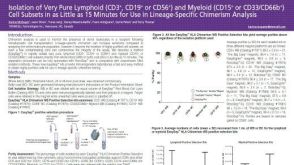 科学海报Isolation of Very Pure Lymphoid (CD3+, CD19+ or CD56+) and Myeloid (CD15+ or CD33/CD66b+) Cell Subsets in as Little as 15 Minutes for Use in Lineage-Specific Chimerism Analysis

 沪公网安备31010102008431号