D. Stanojević et al. (Jul 2024)
Nature Communications 15 4
Rockfish: A transformer-based model for accurate 5-methylcytosine prediction from nanopore sequencing
DNA methylation plays an important role in various biological processes,including cell differentiation,ageing,and cancer development. The most important methylation in mammals is 5-methylcytosine mostly occurring in the context of CpG dinucleotides. Sequencing methods such as whole-genome bisulfite sequencing successfully detect 5-methylcytosine DNA modifications. However,they suffer from the serious drawbacks of short read lengths and might introduce an amplification bias. Here we present Rockfish,a deep learning algorithm that significantly improves read-level 5-methylcytosine detection by using Nanopore sequencing. Rockfish is compared with other methods based on Nanopore sequencing on R9.4.1 and R10.4.1 datasets. There is an increase in the single-base accuracy and the F1 measure of up to 5 percentage points on R.9.4.1 datasets,and up to 0.82 percentage points on R10.4.1 datasets. Moreover,Rockfish shows a high correlation with whole-genome bisulfite sequencing,requires lower read depth,and achieves higher confidence in biologically important regions such as CpG-rich promoters while being computationally efficient. Its superior performance in human and mouse samples highlights its versatility for studying 5-methylcytosine methylation across varied organisms and diseases. Finally,its adaptable architecture ensures compatibility with new versions of pores and chemistry as well as modification types. Subject terms: Genome informatics,Epigenomics,Computational models,DNA sequencing,DNA methylation
View Publication
产品类型:
产品号#:
100-0483
100-0484
产品名:
Hausser Scientificᵀᴹ 明线血球计数板
ReLeSR™
M. Lopez-Cavestany et al. (Aug 2024)
ACS Nano 18 34
Superhydrophobic Array Devices for the Enhanced Formation of 3D Cancer Models
During the metastatic cascade,cancer cells travel through the bloodstream as circulating tumor cells (CTCs) to a secondary site. Clustered CTCs have greater shear stress and treatment resistance,yet their biology remains poorly understood. We therefore engineered a tunable superhydrophobic array device (SHArD). The SHArD-C was applied to culture a clinically relevant model of CTC clusters. Using our device,we cultured a model of cancer cell aggregates of various sizes with immortalized cancer cell lines. These exhibited higher E-cadherin expression and are significantly more capable of surviving high fluid shear stress-related forces compared to single cells and model clusters grown using the control method,helping to explain why clustering may provide a metastatic advantage. Additionally,the SHArD-S,when compared with the AggreWell 800 method,provides a more consistent spheroid-forming device culturing reproducible sizes of spheroids for multiple cancer cell lines. Overall,we designed,fabricated,and validated an easily tunable engineered device which grows physiologically relevant three-dimensional (3D) cancer models containing tens to thousands of cells.
View Publication
Engineering an Escherichia coli strain for production of long single-stranded DNA
AbstractLong single-stranded DNA (ssDNA) is a versatile molecular reagent with applications including RNA-guided genome engineering and DNA nanotechnology,yet its production is typically resource-intensive. We introduce a novel method utilizing an engineered Escherichia coli ‘helper’ strain and phagemid system that simplifies long ssDNA generation to a straightforward transformation and purification procedure. Our method obviates the need for helper plasmids and their associated contamination by integrating M13mp18 genes directly into the E. coli chromosome. We achieved ssDNA lengths ranging from 504 to 20 724 nt with titers up to 250 μg/l following alkaline lysis purification. The efficacy of our system was confirmed through its application in primary T-cell genome modifications and DNA origami folding. The reliability,scalability and ease of our approach promise to unlock new experimental applications requiring large quantities of long ssDNA. Graphical Abstract Graphical Abstract
View Publication
产品类型:
产品号#:
20144
18000
产品名:
EasySep™缓冲液
EasySep™磁极
B. S. Marro et al. (dec 2019)
Cell reports 29 10 3293--3302.e3
Discovery of Small Molecules for the Reversal of T Cell Exhaustion.
Inhibitory receptors (IRs) function as critical regulators of immune responses by tempering T cell activity. In humans,several persisting viruses as well as cancers exploit IR signaling by upregulating IR ligands,resulting in suppression of T cell function (i.e.,exhaustion). This allows escape from immune surveillance and continuation of disease. Here,we report the design,implementation,and results of a phenotypic high-throughput screen for molecules that modulate CD8+ T cell activity. We identify 19 compounds from the ReFRAME drug-repurposing collection that restore cytokine production and enhance the proliferation of exhausted T cells. Analysis of our top hit,ingenol mebutate,a protein kinase C (PKC) inducing diterpene ester,reveals a role for this molecule in overriding the suppressive signaling cascade mediated by IR signaling on T cells. Collectively,these results demonstrate a disease-relevant methodology for identifying modulators of T cell function and reveal new targets for immunotherapy.
View Publication
J. L. Slack et al. (feb 2011)
Cellular and molecular life sciences : CMLS 68 4 709--20
Protein arginine deiminase 4: a target for an epigenetic cancer therapy.
The recent approvals of anticancer therapeutic agents targeting the histone deacetylases and DNA methyltransferases have highlighted the important role that epigenetics plays in human diseases,and suggested that the factors controlling gene expression are novel drug targets. Protein arginine deiminase 4 (PAD4) is one such target because its effects on gene expression parallel those observed for the histone deacetylases. We demonstrated that F- and Cl-amidine,two potent PAD4 inhibitors,display micromolar cytotoxic effects towards several cancerous cell lines (HL-60,MCF7 and HT-29); no effect was observed in noncancerous lines (NIH 3T3 and HL-60 granulocytes). These compounds also induced the differentiation of HL-60 and HT29 cells. Finally,these compounds synergistically potentiated the cell killing effects of doxorubicin. Taken together,these findings suggest PAD4 inhibition as a novel epigenetic approach for the treatment of cancer,and suggest that F- and Cl-amidine are candidate therapeutic agents for this disease.
View Publication
产品类型:
产品号#:
100-0518
100-0519
产品名:
Cl-Amidine
Cl-Amidine (Hydrochloride)
Lee WJ et al. (OCT 2005)
Molecular pharmacology 68 4 1018--30
Mechanisms for the inhibition of DNA methyltransferases by tea catechins and bioflavonoids.
In the present investigation,we studied the modulating effects of several tea catechins and bioflavonoids on DNA methylation catalyzed by prokaryotic SssI DNA methyltransferase (DNMT) and human DNMT1. We found that each of the tea polyphenols [catechin,epicatechin,and (-)-epigallocatechin-3-O-gallate (EGCG)] and bioflavonoids (quercetin,fisetin,and myricetin) inhibited SssI DNMT- and DNMT1-mediated DNA methylation in a concentration-dependent manner. The IC(50) values for catechin,epicatechin,and various flavonoids ranged from 1.0 to 8.4 microM,but EGCG was a more potent inhibitor,with IC(50) values ranging from 0.21 to 0.47 microM. When epicatechin was used as a model inhibitor,kinetic analyses showed that this catechol-containing dietary polyphenol inhibited enzymatic DNA methylation in vitro largely by increasing the formation of S-adenosyl-L-homocysteine (a potent noncompetitive inhibitor of DNMTs) during the catechol-O-methyltransferase-mediated O-methylation of this dietary catechol. In comparison,the strong inhibitory effect of EGCG on DNMT-mediated DNA methylation was independent of its own methylation and was largely due to its direct inhibition of the DNMTs. This inhibition is strongly enhanced by Mg(2+). Computational modeling studies showed that the gallic acid moiety of EGCG plays a crucial role in its high-affinity,direct inhibitory interaction with the catalytic site of the human DNMT1,and its binding with the enzyme is stabilized by Mg(2+). The modeling data on the precise molecular mode of EGCG's inhibitory interaction with human DNMT1 agrees perfectly with our experimental finding.
View Publication
产品类型:
产品号#:
73642
73644
产品名:
(-)-Epigallocatechin Gallate, 50 mg
(-)-Epigallocatechin Gallate
Kubicek S et al. (FEB 2007)
Molecular cell 25 3 473--81
Reversal of H3K9me2 by a small-molecule inhibitor for the G9a histone methyltransferase.
Histone lysine methylation has important roles in the organization of chromatin domains and the regulation of gene expression. To analyze its function and modulate its activity,we screened for specific inhibitors against histone lysine methyltransferases (HMTases) using recombinant G9a as the target enzyme. From a chemical library comprising 125,000 preselected compounds,seven hits were identified. Of those,one inhibitor,BIX-01294 (diazepin-quinazolin-amine derivative),does not compete with the cofactor S-adenosyl-methionine,and selectively impairs the G9a HMTase and the generation of H3K9me2 in vitro. In cellular assays,transient incubation of several cell lines with BIX-01294 lowers bulk H3K9me2 levels that are restored upon removal of the inhibitor. Importantly,chromatin immunoprecipitation at several G9a target genes demonstrates reversible reduction of promoter-proximal H3K9me2 in inhibitor-treated mouse ES cells and fibroblasts. Our data identify a biologically active HMTase inhibitor that allows for the transient modulation of H3K9me2 marks in mammalian chromatin.
View Publication
产品类型:
产品号#:
72042
72044
产品名:
BIX01294 (Trihydrochloride Hydrate)
BIX01294 (Trihydrochloride Hydrate)
An MC et al. ( 2014)
PLoS currents 6 1--19
Polyglutamine Disease Modeling: Epitope Based Screen for Homologous Recombination using CRISPR/Cas9 System.
We have previously reported the genetic correction of Huntington's disease (HD) patient-derived induced pluripotent stem cells using traditional homologous recombination (HR) approaches. To extend this work,we have adopted a CRISPR-based genome editing approach to improve the efficiency of recombination in order to generate allelic isogenic HD models in human cells. Incorporation of a rapid antibody-based screening approach to measure recombination provides a powerful method to determine relative efficiency of genome editing for modeling polyglutamine diseases or understanding factors that modulate CRISPR/Cas9 HR.
View Publication
产品类型:
产品号#:
05850
05857
05870
05875
85850
85857
85870
85875
产品名:
mTeSR™1
mTeSR™1
Gorman BR et al. (DEC 2014)
PLoS ONE 9 12 e116037
Multi-scale imaging and informatics pipeline for in situ pluripotent stem cell analysis
Human pluripotent stem (hPS) cells are a potential source of cells for medical therapy and an ideal system to study fate decisions in early development. However,hPS cells cultured in vitro exhibit a high degree of heterogeneity,presenting an obstacle to clinical translation. hPS cells grow in spatially patterned colony structures,necessitating quantitative single-cell image analysis. We offer a tool for analyzing the spatial population context of hPS cells that integrates automated fluorescent microscopy with an analysis pipeline. It enables high-throughput detection of colonies at low resolution,with single-cellular and sub-cellular analysis at high resolutions,generating seamless in situ maps of single-cellular data organized by colony. We demonstrate the tool's utility by analyzing inter- and intra-colony heterogeneity of hPS cell cycle regulation and pluripotency marker expression. We measured the heterogeneity within individual colonies by analyzing cell cycle as a function of distance. Cells loosely associated with the outside of the colony are more likely to be in G1,reflecting a less pluripotent state,while cells within the first pluripotent layer are more likely to be in G2,possibly reflecting a G2/M block. Our multi-scale analysis tool groups colony regions into density classes,and cells belonging to those classes have distinct distributions of pluripotency markers and respond differently to DNA damage induction. Lastly,we demonstrate that our pipeline can robustly handle high-content,high-resolution single molecular mRNA FISH data by using novel image processing techniques. Overall,the imaging informatics pipeline presented offers a novel approach to the analysis of hPS cells that includes not only single cell features but also colony wide,and more generally,multi-scale spatial configuration.
View Publication


 EasySep™小鼠TIL(CD45)正选试剂盒





 新闻Academics and Industry Partners Launch Novel Study for Easing COVID-19 Restrictions
 1:07:14
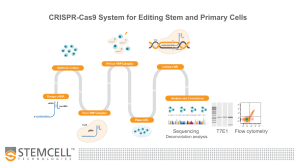
线上讲座Optimized Workflows for High-Efficiency Genome Editing in Stem and Primary Cell Types发布日期: 09/09/2019
1:07:14
线上讲座Optimized Workflows for High-Efficiency Genome Editing in Stem and Primary Cell Types发布日期: 09/09/2019

 沪公网安备31010102008431号