Zheng H et al. (MAY 2010)
Cancer cell 17 5 497--509
PLAGL2 regulates Wnt signaling to impede differentiation in neural stem cells and gliomas.
A hallmark feature of glioblastoma is its strong self-renewal potential and immature differentiation state,which contributes to its plasticity and therapeutic resistance. Here,integrated genomic and biological analyses identified PLAGL2 as a potent protooncogene targeted for amplification/gain in malignant gliomas. Enhanced PLAGL2 expression strongly suppresses neural stem cell (NSC) and glioma-initiating cell differentiation while promoting their self-renewal capacity upon differentiation induction. Transcriptome analysis revealed that these differentiation-suppressive activities are attributable in part to PLAGL2 modulation of Wnt/beta-catenin signaling. Inhibition of Wnt signaling partially restores PLAGL2-expressing NSC differentiation capacity. The identification of PLAGL2 as a glioma oncogene highlights the importance of a growing class of cancer genes functioning to impart stem cell-like characteristics in malignant cells.
View Publication
产品类型:
产品号#:
05700
05701
05702
05751
产品名:
NeuroCult™ 基础培养基(小鼠和大鼠)
NeuroCult™ 扩增添加物(小鼠和大鼠)
NeuroCult™扩增试剂盒(小鼠和大鼠)
NeuroCult™ NS-A 扩增试剂盒(人)
West PR et al. (AUG 2010)
Toxicology and Applied Pharmacology 247 1 18--27
Predicting human developmental toxicity of pharmaceuticals using human embryonic stem cells and metabolomics.
Teratogens,substances that may cause fetal abnormalities during development,are responsible for a significant number of birth defects. Animal models used to predict teratogenicity often do not faithfully correlate to human response. Here,we seek to develop a more predictive developmental toxicity model based on an in vitro method that utilizes both human embryonic stem (hES) cells and metabolomics to discover biomarkers of developmental toxicity. We developed a method where hES cells were dosed with several drugs of known teratogenicity then LC-MS analysis was performed to measure changes in abundance levels of small molecules in response to drug dosing. Statistical analysis was employed to select for specific mass features that can provide a prediction of the developmental toxicity of a substance. These molecules can serve as biomarkers of developmental toxicity,leading to better prediction of teratogenicity. In particular,our work shows a correlation between teratogenicity and changes of greater than 10% in the ratio of arginine to asymmetric dimethylarginine levels. In addition,this study resulted in the establishment of a predictive model based on the most informative mass features. This model was subsequently tested for its predictive accuracy in two blinded studies using eight drugs of known teratogenicity,where it correctly predicted the teratogenicity for seven of the eight drugs. Thus,our initial data shows that this platform is a robust alternative to animal and other in vitro models for the prediction of the developmental toxicity of chemicals that may also provide invaluable information about the underlying biochemical pathways. ?? 2010 Elsevier Inc.
View Publication
产品类型:
产品号#:
05850
05857
05870
05875
85850
85857
85870
85875
产品名:
mTeSR™1
mTeSR™1
Cutler AJ et al. (DEC 2010)
Journal of immunology (Baltimore,Md. : 1950) 185 11 6617--23
Umbilical cord-derived mesenchymal stromal cells modulate monocyte function to suppress T cell proliferation.
Mesenchymal stromal cells (MSCs) may be derived from a variety of tissues,with human umbilical cord (UC) providing an abundant and noninvasive source. Human UC-MSCs share similar in vitro immunosuppressive properties as MSCs obtained from bone marrow and cord blood. However,the mechanisms and cellular interactions used by MSCs to control immune responses remain to be fully elucidated. In this paper,we report that suppression of mitogen-induced T cell proliferation by human UC-,bone marrow-,and cord blood-MSCs required monocytes. Removal of monocytes but not B cells from human adult PBMCs (PBMNCs) reduced the immunosuppressive effects of MSCs on T cell proliferation. There was rapid modulation of a number of cell surface molecules on monocytes when PBMCs or alloantigen-activated PBMNCs were cultured with UC-MSCs. Indomethacin treatment significantly inhibited the ability of UC-MSCs to suppress T cell proliferation,indicating an important role for PGE(2). Monocytes purified from UC-MSC coculture had significantly reduced accessory cell and allostimulatory function when tested in subsequent T cell proliferation assays,an effect mediated in part by UC-MSC PGE(2) production and enhanced by PBMNC alloactivation. Therefore,we identify monocytes as an essential intermediary through which UC-MSCs mediate their suppressive effects on T cell proliferation.
View Publication
产品类型:
产品号#:
05401
05402
05411
产品名:
MesenCult™ MSC 基础培养基(人)
MesenCult™ MSC 刺激补充剂(人)
MesenCult™ 增殖试剂盒(人)
De Falco E et al. (DEC 2004)
Blood 104 12 3472--82
SDF-1 involvement in endothelial phenotype and ischemia-induced recruitment of bone marrow progenitor cells.
Chemokine stromal derived factor 1 (SDF-1) is involved in trafficking of hematopoietic stem cells (HSCs) from the bone marrow (BM) to peripheral blood (PB) and has been found to enhance postischemia angiogenesis. This study was aimed at investigating whether SDF-1 plays a role in differentiation of BM-derived c-kit(+) stem cells into endothelial progenitor cells (EPCs) and in ischemia-induced trafficking of stem cells from PB to ischemic tissues. We found that SDF-1 enhanced EPC number by promoting alpha(2),alpha(4),and alpha(5) integrin-mediated adhesion to fibronectin and collagen I. EPC differentiation was reduced in mitogen-stimulated c-kit(+) cells,while cytokine withdrawal or the overexpression of the cyclin-dependent kinase (CDK) inhibitor p16(INK4) restored such differentiation,suggesting a link between control of cell cycle and EPC differentiation. We also analyzed the time course of SDF-1 expression in a mouse model of hind-limb ischemia. Shortly after femoral artery dissection,plasma SDF-1 levels were up-regulated,while SDF-1 expression in the bone marrow was down-regulated in a timely fashion with the increase in the percentage of PB progenitor cells. An increase in ischemic tissue expression of SDF-1 at RNA and protein level was also observed. Finally,using an in vivo assay such as injection of matrigel plugs,we found that SDF-1 improves formation of tubulelike structures by coinjected c-kit(+) cells. Our findings unravel a function for SDF-1 in increase of EPC number and formation of vascular structures by bone marrow progenitor cells.
View Publication
产品类型:
产品号#:
09600
09650
产品名:
StemSpan™ SFEM
StemSpan™ SFEM
Tominaga S et al. (JAN 2005)
Biochemical and biophysical research communications 326 2 499--504
Negative regulation of adipogenesis from human mesenchymal stem cells by Jun N-terminal kinase.
Human mesenchymal stem cells (hMSCs) are capable of differentiating into several cell types including adipocytes,osteoblasts,and chondrocytes,under appropriate culture conditions. We found that SP600125,an inhibitor of Jun N-terminal kinase (JNK),promoted adipogenesis whereas it repressed osteogenesis from hMSCs. SP600125 increased the expression of adipogenic transcription factors,CCAAT/enhancer-binding proteins alpha and beta as well as peroxisome proliferator-activated receptor gamma2,which suggested that the chemical acted on the early steps of transcriptional regulatory cascade in adipogenesis. A gene reporter assay showed that SP600125 and a dominant negative JNK promoted a transcriptional activity dependent on the cAMP-response element (CRE). Thus,JNK represses adipogenesis from hMSCs probably by,at least in part,inhibiting the transactivating function of CRE-binding protein. Another action of JNK,phosphorylation at Ser(307) of insulin receptor substrate-1,was also predicted to contribute to the repression of adipogenesis.
View Publication
产品类型:
产品号#:
72642
产品名:
SP600125
Cho HH et al. (OCT 2005)
Journal of cellular biochemistry 96 3 533--42
Induction of osteogenic differentiation of human mesenchymal stem cells by histone deacetylase inhibitors.
Valproic acid (VPA) has been used as an anticonvulsant agent for the treatment of epilepsy,as well as a mood stabilizer for the treatment of bipolar disorder,for several decades. The mechanism of action for these effects remains to be elucidated and is most likely multifactorial. Recently,VPA has been reported to inhibit histone deacetylase (HDAC) and HDAC has been reported to play roles in differentiation of mammalian cells. In this study,the effects of HDAC inhibitors on differentiation and proliferation of human adipose tissue-derived stromal cells (hADSC) and bone marrow stromal cells (hBMSC) were determined. VPA increased osteogenic differentiation in a dose dependent manner. The pretreatment of VPA before induction of differentiation also showed stimulatory effects on osteogenic differentiation of hMSC. Trichostatin A (TSA),another HDAC inhibitor,also increased osteogenic differentiation,whereas valpromide (VPM),a structural analog of VPA which does not possess HDAC inhibitory effects,did not show any effect on osteogenic differentiation on hADSC. RT-PCR and Real-time PCR analysis revealed that VPA treatment increased osterix,osteopontin,BMP-2,and Runx2 expression. The addition of noggin inhibited VPA-induced potentiation of osteogenic differentiation. VPA inhibited proliferation of hADSC and hBMSC. Our results suggest that VPA enhance osteogenic differentiation,probably due to inhibition of HDAC,and could be useful for in vivo bone engineering using hMSC.
View Publication
产品类型:
产品号#:
72292
产品名:
丙戊酸(钠盐)
Vallier L et al. (OCT 2005)
Journal of cell science 118 Pt 19 4495--509
Activin/Nodal and FGF pathways cooperate to maintain pluripotency of human embryonic stem cells.
Maintenance of pluripotency is crucial to the mammalian embryo's ability to generate the extra-embryonic and embryonic tissues that are needed for intrauterine survival and foetal development. The recent establishment of embryonic stem cells from human blastocysts (hESCs) provides an opportunity to identify the factors supporting pluripotency at early stages of human development. Using this in vitro model,we have recently shown that Nodal can block neuronal differentiation,suggesting that TGFbeta family members are involved in cell fate decisions of hESCs,including preservation of their pluripotency. Here,we report that Activin/Nodal signalling through Smad2/3 activation is necessary to maintain the pluripotent status of hESCs. Inhibition of Activin/Nodal signalling by follistatin and by overexpression of Lefty or Cerberus-Short,or by the Activin receptor inhibitor SB431542,precipitates hESC differentiation. Nevertheless,neither Nodal nor Activin is sufficient to sustain long-term hESC growth in a chemically defined medium without serum. Recent studies have shown that FGF2 can also maintain long-term expression of pluripotency markers,and we find that inhibition of the FGF signalling pathway by the tyrosine kinase inhibitor SU5402 causes hESC differentiation. However,this effect of FGF on hESC pluripotency depends on Activin/Nodal signalling,because it is blocked by SB431542. Finally,long-term maintenance of in-vitro pluripotency can be achieved with a combination of Activin or Nodal plus FGF2 in the absence of feeder-cell layers,conditioned medium or Serum Replacer. These findings suggest that the Activin/Nodal pathway maintains pluripotency through mechanism(s) in which FGF acts as a competence factor and therefore provide further evidence of distinct mechanisms for preservation of pluripotency in mouse and human ESCs.
View Publication
产品类型:
产品号#:
72232
72234
100-1051
产品名:
SB431542(水合物)
SB431542(水合物)
SB431542(水合物)
Richards GR et al. ( 2006)
Journal of neurochemistry 97 1 201--210
The JAK3 inhibitor WHI-P154 prevents PDGF-evoked process outgrowth in human neural precursor cells.
The prospect of manipulating endogenous neural stem cells to replace damaged tissue and correct functional deficits offers a novel mechanism for treating a variety of CNS disorders. The aim of this study was to investigate pathways controlling neurite outgrowth in human neural precursor cells,in particular in response to platelet-derived growth factor (PDGF). PDGF-AA,-AB and -BB were found to initiate calcium signalling and produce robust increases in neurite outgrowth. PDGF-induced outgrowth of Tuj1-positive precursors was abolished by the addition of EGTA,suggesting that calcium entry is a critical part of the signalling pathway. Wortmannin and PD098059 failed to inhibit PDGF-induced outgrowth. Clostridium Toxin B increased the amount of PDGF-induced neurite branching but had no effect on basal levels. In contrast,WHI-P154,an inhibitor of Janus protein tyrosine kinase (JAK3),Hck and Syk,prevented PDGF-induced neurite outgrowth. PDGF activates multiple signalling pathways with considerable potential for cross-talk. This study has highlighted the complexity of the pathways leading to neurite outgrowth in human neural precursors,and provided initial evidence to suggest that calcium entry is critical in producing the morphological changes observed.
View Publication
产品类型:
产品号#:
73552
产品名:
WHI-P154
Pfaender S et al. ( 2016)
Neural plasticity 2016 ID 3760702 1--15
Cellular Zinc Homeostasis Contributes to Neuronal Differentiation in Human Induced Pluripotent Stem Cells.
Disturbances in neuronal differentiation and function are an underlying factor of many brain disorders. Zinc homeostasis and signaling are important mediators for a normal brain development and function,given that zinc deficiency was shown to result in cognitive and emotional deficits in animal models that might be associated with neurodevelopmental disorders. One underlying mechanism of the observed detrimental effects of zinc deficiency on the brain might be impaired proliferation and differentiation of stem cells participating in neurogenesis. Thus,to examine the molecular mechanisms regulating zinc metabolism and signaling in differentiating neurons,using a protocol for motor neuron differentiation,we characterized the expression of zinc homeostasis genes during neurogenesis using human induced pluripotent stem cells (hiPSCs) and evaluated the influence of altered zinc levels on the expression of zinc homeostasis genes,cell survival,cell fate,and neuronal function. Our results show that zinc transporters are highly regulated genes during neuronal differentiation and that low zinc levels are associated with decreased cell survival,altered neuronal differentiation,and,in particular,synaptic function. We conclude that zinc deficiency in a critical time window during brain development might influence brain function by modulating neuronal differentiation.
View Publication
产品类型:
产品号#:
05850
05857
05870
05875
85850
85857
85870
85875
产品名:
mTeSR™1
mTeSR™1
Alshawaf AJ et al. ( 2017)
Stem cells international 2017 7848932
WDR62 Regulates Early Neural and Glial Progenitor Specification of Human Pluripotent Stem Cells.
Mutations in WD40-repeat protein 62 (WDR62) are commonly associated with primary microcephaly and other developmental cortical malformations. We used human pluripotent stem cells (hPSC) to examine WDR62 function during human neural differentiation and model early stages of human corticogenesis. Neurospheres lacking WDR62 expression showed decreased expression of intermediate progenitor marker,TBR2,and also glial marker,S100β. In contrast,inhibition of c-Jun N-terminal kinase (JNK) signalling during hPSC neural differentiation induced upregulation of WDR62 with a corresponding increase in neural and glial progenitor markers,PAX6 and EAAT1,respectively. These findings may signify a role of WDR62 in specifying intermediate neural and glial progenitors during human pluripotent stem cell differentiation.
View Publication


 EasySep™小鼠TIL(CD45)正选试剂盒





 新闻TeSR™-E8™ and STEMdiff™: New Products to Advance Research on Human Pluripotent Stem Cells
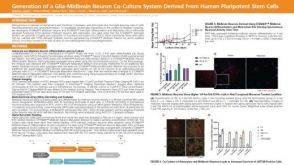 科学海报Generation of a Glia-Midbrain Neuron Co-Culture System Derived From Human Pluripotent Stem Cells
 沪公网安备31010102008431号