BACKGROUND Mechanisms of glioma invasion remain to be fully elucidated. Glioma cells within glioblastoma multiforme (GBM) range from well-differentiated tumor cells to less-differentiated brain tumor-initiating cells (BTICs). The β2-subunit of Na(+)/K(+)-ATPase,called the adhesion molecule on glia (AMOG),is highly expressed in normal glia but is thought to be universally downregulated in GBM. To test our hypothesis that expression of AMOG is heterogeneous in GBM and confers a less invasive phenotype,we compared it between BTICs and differentiated cells from patient-matched GBM and then tested GBM invasion in vitro after AMOG overexpression. METHODS Immunohistochemistry,immunoblotting,and real-time PCR were used to characterize AMOG protein and mRNA expression in tumor samples,BTICs,and differentiated cells. Matrigel invasion assay,scratch assay,and direct cell counting were used for testing in vitro invasion,migration,and proliferation,respectively. RESULTS While AMOG expression is heterogeneous in astrocytomas of grades II-IV,it is lost in most GBM. BTICs express higher levels of AMOG mRNA and protein compared with patient-matched differentiated tumor cells. Overexpression of AMOG decreased GBM cell and BTIC invasion without affecting migration or proliferation. Knockdown of AMOG expression in normal human astrocytes increased invasion. CONCLUSIONS AMOG expression inhibits GBM invasion. Its downregulation increases invasion in glial cells and may also represent an important step in BTIC differentiation. These data provide compelling evidence implicating the role of AMOG in glioma invasion and provide impetus for further investigation.
View Publication
产品类型:
产品号#:
05750
05751
产品名:
NeuroCult™ NS-A 基础培养基(人)
NeuroCult™ NS-A 扩增试剂盒(人)
E. Drent et al. (jul 2019)
Clinical cancer research : an official journal of the American Association for Cancer Research 25 13 4014--4025
Combined CD28 and 4-1BB Costimulation Potentiates Affinity-tuned Chimeric Antigen Receptor-engineered T Cells.
PURPOSE Targeting nonspecific,tumor-associated antigens (TAA) with chimeric antigen receptors (CAR) requires specific attention to restrict possible detrimental on-target/off-tumor effects. A reduced affinity may direct CAR-engineered T (CAR-T) cells to tumor cells expressing high TAA levels while sparing low expressing normal tissues. However,decreasing the affinity of the CAR-target binding may compromise the overall antitumor effects. Here,we demonstrate the prime importance of the type of intracellular signaling on the function of low-affinity CAR-T cells. EXPERIMENTAL DESIGN We used a series of single-chain variable fragments (scFv) with five different affinities targeting the same epitope of the multiple myeloma-associated CD38 antigen. The scFvs were incorporated in three different CAR costimulation designs and we evaluated the antitumor functionality and off-tumor toxicity of the generated CAR-T cells in vitro and in vivo. RESULTS We show that the inferior cytotoxicity and cytokine secretion mediated by CD38 CARs of very low-affinity (Kd {\textless} 1.9 × 10⁻⁶ mol/L) bearing a 4-1BB intracellular domain can be significantly improved when a CD28 costimulatory domain is used. Additional 4-1BB signaling mediated by the coexpression of 4-1BBL provided the CD28-based CD38 CAR-T cells with superior proliferative capacity,preservation of a central memory phenotype,and significantly improved in vivo antitumor function,while preserving their ability to discriminate target antigen density. CONCLUSIONS A combinatorial costimulatory design allows the use of very low-affinity binding domains (Kd {\textless} 1 mumol/L) for the construction of safe but also optimally effective CAR-T cells. Thus,very-low-affinity scFvs empowered by selected costimulatory elements can enhance the clinical potential of TAA-targeting CARs.
View Publication
产品类型:
产品号#:
04534
04544
17856
17856RF
100-1569
产品名:
MethoCult™ H4534 Classic(不含 EPO)
MethoCult™ H4534 Classic(不含 EPO)
EasySep™人CD34正选试剂盒 II
EasySep™人CD34正选试剂盒 II
EasySep™人CD34正选试剂盒 II
S. K. Mittal et al. (jun 2019)
Stem cells translational medicine
Mesenchymal Stromal Cells Modulate Corneal Alloimmunity via Secretion of Hepatocyte Growth Factor.
Mesenchymal stromal cells (MSCs) are multipotent stem cells that participate in tissue repair and posses considerable immunomodulatory potential. MSCs have been shown to promote allograft survival,yet the mechanisms behind this phenomenon have not been fully defined. Here,we investigate the capacity of MSCs to suppress the allogeneic immune response by secreting the pleiotropic molecule hepatocyte growth factor (HGF). Using an in vivo mouse model of corneal transplantation,we report that MSCs promote graft survival in an HGF-dependent manner. Moreover,our data indicate that topically administered recombinant HGF (1) suppresses antigen-presenting cell maturation in draining lymphoid tissue,(2) limits T-helper type-1 cell generation,(3) decreases inflammatory cell infiltration into grafted tissue,and (4) is itself sufficient to promote transplant survival. These findings have potential translational implications for the development of HGF-based therapeutics. Stem Cells Translational Medicine 2019.
View Publication
产品类型:
产品号#:
05513
产品名:
MesenCult™ 扩增试剂盒 (小鼠)
P. Li et al. (mar 2022)
Journal for immunotherapy of cancer 10 3
1$\alpha$,25(OH)2D3 reverses exhaustion and enhances antitumor immunity of human cytotoxic T cells.
BACKGROUND Epidemiological surveys have revealed that low serum vitamin D level was correlated with increased risk of tumors. Dysfunctional T cells in patients with tumor are characterized as exhausted with high levels of immune checkpoint receptors (ICRs). However,whether the reduced level of vitamin D in patients with cancer correlates with cytotoxic T-cell exhaustion is unknown. METHODS Periphery blood samples from 172 patients with non-small cell lung cancer (NSCLC) were prospectively collected. Patients with NSCLC received one course of intravenous docetaxel (75 mg/m2) followed by treatment with or without rocaltrol at a dose of 0.5-2.0 µg/day for total of 3 weeks. We performed phenotypical and functional analysis of T-cell through flow cytometry. Vitamin D receptor (VDR) knockout and overexpression CD8+ and V$\delta$2+ T cells were constructed using Cas9-gRNA targeted and overexpressing approaches to identify 1$\alpha$,25(OH)2D3/VDR-mediated transcription regulation for ICRs or antitumor activity in T cells. RESULTS We show that serum level of vitamin D is negatively correlated with expression of programmed cell death-1 (PD-1),T-cell immunoreceptor with Ig and ITIM domains (TIGIT),and T-cell immunoglobulin and mucin-domain containing-3 (Tim-3),but positively correlated with CD28 expression on CD8+ and V$\gamma$9V$\delta$2+ T cells in patients with NSCLC. 1$\alpha$,25(OH)2D3,the active form of vitamin D,promotes the nuclear translocation of VDR,which binds to the promoter region of Pdcd1,Tim3,and Tigit genes and inhibits their expression. Besides,1$\alpha$,25(OH)2D3 pretreatment also promotes the methylation of CpG island in the promoter region of the Pdcd1 gene and increases H3K27 acetylation at the promoter region of the Cd28 gene,which leads to surface PD-1 downregulation and CD28 upregulation,respectively. We further reveal that VDR-mediated Ca2+ influx enhanced expression of Th1 cytokines via T-cell receptor activation. Functionally,1$\alpha$,25(OH)2D3 pretreated CD8+ T cells or V$\gamma$9V$\delta$2+ T cells showed increased Th1 cytokine production and enhanced antitumor immunity. Finally,oral 1$\alpha$,25(OH)2D3 could also decrease expression of PD-1,Tim-3,TIGIT and increase expression of CD28,resulting in cytokine production (associated with antitumor immunity) by cytotoxic T cells of patients with NSCLC. CONCLUSIONS Our findings uncover the pleiotropic effects of 1$\alpha$,25(OH)2D3 in rescuing the exhausted phenotype of human cytotoxic T cells in patients with tumor and in promoting their antitumor immunity. TRIAL REGISTRATION NUMBER ChiCTR2100051135.
View Publication
产品类型:
产品号#:
19255
19255RF
产品名:
EasySep™人Gamma/Delta T细胞分选试剂盒
RoboSep™ 人Gamma/Delta T细胞分选试剂盒
K. V. Nerum et al. (Apr 2025)
Nature Cell Biology 27 5
α-Ketoglutarate promotes trophectoderm induction and maturation from naive human embryonic stem cells
Development and lineage choice are driven by interconnected transcriptional,epigenetic and metabolic changes. Specific metabolites,such as α-ketoglutarate (αKG),function as signalling molecules affecting the activity of chromatin-modifying enzymes. However,how metabolism coordinates cell-state changes,especially in human pre-implantation development,remains unclear. Here we uncover that inducing naive human embryonic stem cells towards the trophectoderm lineage results in considerable metabolic rewiring,characterized by αKG accumulation. Elevated αKG levels potentiate the capacity of naive embryonic stem cells to specify towards the trophectoderm lineage. Moreover,increased αKG levels promote blastoid polarization and trophectoderm maturation. αKG supplementation does not affect global histone methylation levels; rather,it decreases acetyl-CoA availability,reduces histone acetyltransferase activity and weakens the pluripotency network. We propose that metabolism functions as a positive feedback loop aiding in trophectoderm fate induction and maturation,highlighting that global metabolic rewiring can promote specificity in cell fate decisions through intricate regulation of signalling and chromatin. Subject terms: Embryonic stem cells,Embryology
View Publication
产品类型:
产品号#:
34411
34415
34421
34425
34450
34460
产品名:
AggreWell™ 400 24孔板,1个
AggreWell™400 24孔板,5个
AggreWell™ 400 6孔板,1个
AggreWell™ 400 6孔板,5个
AggreWell™400 24孔板启动套装
AggreWell™ 400 6孔板启动套装
J. Pesic et al. (Jun 2025)
ERJ Open Research 11 3
Inhibition of IL-4Rα reduces CCL26 in bronchial epithelial cells from COPD patients
Anti-interleukin (IL)-4Rα monoclonal antibodies (mAb) improve lung function and decrease the number of exacerbations in patients with COPD type (T)2 inflammation. However,the involvement of early innate immune responses underlying these treatment effects is not well known. We sought to understand the effect and mechanisms of IL-4Rα mAb treatment on bronchial epithelial cells (BECs) from COPD patients under T2 inflammatory conditions with and without rhinoviral infection. Primary BECs from healthy and COPD patients were grown at an air–liquid interface and stimulated with IL-4 or IL-13 cytokines in the presence of IL-4Rα mAb. Cells were infected with human rhinovirus 1B and collected 24 h after infection. Antiviral mediators ( i.e.,interferons (IFNs) and pattern recognition receptors (PRRs)),as well as chemokine and alarmin expression,were measured by reverse transcriptase quantitative PCR and ELISA. Treatment with IL-4Rα mAb (100 nM) inhibited the eotaxin-3 (CCL26) gene after IL-4/IL-13 induction (p<0.05) in COPD BECs. However,no significant changes in rhinovirus-induced IFN-β,PRRs or thymic stromal lymphopoietin gene responses were observed with IL-4/IL-13 stimulation and IL-4Rα mAb treatment. A significant increase in mucin 5AC gene expression was observed with both IL-4 and IL-13 stimulation,but it was not reduced with IL-4Rα treatment in BECs. Inhibition of IL-4Rα reduced CCL26 levels without affecting antiviral immune responses in BECs from COPD patients. Inhibition of IL-4Rα reduced IL-4/IL-13 signalling without broadly suppressing the immune system,which might suggest that inhibition of the IL-4Rα pathways may prevent COPD exacerbations through reduction of eosinophil chemotaxis.
View Publication
产品类型:
产品号#:
05001
05021
05022
产品名:
PneumaCult™-ALI 培养基
PneumaCult™-ALI 培养基含12 mm Transwell®插件
PneumaCult™-ALI 培养基含6.5 mm Transwell®插件
S. Okabe et al. (Jul 2025)
Discover Oncology 16 Suppl 1
Chronic myeloid leukemia (CML) is a myeloproliferative neoplasm characterized by the uncontrolled proliferation of white blood cells. Tyrosine kinase inhibitors (TKIs) are the standard treatment; however,resistance to BCR::ABL1 mutations remains challenging. WEE1,a checkpoint kinase involved in mitosis and DNA repair,is a potential therapeutic target for CML treatment. Ponatinib-resistant CML cells were screened to identify candidates for overcoming drug resistance. The efficacy of the ABL TKI asciminib and the WEE1 inhibitor MK-1775 was evaluated using proliferation and colony formation assays. Public database analysis ( GSE100026 ) assessed WEE1/PKMYT1 expression in CML. In vitro screening identified MK-1775 as a promising therapeutic candidate. WEE1/PKMYT1 expression was elevated in CML cells compared to healthy cells. Both asciminib and MK-1775 inhibited CML cell proliferation after 72 h,with enhanced cytotoxicity when combined. Co-treatment reduced colony formation and induced G2/M arrest,whereas an increase in the sub-G1 cell population indicated apoptosis. Furthermore,the combination treatment disrupted the mitochondrial membrane potential. The combination of asciminib and WEE1 inhibition demonstrated greater efficacy than either drug alone,suggesting a novel therapeutic strategy for treating CML. These findings provide insights into overcoming TKI resistance and highlight a promising approach for future clinical applications. The online version contains supplementary material available at 10.1007/s12672-025-03036-7.
View Publication
产品类型:
产品号#:
04437
04447
产品名:
MethoCult™ Express
MethoCult™ Express
(Nov 2024)
Cell Death & Disease 15 11
PIGK defects induce apoptosis in Purkinje cells and acceleration of neuroectodermal differentiation
Biallelic mutations in PIGK cause GPI biosynthesis defect 22 (GPIBD22),characterized with developmental delay,hypotonia,and cerebellar atrophy. The understanding of the underlying causes is limited due to the lack of suitable disease models. To address this gap,we generated a mouse model with PIGK deficits,specifically in Purkinje cells (Pcp2-cko) and an induced pluripotent stem cell (iPSC) model using the c.87dupT mutant (KI) found in GPIBD22 patients. Pcp2-cko mice demonstrated cerebellar atrophy,ataxia and progressive Purkinje cells loss which were accompanied by increased apoptosis and neuroinflammation. Similarly,KI iPSCs exhibited increased apoptosis and accelerated neural rosette formation,indicating that PIGK defects could impact early neural differentiation that confirmed by the RNA-Seq results of neural progenitor cells (NPCs). The increased apoptosis and accelerated NPC differentiation in KI iPSCs are associated with excessive unfolded protein response (UPR) pathway activation,and can be rescued by UPR pathway inhibitor. Our study reveals potential pathogenic mechanism of GPIBD22 and providing new insights into the therapeutic strategy for GPIBD.
View Publication
产品类型:
产品号#:
100-0276
100-1130
产品名:
mTeSR™ Plus
mTeSR™ Plus
(Feb 2024)
Pathogens and Immunity 8 2
HIV Productively Infects Highly Differentiated and Exhausted CD4+ T Cells During AIDS
Background:Throughout HIV infection,productively infected cells generate billions of viral particles and are thus responsible for body-wide HIV dissemination,but their phenotype during AIDS is unknown. As AIDS is associated with immunological changes,analyzing the phenotype of productively infected cells can help understand HIV production during this terminal stage.Methods:Blood samples from 15 untreated viremic participants (recent infection,n=5; long-term infection,n=5; active opportunistic AIDS-defining disease,n=5) and 5 participants virologically controlled on antiretroviral therapy (ART) enrolled in the Analysis of the Persistence,Reservoir and HIV Latency (APRIL) study (NCT05752318) were analyzed. Cells expressing the capsid protein p24 (p24+ cells) after 18 hours of resting or 24 hours of stimulation (HIV-Flow) revealed productively infected cells from viremic participants or translation-competent reservoir cells from treated participants,respectively.Results:The frequency of productively infected cells tended to be higher during AIDS in comparison with recent and long-term infections (median,340,72,and 32/million CD4+ T cells,respectively) and correlated with the plasma viral load at all stages of infection. Altogether,these cells were more frequently CD4low,HLA-ABClow,CD45RA-,Ki67+,PD-1+,with a non-negligible contribution from pTfh (CXCR5+PD-1+) cells,and were not significantly enriched in HIV coreceptors CCR5 nor CXCR4 expression. The comparison markers expression between stages showed that productively infected cells during AIDS were enriched in memory and exhausted cells. In contrast,the frequencies of infected pTfh were lower during AIDS compared to non-AIDS stages. A UMAP analysis revealed that total CD4+ T cells were grouped in 7 clusters and that productive p24+ cells were skewed to given clusters throughout the course of infection. Overall,the preferential targets of HIV during the latest stages seemed to be more frequently highly differentiated (memory,TTD-like) and exhausted cells and less frequently pTfh-like cells. In contrast,translation-competent reservoir cells were less frequent (5/million CD4+ T cells) and expressed more frequently HLA-ABC and less frequently PD-1.Conclusions:In long-term infection and AIDS,productively infected cells were differentiated and exhausted. This could indicate that cells with these given features are responsible for HIV production and dissemination in an immune dysfunction environment occurring during the last stages of infection.
View Publication
产品类型:
产品号#:
19052
19052RF
产品名:
EasySep™人CD4+ T细胞富集试剂盒
RoboSep™ 人CD4+ T细胞富集试剂盒含滤芯吸头
(Apr 2024)
Frontiers in Immunology 15
The post-septic peripheral myeloid compartment reveals unexpected diversity in myeloid-derived suppressor cells
IntroductionSepsis engenders distinct host immunologic changes that include the expansion of myeloid-derived suppressor cells (MDSCs). These cells play a physiologic role in tempering acute inflammatory responses but can persist in patients who develop chronic critical illness.MethodsCellular Indexing of Transcriptomes and Epitopes by Sequencing and transcriptomic analysis are used to describe MDSC subpopulations based on differential gene expression,RNA velocities,and biologic process clustering.ResultsWe identify a unique lineage and differentiation pathway for MDSCs after sepsis and describe a novel MDSC subpopulation. Additionally,we report that the heterogeneous response of the myeloid compartment of blood to sepsis is dependent on clinical outcome.DiscussionThe origins and lineage of these MDSC subpopulations were previously assumed to be discrete and unidirectional; however,these cells exhibit a dynamic phenotype with considerable plasticity.
View Publication
van den Akker E et al. (SEP 2010)
Haematologica 95 9 1594--8
The majority of the in vitro erythroid expansion potential resides in CD34(-) cells, outweighing the contribution of CD34(+) cells and significantly increasing the erythroblast yield from peripheral blood samples.
The study of human erythropoiesis in health and disease requires a robust culture system that consistently and reliably generates large numbers of immature erythroblasts that can be induced to differentiate synchronously. We describe a culture method modified from Leberbauer et al. (2005) and obtain a homogenous population of erythroblasts from peripheral blood mononuclear cells (PBMC) without prior purification of CD34(+) cells. This pure population of immature erythroblasts can be expanded to obtain 4x10(8) erythroblasts from 1x10(8) PBMC after 13-14 days in culture. Upon synchronized differentiation,high levels of enucleation (80-90%) and low levels of cell death (textless10%) are achieved. We compared the yield of erythroblasts obtained from PBMC,CD34(+) cells or PBMC depleted of CD34(+) cells and show that CD34(-) cells represent the most significant early erythroid progenitor population. This culture system may be particularly useful for investigating the pathophysiology of anemic patients where only small blood volumes are available.
View Publication


 EasySep™小鼠TIL(CD45)正选试剂盒





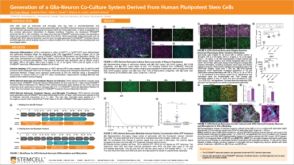 科学海报Generation of a Glia-Neuron Co-Culture System Derived From Human Pluripotent Stem Cells
 沪公网安备31010102008431号