Diederichs S and Tuan RS (JUL 2014)
Stem cells and development 23 14 1--53
Functional comparison of human-induced pluripotent stem cell-derived mesenchymal cells and bone marrow-derived mesenchymal stromal cells from the same donor.
Mesenchymal stem cells (MSCs) have a high potential for therapeutic efficacy in treating diverse musculoskeletal injuries and cardiovascular diseases,and for ameliorating the severity of graft-versus-host and autoimmune diseases. While most of these clinical applications require substantial cell quantities,the number of MSCs that can be obtained initially from a single donor is limited. Reports on the derivation of MSC-like cells from pluripotent stem cells (PSCs) are,thus,of interest,as the infinite proliferative capacity of PSCs opens the possibility to generate large amounts of uniform batches of MSCs. However,characterization of such MSC-like cells is currently inadequate,especially with regard to the question of whether these cells are equivalent or identical to MSCs. In this study,we have derived MSC-like cells [induced PSC-derived MSC-like progenitor cells (iMPCs)] using four different methodologies from a newly established induced PSC line reprogrammed from human bone marrow stromal cells (BMSCs),and compared the iMPCs directly with the originating parental BMSCs. The iMPCs exhibited typical MSC/fibroblastic morphology and MSC-typical surface marker profile,and they were capable of differentiation in vitro along the osteogenic,chondrogenic,and adipogenic lineages. However,compared with the parental BMSCs,iMPCs displayed a unique expression pattern of mesenchymal and pluripotency genes and were less responsive to traditional BMSC differentiation protocols. We,therefore,conclude that iMPCs generated from PSCs via spontaneous differentiation represent a distinct population of cells which exhibit MSC-like characteristics.
View Publication
Metnase mediates chromosome decatenation in acute leukemia cells.
After DNA replication,sister chromatids must be untangled,or decatenated,before mitosis so that chromatids do not tear during anaphase. Topoisomerase IIalpha (Topo IIalpha) is the major decatenating enzyme. Topo IIalpha inhibitors prevent decatenation,causing cells to arrest during mitosis. Here we report that acute myeloid leukemia cells fail to arrest at the mitotic decatenation checkpoint,and their progression through this checkpoint is regulated by the DNA repair component Metnase (also termed SETMAR). Metnase contains a SET histone methylase and transposase nuclease domain,and is a component of the nonhomologous end-joining DNA double-strand break repair pathway. Metnase interacts with Topo IIalpha and enhances its decatenation activity. Here we show that multiple types of acute leukemia cells have an attenuated mitotic arrest when decatenation is inhibited and that in an acute myeloid leukemia (AML) cell line this is mediated by Metnase. Of further importance,Metnase permits continued proliferation of these AML cells even in the presence of the clinical Topo IIalpha inhibitor VP-16. In vitro,purified Metnase prevents VP-16 inhibition of Topo IIalpha decatenation of tangled DNA. Thus,Metnase expression levels may predict AML resistance to Topo IIalpha inhibitors,and Metnase is a potential therapeutic target for small molecule interference.
View Publication
产品类型:
产品号#:
02690
09850
产品名:
StemSpan™ CC100
Zhong B et al. (MAY 2011)
Stem cells and development 20 5 795--807
Efficient generation of nonhuman primate induced pluripotent stem cells.
Induced pluripotent stem (iPS) cells have great potential for regenerative medicine and gene therapy. Thus far,iPS cells have typically been generated using integrating viral vectors expressing various reprogramming transcription factors; nonintegrating methods have been less effective and efficient. Because there is a significant risk of malignant transformation and cancer involved with the use of iPS cells,careful evaluation of transplanted iPS cells will be necessary in small and large animal studies before clinical application. Here,we have generated and characterized nonhuman primate iPS cells with the goal of evaluating iPS cell transplantation in a clinically relevant large animal model. We developed stable Phoenix-RD114-based packaging cell lines that produce OCT4,SOX2,c-MYC,and KLF4 (OSCK) expressing gammaretroviral vectors. Using these vectors in combination with small molecules,we were able to efficiently and reproducibly generate nonhuman primate iPS cells from pigtailed macaques (Macaca nemestrina). The established nonhuman primate iPS cells exhibited pluripotency and extensive self-renewal capacity. The facile and reproducible generation of nonhuman primate iPS cells using defined producer cells as a source of individual reprogramming factors should provide an important resource to optimize and evaluate iPS cell technology for studies involving stem cell biology and regenerative medicine.
View Publication
产品类型:
产品号#:
05860
05880
05850
05857
05870
05875
27100
27150
85850
85857
85870
85875
产品名:
35 mm培养皿
35 mm培养皿
mTeSR™1
mTeSR™1
Kitsos CM et al. (SEP 2005)
The Journal of biological chemistry 280 39 33101--8
Calmodulin-dependent protein kinase IV regulates hematopoietic stem cell maintenance.
The hematopoietic stem cell (HSC) gives rise to all mature,terminally differentiated cells of the blood. Here we show that calmodulin-dependent protein kinase IV (CaMKIV) is present in c-Kit+ ScaI+ Lin(-/low) hematopoietic progenitor cells (KLS cells) and that its absence results in hematopoietic failure,characterized by a diminished KLS cell population and by an inability of these cells to reconstitute blood cells upon serial transplantation. KLS cell failure in the absence of CaMKIV is correlated with increased apoptosis and proliferation of these cells in vivo and in vitro. In turn,these cell biological defects are correlated with decreases in CREB-serine 133 phosphorylation as well as in CREB-binding protein (CBP) and Bcl-2 levels. Re-expression of CaMKIV in Camk4-/- KLS cells results in the rescue of the proliferation defects in vitro as well as in the restoration of CBP and Bcl-2 to wild type levels. These studies show that CaMKIV is a regulator of HSC homeostasis and suggest that its effects may be in part mediated via regulation of CBP and Bcl-2.
View Publication
产品类型:
产品号#:
03434
03444
产品名:
MethoCult™ GF M3434
MethoCult™ GF M3434
Doyonnas R et al. (SEP 2004)
Proceedings of the National Academy of Sciences of the United States of America 101 37 13507--12
Hematopoietic contribution to skeletal muscle regeneration by myelomonocytic precursors.
Adult bone marrow-derived cells can participate in muscle regeneration after bone marrow transplantation. In recent studies a single hematopoietic stem cell (HSC) was shown to give rise to cells that not only reconstituted all of the lineages of the blood,but also contributed to mature muscle fibers. However,the relevant HSC derivative with this potential has not yet been definitively identified. Here we use fluorescence-activated cell sorter-based protocols to test distinct hematopoietic fractions and show that only fractions containing c-kit(+) immature myelomonocytic precursors are capable of contributing to muscle fibers after i.m. injection. Although these cells belong to the myeloid lineage,they do not include mature CD11b(+) myelomonocytic cells,such as macrophages. Of the four sources of mature macrophages tested that were derived either from monocytic culture,bone marrow,peripheral blood after granulocyte colony-stimulating factor mobilization,or injured muscle,none contributed to muscle. In addition,after transplantation of bone marrow isolated from CD11b-Cre-transgenic mice into the Cre-reporter strain (Z/EG),no GFP myofibers were detected,demonstrating that macrophages expressing CD11b do not fuse with myofibers. Irrespective of the underlying mechanisms,these data suggest that the HSC derivatives that integrate into regenerating muscle fibers exist in the pool of hematopoietic cells known as myelomonocytic progenitors.
View Publication
产品类型:
产品号#:
03434
03444
产品名:
MethoCult™ GF M3434
MethoCult™ GF M3434
Krummey SM et al. (MAR 2016)
Journal of Immunology 196 6 2838--46
Low-Affinity Memory CD8+ T Cells Mediate Robust Heterologous Immunity.
Heterologous immunity is recognized as a significant barrier to transplant tolerance. Whereas it has been established that pathogen-elicited memory T cells can have high or low affinity for cross-reactive allogeneic peptide-MHC,the role of TCR affinity during heterologous immunity has not been explored. We established a model with which to investigate the impact of TCR-priming affinity on memory T cell populations following a graft rechallenge. In contrast to high-affinity priming,low-affinity priming elicited fully differentiated memory T cells with a CD45RB(hi) status. High CD45RB status enabled robust secondary responses in vivo,as demonstrated by faster graft rejection kinetics and greater proliferative responses. CD45RB blockade prolonged graft survival in low affinity-primed mice,but not in high affinity-primed mice. Mechanistically,low affinity-primed memory CD8(+) T cells produced more IL-2 and significantly upregulated IL-2Rα expression during rechallenge. We found that CD45RB(hi) status was also a stable marker of priming affinity within polyclonal CD8(+) T cell populations. Following high-affinity rechallenge,low affinity-primed CD45RB(hi) cells became CD45RB(lo),demonstrating that CD45RB status acts as an affinity-based differentiation switch on CD8(+) T cells. Thus,these data establish a novel mechanism by which CD45 isoforms tune low affinity-primed memory CD8(+) T cells to become potent secondary effectors following heterologous rechallenge. These findings have direct implications for allogeneic heterologous immunity by demonstrating that despite a lower precursor frequency,low-affinity priming is sufficient to generate memory cells that mediate potent secondary responses against a cross-reactive graft challenge.
View Publication
产品类型:
产品号#:
19853
19853RF
产品名:
EasySep™小鼠CD8+ T细胞分选试剂盒
RoboSep™ 小鼠CD8+ T细胞分选试剂盒
(Jun 2025)
BMJ Oncology 4 1
Osteoclast-expanded supercharged NK cells perform superior antitumour effector functions
AbstractObjectiveNatural killer (NK) cells are the largest innate lymphocyte subset with potent antitumour and antiviral functions. However,clinical utilisation of human NK cells is hampered due to a lack of reliable methods to augment their antitumour potential. We demonstrated technology in which human NK cells were cocultured with osteoclasts in the presence of probiotic bacteria. This approach significantly augmented the antitumour cytotoxicity and polyfunctionality of human NK cells,resulting in the generation of supercharged NK (sNK) cells.Methods and analysisWe explored the proteomic,transcriptomic and functional characterisation of sNK cells using cell imaging,flow cytometric analysis,51-chromium release cytotoxicity assay,ELISA,ELIspot,IsoPLexis single-cell secretome analysis,proteomic analysis,RNA analysis,western blot and enzyme kinetics.ResultsWe found that sNK cells were less susceptible to split anergy and tumour-induced exhaustion. Proteomic analyses revealed that sNK cells significantly increased their cell motility and proliferation. Single-cell transcriptomes uncovered sNK cells undertaking a unique differentiation trajectory and turning on STAT1,JUN,BHLHE40,ELF1,MAX and MYC regulons essential for augmenting antitumour effector functions and proliferation,respectively. Both proteomic and single-cell transcriptomes revealed that an increase in Cathepsin C helped to augment the quantity and function of Granzyme B.ConclusionsThese results support that this unique method produces potent NK cells for clinical utilisation and delineate the molecular mechanisms associated with this process.
View Publication
产品类型:
产品号#:
19059
19055
19055RF
19059RF
产品名:
EasySep™人单核细胞富集试剂盒
EasySep™人NK细胞富集试剂盒
RoboSep™ 人NK细胞富集试剂盒含滤芯吸头
RoboSep™ 人单核细胞富集试剂盒含滤芯吸头
P. Lisowski et al. (Aug 2024)
Nature Communications 15
Mutant huntingtin impairs neurodevelopment in human brain organoids through CHCHD2-mediated neurometabolic failure
Expansion of the glutamine tract (poly-Q) in the protein huntingtin (HTT) causes the neurodegenerative disorder Huntington’s disease (HD). Emerging evidence suggests that mutant HTT (mHTT) disrupts brain development. To gain mechanistic insights into the neurodevelopmental impact of human mHTT,we engineered male induced pluripotent stem cells to introduce a biallelic or monoallelic mutant 70Q expansion or to remove the poly-Q tract of HTT. The introduction of a 70Q mutation caused aberrant development of cerebral organoids with loss of neural progenitor organization. The early neurodevelopmental signature of mHTT highlighted the dysregulation of the protein coiled-coil-helix-coiled-coil-helix domain containing 2 (CHCHD2),a transcription factor involved in mitochondrial integrated stress response. CHCHD2 repression was associated with abnormal mitochondrial morpho-dynamics that was reverted upon overexpression of CHCHD2. Removing the poly-Q tract from HTT normalized CHCHD2 levels and corrected key mitochondrial defects. Hence,mHTT-mediated disruption of human neurodevelopment is paralleled by aberrant neurometabolic programming mediated by dysregulation of CHCHD2,which could then serve as an early interventional target for HD. Subject terms: Huntington's disease,Mechanisms of disease,Stem cells
View Publication
Sundberg M et al. (AUG 2013)
Stem Cells 31 8 1548--1562
Improved cell therapy protocols for Parkinson's disease based on differentiation efficiency and safety of hESC-, hiPSC-, and non-human primate iPSC-derived dopaminergic neurons
The main motor symptoms of Parkinson's disease are due to the loss of dopaminergic (DA) neurons in the ventral midbrain (VM). For the future treatment of Parkinson's disease with cell transplantation it is important to develop efficient differentiation methods for production of human iPSCs and hESCs-derived midbrain-type DA neurons. Here we describe an efficient differentiation and sorting strategy for DA neurons from both human ES/iPS cells and non-human primate iPSCs. The use of non-human primate iPSCs for neuronal differentiation and autologous transplantation is important for preclinical evaluation of safety and efficacy of stem cell-derived DA neurons. The aim of this study was to improve the safety of human- and non-human primate iPSC (PiPSC)-derived DA neurons. According to our results,NCAM(+) /CD29(low) sorting enriched VM DA neurons from pluripotent stem cell-derived neural cell populations. NCAM(+) /CD29(low) DA neurons were positive for FOXA2/TH and EN1/TH and this cell population had increased expression levels of FOXA2,LMX1A,TH,GIRK2,PITX3,EN1,NURR1 mRNA compared to unsorted neural cell populations. PiPSC-derived NCAM(+) /CD29(low) DA neurons were able to restore motor function of 6-hydroxydopamine (6-OHDA) lesioned rats 16 weeks after transplantation. The transplanted sorted cells also integrated in the rodent brain tissue,with robust TH+/hNCAM+ neuritic innervation of the host striatum. One year after autologous transplantation,the primate iPSC-derived neural cells survived in the striatum of one primate without any immunosuppression. These neural cell grafts contained FOXA2/TH-positive neurons in the graft site. This is an important proof of concept for the feasibility and safety of iPSC-derived cell transplantation therapies in the future.
View Publication
NANOG Is a Direct Target of TGF$\$/Activin-Mediated SMAD Signaling in Human ESCs
Self-renewal of human embryonic stem cells (ESCs) is promoted by FGF and TGFbeta/Activin signaling,and differentiation is promoted by BMP signaling,but how these signals regulate genes critical to the maintenance of pluripotency has been unclear. Using a defined medium,we show here that both TGFbeta and FGF signals synergize to inhibit BMP signaling; sustain expression of pluripotency-associated genes such as NANOG,OCT4,and SOX2; and promote long-term undifferentiated proliferation of human ESCs. We also show that both TGFbeta- and BMP-responsive SMADs can bind with the NANOG proximal promoter. NANOG promoter activity is enhanced by TGFbeta/Activin and FGF signaling and is decreased by BMP signaling. Mutation of putative SMAD binding elements reduces NANOG promoter activity to basal levels and makes NANOG unresponsive to BMP and TGFbeta signaling. These results suggest that direct binding of TGFbeta/Activin-responsive SMADs to the NANOG promoter plays an essential role in sustaining human ESC self-renewal.
View Publication


 EasySep™小鼠TIL(CD45)正选试剂盒





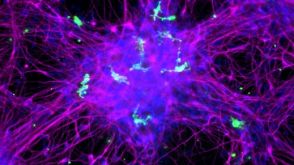 实验方案How to Co-Culture Human Pluripotent Stem Cell (hPSC)-Derived Forebrain Neurons and Microglia

 沪公网安备31010102008431号