Yoshida T et al. (APR 2006)
Nature immunology 7 4 382--91
Early hematopoietic lineage restrictions directed by Ikaros.
Ikaros is expressed in early hematopoietic progenitors and is required for lymphoid differentiation. In the absence of Ikaros,there is a lack of markers defining fate restriction along lympho-myeloid pathways,but it is unclear whether formation of specific progenitors or expression of their markers is affected. Here we use a reporter based on Ikaros regulatory elements to separate early progenitors in wild-type and Ikaros-null mice. We found previously undetected Ikaros-null lympho-myeloid progenitors lacking the receptor tyrosine kinase Flt3 that were capable of myeloid but not lymphoid differentiation. In contrast,lack of Ikaros in the common myeloid progenitor resulted in increased formation of erythro-megakaryocytes at the expense of myeloid progenitors. Using this approach,we identify previously unknown pivotal functions for Ikaros in distinct fate 'decisions' in the early hematopoietic hierarchy.
View Publication
产品类型:
产品号#:
03334
产品名:
MethoCult™ M3334
Wilson KD et al. (JUN 2009)
Stem cells and development 18 5 749--58
MicroRNA profiling of human-induced pluripotent stem cells.
MicroRNAs (miRNAs) are a newly discovered endogenous class of small noncoding RNAs that play important posttranscriptional regulatory roles by targeting mRNAs for cleavage or translational repression. Accumulating evidence now supports the importance of miRNAs for human embryonic stem cell (hESC) self-renewal,pluripotency,and differentiation. However,with respect to induced pluripotent stem cells (iPSC),in which embryonic-like cells are reprogrammed from adult cells using defined factors,the role of miRNAs during reprogramming has not been well-characterized. Determining the miRNAs that are associated with reprogramming should yield significant insight into the specific miRNA expression patterns that are required for pluripotency. To address this lack of knowledge,we use miRNA microarrays to compare the microRNA-omes" of human iPSCs�
View Publication
产品类型:
产品号#:
05850
05857
05870
05875
85850
85857
85870
85875
产品名:
mTeSR™1
mTeSR™1
Agosti V et al. (MAR 2004)
The Journal of experimental medicine 199 6 867--78
Critical role for Kit-mediated Src kinase but not PI 3-kinase signaling in pro T and pro B cell development.
The Kit receptor functions in hematopoiesis,lymphocyte development,gastrointestinal tract motility,melanogenesis,and gametogenesis. To investigate the roles of different Kit signaling pathways in vivo,we have generated knock-in mice in which docking sites for PI 3-kinase (KitY719) or Src kinase (KitY567) have been mutated. Whereas steady-state hematopoiesis is normal in KitY719F/Y719F and KitY567F/Y567F mice,lymphopoiesis is affected differentially. The KitY567F mutation,but not the KitY719F mutation,blocks pro T cell and pro B cell development in an age-dependent manner. Thus,the Src family kinase,but not the PI 3-kinase docking site in Kit,mediates a critical signal for lymphocyte development. In agreement with these results,treatment of normal mice with the Kit tyrosine kinase inhibitor imatinib (Gleevec) leads to deficits in pro T and pro B cell development,similar to those seen in KitY567F/Y567F and KitW/W mice. The two mutations do not affect embryonic gametogenesis but the KitY719F mutation blocks spermatogenesis at the spermatogonial stages and in contrast the KitY567F mutation does not affect this process. Therefore,Kit-mediated PI 3-kinase signaling and Src kinase family signaling is highly specific for different cellular contexts in vivo.
View Publication
产品类型:
产品号#:
09600
09650
产品名:
StemSpan™ SFEM
StemSpan™ SFEM
Y. Kang et al. ( 2022)
Stem cell investigation 9 8
An autologous humanized patient-derived xenograft (PDX) model for evaluation of nivolumab immunotherapy in renal cell cancer: a case report.
BACKGROUND There is an unmet need for developing faithful animal models for preclinical evaluation of immunotherapy. The current approach to generate preclinical models for immunotherapy evaluation has been to transplant CD34+ cells from umbilical cord blood into immune-deficient mice followed by implantation of patient derived tumor cells. However,current models are associated with high tumor rejection rate secondary to the allograft vs. tumor response from human leukocyte antigen (HLA) mismatches. We herein report the first development of a novel,humanized patient-derived xenograft (PDX) model using autologous CD34+ cells from bone marrow aspirate obtained from a patient with metastatic clear cell renal cell carcinoma (mRCC) from whom a PDX had been developed. CASE DESCRIPTION This is a 68-year-old Caucasian man diagnosed with mRCC with metastasis to the liver in 2014. He was treated with sunitinib +/- AGS-003 and underwent a cytoreductive right nephrectomy,left adrenalectomy and partial liver resection. PDX was generated using resected nephrectomy specimen. After surgery,patient received multiple lines of standard of care therapy including sunitinib,axitinib,bevacizumab,everolimus and cabozantinib. While progressing on cabozantinib,he was treated with nivolumab. Seven years after initiation of nivolumab,and 4 years after stopping systemic therapy,he remains in complete remission. To generate autologous PDX model,bone marrow aspirate was performed and CD34+ hematopoietic stem/progenitor cells (HSPCs) were isolated and injected into 150 rad irradiated non-obese diabetic scid gamma null (NSG) mice. At 11 weeks post-transplant,the matched patient PDX was injected subcutaneously into the humanized mice and the mice were treated with nivolumab. CONCLUSIONS Our case represents successful therapy of nivolumab in mRCC. Furthermore,HPSCs obtained from a single bone marrow aspirate were able to reconstitute an immune system in the mice that allowed nivolumab to inhibit the tumor growth of PDX and recapitulated the durable remission observed in the patient with nivolumab. We observed the reconstitution of human T cells,B cells and natural killer (NK) cells and unlike the humanized mouse model using cord blood,our model system eliminates the tumor rejection from mis-matched HLA. Our autologous humanized renal cell carcinoma (RCC) PDX model provides an effective tool to study immunotherapy in a preclinical setting.
View Publication
产品类型:
产品号#:
15021
15024
17856
15064
15061
17856RF
100-1569
产品名:
RosetteSep™人T细胞富集抗体混合物
RosetteSep™人B细胞富集抗体混合物
EasySep™人CD34正选试剂盒 II
RosetteSep™人B细胞富集抗体混合物
RosetteSep™人T细胞富集抗体混合物
EasySep™人CD34正选试剂盒 II
EasySep™人CD34正选试剂盒 II
C. M. Card et al. (feb 2022)
AIDS research and human retroviruses 38 2 111--126
Endothelial Cells Promote Productive HIV Infection of Resting CD4+ T Cells by an Integrin-Mediated Cell Adhesion-Dependent Mechanism.
Resting CD4+ T cells are primary targets of early HIV infection events in vivo,but do not readily support HIV replication in vitro. This barrier to infection can be overcome by exposing resting CD4+ T cells to endothelial cells (ECs). ECs line blood vessels and direct T cell trafficking into inflamed tissues. Cell trafficking pathways have been shown to have overlapping roles in facilitating HIV replication,but their relevance to EC-mediated enhancement of HIV susceptibility in resting CD4+ T cells has not previously been examined. We characterized the phenotype of primary human resting CD4+ T cells that became productively infected with HIV when cocultured with primary human blood and lymphatic ECs. The infected CD4+ T cells were primarily central memory cells enriched for high expression of the integrins LFA-1 and VLA-4. ICAM-1 and VCAM-1,the cognate ligands for LFA-1 and VLA-4,respectively,were expressed by the ECs in the coculture. Blocking LFA-1 and VLA-4 on resting CD4+ T cells inhibited infection by 65.4%-96.9%,indicating that engagement of these integrins facilitates EC-mediated enhancement of productive HIV infection in resting CD4+ T cells. The demonstration that ECs influence cellular HIV susceptibility of resting memory CD4+ T cells through cell trafficking pathways engaged during the transmigration of T cells into tissues highlights the physiological relevance of these findings for HIV acquisition and opportunities for intervention.
View Publication
Human iPSC-derived cerebral organoids reveal oxytocin-mediated protection against amyloid-? pathology
IntroductionNeuroinflammation is a key contributor to the pathogenesis of Alzheimer's disease (AD),and impaired clearance of amyloid-? (A?) by microglia is closely associated with disease progression. Oxytocin (OXT),a hypothalamic neuropeptide,has recently been reported to exert anti-inflammatory effects on microglia; however,its therapeutic potential in the human brain remains unclear.MethodsWe generated human cerebral organoids (hCOs) from induced pluripotent stem cells (iPSCs) to model early AD-like pathology. A? toxicity was induced by applying 3 ?M A?1–42 for 48 h. The protective effects of OXT were evaluated through immunohistochemistry,RT-qPCR,calcium imaging,and multielectrode array (MEA) recordings. The involvement of microglia in A? clearance was assessed by immunostaining and gene expression analysis of TREM2.ResultsA? exposure led to significant deposition of A? in the outer layers of hCOs,accompanied by suppressed neural activity and increased apoptotic signaling. Pretreatment with OXT attenuated A? deposition and caspase-3-mediated apoptosis in a concentration-dependent manner. OXT also restored calcium oscillations and neuronal network activity as measured by MEA. Notably,OXT enhanced the recruitment of microglia to A? deposits and upregulated the expression of TREM2,a key regulator of microglial phagocytosis. Co-expression of oxytocin receptors (OXTR) on Iba1-positive microglia suggests that OXT directly modulates microglial activation and A? clearance.ConclusionsOXT has neuroprotective effects on human cortical organoids by preserving their neuronal activity and promoting microglial-mediated A? clearance. This study provides novel insights into the therapeutic potential of OXT for targeting neuroinflammation and A? pathology in patients with AD. Graphical abstractImage 1 Highlights•Oxytocin reduces A? deposition and apoptosis in human cerebral organoids.•A? impairs neuronal activity,rescued by oxytocin preconditioning.•Oxytocin enhances microglial phagocytosis via OXTR and TREM2 upregulation.•Human iPSC-derived organoids model early A? pathology and oxytocin response.
View Publication
产品类型:
产品号#:
100-0483
100-0484
100-0276
100-1130
产品名:
Hausser Scientificᵀᴹ 明线血球计数板
ReLeSR™
mTeSR™ Plus
mTeSR™ Plus
Hinrichs CS et al. (OCT 2009)
Proceedings of the National Academy of Sciences of the United States of America 106 41 17469--74
Adoptively transferred effector cells derived from naive rather than central memory CD8+ T cells mediate superior antitumor immunity.
Effector cells derived from central memory CD8(+) T cells were reported to engraft and survive better than those derived from effector memory populations,suggesting that they are superior for use in adoptive immunotherapy studies. However,previous studies did not evaluate the relative efficacy of effector cells derived from naïve T cells. We sought to investigate the efficacy of tumor-specific effector cells derived from naïve or central memory T-cell subsets using transgenic or retrovirally transduced T cells engineered to express a tumor-specific T-cell receptor. We found that naïve,rather than central memory T cells,gave rise to an effector population that mediated superior antitumor immunity upon adoptive transfer. Effector cells developed from naïve T cells lost the expression of CD62L more rapidly than those derived from central memory T cells,but did not acquire the expression of KLRG-1,a marker for terminal differentiation and replicative senescence. Consistent with this KLRG-1(-) phenotype,naïve-derived cells were capable of a greater proliferative burst and had enhanced cytokine production after adoptive transfer. These results indicate that insertion of genes that confer antitumor specificity into naïve rather than central memory CD8(+) T cells may allow superior efficacy upon adoptive transfer.
View Publication
产品类型:
产品号#:
19753
19753RF
产品名:
Carella C et al. (FEB 2006)
Blood 107 3 1124--32
The ETS factor TEL2 is a hematopoietic oncoprotein.
TEL2/ETV7 is highly homologous to the ETS transcription factor TEL/ETV6,a frequent target of chromosome translocation in human leukemia. Although both proteins are transcriptional inhibitors binding similar DNA recognition sequences,they have opposite biologic effects: TEL inhibits proliferation while TEL2 promotes it. In addition,forced expression of TEL2 but not TEL blocks vitamin D3-induced differentiation of U937 and HL60 myeloid cells. TEL2 is expressed in the hematopoietic system,and its expression is up-regulated in bone marrow samples of some patients with leukemia,suggesting a role in oncogenesis. Recently we also showed that TEL2 cooperates with Myc in B lymphomagenesis in mice. Here we show that forced expression of TEL2 alone in mouse bone marrow causes a myeloproliferative disease with a long latency period but with high penetrance. This suggested that secondary mutations are necessary for disease development. Treating mice receiving transplants with TEL2-expressing bone marrow with the chemical carcinogen N-ethyl-N-nitrosourea (ENU) resulted in significantly accelerated disease onset. Although the mice developed a GFP-positive myeloid disease with 30% of the mice showing elevated white blood counts,they all died of T-cell lymphoma,which was GFP negative. Together our data identify TEL2 as a bona fide oncogene,but leukemic transformation is dependent on secondary mutations.
View Publication
产品类型:
产品号#:
03434
03444
05350
产品名:
MethoCult™ GF M3434
MethoCult™ GF M3434
J. L. H. Ha et al. (Nov 2025)
eBioMedicine 122 4
Loss of function of Adducin 3 (ADD3) causes abnormal development and impaired barrier function of human and mouse bile duct cells resulting in increased incidence and severity of Biliary Atresia
Background: Biliary atresia (BA) is the most prevalent serious neonatal biliary obstructive disorder and is a complex multifactorial liver disorder. Genome-wide association studies have identified Adducin 3 (ADD3) as a BA susceptibility gene but the mechanisms involved in disease causation and progression remain unclear. Methods: ADD3 knockout human pluripotent stem cells were differentiated into cholangiocyte organoids to assess the effect of ADD3 deletion on biliary development in vitro. Add3 deletion in rhesus rotavirus (RRV)-induced experimental BA mice were employed as the in vivo model to address the impact of reduced Add3 expression on BA pathogenesis. Findings: ADD3 knockout organoids displayed defective cholangiocyte differentiation,failure in the recruitment of βII-spectrin to the cell membrane,abnormal primary cilia development,reduced expression of tight junction proteins,lower transepithelial electrical resistance (TEER) and increased paracellular permeability. Statistical significantly reduced tight junction (TJ) proteins expression and lower TEER in Add3+/− and Add3−/− liver tissue-derived cholangiocytes were observed. Reduced number of TJs and enlarged paracellular spaces without any detectable TJ were detected in the intra-hepatic bile ducts of Add3+/− and Add3−/− livers. A statistical significantly higher incidence and a more advanced form of BA with statistical significantly higher serum bilirubin,liver necrosis and fibrosis,and accumulation of macrophages and activated hepatic stellate cells were observed in Add3 knockout BA mice as compared to wild-type BA mice. Interpretation: Dysregulated ADD3 expression caused an abnormal development and impaired barrier function of cholangiocytes,and the resultant increase in bile duct permeability rendered the foetus/neonate susceptible to a more severe injury response to an external insult. The findings support the hypothetical pathogenic model of genetic susceptibility genes being involved in hepatobiliary development/structure,and the perturbed embryogenesis of the biliary tree and its disrupt integrity increase the host susceptibility to biliary injury and BA.
View Publication
产品类型:
产品号#:
02690
产品名:
StemSpan™ CC100
F. Ni et al. (apr 2019)
Cell stem cell 24 4 608--620.e6
Ptpn21 Controls Hematopoietic Stem Cell Homeostasis and Biomechanics.
Hematopoietic stem cell (HSC) quiescence is a tightly regulated process crucial for hematopoietic regeneration,which requires a healthy and supportive microenvironmental niche within the bone marrow (BM). Here,we show that deletion of Ptpn21,a protein tyrosine phosphatase highly expressed in HSCs,induces stem cell egress from the niche due to impaired retention within the BM. Ptpn21-/- HSCs exhibit enhanced mobility,decreased quiescence,increased apoptosis,and defective reconstitution capacity. Ptpn21 deletion also decreased HSC stiffness and increased physical deformability,in part by dephosphorylating Spetin1 (Tyr246),a poorly described component of the cytoskeleton. Elevated phosphorylation of Spetin1 in Ptpn21-/- cells impaired cytoskeletal remodeling,contributed to cortical instability,and decreased cell rigidity. Collectively,these findings show that Ptpn21 maintains cellular mechanics,which is correlated with its important functions in HSC niche retention and preservation of hematopoietic regeneration capacity.
View Publication
产品类型:
产品号#:
09600
09650
产品名:
StemSpan™ SFEM
StemSpan™ SFEM
Ruiz-Herguido C et al. (JUL 2012)
The Journal of experimental medicine 209 8 1457--68
Hematopoietic stem cell development requires transient Wnt/β-catenin activity.
Understanding how hematopoietic stem cells (HSCs) are generated and the signals that control this process is a crucial issue for regenerative medicine applications that require in vitro production of HSC. HSCs emerge during embryonic life from an endothelial-like cell population that resides in the aorta-gonad-mesonephros (AGM) region. We show here that β-catenin is nuclear and active in few endothelial nonhematopoietic cells closely associated with the emerging hematopoietic clusters of the embryonic aorta during mouse development. Importantly,Wnt/β-catenin activity is transiently required in the AGM to generate long-term HSCs and to produce hematopoietic cells in vitro from AGM endothelial precursors. Genetic deletion of β-catenin from the embryonic endothelium stage (using VE-cadherin-Cre recombinase),but not from embryonic hematopoietic cells (using Vav1-Cre),precludes progression of mutant cells toward the hematopoietic lineage; however,these mutant cells still contribute to the adult endothelium. Together,those findings indicate that Wnt/β-catenin activity is needed for the emergence but not the maintenance of HSCs in mouse embryos.
View Publication


 EasySep™小鼠TIL(CD45)正选试剂盒





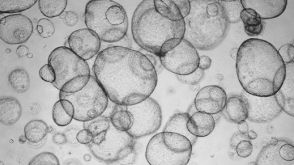 实验方案How to Perform Albumin Detection Assays in Human Hepatic Organoids
 沪公网安备31010102008431号