Cell Seeding Strategy Influences Metabolism and Differentiation Potency of Human Induced Pluripotent Stem Cells Into Pancreatic Progenitors
ABSTRACTHuman induced pluripotent stem cells (iPSCs) are an invaluable endless cell source for generating various therapeutic cells and tissues. However,their differentiation into specific cell lineages,such as definitive endoderm (DE) and pancreatic progenitor (PP),often suffers from poor reproducibility,due partially to their pluripotency. In this work,we investigated the impact of iPSC confluency during cell self?renewal and seeding density on cell metabolic activity,glycolysis to oxidative phosphorylation shift,and differentiation potential toward DE and PP lineages. Our findings demonstrated that cell seeding strategy influences cellular metabolic activity and the robustness of iPSC differentiation. iPSCs maintained at higher seeding density exhibited lower initial oxygen consumption rate (OCR) and metabolic activity. There is an optimal seeding density to ensure sufficient oxygen consumption during differentiation and to yield high expression of SOX17 in the DE lineage and high PDX1/NKX6.1 dual?positive cells in PPs. Interestingly,we found that cell confluency at the time of harvest has less impact on the efficacy of pancreatic lineage formation or metabolic activity. This study sheds light on the interplay between metabolic activity and iPSC lineage specification,offering new insights into the robustness of iPSC self?renewal and differentiation for creating human tissues. Graphical Abstract and Lay SummaryHuman induced pluripotent stem cell (iPSC) differentiation into specific cell lineages often shows poor reproducibility due to cell pluripotency. This study demonstrated impact of iPSC seeding strategy on metabolic activity and differentiation potential,offering new insights into the robustness of iPSC self?renewal and differentiation for creating human tissues.
View Publication
产品类型:
产品号#:
85850
85857
产品名:
mTeSR™1
mTeSR™1
(Mar 2025)
Biological Research 58 5
Endocannabinoid system upregulates the enrichment and differentiation of human iPSC- derived spermatogonial stem cells via CB2R agonism
BackgroundMale factor infertility (MFI) is responsible for 50% of infertility cases and in 15% of the cases sperm is absent due to germ cell aplasia. Human induced pluripotent stem cell (hiPSC)-derived spermatogonial stem cells (hSSCs) could serve as an autologous germ cell source for MFI in patients with an insufficient sperm yield for assisted reproductive technology (ART). The endocannabinoid system (ECS) has been implicated to play a role in mouse embryonic stem cells (mESCs) and the human testicular environment. However,the contribution of the ECS in hiPSCs and hiPSC-derived hSSCs is currently unknown. Here,we aimed to assess whether hiPSCs and hiPSC-derived hSSCs are regulated by components of the ECS and whether manipulation of the ECS could increase the yield of hiPSC-derived SSCs and serve as an autologous cell-based source for treatment of MFI.MethodsWe reprogrammed human dermal fibroblasts (hDFs) to hiPSCs,induced differentiation of hSSC from hiPSCs and evaluated the presence of ECS ligands (AEA,2-AG) by LC/MS,receptors (CB1R,CB2R,TRPV1,GPR55) by qPCR,flow cytometry and immunofluorescent labeling. We then examined the efficacy of endogenous and synthetic selective ligands (ACPA,CB65,CSP,ML184) on proliferation of hiPSCs using real-time cell analysis (RTCA) and assessed the effects of on CB2R agonism on hiPSC pluripotency and differentiation to hSSCs.ResultshiPSCs from hDFs expressed the pluripotency markers OCT4,SOX2,NANOG,SSEA4 and TRA-1-60; and could be differentiated into ID4+,PLZF?+?hSSCs. hiPSCs and hiPSC-derived hSSCs secreted AEA and 2-AG at 10??10 ??10??9 M levels. Broad expression of all ECS receptors was observed in both hiPSCs and hiPSC-derived hSSCs,with a higher CB2R expression in hSSCs in comparison to hiPSCs. CB2R agonist CB65 promoted proliferation and differentiation of hiPSCs to hiPSC-hSSCs in comparison to AEA,2-AG,ACPA,CSP and ML184. The EC50 of CB65 was determined to be 2.092?×?10??8 M for support of pluripotency and preservation of stemness on hiPSCs from 78 h. CB65 stimulation at EC50 also increased the yield of ID4?+?hSSCs,PLZF?+?SSPCs and SCP3?+?spermatocytes from day 10 to 12.ConclusionsWe demonstrated here for the first time that stimulation of CB2R results in an increased yield of hiPSCs and hiPSC-derived hSSCs. CB65 is a potent CB2R agonist that can be used to increase the yield of hiPSC-derived hSSCs offering an alternative source of autologous male germ cells for patients with MFI. Increasing the male germ/stem cell pool by CB65 supplementation could be part of the ART-associated protocols in MFI patients with complete germ cell aplasia.Supplementary InformationThe online version contains supplementary material available at 10.1186/s40659-025-00596-4.
View Publication
产品类型:
产品号#:
05230
100-0483
100-0484
100-0276
100-1130
产品名:
STEMdiff™ 三胚层分化试剂盒
Hausser Scientificᵀᴹ 明线血球计数板
ReLeSR™
mTeSR™ Plus
mTeSR™ Plus
(Dec 2024)
International Journal of Molecular Sciences 26 1
Optimized Prime Editing of Human Induced Pluripotent Stem Cells to Efficiently Generate Isogenic Models of Mendelian Diseases
Prime editing (PE) is a CRISPR-based tool for genome engineering that can be applied to generate human induced pluripotent stem cell (hiPSC)-based disease models. PE technology safely introduces point mutations,small insertions,and deletions (indels) into the genome. It uses a Cas9-nickase (nCas9) fused to a reverse transcriptase (RT) as an editor and a PE guide RNA (pegRNA),which introduces the desired edit with great precision without creating double-strand breaks (DSBs). PE leads to minimal off-targets or indels when introducing single-strand breaks (SSB) in the DNA. Low efficiency can be an obstacle to its use in hiPSCs,especially when the genetic context precludes the screening of multiple pegRNAs,and other strategies must be employed to achieve the desired edit. We developed a PE platform to efficiently generate isogenic models of Mendelian disorders. We introduced the c.25G>A (p.V9M) mutation in the NMNAT1 gene with over 25% efficiency by optimizing the PE workflow. Using our optimized system,we generated other isogenic models of inherited retinal diseases (IRDs),including the c.1481C>T (p.T494M) mutation in PRPF3 and the c.6926A>C (p.H2309P) mutation in PRPF8. We modified several determinants of the hiPSC PE procedure,such as plasmid concentrations,PE component ratios,and delivery method settings,showing that our improved workflow increased the hiPSC editing efficiency.
View Publication
产品类型:
产品号#:
100-0483
100-0484
100-0276
100-1130
产品名:
Hausser Scientificᵀᴹ 明线血球计数板
ReLeSR™
mTeSR™ Plus
mTeSR™ Plus
(Jul 2024)
Frontiers in Immunology 15
Expression of a stress-inducible heme oxygenase-1 in NK cells is maintained in the process of human aging
IntroductionHeme oxygenase-1 (HO-1) is a stress-inducible heat shock protein (HSP32) that exerts cytoprotective effects against oxidative stress and inflammation,and is involved in the maintenance of cellular homeostasis. This study aimed to evaluate the expression of HO-1 in natural killer (NK) cells from individuals of different age groups after stimulation with various factors,and to analyze the relationships between the concentration of this cytoprotective protein and parameters corresponding to oxidative stress and inflammation,that is,NOD-like receptor protein 3 (NLRP3),glutathione (GSH),GSH disulfide (GSSG),and interleukin 6 (IL-6).MethodsThe study population comprised three age groups: young adults (age range,19–23 years),older adults aged under 85 years (age range,73–84 years),and older adults aged over 85 years (age range,85–92 years). NLRP3,GSH,and GSSG concentrations were measured in serum,whereas the HO-1 concentration and IL-6 expression were studied in NK cells cultivated for 48 h and stimulated with IL-2,lipopolysaccharide (LPS),or phorbol 12-myristate 13-acetate (PMA) with ionomycin.ResultsThe analysis of serum NLRP3,GSH,and GSSG concentrations revealed no statistically significant differences among the studied age groups. However,some typical trends of aging were observed,such as a decrease in GSH concentration and an increase in both GSSG level,and GSSG/GSH ratio. The highest basal expression of IL-6 and lowest basal content of HO-1 were found in NK cells of adults over 85 years of age. The NK cells in this age group also showed the highest sensitivity to stimulation with the applied factors. Moreover,statistically significant negative correlations were observed between HO-1 and IL-6 expression levels in the studied NK cells.ConclusionsThese results showed that NK cells can express HO-1 at a basal level,which was significantly increased in activated cells,even in the oldest group of adults. The reciprocal relationship between HO-1 and IL-6 expression suggests a negative feedback loop between these parameters.
View Publication
Lechner A et al. (MAY 2002)
Biochemical and biophysical research communications 293 2 670--4
Nestin-positive progenitor cells derived from adult human pancreatic islets of Langerhans contain side population (SP) cells defined by expression of the ABCG2 (BCRP1) ATP-binding cassette transporter.
The disease diabetes mellitus arises as a consequence of a failure of the beta-cells in the islets of Langerhans of the pancreas to produce insulin in the amounts required to meet the needs of the body. Whole pancreas or islet transplants in patients with severe diabetes effectively restore insulin production. A lack of availability of donor pancreata requires the development of alternative sources of islets such as the ex vivo culture and differentiation of stem/progenitor cells. Earlier we discovered multipotential progenitor cells in islets isolated from adult human pancreata that express the neural stem cell marker nestin: nestin-positive islet-derived progenitor cells (NIPs). Recently it was shown that the exclusion of the Hoechst 33342 dye,which defines the pluripotential side population (SP) of hematopoietic stem cells,is mediated by the ATP-binding cassette transporter,ABCG2. Here we report that the human islet-derived NIPs contain a substantial subpopulation of SP cells that co-express ABCG2,MDR1,and nestin. Thus NIPs may be a potential source of adult pluripotential stem/progenitor cells useful for the production of islet tissue for transplantation into diabetic subjects.
View Publication
产品类型:
产品号#:
产品名:
Naka K et al. (AUG 1997)
Differentiation 61 5 313--20
Growth inhibition of cultured human gastric cancer cells by 9-cis-retinoic acid with induction of cdk inhibitor Waf1/Cip1/Sdi1/p21 protein.
The effect of 9-cis-retinoic acid (9-cis-RA) on the growth of eight gastric cancer cell lines was related to their transcription levels of mRNAs for retinoid receptors. Northern blot analysis showed that seven (TMK-1,MKN-1,-28,-45,-74,HSC-39,KATO-III) out of eight gastric cancer cell lines synthesized mRNAs for retinoic acid receptors (RARs) and retinoid X receptor-alpha (RXR-alpha). MKN-7 cells did not transcribe either RARs or RXR-alpha at the mRNA level although they appeared to have no alterations at the gene level. The growth of all of the cell lines except for MKN-7 cells was inhibited by 1 x 10(-6) M 9-cis-RA. Cell cycle distribution analysis revealed that G0-G1 arrest was not induced by exposure to 9-cis-RA in the sensitive TMK-1 and KATO-III cells or the resistant MKN-7 cells. Interestingly,9-cis-RA temporarily increased the amount of the cyclin dependent kinase (cdk) inhibitor,Waf1/Cip1/Sdi1/p21 protein,and also reduced the amount of cdk-7,epidermal growth factor receptor (EGFR) and cyclin D1 proteins,followed by reduction in phosphorylation of the product of the retinoblastoma tumor suppressor gene (Rb) in the sensitive TMK-1 cells,but not in the resistant MKN-7 cells. These results suggest that 9-cis-RA has a cytostatic effect on gastric cancer cells that synthesize the receptor molecules through cell cycle regulatory machinery.
View Publication
产品类型:
产品号#:
72382
72384
产品名:
9-顺式视黄酸
Hansson ML et al. (FEB 2015)
Journal of Biological Chemistry 290 9 5661--5672
Efficient delivery and functional expression of transfected modified mRNA in human embryonic stem cell-derived retinal pigmented epithelial cells
Gene- and cell-based therapies are promising strategies for the treatment of degenerative retinal diseases such as age-related macular degeneration,Stargardt disease,and retinitis pigmentosa. Cellular engineering before transplantation may allow the delivery of cellular factors that can promote functional improvements,such as increased engraftment or survival of transplanted cells. A current challenge in traditional DNA-based vector transfection is to find a delivery system that is both safe and efficient,but using mRNA as an alternative to DNA can circumvent these major roadblocks. In this study,we show that both unmodified and modified mRNA can be delivered to retinal pigmented epithelial (RPE) cells with a high efficiency compared with conventional plasmid delivery systems. On the other hand,administration of unmodified mRNA induced a strong innate immune response that was almost absent when using modified mRNA. Importantly,transfection of mRNA encoding a key regulator of RPE gene expression,microphthalmia-associated transcription factor (MITF),confirmed the functionality of the delivered mRNA. Immunostaining showed that transfection with either type of mRNA led to the expression of roughly equal levels of MITF,primarily localized in the nucleus. Despite these findings,quantitative RT-PCR analyses showed that the activation of the expression of MITF target genes was higher following transfection with modified mRNA compared with unmodified mRNA. Our findings,therefore,show that modified mRNA transfection can be applied to human embryonic stem cell-derived RPE cells and that the method is safe,efficient,and functional.
View Publication
产品类型:
产品号#:
05850
05857
05870
05875
85850
85857
85870
85875
产品名:
mTeSR™1
mTeSR™1
Ramos-Mejia V et al. (MAY 2012)
Stem cells and development 21 7 1145--55
The Adaptation of Human Embryonic Stem Cells to Different Feeder-Free Culture Conditions Is Accompanied by a Mitochondrial Response
The mitochondrial contribution to the maintenance of human embryonic stem cell (hESC) pluripotency and culture homeostasis remains poorly understood. Here,we sought to determine whether hESC adaptation to different feeder-free culture conditions is linked to a mitochondrial adaptation. The expression of ESC pluripotency factors and parameters of mitochondrial contribution including mitochondrial membrane potential,mtDNA content,and the expression of master mitochondrial genes implicated in replication,transcription,and biogenesis were determined in 8 hESC lines maintained in 2 distinct human feeders-conditioned media (CM): human foreskin fibroblast-CM (HFF-CM) and mesenchymal stem cell-CM (MSC-CM). We show a robust parallel trend between the expression of ESC pluripotency factors and the mitochondrial contribution depending on the culture conditions employed to maintain the hESCs,with those in MSC-CM consistently displaying increased levels of pluripotency markers associated to an enhanced mitochondrial contribution. The differences in the mitochondrial status between hESCs maintained in MSC-CM versus HFF-CM respond to coordinated changes in mitochondrial gene expression and biogenesis. Importantly,the culture conditions determine the mitochondrial distribution within the stage-specific embryonic antigen 3 positive (SSEA3(+)) and negative (SSEA3(-)) isolated cell subsets. hESC colonies in MSC-CM display an intrinsic" high mitochondrial status which may suffice to support undifferentiated growth�
View Publication
产品类型:
产品号#:
05850
05857
05870
05875
85850
85857
85870
85875
产品名:
mTeSR™1
mTeSR™1
Dumitru R et al. (JUN 2012)
Molecular cell 46 5 573--583
Human embryonic stem cells have constitutively active Bax at the Golgi and are primed to undergo rapid apoptosis.
Human embryonic stem (hES) cells activate a rapid apoptotic response after DNA damage but the underlying mechanisms are unknown. A critical mediator of apoptosis is Bax,which is reported to become active and translocate to the mitochondria only after apoptotic stimuli. Here we show that undifferentiated hES cells constitutively maintain Bax in its active conformation. Surprisingly,active Bax was maintained at the Golgi rather than at the mitochondria,thus allowing hES cells to effectively minimize the risks associated with having preactivated Bax. After DNA damage,active Bax rapidly translocated to the mitochondria by a p53-dependent mechanism. Interestingly,upon differentiation,Bax was no longer active,and cells were not acutely sensitive to DNA damage. Thus,maintenance of Bax in its active form is a unique mechanism that can prime hES cells for rapid death,likely to prevent the propagation of mutations during the early critical stages of embryonic development.
View Publication
产品类型:
产品号#:
05850
05857
05870
05875
85850
85857
85870
85875
产品名:
mTeSR™1
mTeSR™1
P. Klaihmon et al. (Feb 2024)
Scientific Reports 14 3
Inhibition of LATS kinases reduces tumorigenicity and increases the sensitivity of human chronic myelogenous leukemia cells to imatinib
Chronic myelogenous leukemia (CML) is a clonal hematologic malignancy of the myeloid lineage caused by the oncogenic BCR/ABL fusion protein that promotes CML cell proliferation and protects them against drug-induced apoptosis. In this study,we determine LATS1 and LATS2 expression in CML cells derived from patients who are resistant to imatinib (IM) treatment. Significant upregulation of LATS1 and LATS2 was found in these CML patients compared to healthy donors. To further explore whether the expression of LATS1/2 contributes to the IM-resistant phenotype,IM-resistant CML cell lines generated by culturing CML-derived erythroblastic K562 cells in increasing concentrations of IM were used as in vitro models. Up-regulation of LATS1 and LATS2 was observed in IM-resistant K562 cells. Reduction of LATS using either Lats-IN-1 (TRULI),a specific LATS inhibitor,or shRNA targeting LATS1/2 significantly reduced clonogenicity,increased apoptosis and induced differentiation of K562 cells to late-stage erythroid cells. Furthermore,depletion of LATS1 and LATS2 also increased the sensitivity of K562 cells to IM. Taken together,our results suggest that LATS could be one of the key factors contributing to the rapid proliferation,reduced apoptosis,and IM resistance of CML cells. Targeting LATS could be a promising treatment to enhance the therapeutic effect of a conventional BCR/ABL tyrosine kinase inhibitor such as IM.
View Publication
产品类型:
产品号#:
04100
产品名:
MethoCult™ H4100
(Sep 2024)
International Journal of Molecular Sciences 25 19
Evaluating the Reparative Potential of Secretome from Patient-Derived Induced Pluripotent Stem Cells during Ischemia–Reperfusion Injury in Human Cardiomyocytes
During a heart attack,ischemia causes losses of billions of cells; this is especially concerning given the minimal regenerative capability of cardiomyocytes (CMs). Heart remuscularization utilizing stem cells has improved cardiac outcomes despite little cell engraftment,thereby shifting focus to cell-free therapies. Consequently,we chose induced pluripotent stem cells (iPSCs) given their pluripotent nature,efficacy in previous studies,and easy obtainability from minimally invasive techniques. Nonetheless,using iPSC secretome-based therapies for treating injured CMs in a clinical setting is ill-understood. We hypothesized that the iPSC secretome,regardless of donor health,would improve cardiovascular outcomes in the CM model of ischemia–reperfusion (IR) injury. Episomal-generated iPSCs from healthy and dilated cardiomyopathy (DCM) donors,passaged 6–10 times,underwent 24 h incubation in serum-free media. Protein content of the secretome was analyzed by mass spectroscopy and used to treat AC16 immortalized CMs during 5 h reperfusion following 24 h of hypoxia. IPSC-derived secretome content,independent of donor health status,had elevated expression of proteins involved in cell survival pathways. In IR conditions,iPSC-derived secretome increased cell survival as measured by metabolic activity (p < 0.05),cell viability (p < 0.001),and maladaptive cellular remodelling (p = 0.052). Healthy donor-derived secretome contained increased expression of proteins related to calcium contractility compared to DCM donors. Congruently,only healthy donor-derived secretomes improved CM intracellular calcium concentrations (p < 0.01). Heretofore,secretome studies mainly investigated differences relating to cell type rather than donor health. Our work suggests that healthy donors provide more efficacious iPSC-derived secretome compared to DCM donors in the context of IR injury in human CMs. These findings illustrate that the regenerative potential of the iPSC secretome varies due to donor-specific differences.
View Publication


 EasySep™小鼠TIL(CD45)正选试剂盒





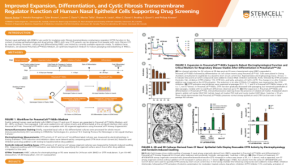 科学海报Improved Expansion, Differentiation, and Cystic Fibrosis Transmembrane Regulator Function of Human Nasal Epithelial Cells Supporting Drug Screening
 沪公网安备31010102008431号