Differentiation of human embryonic stem cells to regional specific neural precursors in chemically defined medium conditions.
BACKGROUND: Human embryonic stem cells (hESC) provide a unique model to study early events in human development. The hESC-derived cells can potentially be used to replace or restore different tissues including neuronal that have been damaged by disease or injury.backslashnbackslashnMETHODOLOGY AND PRINCIPAL FINDINGS: The cells of two different hESC lines were converted to neural rosettes using adherent and chemically defined conditions. The progenitor cells were exposed to retinoic acid (RA) or to human recombinant basic fibroblast growth factor (bFGF) in the late phase of the rosette formation. Exposing the progenitor cells to RA suppressed differentiation to rostral forebrain dopamine neural lineage and promoted that of spinal neural tissue including motor neurons. The functional characteristics of these differentiated neuronal precursors under both,rostral (bFGF) and caudalizing (RA) signals were confirmed by patch clamp analysis.backslashnbackslashnCONCLUSIONS/SIGNIFICANCE: These findings suggest that our differentiation protocol has the capacity to generate region-specific and electrophysiologically active neurons under in vitro conditions without embryoid body formation,co-culture with stromal cells and without presence of cells of mesodermal or endodermal lineages.
View Publication
产品类型:
产品号#:
05850
05857
05870
05875
85850
85857
85870
85875
产品名:
mTeSR™1
mTeSR™1
Muntasell A et al. (JUN 2010)
Blood 115 25 5170--9
Inhibition of NKG2D expression in NK cells by cytokines secreted in response to human cytomegalovirus infection.
The NKG2D receptor activates natural killer (NK) cell cytotoxicity and cytokine production on recognition of self-molecules induced by cellular stress under different conditions such as viral infections. The importance of NKG2D in the immune response to human cytomegalovirus (HCMV) is supported by the identification of several viral molecules that prevent the expression of NKG2D ligands by infected cells. In this study we report that,paradoxically,a significant,selective,and transient reduction of NKG2D expression on NK cells is detected during HCMV infection of peripheral blood mononuclear cells if needed. Antagonizing type I interferon (IFN),interleukin-12 (IL-12),and IFNgamma prevented HCMV-induced down-regulation of surface NKG2D. Moreover,treatment of purified NK cells with recombinant IFNbeta1 and IL-12 mimicked the effect,supporting a direct role of these cytokines in regulating NKG2D surface expression in NK cells. The loss of NKG2D expression selectively impaired NK-cell cytotoxicity against cells expressing NKG2D ligands but preserved the response triggered through other activating receptors. These results support that down-regulation of NKG2D expression on NK cells by cytokines with a key role in antiviral immune response may constitute a physiologic mechanism to control NK-cell reactivity against normal cells expressing NKG2D ligands in the context of inflammatory responses to viral infections.
View Publication
产品类型:
产品号#:
19055
19055RF
产品名:
EasySep™人NK细胞富集试剂盒
RoboSep™ 人NK细胞富集试剂盒含滤芯吸头
Mallon BS et al. (MAR 2014)
Stem Cell Research 12 2 376--386
Comparison of the molecular profiles of human embryonic and induced pluripotent stem cells of isogenic origin
Many studies have compared the genetic and epigenetic profiles of human induced pluripotent stem cells (hiPSCs) to human embryonic stem cells (hESCs) and yet the picture remains unclear. To address this,we derived a population of neural precursor cells (NPCs) from the H1 (WA01) hESC line and generated isogenic iPSC lines by reprogramming. The gene expression and methylation profile of three lines were compared to the parental line and intermediate NPC population. We found no gene probe with expression that differed significantly between hESC and iPSC samples under undifferentiated or differentiated conditions. Analysis of the global methylation pattern also showed no significant difference between the two PSC populations. Both undifferentiated populations were distinctly different from the intermediate NPC population in both gene expression and methylation profiles. One point to note is that H1 is a male line and so extrapolation to female lines should be cautioned. However,these data confirm our previous findings that there are no significant differences between hESCs and hiPSCs at the gene expression or methylation level.
View Publication
产品类型:
产品号#:
05850
05857
05870
05875
85850
85857
85870
85875
产品名:
mTeSR™1
mTeSR™1
Iovino S et al. (DEC 2014)
Diabetes 63 12 4130--4142
Genetic insulin resistance is a potent regulator of gene expression and proliferation in human iPS cells
Insulin resistance is central to diabetes and metabolic syndrome. To define the consequences of genetic insulin resistance distinct from those secondary to cellular differentiation or in vivo regulation,we generated induced pluripotent stem cells (iPSCs) from individuals with insulin receptor mutations and age-appropriate control subjects and studied insulin signaling and gene expression compared with the fibroblasts from which they were derived. iPSCs from patients with genetic insulin resistance exhibited altered insulin signaling,paralleling that seen in the original fibroblasts. Insulin-stimulated expression of immediate early genes and proliferation were also potently reduced in insulin resistant iPSCs. Global gene expression analysis revealed marked differences in both insulin-resistant iPSCs and corresponding fibroblasts compared with control iPSCs and fibroblasts. Patterns of gene expression in patients with genetic insulin resistance were particularly distinct in the two cell types,indicating dependence on not only receptor activity but also the cellular context of the mutant insulin receptor. Thus,iPSCs provide a novel approach to define effects of genetically determined insulin resistance. This study demonstrates that effects of insulin resistance on gene expression are modified by cellular context and differentiation state. Moreover,altered insulin receptor signaling and insulin resistance can modify proliferation and function of pluripotent stem cell populations.
View Publication
产品类型:
产品号#:
05850
05857
05870
05875
85850
85857
85870
85875
产品名:
mTeSR™1
mTeSR™1
Zhao L et al. (SEP 2014)
Stem Cell Research 13 2 342--354
Heterelogous expression of mutated HLA-G decreases immunogenicity of human embryonic stem cells and their epidermal derivatives.
Human embryonic stem cells (hESCs) are capable of extensive self-renewal and expansion and can differentiate into any somatic tissue,making them useful for regenerative medicine applications. Allogeneic transplantation of hESC-derived tissues from results in immunological rejection absent adjunctive immunosuppression. The goal of our study was to generate a universal pluripotent stem cell source by nucleofecting a mutated human leukocyte antigen G (mHLA-G) gene into hESCs using the PiggyBac transposon. We successfully generated stable mHLA-G(EF1$\$)-hESC lines using chEF1$\$ system that stably expressed mHLA-G protein during prolonged undifferentiated proliferation andin differentiated embryoid bodies as well as teratomas. Morphology,karyotype,and telomerase activity of mHLA-G expressing hESC were normal. Immunofluorescence staining and flow cytometry analysis revealed persistent expression of pluripotent markers,OCT-3/4 and SSEA-4,in undifferentiated mHLA-G(EF1$\$)-hESC. Nucleofected hESC formed teratomas and when directed to differentiate into epidermal precursors,expressed high levels of mHLA-G and keratinocyte markers K14 and CD29. Natural killer cell cytotoxicity assays demonstrated a significant decrease in lysis of mHLA-G(EF1a)-hESC targets relative to control cells. Similar results were obtained with mHLA-G(EF1$\$)-hESC-derived epidermal progenitors (hEEP). One way mixed T lymphocyte reactions unveiled that mHLA-G(EF1a)-hESC and -hEEP restrained the proliferative activity of mixed T lymphocytes. We conclude that heterologous expression of mHLA-G decreases immunogenicity of hESCs and their epidermal differentiated derivatives.
View Publication
产品类型:
产品号#:
05850
05857
05870
05875
07913
85850
85857
85870
85875
产品名:
Dispase(5 U/mL)
mTeSR™1
mTeSR™1
Yang L et al. (NOV 2014)
Nature communications 5 5507
Targeted and genome-wide sequencing reveal single nucleotide variations impacting specificity of Cas9 in human stem cells.
CRISPR/Cas9 has demonstrated a high-efficiency in site-specific gene targeting. However,potential off-target effects of the Cas9 nuclease represent a major safety concern for any therapeutic application. Here,we knock out the Tafazzin gene by CRISPR/Cas9 in human-induced pluripotent stem cells with 54% efficiency. We combine whole-genome sequencing and deep-targeted sequencing to characterise the off-target effects of Cas9 editing. Whole-genome sequencing of Cas9-modified hiPSC clones detects neither gross genomic alterations nor elevated mutation rates. Deep sequencing of in silico predicted off-target sites in a population of Cas9-treated cells further confirms high specificity of Cas9. However,we identify a single high-efficiency off-target site that is generated by a common germline single-nucleotide variant (SNV) in our experiment. Based on in silico analysis,we estimate a likelihood of SNVs creating off-target sites in a human genome to be ˜1.5-8.5%,depending on the genome and site-selection method,but also note that mutations might be generated at these sites only at low rates and may not have functional consequences. Our study demonstrates the feasibility of highly specific clonal ex vivo gene editing using CRISPR/Cas9 and highlights the value of whole-genome sequencing before personalised CRISPR design.
View Publication
产品类型:
产品号#:
05850
05857
05870
05875
85850
85857
85870
85875
产品名:
mTeSR™1
mTeSR™1
Jenkins PM et al. (DEC 2015)
Nanoscale research letters 10 1 972
A nerve guidance conduit with topographical and biochemical cues: potential application using human neural stem cells.
Despite major advances in the pathophysiological understanding of peripheral nerve damage,the treatment of nerve injuries still remains an unmet medical need. Nerve guidance conduits present a promising treatment option by providing a growth-permissive environment that 1) promotes neuronal cell survival and axon growth and 2) directs axonal extension. To this end,we designed an electrospun nerve guidance conduit using a blend of polyurea and poly-caprolactone with both biochemical and topographical cues. Biochemical cues were integrated into the conduit by functionalizing the polyurea with RGD to improve cell attachment. Topographical cues that resemble natural nerve tissue were incorporated by introducing intraluminal microchannels aligned with nanofibers. We determined that electrospinning the polymer solution across a two electrode system with dissolvable sucrose fibers produced a polymer conduit with the appropriate biomimetic properties. Human neural stem cells were cultured on the conduit to evaluate its ability to promote neuronal growth and axonal extension. The nerve guidance conduit was shown to enhance cell survival,migration,and guide neurite extension.
View Publication
产品类型:
产品号#:
05850
05857
05870
05875
85850
85857
85870
85875
产品名:
mTeSR™1
mTeSR™1
Amps K et al. (DEC 2011)
Nature biotechnology 29 12 1132--44
Screening ethnically diverse human embryonic stem cells identifies a chromosome 20 minimal amplicon conferring growth advantage.
The International Stem Cell Initiative analyzed 125 human embryonic stem (ES) cell lines and 11 induced pluripotent stem (iPS) cell lines,from 38 laboratories worldwide,for genetic changes occurring during culture. Most lines were analyzed at an early and late passage. Single-nucleotide polymorphism (SNP) analysis revealed that they included representatives of most major ethnic groups. Most lines remained karyotypically normal,but there was a progressive tendency to acquire changes on prolonged culture,commonly affecting chromosomes 1,12,17 and 20. DNA methylation patterns changed haphazardly with no link to time in culture. Structural variants,determined from the SNP arrays,also appeared sporadically. No common variants related to culture were observed on chromosomes 1,12 and 17,but a minimal amplicon in chromosome 20q11.21,including three genes expressed in human ES cells,ID1,BCL2L1 and HM13,occurred in textgreater20% of the lines. Of these genes,BCL2L1 is a strong candidate for driving culture adaptation of ES cells.
View Publication
产品类型:
产品号#:
05850
05857
05870
05875
85850
85857
85870
85875
77003
77004
200-0117
产品名:
mTeSR™1
mTeSR™1
CellAdhere™ Laminin-521
CellAdhere™ Laminin-521
MacLean Ga et al. (OCT 2012)
Proceedings of the National Academy of Sciences 109 43 17567--17572
Altered hematopoiesis in trisomy 21 as revealed through in vitro differentiation of isogenic human pluripotent cells
Trisomy 21 is associated with hematopoietic abnormalities in the fetal liver,a preleukemic condition termed transient myeloproliferative disorder,and increased incidence of acute megakaryoblastic leukemia. Human trisomy 21 pluripotent cells of various origins,human embryonic stem (hES),and induced pluripotent stem (iPS) cells,were differentiated in vitro as a model to recapitulate the effects of trisomy on hematopoiesis. To mitigate clonal variation,we isolated disomic and trisomic subclones from the same parental iPS line,thereby generating subclones isogenic except for chromosome 21. Under differentiation conditions favoring development of fetal liver-like,γ-globin expressing,definitive hematopoiesis,we found that trisomic cells of hES,iPS,or isogenic origins exhibited a two- to fivefold increase in a population of CD43(+)(Leukosialin)/CD235(+)(Glycophorin A) hematopoietic cells,accompanied by increased multilineage colony-forming potential in colony-forming assays. These findings establish an intrinsic disturbance of multilineage myeloid hematopoiesis in trisomy 21 at the fetal liver stage.
View Publication
产品类型:
产品号#:
05850
05857
05870
05875
85850
85857
85870
85875
产品名:
mTeSR™1
mTeSR™1
White MP et al. (JAN 2013)
STEM CELLS 31 1 92--103
Limited Gene Expression Variation in Human Embryonic Stem Cell and Induced Pluripotent Stem Cell-Derived Endothelial Cells
Recent evidence suggests human embryonic stem cell (hESC) and induced pluripotent stem (iPS) cell lines have differences in their epigenetic marks and transcriptomes,yet the impact of these differences on subsequent terminally differentiated cells is less well understood. Comparison of purified,homogeneous populations of somatic cells derived from multiple independent human iPS and ES lines will be required to address this critical question. Here,we report a differentiation protocol based on embryonic development that consistently yields large numbers of endothelial cells (ECs) derived from multiple hESCs or iPS cells. Mesoderm differentiation of embryoid bodies was maximized,and defined growth factors were used to generate KDR+ EC progenitors. Magnetic purification of a KDR+ progenitor subpopulation resulted in an expanding,homogeneous pool of ECs that expressed EC markers and had functional properties of ECs. Comparison of the transcriptomes revealed limited gene expression variability between multiple lines of human iPS-derived ECs or between lines of ES- and iPS-derived ECs. These results demonstrate a method to generate large numbers of pure human EC progenitors and differentiated ECs from pluripotent stem cells and suggest individual lineages derived from human iPS cells may have significantly less variance than their pluripotent founders. STEM Cells2013;31:92–103
View Publication
产品类型:
产品号#:
05850
05857
05870
05875
85850
85857
85870
85875
产品名:
mTeSR™1
mTeSR™1
(Apr 2025)
European Journal of Immunology 55 4
Monocyte?Platelet Aggregates Are Major Source of BDNF after Bacterial Stimulation of Human Peripheral Blood Immune Cells
ABSTRACTThe gut microbiota and the immune system are closely connected,influencing early?life brain development. Brain?derived neurotrophic factor (BDNF),crucial for neuronal development,has been demonstrated to be produced by certain immune cells. However,the modulation of BDNF during bacterial antigen and metabolite challenge remains elusive. We investigate the effects of bacterial?derived antigens and metabolites on BDNF secretion in human PBMCs. Although BDNF levels were altered during stimulation,a specific cellular origin of BDNF within PBMCs was indeterminate. Positive magnetic separation of monocytes eliminated both the stimulant?induced BDNF secretion and reduced monocyte?platelet aggregates. Conversely,elevated platelet counts significantly increased BDNF levels,indicating that platelets,when interacting with monocytes and exposed to bacterial antigens,are likely the dominant source of BDNF in PBMC cultures. As previously described,platelets are a crucial source of circulating peripheral blood BDNF. Our findings emphasize the importance of the interplay between immune?blood cell complexes during microbial stimulation in regulating BDNF levels. This highlights the necessity of investigating such interactions to better understand the early?life gut?brain axis. Bacterial antigens primarily induce BDNF release from platelets interacting with monocytes in PBMCs. This interplay underscores how immune?blood cell complexes shape BDNF levels which may impact early human development.
View Publication


 EasySep™小鼠TIL(CD45)正选试剂盒




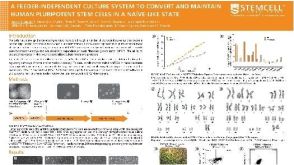 科学海报A Feeder-Independent Culture System to Convert and Maintain Human Pluripotent Stem Cells in a Naïve-Like State

 沪公网安备31010102008431号