Palaniyandi K et al. (JUL 2012)
Journal of cancer science & therapy 4 7 214--222
Human Breast Cancer Stem Cells Have Significantly Higher Rate of Clathrin-Independent and Caveolin-Independent Endocytosis than the Differentiated Breast Cancer Cells.
Breast Cancer Stem (BCS) cells play critical roles in self-renewal,Multi Drug Resistance (MDR),differentiation and generation of secondary tumors. Conventional chemotherapy may efficiently kill the bulk of differentiated drug sensitive breast cancer cells,but not the MDR self-renewable BCS cells,leading to enrichment of the MDR BCS cells. In order to target the MDR BCS cells,we have isolated: 1) BCS cells from either breast cancer cell lines or fresh breast cancer specimens; 2) ATP binding cassette (ABC) transporter group G number 2 (ABCG2)-specific aptamers; and 3) BCS cell-binding aptamers. Interestingly,ABCG2-specific aptamers labeled the membrane surface of the ABCG2-expressing baby hamster kidney (BHK) cells,but stained whole cells of the BCS cells derived from mammospheres,implying that BCS cells might have much higher rate of endocytosis than the ABCG2-expressing BHK cells. In addition,5D3,a monoclonal antibody that recognizes the extracellular loops of ABCG2 protein,also stained whole BCS cells. Furthermore,BCS cell-binding aptamers stained whole BCS cells,but not the differentiated breast cancer MCF-7 cells. All these results support above conclusion that BCS cells might have high rate of endocytosis. Further experiments performed with aptamers and human transferrin or lactosylceramide showed that BCS cells do have much higher endocytosis rate than the differentiated breast cancer cells. Interestingly,clathrin dependent endocytosis inhibitors,such as monodansylcadaverine or sucrose,or caveolin-dependent endocytosis inhibitors,such as methyl-$$-cyclodextrin or genistein,can inhibit the internalization of transferrin or lactosylceramide into the differentiated breast cancer cells,but cannot block the internalization of these compounds into the BCS cells,suggesting that BCS cells undergo clathrin-independent and caveolin-independent endocytosis. Taken together,our data suggest that BCS cells have high rate of endocytosis and open the possibilities for delivering therapeutic agents directly into the MDR BCS cells with aptamer-coated liposomes.
View Publication
产品类型:
产品号#:
05620
产品名:
MammoCult™ 人源培养基套装
Grimbert P et al. (SEP 2006)
Journal of immunology (Baltimore,Md. : 1950) 177 6 3534--41
Thrombospondin/CD47 interaction: a pathway to generate regulatory T cells from human CD4+ CD25- T cells in response to inflammation.
Thymus-derived CD4+ CD25+ T regulatory cells (Tregs) are essential for the maintenance of self-tolerance. What critical factors and conditions are required for the extra-thymic development of Tregs remains an important question. In this study,we show that the anti-inflammatory extracellular matrix protein,thrombospondin-1,promoted the generation of human peripheral regulatory T cells through the ligation of one of its receptor,CD47. CD47 stimulation by mAb or a thrombospondin-1 peptide induced naive or memory CD4+ CD25- T cells to become suppressive. The latter expressed increased amounts of CTLA-4,OX40,GITR,and Foxp3 and inhibited autologous Th0,Th1,and Th2 cells. Their regulatory activity was contact dependent,TGF-beta independent,and partially circumvented by IL-2. This previously unknown mechanism to induce human peripheral Tregs in response to inflammation may participate to the limitation of collateral damage induced by exacerbated responses to self or foreign Ags and thus be relevant for therapeutic intervention in autoimmune diseases and transplantation.
View Publication
产品类型:
产品号#:
18053
18053RF
产品名:
S. Han et al. (May 2025)
Reproductive Biology and Endocrinology : RB&E 23 1
Identification and isolation of human testicular peritubular myoid cells and Leydig cells by a combination of ITGA9 and NGFR
Testicular somatic cells play an important role in supporting spermatogenesis. Leydig cells (LCs) and peritubular myoid cells (PTMs) originate from a common progenitor population and show similar expression signatures in adulthood,making it difficult to distinguish and isolate the two in vitro. In this study,new surface markers for identifying adult LCs (ALCs) and PTMs were discovered by reanalyzing testicular single-cell dataset. Differential expressions of ITGA9 and NGFR were confirmed through immunofluorescence staining of human testes. A novel Fluorescence activated Cell Sorting (FACS) protocol is established for the isolation of ALCs and PTMs based on the two markers. Long-term culture of both cells were performed and their characteristics were characterized and explored. ITGA9+ /NGFR + cells were positive for markers of PTMs (SMA,CNN1) and negative for markers of ALCs (HSD3B,STAR),and were able to form tubular and spheroid structures in vitro. In contrast,ITGA9-/NGFR + cells were positive for ALC markers and negative for PTM markers,and showed a capacity of testosterone production in vitro. Also,both cells were negative for Sertoli cell marker SOX9. When the two cells were cultured,they can expand for more than 15 passages. Our study established a novel and efficient method for identifying and isolating human ALCs and PTMs,which provides a great potential for researches of the two cell types in human. The online version contains supplementary material available at 10.1186/s12958-025-01389-w.
View Publication
产品类型:
产品号#:
34411
34415
34421
34425
34450
34460
产品名:
AggreWell™ 400 24孔板,1个
AggreWell™400 24孔板,5个
AggreWell™ 400 6孔板,1个
AggreWell™ 400 6孔板,5个
AggreWell™400 24孔板启动套装
AggreWell™ 400 6孔板启动套装
G. Schiroli et al. (apr 2019)
Cell stem cell 24 4 551--565.e8
Precise Gene Editing Preserves Hematopoietic Stem Cell Function following Transient p53-Mediated DNA Damage Response.
Precise gene editing in hematopoietic stem and progenitor cells (HSPCs) holds promise for treating genetic diseases. However,responses triggered by programmable nucleases in HSPCs are poorly characterized and may negatively impact HSPC engraftment and long-term repopulation capacity. Here,we induced either one or several DNA double-stranded breaks (DSBs) with optimized zinc-finger and CRISPR/Cas9 nucleases and monitored DNA damage response (DDR) foci induction,cell-cycle progression,and transcriptional responses in HSPC subpopulations,with up to single-cell resolution. p53-mediated DDR pathway activation was the predominant response to even single-nuclease-induced DSBs across all HSPC subtypes analyzed. Excess DSB load and/or adeno-associated virus (AAV)-mediated delivery of DNA repair templates induced cumulative p53 pathway activation,constraining proliferation,yield,and engraftment of edited HSPCs. However,functional impairment was reversible when DDR burden was low and could be overcome by transient p53 inhibition. These findings provide molecular and functional evidence for feasible and seamless gene editing in HSPCs.
View Publication
产品类型:
产品号#:
04434
04444
72912
72914
产品名:
MethoCult™ H4434 Classic
MethoCult™ H4434 Classic
(Mar 2025)
PLOS One 20 3
Sequences within and upstream of the mouse Ets1 gene drive high level expression in B cells, but are not sufficient for consistent expression in T cells
The levels of transcription factor Ets1 are high in resting B and T cells,but are downregulated by signaling through antigen receptors and Toll-like receptors (TLRs). Loss of Ets1 in mice leads to excessive immune cell activation and development of an autoimmune syndrome and reduced Ets1 expression has been observed in human PBMCs in the context of autoimmune diseases. In B cells,Ets1 serves to prevent premature activation and differentiation to antibody-secreting cells. Given these important roles for Ets1 in the immune response,stringent control of Ets1 gene expression levels is required for homeostasis. However,the genetic regulatory elements that control expression of the Ets1 gene remain relatively unknown. Here we identify a topologically-associating domain (TAD) in the chromatin of B cells that includes the mouse Ets1 gene locus and describe an interaction hub that extends over 100 kb upstream and into the gene body. Additionally,we compile epigenetic datasets to find several putative regulatory elements within the interaction hub by identifying regions of high DNA accessibility and enrichment of active enhancer histone marks. Using reporter constructs,we determine that DNA sequences within this interaction hub are sufficient to direct reporter gene expression in lymphoid tissues of transgenic mice. Further analysis indicates that the reporter construct drives faithful expression of the reporter gene in mouse B cells,but variegated expression in T cells,suggesting the existence of T cell regulatory elements outside this region. To investigate how the downregulation of Ets1 transcription is associated with alterations in the epigenetic landscape of stimulated B cells,we performed ATAC-seq in resting and BCR-stimulated primary B cells and identified four regions within and upstream of the Ets1 locus that undergo changes in chromatin accessibility that correlate to Ets1 gene expression. Interestingly,functional analysis of several putative Ets1 regulatory elements using luciferase constructs suggested a high level of functional redundancy. Taken together our studies reveal a complex network of regulatory elements and transcription factors that coordinate the B cell-specific expression of Ets1.
View Publication
产品类型:
产品号#:
19854
19854RF
产品名:
EasySep™小鼠B细胞分选试剂盒
RoboSep™ 小鼠B细胞分选试剂盒
Greish K et al. ( )
Anticancer research 25 6B 4245--8
Protective effect of melatonin on human peripheral blood hematopoeitic stem cells against doxorubicin cytotoxicity.
BACKGROUND: The dose-limiting toxicity of doxorubicin on hematopoietic stem cells reduces the maximum benefit from this powerful drug. Melatonin may play a role in reducing this toxicity. MATERIALS AND METHODS: Melatonin at 10 microM was used while challenging human peripheral blood stem cells (PBSC) with doxorubicin (0.6 microM and 1 microM),and colony formation was used to evaluate the protective effect of melatonin. RESULTS: Melatonin was protective for the myeloid and erythroid series when given during or 1 hour after,but not before,doxorubicin,as measured by colony assay. This protection was independent from its antioxidant function as measured by 2',7'-dichlodihydro-fluorescein diacetate and was selective for PBSC when compared to the MCF-7 cancer cell line. CONCLUSION: The results suggest the importance of the time sequence for melatonin administration to exert its protective effect in relation to doxorubicin treatment,as well as its protective effect on both erythroid and myeloid elements independent from its antioxidant function.
View Publication
Kawatsu K et al. (APR 2008)
Journal of clinical microbiology 46 4 1226--31
Development and evaluation of immunochromatographic assay for simple and rapid detection of Campylobacter jejuni and Campylobacter coli in human stool specimens.
An immunochromatographic assay (Campy-ICA) using a newly generated single monoclonal antibody against a 15-kDa cell surface protein of Campylobacter jejuni was developed. When cell suspensions of 86 C. jejuni strains and 27 Campylobacter coli strains were treated with a commercially available bacterial protein extraction reagent and the resulting extracts were tested with the Campy-ICA,they all yielded positive results. The minimum detectable limits for the C. jejuni strains ranged from 1.8 x 10(4) to 8.2 x 10(5) CFU/ml of cell suspension,and those for the C. coli strains ranged from 1.4 x 10(5) to 4.6 x 10(6) CFU/ml of cell suspension. All 26 non-Campylobacter species tested yielded negative results with the Campy-ICA. To evaluate the ability of the Campy-ICA to detect C. jejuni and C. coli in human stool specimens,suspensions of 222 stool specimens from patients with acute gastroenteritis were treated with the bacterial protein extraction reagent,and the resulting extracts were tested with the Campy-ICA. The Campy-ICA results showed a sensitivity of 84.8% (28 of 33 specimens) and a specificity of 100% (189 of 189 specimens) compared to the results of isolation of C. jejuni and C. coli from the stool specimens by a bacterial culture test. The Campy-ICA was simple to perform and was able to detect Campylobacter antigen in a fecal extract within 15 min. These results suggest that Campy-ICA testing of fecal extracts may be useful as a simple and rapid adjunct to stool culture for detecting C. jejuni and C. coli in human stool specimens.
View Publication
产品类型:
产品号#:
03800
03801
03802
03803
03804
03805
03806
产品名:
ClonaCell™-HY杂交瘤试剂盒
ClonaCell™-HY培养基A
ClonaCell™-HY 培养基 B
ClonaCell™-HY 培养基 C
ClonaCell™-HY 培养基 D
ClonaCell™-HY 培养基 E
ClonaCell™-HY PEG
Nguyen HX et al. (AUG 2014)
Journal of Comparative Neurology 522 12 2767--2783
Induction of early neural precursors and derivation of tripotent neural stem cells from human pluripotent stem cells under xeno-free conditions
Human embryonic stem cells (hESC) and induced pluripotent stem cells (hiPSC) can differentiate into many cell types and are important for regenerative medicine; however,further work is needed to reliably differentiate hESC and hiPSC into neural-restricted multipotent derivatives or specialized cell types under conditions that are free from animal products. Toward this goal,we tested the transition of hESC and hiPSC lines onto xeno-free (XF) / feeder-free conditions and evaluated XF substrate preference,pluripotency,and karyotype. Critically,XF transitioned H9 hESC,Shef4 hESC,and iPS6-9 retained pluripotency (Oct-4 and NANOG),proliferation (MKI67 and PCNA),and normal karyotype. Subsequently,XF transitioned hESC and hiPSC were induced with epidermal growth factor (EGF) and basic fibroblast growth factor (bFGF) to generate neuralized spheres containing primitive neural precursors,which could differentiate into astrocytes and neurons,but not oligoprogenitors. Further neuralization of spheres via LIF supplementation and attachment selection on CELLstart substrate generated adherent human neural stem cells (hNSC) with normal karyotype and high proliferation potential under XF conditions. Interestingly,adherent hNSC derived from H9,Shef4,and iPS6-9 differentiated into significant numbers of O4+ oligoprogenitors (∼20-30%) with robust proliferation; however,very few GalC+ cells were observed (∼2-4%),indicative of early oligodendrocytic lineage commitment. Overall,these data demonstrate the transition of multiple hESC and hiPSC lines onto XF substrate and media conditions,and a reproducible neuralization method that generated neural derivatives with multipotent cell fate potential and normal karyotype.
View Publication
产品类型:
产品号#:
05860
05880
05850
05857
05870
05875
85850
85857
85870
85875
产品名:
mTeSR™1
mTeSR™1
Wang H et al. (JAN 2012)
Journal of translational medicine 10 1 167
Oncolytic vaccinia virus GLV-1h68 strain shows enhanced replication in human breast cancer stem-like cells in comparison to breast cancer cells.
BACKGROUND: Recent data suggest that cancer stem cells (CSCs) play an important role in cancer,as these cells possess enhanced tumor-forming capabilities and are responsible for relapses after apparently curative therapies have been undertaken. Hence,novel cancer therapies will be needed to test for both tumor regression and CSC targeting. The use of oncolytic vaccinia virus (VACV) represents an attractive anti-tumor approach and is currently under evaluation in clinical trials. The purpose of this study was to demonstrate whether VACV does kill CSCs that are resistant to irradiation and chemotherapy. METHODS: Cancer stem-like cells were identified and separated from the human breast cancer cell line GI-101A by virtue of increased aldehyde dehydrogenase 1 (ALDH1) activity as assessed by the ALDEFLUOR assay and cancer stem cell-like features such as chemo-resistance,irradiation-resistance and tumor-initiating were confirmed in cell culture and in animal models. VACV treatments were applied to both ALDEFLUOR-positive cells in cell culture and in xenograft tumors derived from these cells. Moreover,we identified and isolated CD44(+)CD24(+)ESA(+) cells from GI-101A upon an epithelial-mesenchymal transition (EMT). These cells were similarly characterized both in cell culture and in animal models. RESULTS: We demonstrated for the first time that the oncolytic VACV GLV-1h68 strain replicated more efficiently in cells with higher ALDH1 activity that possessed stem cell-like features than in cells with lower ALDH1 activity. GLV-1h68 selectively colonized and eventually eradicated xenograft tumors originating from cells with higher ALDH1 activity. Furthermore,GLV-1h68 also showed preferential replication in CD44(+)CD24(+)ESA(+) cells derived from GI-101A upon an EMT induction as well as in xenograft tumors originating from these cells that were more tumorigenic than CD44(+)CD24(-)ESA(+) cells. CONCLUSIONS: Taken together,our findings indicate that GLV-1h68 efficiently replicates and kills cancer stem-like cells. Thus,GLV-1h68 may become a promising agent for eradicating both primary and metastatic tumors,especially tumors harboring cancer stem-like cells that are resistant to chemo and/or radiotherapy and may be responsible for recurrence of tumors.
View Publication
产品类型:
产品号#:
01700
01705
05620
01702
产品名:
ALDEFLUOR™ 试剂盒
ALDEFLUOR™ DEAB试剂, 1.5 mM, 1 mL
MammoCult™ 人源培养基套装
ALDEFLUOR™检测缓冲液
Nä et al. (MAR 2012)
Stem Cells 30 3 452--60
RNA-binding protein L1TD1 interacts with LIN28 via RNA and is required for human embryonic stem cell self-renewal and cancer cell proliferation.
Human embryonic stem cells (hESC) have a unique capacity to self-renew and differentiate into all the cell types found in human body. Although the transcriptional regulators of pluripotency are well studied,the role of cytoplasmic regulators is still poorly characterized. Here,we report a new stem cell-specific RNA-binding protein L1TD1 (ECAT11,FLJ10884) required for hESC self-renewal and cancer cell proliferation. Depletion of L1TD1 results in immediate downregulation of OCT4 and NANOG. Furthermore,we demonstrate that OCT4,SOX2,and NANOG all bind to the promoter of L1TD1. Moreover,L1TD1 is highly expressed in seminomas,and depletion of L1TD1 in these cancer cells influences self-renewal and proliferation. We show that L1TD1 colocalizes and interacts with LIN28 via RNA and directly with RNA helicase A (RHA). LIN28 has been reported to regulate translation of OCT4 in complex with RHA. Thus,we hypothesize that L1TD1 is part of the L1TD1-RHA-LIN28 complex that could influence levels of OCT4. Our results strongly suggest that L1TD1 has an important role in the regulation of stemness.
View Publication
产品类型:
产品号#:
05850
05857
05870
05875
36254
85850
85857
85870
85875
产品名:
DMEM/F-12 with 15 mM HEPES
mTeSR™1
mTeSR™1
J. L. D. Andrés et al. (Sep 2024)
Materials Today Bio 29 6
A bioengineered tumor matrix-based scaffold for the evaluation of melatonin efficacy on head and neck squamous cancer stem cells
Head and neck squamous cell carcinoma (HNSCC) presents a significant challenge worldwide due to its aggressiveness and high recurrence rates post-treatment,often linked to cancer stem cells (CSCs). Melatonin shows promise as a potent tumor suppressor; however,the effects of melatonin on CSCs remain unclear,and the development of models that closely resemble tumor heterogeneity could help to better understand the effects of this molecule. This study developed a tumor scaffold based on patient fibroblast-derived decellularized extracellular matrix that mimics the HNSCC microenvironment. Our study investigates the antitumoral effects of melatonin within this context. We validated its strong antiproliferative effect on HNSCC CSCs and the reduction of tumor invasion and migration markers,even in a strongly chemoprotective environment,as it is required to increase the minimum doses necessary to impact tumor viability compared to the non-scaffolded tumorspheres culture. Moreover,melatonin exhibited no cytotoxic effects on healthy cells co-cultured in the tumor hydrogel. This scaffold-based platform allows an in vitro study closer to HNSCC tumor reality,including CSCs,stromal component,and a biomimetic matrix,providing a new valuable research tool in precision oncology.
View Publication


 EasySep™小鼠TIL(CD45)正选试剂盒





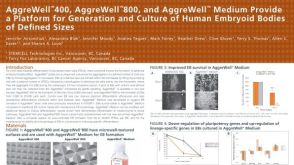 科学海报Aggrewell™ 400, Aggrewell™ 800, and Aggrewell™ Medium Provide a Platform for Generation and Culture of Human Embryoid Bodies of Defined Sizes
 沪公网安备31010102008431号