Lowe A et al. (MAY 2016)
Stem Cell Reports 6 5 743--756
Intercellular Adhesion-Dependent Cell Survival and ROCK-Regulated Actomyosin-Driven Forces Mediate Self-Formation of a Retinal Organoid
In this study we dissected retinal organoid morphogenesis in human embryonic stem cell (hESC)-derived cultures and established a convenient method for isolating large quantities of retinal organoids for modeling human retinal development and disease. Epithelialized cysts were generated via floating culture of clumps of Matrigel/hESCs. Upon spontaneous attachment and spreading of the cysts,patterned retinal monolayers with tight junctions formed. Dispase-mediated detachment of the monolayers and subsequent floating culture led to self-formation of retinal organoids comprising patterned neuroretina,ciliary margin,and retinal pigment epithelium. Intercellular adhesion-dependent cell survival and ROCK-regulated actomyosin-driven forces are required for the self-organization. Our data supports a hypothesis that newly specified neuroretina progenitors form characteristic structures in equilibrium through minimization of cell surface tension. In long-term culture,the retinal organoids autonomously generated stratified retinal tissues,including photoreceptors with ultrastructure of outer segments. Our system requires minimal manual manipulation,has been validated in two lines of human pluripotent stem cells,and provides insight into optic cup invagination in vivo.
View Publication
产品类型:
产品号#:
05850
05857
05870
05875
05872
05873
85850
85857
85870
85875
100-0483
100-0484
产品名:
mTeSR™1
mTeSR™1
Hausser Scientificᵀᴹ 明线血球计数板
ReLeSR™
Twu Y-C et al. (MAR 2010)
Blood 115 12 2491--9
Phosphorylation status of transcription factor C/EBPalpha determines cell-surface poly-LacNAc branching (I antigen) formation in erythropoiesis and granulopoiesis.
The cell-surface straight and branched repeats of N-acetyllactosamine (LacNAc) units,called poly-LacNAc chains,characterize the histo-blood group i and I antigens,respectively. The transition of straight to branched poly-LacNAc chain (i to I) is determined by the I locus,which expresses 3 IGnT transcripts,IGnTA,IGnTB,and IGnTC. Our previous investigation demonstrated that the i-to-I transition in erythroid differentiation is regulated by the transcription factor CCAAT/enhancer binding protein alpha (C/EBPalpha). In the present investigation,the K-562 cell line was used as a model to show that the i-to-I transition is determined by the phosphorylation status of the C/EBPalpha Ser-21 residue,with dephosphorylated C/EBPalpha Ser-21 stimulating the transcription of the IGnTC gene,consequently resulting in I branching. Results from studies using adult erythropoietic and granulopoietic progenitor cells agreed with those derived using the K-562 cell model,with lentiviral expression of C/EBPalpha in CD34(+) hematopoietic cells demonstrating that the dephosphorylated form of C/EBPalpha Ser-21 induced the expression of I antigen,granulocytic CD15,and also erythroid CD71 antigens. Taken together,these results demonstrate that the regulation of poly-LacNAc branching (I antigen) formation in erythropoiesis and granulopoiesis share a common mechanism,with dephosphorylation of the Ser-21 residue on C/EBPalpha playing the critical role.
View Publication
产品类型:
产品号#:
02532
02832
02615
02855
09600
09650
产品名:
StemSpan™ SFEM
StemSpan™ SFEM
R. Lorenzetti et al. (jul 2019)
Journal of autoimmunity 101 145--152
Abatacept modulates CD80 and CD86 expression and memory formation in human B-cells.
BACKGROUND Cytotoxic T lymphocyte antigen-4 (CTLA-4) limits T-cell activation and is expressed on T-regulatory cells. Human CTLA-4 deficiency results in severe immune dysregulation. Abatacept (CTLA-4 Ig) is approved for the treatment of rheumatoid arthritis (RA) and its mechanism of action is attributed to effects on T-cells. It is known that CTLA-4 modulates the expression of its ligands CD80 and CD86 on antigen presenting cells (APC) by transendocytosis. As B-cells express CD80/CD86 and function as APC,we hypothesize that B-cells are a direct target of abatacept. OBJECTIVES To investigate direct effects of abatacept on human B-lymphocytes in vitro and in RA patients. METHODS The effect of abatacept on healthy donor B-cells' phenotype,activation and CD80/CD86 expression was studied in vitro. Nine abatacept-treated RA patients were studied. Seven of these were followed up to 24 months,and two up to 12 months only and treatment response,immunoglobulins,ACPA,RF concentrations,B-cell phenotype and ACPA-specific switched memory B-cell frequency were assessed. RESULTS B-cell development was unaffected by abatacept. Abatacept treatment resulted in a dose-dependent decrease of CD80/CD86 expression on B-cells in vitro,which was due to dynamin-dependent internalization. RA patients treated with abatacept showed a progressive decrease in plasmablasts and serum IgG. While ACPA-titers only moderately declined,the frequency of ACPA-specific switched memory B-cells significantly decreased. CONCLUSIONS Abatacept directly targets B-cells by reducing CD80/CD86 expression. Impairment of antigen presentation and T-cell activation may result in altered B-cell selection,providing a new therapeutic mechanism and a base for abatacept use in B-cell mediated autoimmunity.
View Publication
产品类型:
产品号#:
17954
17954RF
100-0971
产品名:
EasySep™人B细胞分选试剂盒
RoboSep™ 人B细胞分选试剂盒
EasySep™人B细胞分离试剂盒
Mace EM et al. ( 2016)
Nature communications 7 12171
Human NK cell development requires CD56-mediated motility and formation of the developmental synapse.
While distinct stages of natural killer (NK) cell development have been defined,the molecular interactions that shape human NK cell maturation are poorly understood. Here we define intercellular interactions between developing NK cells and stromal cells which,through contact-dependent mechanisms,promote the generation of mature,functional human NK cells from CD34(+) precursors. We show that developing NK cells undergo unique,developmental stage-specific sustained and transient interactions with developmentally supportive stromal cells,and that the relative motility of NK cells increases as they move through development in vitro and ex vivo. These interactions include the formation of a synapse between developing NK cells and stromal cells,which we term the developmental synapse. Finally,we identify a role for CD56 in developmental synapse structure,NK cell motility and NK cell development. Thus,we define the developmental synapse leading to human NK cell functional maturation.
View Publication
产品类型:
产品号#:
05150
15025
15065
产品名:
MyeloCult™ H5100
RosetteSep™人NK细胞富集抗体混合物
RosetteSep™人NK细胞富集抗体混合物
Barruet E et al. (AUG 2016)
Stem cell research & therapy 7 1 115
The ACVR1 R206H mutation found in fibrodysplasia ossificans progressiva increases human induced pluripotent stem cell-derived endothelial cell formation and collagen production through BMP-mediated SMAD1/5/8 signaling.
BACKGROUND The Activin A and bone morphogenetic protein (BMP) pathways are critical regulators of the immune system and of bone formation. Inappropriate activation of these pathways,as in conditions of congenital heterotopic ossification,are thought to activate an osteogenic program in endothelial cells. However,if and how this occurs in human endothelial cells remains unclear. METHODS We used a new directed differentiation protocol to create human induced pluripotent stem cell (hiPSC)-derived endothelial cells (iECs) from patients with fibrodysplasia ossificans progressiva (FOP),a congenital disease of heterotopic ossification caused by an activating R206H mutation in the Activin A type I receptor (ACVR1). This strategy allowed the direct assay of the cell-autonomous effects of ACVR1 R206H in the endogenous locus without the use of transgenic expression. These cells were challenged with BMP or Activin A ligand,and tested for their ability to activate osteogenesis,extracellular matrix production,and differential downstream signaling in the BMP/Activin A pathways. RESULTS We found that FOP iECs could form in conditions with low or absent BMP4. These conditions are not normally permissive in control cells. FOP iECs cultured in mineralization media showed increased alkaline phosphatase staining,suggesting formation of immature osteoblasts,but failed to show mature osteoblastic features. However,FOP iECs expressed more fibroblastic genes and Collagen 1/2 compared to control iECs,suggesting a mechanism for the tissue fibrosis seen in early heterotopic lesions. Finally,FOP iECs showed increased SMAD1/5/8 signaling upon BMP4 stimulation. Contrary to FOP hiPSCs,FOP iECs did not show a significant increase in SMAD1/5/8 phosphorylation upon Activin A stimulation,suggesting that the ACVR1 R206H mutation has a cell type-specific effect. In addition,we found that the expression of ACVR1 and type II receptors were different in hiPSCs and iECs,which could explain the cell type-specific SMAD signaling. CONCLUSIONS Our results suggest that the ACVR1 R206H mutation may not directly increase the formation of mature chondrogenic or osteogenic cells by FOP iECs. Our results also show that BMP can induce endothelial cell dysfunction,increase expression of fibrogenic matrix proteins,and cause differential downstream signaling of the ACVR1 R206H mutation. This iPSC model provides new insight into how human endothelial cells may contribute to the pathogenesis of heterotopic ossification.
View Publication
产品类型:
产品号#:
05850
05857
05870
05875
85850
85857
85870
85875
产品名:
mTeSR™1
mTeSR™1
Fiala ES et al. (SEP 1996)
Experientia 52 9 922--6
(-)-Epigallocatechin gallate, a polyphenolic tea antioxidant, inhibits peroxynitrite-mediated formation of 8-oxodeoxyguanosine and 3-nitrotyrosine.
Reaction with peroxynitrite at pH 7.4 and 37 degrees C was found to increase the 8-oxodeoxyguanosine levels in calf thymus DNA 35- 38-fold. This oxidation of deoxyguanosine,as well as the peroxynitrite-mediated nitration of tyrosine to 3-nitrotyrosine,was significantly inhibited by ascorbic acid,glutathione and (-)-epigallocatechin gallate,a polyphenolic antioxidant present in tea. For 50% inhibition of the oxidation of deoxyguanosine to 8-oxodeoxyguanosine,1.1,7.6 or 0.25 mM ascorbate,glutathione or (-)-epigallocatechin gallate,respectively,was required. For 50% inhibition of tyrosine nitration,the respective concentrations were 1.4,4.6 or 0.11 mM. Thus,(-)-epigallocatechin gallate is a significantly better inhibitor of both reactions than either ascorbate or glutathione. Reaction of (-)-epigallocatechin gallate with peroxynitrite alone resulted in the formation of a number of products. Ultraviolet spectra of two of these suggest that the tea polyphenol and/or its oxidation products are nitrated by peroxynitrite.
View Publication
产品类型:
产品号#:
73642
73644
产品名:
(-)-Epigallocatechin Gallate, 50 mg
(-)-Epigallocatechin Gallate
Fukuda I et al. (FEB 2009)
Chemistry & biology 16 2 133--40
Ginkgolic acid inhibits protein SUMOylation by blocking formation of the E1-SUMO intermediate.
Protein modification by small ubiquitin-related modifier proteins (SUMOs) controls diverse cellular functions. Dysregulation of SUMOylation or deSUMOylation processes has been implicated in the development of cancer and neurodegenerative diseases. However,no small-molecule inhibiting protein SUMOylation has been reported so far. Here,we report inhibition of SUMOylation by ginkgolic acid and its analog,anacardic acid. Ginkgolic acid and anacardic acid inhibit protein SUMOylation both in vitro and in vivo without affecting in vivo ubiquitination. Binding assays with a fluorescently labeled probe showed that ginkgolic acid directly binds E1 and inhibits the formation of the E1-SUMO intermediate. These studies will provide not only a useful tool for investigating the roles of SUMO conjugations in a variety of pathways in cells,but also a basis for the development of drugs targeted against diseases involving aberrant SUMOylation.
View Publication
产品类型:
产品号#:
73192
73194
产品名:
Hikita T et al. (OCT 2010)
Genes to cells : devoted to molecular & cellular mechanisms 15 10 1051--62
Purvalanol A, a CDK inhibitor, effectively suppresses Src-mediated transformation by inhibiting both CDKs and c-Src.
The nonreceptor tyrosine kinase c-Src is frequently over-expressed or hyperactivated in various human cancers and contributes to cancer progression in cooperation with up-regulated growth factor receptors. However,Src-selective anticancer drugs are still in clinical trials. To identify more effective inhibitors of c-Src-mediated cancer progression,we developed a new screening platform using Csk-deficient cells that can be transformed by c-Src. We found that purvalanol A,developed as a CDK inhibitor,potently suppressed the anchorage-independent growth of c-Src-transformed cells,indicating that the activation of CDKs contributes to the c-Src transformation. We also found that purvalanol A suppressed the c-Src activity as effectively as the Src-selective inhibitor PP2,and that it reverted the transformed morphology to a nearly normal shape with less cytotoxicity than PP2. Purvalanol A induced a strong G2-M arrest,whereas PP2 weakly acted on the G1-S transition. Furthermore,when compared with PP2,purvalanol A more effectively suppressed the growth of human colon cancer HT29 and SW480 cells,in which Src family kinases and CDKs are activated. These findings demonstrate that the coordinated inhibition of cell cycle progression and tyrosine kinase signaling by the multi-selective purvalanol A is effective in suppressing cancer progression associated with c-Src up-regulation.
View Publication
Iori AP et al. (JUN 2004)
Bone marrow transplantation 33 11 1097--105
Pre-transplant prognostic factors for patients with high-risk leukemia undergoing an unrelated cord blood transplantation.
From July 1995 to December 2001,42 patients with leukemia aged 1-42 years underwent cord blood transplant (CBT) from unrelated,textless or = 2 antigen HLA mismatched donors. In all,26 patients were in textless or = 2nd complete remission and 16 in more advanced phase. Conditioning regimens,graft-versus-host disease (GVHD) prophylaxis and supportive policy were uniform for all patients. The cumulative incidence of engraftment was 90% (95% CI: 0.78-0.91). The cumulative incidence of III-IV grade acute- and chronic-GVHD was 9% (95% CI: 0.04-0.24) and 35% (95% CI: 0.21-0.60),respectively. The 4-year cumulative incidence of transplant-related mortality (TRM) and relapse was 28% (95% CI: 0.17-0.47) and 25% (95% CI: 0.14-0.45),respectively. The 4-year overall survival (OS),leukemia-free survival (LFS) and event-free survival (EFS) were 45% (95% CI: 0.27-0.63),47% (95% CI: 0.30-0.64) and 46% (95% CI: 0.30-0.62),respectively. In multivariate analysis,the most important factor affecting outcomes was the CFU-GM dose,associated with CMV serology (P=0.003 and 0.04,respectively) in influencing OS and with patient sex (P=0.008 and 0.03,respectively) in influencing LFS. Finally,CFU-GM dose was the only factor that affected EFS significantly (P=0.02). In conclusion,the infused cell dose expressed as in vitro progenitor cell growth is highly predictive of outcomes after an unrelated CBT and should be considered the main parameter in selecting cord blood units for transplant.
View Publication
产品类型:
产品号#:
04437
04447
产品名:
MethoCult™ Express
MethoCult™ Express
Li J et al. (MAR 2005)
Clinical Cancer Research 11 6 2195--2204
Generation of PRL-3- and PRL-1-specific monoclonal antibodies as potential diagnostic markers for cancer metastases
PURPOSE: The PRL-3 mRNA is consistently elevated in metastatic samples derived from colorectal cancers. We sought to generate a specific PRL-3 monoclonal antibody (mAb) that might serve as a potential diagnostic marker for colorectal cancer metastasis. EXPERIMENTAL DESIGN: PRL-3 is one of three members (PRL-1,PRL-2,and PRL-3) in a unique protein-tyrosine phosphatase family. Because the three PRLs are 76% to 87% identical in their amino acid sequences,it poses a great challenge to obtain mAbs that are specific for respective phosphatase of regenerating liver (PRL) but not for the other two in the family. We screened over 1,400 hybridoma clones to generate mAbs specific to each PRL member. RESULTS: We obtained two hybridoma clones specifically against PRL-3 and another two clones specifically against PRL-1. These antibodies had been evaluated by several critical tests to show their own specificities and applications. Most importantly,the PRL-3 mAbs were assessed on 282 human colorectal tissue samples (121 normal,17 adenomas,and 144 adenocarcinomas). PRL-3 protein was detected in 11% of adenocarcinoma samples. The PRL-3- and PRL-1-specific mAbs were further examined on 204 human multiple cancer tissues. The differential expressions of PRL-3 and PRL-1 confirmed the mAbs' specificity. CONCLUSIONS: Using several approaches,we show that PRL-3- or PRL-1-specific mAbs react only to their respective antigen. The expression of PRL-3 in textgreater10% of primary colorectal cancer samples indicates that PRL-3 may prime the metastatic process. These mAbs will be useful as markers in clinical diagnosis for assessing tumor aggressiveness.
View Publication
产品类型:
产品号#:
03800
03801
03802
03803
03804
03805
03806
产品名:
ClonaCell™-HY杂交瘤试剂盒
ClonaCell™-HY培养基A
ClonaCell™-HY 培养基 B
ClonaCell™-HY 培养基 C
ClonaCell™-HY 培养基 D
ClonaCell™-HY 培养基 E
ClonaCell™-HY PEG
Bravard A et al. (JAN 2015)
Nucleic acids research 43 2 904--16
The prion protein is critical for DNA repair and cell survival after genotoxic stress.
The prion protein (PrP) is highly conserved and ubiquitously expressed,suggesting that it plays an important physiological function. However,despite decades of investigation,this role remains elusive. Here,by using animal and cellular models,we unveil a key role of PrP in the DNA damage response. Exposure of neurons to a genotoxic stress activates PRNP transcription leading to an increased amount of PrP in the nucleus where it interacts with APE1,the major mammalian endonuclease essential for base excision repair,and stimulates its activity. Preventing the induction of PRNP results in accumulation of abasic sites in DNA and impairs cell survival after genotoxic treatment. Brains from Prnp(-/-) mice display a reduced APE1 activity and a defect in the repair of induced DNA damage in vivo. Thus,PrP is required to maintain genomic stability in response to genotoxic stresses.
View Publication


 EasySep™小鼠TIL(CD45)正选试剂盒





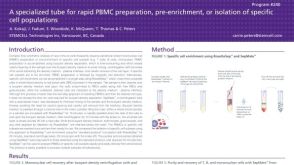 科学海报A Specialized Tube for Rapid PBMC Preparation, Pre-Enrichment, or Isolation of Specific Cell Populations
 沪公网安备31010102008431号