Kwok CTD et al. (MAR 2016)
Stem Cell Research 16 3 651--661
The Forkhead box transcription factor FOXM1 is required for the maintenance of cell proliferation and protection against oxidative stress in human embryonic stem cells
Human embryonic stem cells (hESCs) exhibit unique cell cycle structure,self-renewal and pluripotency. The Forkhead box transcription factor M1 (FOXM1) is critically required for the maintenance of pluripotency in mouse embryonic stem cells and mouse embryonal carcinoma cells,but its role in hESCs remains unclear. Here,we show that FOXM1 expression was enriched in undifferentiated hESCs and was regulated in a cell cycle-dependent manner with peak levels detected at the G2/M phase. Expression of FOXM1 did not correlate with OCT4 and NANOG during in vitro differentiation of hESCs. Importantly,knockdown of FOXM1 expression led to aberrant cell cycle distribution with impairment in mitotic progression but showed no profound effect on the undifferentiated state. Interestingly,FOXM1 depletion sensitized hESCs to oxidative stress. Moreover,genome-wide analysis of FOXM1 targets by ChIP-seq identified genes important for M phase including CCNB1 and CDK1,which were subsequently confirmed by ChIP and RNA interference analyses. Further peak set comparison against a differentiating hESC line and a cancer cell line revealed a substantial difference in the genomic binding profile of FOXM1 in hESCs. Taken together,our findings provide the first evidence to support FOXM1 as an important regulator of cell cycle progression and defense against oxidative stress in hESCs.
View Publication
产品类型:
产品号#:
05110
05850
05857
05870
05875
85850
85857
85870
85875
产品名:
STEMdiff™定型内胚层检测试剂盒
mTeSR™1
mTeSR™1
Hirano I et al. (AUG 2009)
The Journal of biological chemistry 284 33 22155--65
Depletion of Pleckstrin homology domain leucine-rich repeat protein phosphatases 1 and 2 by Bcr-Abl promotes chronic myelogenous leukemia cell proliferation through continuous phosphorylation of Akt isoforms.
The constitutive activation of the phosphatidylinositol 3-kinase (PI3K)/Akt pathway commonly occurs in cancers and is a crucial event in tumorigenesis. Chronic myelogenous leukemia (CML) is characterized by a reciprocal chromosomal translocation (9;22) that generates the Bcr-Abl fusion gene. The PI3K/Akt pathway is activated by Bcr-Abl chimera protein and mediates the leukemogenesis in CML. However,the mechanism by which Bcr-Abl activates the PI3K/Akt pathway is not completely understood. In the present study,we found that pleckstrin homology domain leucine-rich repeat protein phosphatases 1 and 2 (PHLPP1 and PHLPP2) were depleted in CML cells. We investigated the interaction between PHLPPs and Bcr-Abl in CML cell lines and Bcr-Abl+ progenitor cells from CML patients. The Abl kinase inhibitors and depletion of Bcr-Abl induced the expression of PHLPP1 and PHLPP2,which dephosphorylated Ser-473 on Akt1,-2,and -3,resulting in inhibited proliferation of CML cells. The reduction of PHLPP1 and PHLPP2 expression by short interfering RNA in CML cells weakened the Abl kinase inhibitor-mediated inhibition of proliferation. In colony-forming unit-granulocyte,erythroid,macrophage,megakaryocyte; colony-forming unit-granulocyte,macrophage; and burst-forming unit-erythroid,treatment with the Abl kinase inhibitors and depletion of Bcr-Abl induced PHLPP1 and PHLPP2 expression and inhibited colony formation of Bcr-Abl+ progenitor cells,whereas depletion of PHLPP1 and PHLPP2 weakened the inhibition of colony formation activity by the Abl kinase inhibitors in Bcr-Abl+ progenitor cells. Thus,Bcr-Abl represses the expression of PHLPP1 and PHLPP2 and continuously activates Akt1,-2,and -3 via phosphorylation on Ser-473,resulting in the proliferation of CML cells.
View Publication
产品类型:
产品号#:
01700
01705
04435
04445
01702
产品名:
ALDEFLUOR™ 试剂盒
ALDEFLUOR™ DEAB试剂, 1.5 mM, 1 mL
MethoCult™ H4435 Enriched
MethoCult™ H4435 Enriched
ALDEFLUOR™检测缓冲液
McPherson CA et al. (JUL 2011)
Brain,behavior,and immunity 25 5 850--62
Interleukin (IL)-1 and IL-6 regulation of neural progenitor cell proliferation with hippocampal injury: differential regulatory pathways in the subgranular zone (SGZ) of the adolescent and mature mouse brain.
Current data suggests an association between elevations in interleukin 1 (IL-1)α,IL-1β,and IL-6 and the proliferation of neural progenitor cells (NPCs) following brain injury. A limited amount of work implicates changes in these pro-inflammatory responses with diminished NPC proliferation observed as a function of aging. In the current study,adolescent (21day-old) and 1year-old CD-1 male mice were injected with trimethyltin (TMT,2.3mg/kg,i.p.) to produce acute apoptosis of hippocampal dentate granule cells. In this model,fewer 5-bromo-2'-deoxyuridine (BrdU)+ NPC were observed in both naive and injured adult hippocampus as compared to the corresponding number seen in adolescent mice. At 48h post-TMT,a similar level of neuronal death was observed across ages,yet activated ameboid microglia were observed in the adolescent and hypertrophic process-bearing microglia in the adult. IL-1α mRNA levels were elevated in the adolescent hippocampus; IL-6 mRNA levels were elevated in the adult. In subgranular zone (SGZ) isolated by laser-capture microdissection,IL-1β was detected but not elevated by TMT,IL-1a was elevated at both ages,while IL-6 was elevated only in the adult. Naïve NPCs isolated from the hippocampus expressed transcripts for IL-1R1,IL-6Rα,and gp130 with significantly higher levels of IL-6Rα mRNA in the adult. In vitro,IL-1α (150pg/ml) stimulated proliferation of adolescent NPCs; IL-6 (10ng/ml) inhibited proliferation of adolescent and adult NPCs. Microarray analysis of SGZ post-TMT indicated a prominence of IL-1a/IL-1R1 signaling in the adolescent and IL-6/gp130 signaling in the adult.
View Publication
The enzymatic activity of human aldehyde dehydrogenases 1A2 and 2 (ALDH1A2 and ALDH2) is detected by Aldefluor, inhibited by diethylaminobenzaldehyde and has significant effects on cell proliferation and drug resistance.
There has been a new interest in using aldehyde dehydrogenase (ALDH) activity as one marker for stem cells since the Aldefluor flow cytometry-based assay has become available. Diethylaminobenzaldehyde (DEAB),used in the Aldeflour assay,has been considered a specific inhibitor for ALDH1A1 isoform. In this study,we explore the effects of human ALDH isoenzymes,ALDH1A2 and ALDH2,on drug resistance and proliferation,and the specificity of DEAB as an inhibitor. We also screened for the expression of 19 ALDH isoenzymes in K562 cells using TaqMan Low Density Array (TLDA). We used lentiviral vectors containing the full cDNA length of either ALDH2 or ALDH1A2 to over express the enzymes in K562 leukemia and H1299 lung cancer cell lines. Successful expression was measured by activity assay,Western blot,RT-PCR,and Aldefluor assay. Both cell lines,with either ALDH1A2 or ALDH2,exhibited higher cell proliferation rates,higher clonal efficiency,and increased drug resistance to 4-hydroperoxycyclophosphamide and doxorubicin. In order to study the specificity of known ALDH activity inhibitors,DEAB and disulfiram,we incubated each cell line with either inhibitor and measured the remaining ALDH enzymatic activity. Both inhibitors reduced ALDH activity of both isoenzymes by 65-90%. Furthermore,our TLDA results revealed that ALDH1,ALDH7,ALDH3 and ALDH8 are expressed in K562 cells. We conclude that DEAB is not a specific inhibitor for ALDH1A1 and that Aldefluor assay is not specific for ALDH1A1 activity. In addition,other ALDH isoenzymes seem to play a major role in the biology and drug resistance of various malignant cells.
View Publication
产品类型:
产品号#:
01700
01705
01702
产品名:
ALDEFLUOR™ 试剂盒
ALDEFLUOR™ DEAB试剂, 1.5 mM, 1 mL
ALDEFLUOR™检测缓冲液
Sung B et al. (MAY 2008)
Blood 111 10 4880--91
Anacardic acid (6-nonadecyl salicylic acid), an inhibitor of histone acetyltransferase, suppresses expression of nuclear factor-kappaB-regulated gene products involved in cell survival, proliferation, invasion, and inflammation through inhibition of the i
Anacardic acid (6-pentadecylsalicylic acid) is derived from traditional medicinal plants,such as cashew nuts,and has been linked to anticancer,anti-inflammatory,and radiosensitization activities through a mechanism that is not yet fully understood. Because of the role of nuclear factor-kappaB (NF-kappaB) activation in these cellular responses,we postulated that anacardic acid might interfere with this pathway. We found that this salicylic acid potentiated the apoptosis induced by cytokine and chemotherapeutic agents,which correlated with the down-regulation of various gene products that mediate proliferation (cyclin D1 and cyclooxygenase-2),survival (Bcl-2,Bcl-xL,cFLIP,cIAP-1,and survivin),invasion (matrix metalloproteinase-9 and intercellular adhesion molecule-1),and angiogenesis (vascular endothelial growth factor),all known to be regulated by the NF-kappaB. We found that anacardic acid inhibited both inducible and constitutive NF-kappaB activation; suppressed the activation of IkappaBalpha kinase that led to abrogation of phosphorylation and degradation of IkappaBalpha; inhibited acetylation and nuclear translocation of p65; and suppressed NF-kappaB-dependent reporter gene expression. Down-regulation of the p300 histone acetyltransferase gene by RNA interference abrogated the effect of anacardic acid on NF-kappaB suppression,suggesting the critical role of this enzyme. Overall,our results demonstrate a novel role for anacardic acid in potentially preventing or treating cancer through modulation of NF-kappaB signaling pathway.
View Publication
产品类型:
产品号#:
73192
73194
产品名:
Van Meter MEM et al. (MAY 2007)
Blood 109 9 3945--52
K-RasG12D expression induces hyperproliferation and aberrant signaling in primary hematopoietic stem/progenitor cells.
Defining how cancer-associated mutations perturb signaling networks in stem/progenitor populations that are integral to tumor formation and maintenance is a fundamental problem with biologic and clinical implications. Point mutations in RAS genes contribute to many cancers,including myeloid malignancies. We investigated the effects of an oncogenic Kras(G12D) allele on phosphorylated signaling molecules in primary c-kit(+) lin(-/low) hematopoietic stem/progenitor cells. Comparison of wild-type and Kras(G12D) c-kit(+) lin(-/low) cells shows that K-Ras(G12D) expression causes hyperproliferation in vivo and results in abnormal levels of phosphorylated STAT5,ERK,and S6 under basal and stimulated conditions. Whereas Kras(G12D) cells demonstrate hyperactive signaling after exposure to granulocyte-macrophage colony-stimulating factor,we unexpectedly observe a paradoxical attenuation of ERK and S6 phosphorylation in response to stem cell factor. These studies provide direct biochemical evidence that cancer stem/progenitor cells remodel signaling networks in response to oncogenic stress and demonstrate that multi-parameter flow cytometry can be used to monitor the effects of targeted therapeutics in vivo. This strategy has broad implications for defining the architecture of signaling networks in primary cancer cells and for implementing stem cell-targeted interventions.
View Publication
产品类型:
产品号#:
03231
03434
03444
产品名:
MethoCult™ M3231
MethoCult™ GF M3434
MethoCult™ GF M3434
Kandilci A and Grosveld GC (AUG 2009)
Blood 114 8 1596--606
Reintroduction of CEBPA in MN1-overexpressing hematopoietic cells prevents their hyperproliferation and restores myeloid differentiation.
Forced expression of MN1 in primitive mouse hematopoietic cells causes acute myeloid leukemia and impairs all-trans retinoic acid-induced granulocytic differentiation. Here,we studied the effects of MN1 on myeloid differentiation and proliferation using primary human CD34(+) hematopoietic cells,lineage-depleted mouse bone marrow cells,and bipotential (granulocytic/monocytic) human acute myeloid leukemia cell lines. We show that exogenous MN1 stimulated the growth of CD34(+) cells,which was accompanied by enhanced survival and increased cell cycle traverse in cultures supporting progenitor cell growth. Forced MN1 expression impaired both granulocytic and monocytic differentiation in vitro in primary hematopoietic cells and acute myeloid leukemia cell lines. Endogenous MN1 expression was higher in human CD34(+) cells compared with both primary and in vitro-differentiated monocytes and granulocytes. Microarray and real-time reverse-transcribed polymerase chain reaction analysis of MN1-overexpressing CD34(+) cells showed down-regulation of CEBPA and its downstream target genes. Reintroduction of conditional and constitutive CEBPA overcame the effects of MN1 on myeloid differentiation and inhibited MN1-induced proliferation in vitro. These results indicate that down-regulation of CEBPA activity contributes to MN1-modulated proliferation and impaired myeloid differentiation of hematopoietic cells.
View Publication
Sox2 expression defines a heterogeneous population of neurosphere-forming cells in the adult murine brain.
The identification of neural stem cells (NSCs) in situ has been prevented by the inability to identify a marker consistently expressed in all adult NSCs and is thus generally accomplished using the in vitro neurosphere-forming assay. The high-mobility group transcription factor Sox2 is expressed in embryonic neural epithelial stem cells; because these cells are thought to give rise to the adult NSC population,we hypothesized that Sox2 may continue to be expressed in adult NSCs. Using Sox2:EGFP transgenic mice,we show that Sox2 is expressed in neurogenic regions along the rostral-caudal axis of the central nervous system throughout life. Furthermore,all neurospheres derived from these neurogenic regions express Sox2,suggesting that Sox2 is indeed expressed in adult NSCs. We demonstrate that NSCs are heterogeneous within the adult brain,with differing capacities for cell production. In vitro,all neurospheres express Sox2,but the expression of markers common to early progenitor cells within individual neurospheres varies; this heterogeneity of NSCs is mirrored in vivo. For example,both glial fibrillary acidic protein and NG2 are expressed within individual neurospheres,but their expression is mutually exclusive; likewise,these two markers show distinct staining patterns within the Sox2+ regions of the brain's neurogenic regions. Thus,we propose that the expression of Sox2 is a unifying characteristic of NSCs in the adult brain,but that not all NSCs maintain the ability to form all neural cell types in vivo.
View Publication


 EasySep™小鼠TIL(CD45)正选试剂盒





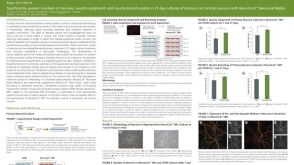 科学海报Significantly Greater Numbers of Neurons, Neurite Outgrowth and Branch Points in 21 Day Cultures of Primary Rat Cortical Neurons
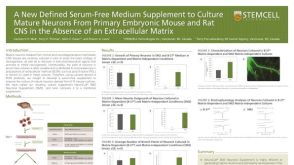 科学海报A New Defined Serum-Free Medium Supplement to Culture Mature Neurons from Primary Embryonic Mouse and Rat CNS
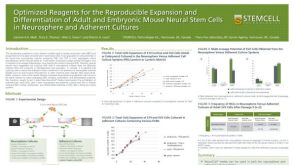 科学海报Optimized Reagents for the Reproducible Expansion and Differentiation of Adult and Embryonic Mouse Neural Stem Cells in Neurosphere and Adherent Cultures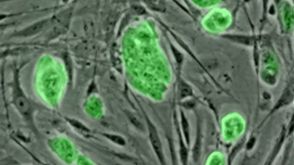

 沪公网安备31010102008431号