Repression of Id2 expression by Gfi-1 is required for B-cell and myeloid development.
The development of mature blood cells from hematopoietic stem cells requires coordinated activities of transcriptional networks. Transcriptional repressor growth factor independence 1 (Gfi-1) is required for the development of B cells,T cells,neutrophils,and for the maintenance of hematopoietic stem cell function. However,the mechanisms by which Gfi-1 regulates hematopoiesis and how Gfi-1 integrates into transcriptional networks remain unclear. Here,we provide evidence that Id2 is a transcriptional target of Gfi-1,and repression of Id2 by Gfi-1 is required for B-cell and myeloid development. Gfi-1 binds to 3 conserved regions in the Id2 promoter and represses Id2 promoter activity in transient reporter assays. Increased Id2 expression was observed in multipotent progenitors,myeloid progenitors,T-cell progenitors,and B-cell progenitors in Gfi-1(-/-) mice. Knockdown of Id2 expression or heterozygosity at the Id2 locus partially rescues the B-cell and myeloid development but not the T-cell development in Gfi-1(-/-) mice. These studies demonstrate a role of Id2 in mediating Gfi-1 functions in B-cell and myeloid development and provide a direct link between Gfi-1 and the B-cell transcriptional network by its ability to repress Id2 expression.
View Publication
产品类型:
产品号#:
03234
产品名:
MethoCult™ M3234
Staron M et al. (JUN 2011)
Blood 117 26 7136--44
Heat-shock protein gp96/grp94 is an essential chaperone for the platelet glycoprotein Ib-IX-V complex.
The platelet glycoprotein Ib-IX-V complex (GPIb-IX-IV) is the receptor for VWF and is responsible for VWF-mediated platelet activation and aggregation. Loss of the GPIb-IX-V complex is pathogenic for Bernard-soulier Syndrome (BSS),which is characterized by macrothrombocytopenia and impaired platelet function. It remains unclear how the GPIb-IX-V complex is assembled and whether there is a role for a specific molecular chaperone in the process. In the present study,we report that the assembly of the GPIb-IX-V complex depends critically on a molecular chaperone in the endoplasmic reticulum (ER): gp96 (also known as grp94 and HSP90b1). gp96/grp94 deletion in the murine hematopoietic system results in thrombocytopenia,prolonged bleeding time,and giant platelets that are clinically indistinguishable from human BSS. Loss of gp96/grp94 in vivo and in vitro leads to the concomitant reduction in GPIb-IX complex expression due to ER-associated degradation. We further demonstrate that gp96/grp94 binds selectively to the GPIX subunit,but not to gpIbα or gpIbβ. Therefore,we identify the platelet GPIX subunit of the GPIb-IX-V complex as an obligate and novel client of gp96/grp94.
View Publication
产品类型:
产品号#:
03434
03444
产品名:
MethoCult™ GF M3434
MethoCult™ GF M3434
Rö et al. (SEP 2016)
Nature methods 13 9 777--783
TRIC: an automated alignment strategy for reproducible protein quantification in targeted proteomics.
Next-generation mass spectrometric (MS) techniques such as SWATH-MS have substantially increased the throughput and reproducibility of proteomic analysis,but ensuring consistent quantification of thousands of peptide analytes across multiple liquid chromatography-tandem MS (LC-MS/MS) runs remains a challenging and laborious manual process. To produce highly consistent and quantitatively accurate proteomics data matrices in an automated fashion,we developed TRIC (http://proteomics.ethz.ch/tric/),a software tool that utilizes fragment-ion data to perform cross-run alignment,consistent peak-picking and quantification for high-throughput targeted proteomics. TRIC reduced the identification error compared to a state-of-the-art SWATH-MS analysis without alignment by more than threefold at constant recall while correcting for highly nonlinear chromatographic effects. On a pulsed-SILAC experiment performed on human induced pluripotent stem cells,TRIC was able to automatically align and quantify thousands of light and heavy isotopic peak groups. Thus,TRIC fills a gap in the pipeline for automated analysis of massively parallel targeted proteomics data sets.
View Publication
产品类型:
产品号#:
05850
05857
05870
05875
85850
85857
85870
85875
产品名:
mTeSR™1
mTeSR™1
K. K. Dunn and S. P. Palecek ( 2018)
Frontiers in medicine 5 110
Engineering Scalable Manufacturing of High-Quality Stem Cell-Derived Cardiomyocytes for Cardiac Tissue Repair.
Recent advances in the differentiation and production of human pluripotent stem cell (hPSC)-derived cardiomyocytes (CMs) have stimulated development of strategies to use these cells in human cardiac regenerative therapies. A prerequisite for clinical trials and translational implementation of hPSC-derived CMs is the ability to manufacture safe and potent cells on the scale needed to replace cells lost during heart disease. Current differentiation protocols generate fetal-like CMs that exhibit proarrhythmogenic potential. Sufficient maturation of these hPSC-derived CMs has yet to be achieved to allow these cells to be used as a regenerative medicine therapy. Insights into the native cardiac environment during heart development may enable engineering of strategies that guide hPSC-derived CMs to mature. Specifically,considerations must be made in regard to developing methods to incorporate the native intercellular interactions and biomechanical cues into hPSC-derived CM production that are conducive to scale-up.
View Publication
产品类型:
产品号#:
07930
07931
07940
07955
07959
07952
100-1061
产品名:
CryoStor® CS10
CryoStor® CS10
CryoStor® CS10
CryoStor® CS10
CryoStor® CS10
CryoStor® CS10
CryoStor® CS10
Wernig M et al. (AUG 2008)
Nature biotechnology 26 8 916--24
A drug-inducible transgenic system for direct reprogramming of multiple somatic cell types.
The study of induced pluripotency is complicated by the need for infection with high-titer retroviral vectors,which results in genetically heterogeneous cell populations. We generated genetically homogeneous 'secondary' somatic cells that carry the reprogramming factors as defined doxycycline (dox)-inducible transgenes. These cells were produced by infecting fibroblasts with dox-inducible lentiviruses,reprogramming by dox addition,selecting induced pluripotent stem cells and producing chimeric mice. Cells derived from these chimeras reprogram upon dox exposure without the need for viral infection with efficiencies 25- to 50-fold greater than those observed using direct infection and drug selection for pluripotency marker reactivation. We demonstrate that (i) various induction levels of the reprogramming factors can induce pluripotency,(ii) the duration of transgene activity directly correlates with reprogramming efficiency,(iii) cells from many somatic tissues can be reprogrammed and (iv) different cell types require different induction levels. This system facilitates the characterization of reprogramming and provides a tool for genetic or chemical screens to enhance reprogramming.
View Publication
产品类型:
产品号#:
72742
产品名:
强力霉素(盐酸盐)
Distler JHW and Distler O ( 2008)
Rheumatology (Oxford,England) 47 Suppl 5 suppl{\_}5 v10--1
Intracellular tyrosine kinases as novel targets for anti-fibrotic therapy in systemic sclerosis.
Tissue fibrosis is a major cause of death in SSc,but therapies that target selectively fibrosis are not yet available for routine clinical use. Recent pre-clinical studies suggest that selective tyrosine kinase inhibitors that target c-Abl,PDGF receptor or Src kinases might be promising targets for anti-fibrotic approaches. Dual inhibition of c-Abl and PDGF receptor by imatinib and nilotinib,and inhibition of Src kinases either selectively by SU6656 or in combination with c-Abl and PDGF by dasatinib exerted potent anti-fibrotic effects. Imatinib,nilotinib,dasatinib and SU6656 reduced dose-dependently the synthesis of extracellular matrix protein in human dermal fibroblasts in vitro and prevented fibrosis in the mouse model of bleomycin-induced skin fibrosis. Clinical data from patients with chronic myelogenous leukaemia suggest that imatinib,nilotinib and dasatinib are well tolerated. Based on the promising pre-clinical data,imatinib is currently evaluated in clinical trials for the treatment of fibrosis in SSc and trials with other tyrosine kinase inhibitors are in preparation.
View Publication
产品类型:
产品号#:
73082
73084
产品名:
达沙替尼
达沙替尼
Rohatgi R et al. ( 2009)
Proceedings of the National Academy of Sciences of the United States of America 106 9 3196--3201
Hedgehog signal transduction by Smoothened: pharmacologic evidence for a 2-step activation process.
The Hedgehog (Hh) signaling pathway controls growth,cell fate decisions,and morphogenesis during development. Damage to Hh transduction machinery can lead to birth defects and cancer. The transmembrane protein Smoothened (Smo) relays the Hh signal and is an important drug target in cancer. Smo enrichment in primary cilia is thought to drive activation of target genes. Using small-molecule agonists and antagonists to dissect Smo function,we find that Smo enrichment in cilia is not sufficient for signaling and a distinct second step is required for full activation. This 2-step mechanism--localization followed by activation--has direct implications for the design and use of anticancer therapeutics targeted against Smo.
View Publication
产品类型:
产品号#:
73412
73414
产品名:
SAG
SAG
N. L. Urizar et al. (may 2002)
Science (New York,N.Y.) 296 5573 1703--6
A natural product that lowers cholesterol as an antagonist ligand for FXR.
Extracts of the resin of the guggul tree (Commiphora mukul) lower LDL (low-density lipoprotein) cholesterol levels in humans. The plant sterol guggulsterone [4,17(20)-pregnadiene-3,16-dione] is the active agent in this extract. We show that guggulsterone is a highly efficacious antagonist of the farnesoid X receptor (FXR),a nuclear hormone receptor that is activated by bile acids. Guggulsterone treatment decreases hepatic cholesterol in wild-type mice fed a high-cholesterol diet but is not effective in FXR-null mice. Thus,we propose that inhibition of FXR activation is the basis for the cholesterol-lowering activity of guggulsterone. Other natural products with specific biologic effects may modulate the activity of FXR or other relatively promiscuous nuclear hormone receptors.
View Publication
产品类型:
产品号#:
73702
产品名:
Drayer AL et al. (JAN 2006)
Stem cells (Dayton,Ohio) 24 1 105--14
Mammalian target of rapamycin is required for thrombopoietin-induced proliferation of megakaryocyte progenitors.
Thrombopoietin (TPO) is a potent regulator of megakaryopoiesis and stimulates megakaryocyte (MK) progenitor expansion and MK differentiation. In this study,we show that TPO induces activation of the mammalian target of rapamycin (mTOR) signaling pathway,which plays a central role in translational regulation and is required for proliferation of MO7e cells and primary human MK progenitors. Treatment of MO7e cells,human CD34+,and primary MK cells with the mTOR inhibitor rapamycin inhibits TPO-induced cell cycling by reducing cells in S phase and blocking cells in G0/G1. Rapamycin markedly inhibits the clonogenic growth of MK progenitors with high proliferative capacity but does not reduce the formation of small MK colonies. Addition of rapamycin to MK suspension cultures reduces the number of MK cells,but inhibition of mTOR does not significantly affect expression of glycoproteins IIb/IIIa (CD41) and glycoprotein Ib (CD42),nuclear polyploidization levels,cell size,or cell survival. The downstream effectors of mTOR,p70 S6 kinase (S6K) and 4E-binding protein 1 (4E-BP1),are phosphorylated by TPO in a rapamycin- and LY294002-sensitive manner. Part of the effect of the phosphatidyl inositol 3-kinase pathway in regulating megakaryopoiesis may be mediated by the mTOR/S6K/4E-BP1 pathway. In conclusion,these data demonstrate that the mTOR pathway is activated by TPO and plays a critical role in regulating proliferation of MK progenitors,without affecting differentiation or cell survival.
View Publication


 EasySep™小鼠TIL(CD45)正选试剂盒




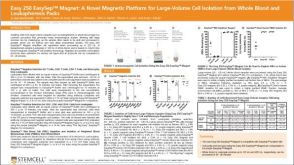 科学海报Easy 250 EasySep™ Magnet: A Novel Magnetic Platform for Large-Volume Cell Isolation
 39:33
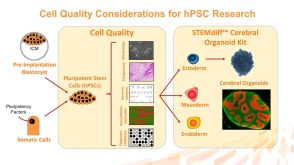
线上讲座Quality by Design: Reagents and Support for hPSC-Derived Cell and Gene Therapies发布日期: 08/16/2021
39:33
线上讲座Quality by Design: Reagents and Support for hPSC-Derived Cell and Gene Therapies发布日期: 08/16/2021

 沪公网安备31010102008431号