T. P. Resende et al. (feb 2020)
Journal of animal science 98 2
Evaluation of swine enteroids as in vitro models for Lawsonia intracellularis infection1,2.
The enteric pathogen Lawsonia intracellularis is one of the main causes of diarrhea and compromised weight gain in pigs worldwide. Traditional cell-line cultures have been used to study L. intracellularis pathogenesis. However,these systems fail to reproduce the epithelial changes observed in the intestines of L. intracellularis-infected pigs,specifically,the changes in intestinal cell constitution and gene expression. A more physiologically accurate and state-of-the-art model is provided by swine enteroids derived from stem cell-containing crypts from healthy pigs. The objective of this study was to verify the feasibility of two-dimensional swine enteroids as in vitro models for L. intracellularis infection. We established both three- and two-dimensional swine enteroid cultures derived from intestinal crypts. The two-dimensional swine enteroids were infected by L. intracellularis in four independent experiments. Enteroid-infected samples were collected 3 and 7 d postinfection for analysis using real-time quantitative PCR and L. intracellularis immunohistochemistry. In this study,we show that L. intracellularis is capable of infecting and replicating intracellularly in two-dimensional swine enteroids derived from ileum.
View Publication
Kakarala M and Wicha MS (JUN 2008)
Journal of clinical oncology : official journal of the American Society of Clinical Oncology 26 17 2813--20
Implications of the cancer stem-cell hypothesis for breast cancer prevention and therapy.
Recent research in breast biology has provided support for the cancer stem-cell hypothesis. Two important components of this hypothesis are that tumors originate in mammary stem or progenitor cells as a result of dysregulation of the normally tightly regulated process of self-renewal. As a result,tumors contain and are driven by a cellular subcomponent that retains key stem-cell properties including self-renewal,which drives tumorigenesis and differentiation that contributes to cellular heterogeneity. Advances in stem-cell technology have led to the identification of stem cells in normal and malignant breast tissue. The study of these stem cells has helped to elucidate the origin of the molecular complexity of human breast cancer. The cancer stem-cell hypothesis has important implications for early detection,prevention,and treatment of breast cancer. Both hereditary and sporadic breast cancers may develop through dysregulation of stem-cell self-renewal pathways. These aberrant stem cells may provide targets for the development of cancer prevention strategies. Furthermore,because breast cancer stem cells may be highly resistant to radiation and chemotherapy,the development of more effective therapies for this disease may require the effective targeting of this cell population.
View Publication
产品类型:
产品号#:
01700
01705
01702
产品名:
ALDEFLUOR™ 试剂盒
ALDEFLUOR™ DEAB试剂, 1.5 mM, 1 mL
ALDEFLUOR™检测缓冲液
Gordon R et al. (JAN 2011)
Journal of neuroscience methods 194 2 287--96
A simple magnetic separation method for high-yield isolation of pure primary microglia.
Microglial cells play a dynamic role in the brain beyond their established function of immune surveillance. Activated microglia play key roles in neural development,neuroinflammation,neural repair and neurotoxicity. They are particularly important in several neurodegenerative diseases in which sustained microglial activation contributes to the progression of neurodegenerative processes. Consequently,understanding microglial function in CNS health and disease has become an area of active research in recent years. However,a significant obstacle to progress in this field has been the inherent difficulties in obtaining large amounts of primary microglial cells to routinely perform mechanistic studies and characterize signaling pathways regulating the dynamics of microglial activation. Herein,we describe a novel column-free magnetic separation protocol for high-yield isolation of primary microglia from mouse postnatal mixed glial cultures. The procedure is based on optimized culture conditions that enable high microglial cell densities in confluent mixed glial cultures followed by highly efficient recovery of pure microglia by magnetic separation. The novel column-free magnetic separation system utilizes tetrameric antibody complexes (TAC) with dual specificity for CD11b-PE labeled microglia and dextran magnetic nanoparticles. An FcR blocker (anti-CD16/32) is added to enhance the purity of the microglial separation by preventing non-specific labeling of other cell types. This procedure yields on average textgreater3×10�?� microglial cells per mouse pup,with a remarkable purity of 97% and recovery of around 87% of microglia from the mixed glial population. Importantly,the microglia obtained by this method are fully functional and respond like cells obtained by conventional isolation techniques.
View Publication
产品类型:
产品号#:
18770
18770RF
产品名:
Abramovitz M et al. (JAN 1994)
The Journal of biological chemistry 269 4 2632--6
Cloning and expression of a cDNA for the human prostanoid FP receptor.
A cDNA clone coding for a functional human prostanoid FP receptor has been isolated from a uterus cDNA library. The human FP receptor consists of 359 amino acid residues with a predicted molecular mass of 40,060,and has the seven putative transmembrane domains characteristic of G-protein-coupled receptors. Challenge of Xenopus oocytes expressing the FP receptor with 10 nM of either prostaglandin (PG) F2 alpha or the selective FP-receptor agonist fluprostenol resulted in an elevation in intracellular Ca2+. Radioreceptor binding studies using membranes prepared from mammalian COS cells transfected with the FP receptor cDNA showed that the rank order of potency for prostaglandins and prostaglandin analogs in competition for [3H]PGF2 alpha specific binding sites was as predicted for the FP receptor,with PGF2 alpha approximately fluprostenol textgreater PGD2 textgreater PGE2 textgreater U46619 textgreater iloprost. In summary,we have cloned the human prostanoid FP receptor which is functionally coupled to the Ca2+ signalling pathway.
View Publication
产品类型:
产品号#:
73672
73674
产品名:
J. M. Horcas-Nieto et al. (Sep 2025)
Frontiers in Toxicology 7 1
Implementing a trilineage differentiation in the ReproTracker assay for improved teratogenicity assessment
IntroductionExposure to teratogenic compounds during pregnancy can lead to significant birth defects. Given the considerable variation in drug responses across species,along with the financial and ethical challenges associated with animal testing,the development of advanced human-based in vitro assays is imperative for effectively identifying potential human teratogens. Previously,we developed a human induced pluripotent stem cells (hiPSCs)-based biomarker assay,ReproTracker,that follows the differentiation of hiPSCs into hepatocytes and cardiomyocytes. The assay combines morphological profiling with the assessment of time-dependent expression patterns of cell-specific biomarkers to detect developmental toxicity responses.MethodsTo further increase the predictability of the assay in identifying potential teratogens,we added differentiation of hiPSCs towards neural rosette-like cells. We evaluated the performance of the extended assay with a set of 51 well-known in vivo teratogens and non-teratogens,including the compounds listed in the ICH S5 reference list.ResultsThe optimized assay correctly identified (neuro)developmental toxicants that were not detected in the hepatocyte and cardiomyocyte differentiation assays. These compounds selectively downregulated gene and protein expression of the neuroectodermal marker PAX6 and/or neural rosette marker NESTIN in a concentration-dependent manner and disrupted the differentiation of hiPSCs towards neural rosette-like cells. Overall,based on the current dataset,the addition of neural commitment improved the assay accuracy (from 72.55% to 86.27%) and sensitivity (from 67.50% to 87.50%),when compared to the previously described assay.DiscussionIn summary,trilineage differentiation expanded the spectrum of teratogenic agents detectable by ReproTracker,making the assay an invaluable tool for early in vitro teratogenicity screening.
View Publication
产品类型:
产品号#:
85850
85857
产品名:
mTeSR™1
mTeSR™1
(Jun 2025)
Nucleic Acids Research 53 11
A flexible, high-throughput system for studying live mRNA translation with HiBiT technology
HiBiT is an engineered luciferase’s 11-amino-acid component that can be introduced as a tag at either terminus of a protein of interest. When the LgBiT component and a substrate are present,HiBiT and LgBiT dimerize forming a functional luciferase. The HiBiT technology has been extensively used for high-throughput protein turnover studies in cells. Here,we have adapted the use of the HiBiT technology to quantify messenger RNA (mRNA) translation temporally in vitro in the rabbit reticulocyte system and in cellulo in HEK293 cells constitutively expressing LgBiT. The assay system can uniquely detect differences in cap,5?UTR,modified nucleotide composition,coding sequence optimization and poly(A) length,and their effects on mRNA translation over time. Importantly,using these assays we established the optimal mRNA composition varied depending on the encoded protein of interest,highlighting the importance of screening methods tailored to the protein of interest,and not reliant on reporter proteins. Our findings demonstrated that HiBiT can be easily and readily adapted to monitor real-time mRNA translation in live cells and offers a novel and highly favourable method for the development of mRNA-based therapeutics.
View Publication


 EasySep™小鼠TIL(CD45)正选试剂盒





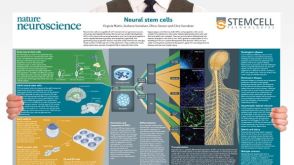 挂图Neural Stem Cells Overview of the types of NSCs and their potential use as therapeutic agents for disease
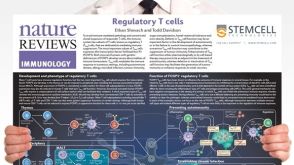 挂图Regulatory T Cells Overview of the development, phenotype and functions of regulatory T cells
 技术公告Protocol for Semi-Solid Hybridoma Cloning Using ClonaCell™-HY Medium in a 96-Well Plate


 沪公网安备31010102008431号