R. Kitte et al. (Jan 2025)
International Journal of Molecular Sciences 26 3
Optimal Chimeric Antigen Receptor (CAR)-mRNA for Transient CAR T Cell Generation
Genetically modified T lymphocytes expressing chimeric antigen receptors (CARs) are becoming increasingly important in the treatment of hematologic malignancies and are also intensively being investigated for other diseases such as autoimmune disorders and HIV. Current CAR T cell therapies predominantly use viral transduction methods which,despite their efficacy,raise safety concerns related to genomic integration and potentially associated malignancies as well as labor- and cost-intensive manufacturing. Therefore,non-viral gene transfer methods,especially mRNA-based approaches,have attracted research interest due to their transient modification and enhanced safety profile. In this study,the optimization of CAR-mRNA for T cell applications is investigated,focusing on the impact of mRNA modifications,in vitro transcription protocols,and purification techniques on the translation efficiency and immunogenicity of mRNA. Furthermore,the refined CAR-mRNA was used to generate transient CAR T cells from acute myeloid leukemia patient samples,demonstrating efficacy in vitro and proof-of-concept for clinically relevant settings. These results highlight the potential of optimized mRNA to produce transient and safe CAR T cells.
View Publication
Vessillier S et al. (SEP 2015)
Journal of immunological methods 424 43--52
Cytokine release assays for the prediction of therapeutic mAb safety in first-in man trials--Whole blood cytokine release assays are poorly predictive for TGN1412 cytokine storm.
The therapeutic monoclonal antibody (mAb) TGN1412 (anti-CD28 superagonist) caused near-fatal cytokine release syndrome (CRS) in all six volunteers during a phase-I clinical trial. Several cytokine release assays (CRAs) with reported predictivity for TGN1412-induced CRS have since been developed for the preclinical safety testing of new therapeutic mAbs. The whole blood (WB) CRA is the most widely used,but its sensitivity for TGN1412-like cytokine release was recently criticized. In a comparative study,using group size required for 90% power with 5% significance as a measure of sensitivity,we found that WB and 10% (v/v) WB CRAs were the least sensitive for TGN1412 as these required the largest group sizes (n = 52 and 79,respectively). In contrast,the peripheral blood mononuclear cell (PBMC) solid phase (SP) CRA was the most sensitive for TGN1412 as it required the smallest group size (n = 4). Similarly,the PBMC SP CRA was more sensitive than the WB CRA for muromonab-CD3 (anti-CD3) which stimulates TGN1412-like cytokine release (n = 4 and 4519,respectively). Conversely,the WB CRA was far more sensitive than the PBMC SP CRA for alemtuzumab (anti-CD52) which stimulates FcγRI-mediated cytokine release (n = 8 and 180,respectively). Investigation of potential factors contributing to the different sensitivities revealed that removal of red blood cells (RBCs) from WB permitted PBMC-like TGN1412 responses in a SP CRA,which in turn could be inhibited by the addition of the RBC membrane protein glycophorin A (GYPA); this observation likely underlies,at least in part,the poor sensitivity of WB CRA for TGN1412. The use of PBMC SP CRA for the detection of TGN1412-like cytokine release is recommended in conjunction with adequately powered group sizes for dependable preclinical safety testing of new therapeutic mAbs.
View Publication
产品类型:
产品号#:
18352
18352RF
产品名:
McCune K et al. (NOV 2010)
Oncology reports 24 5 1233--9
Loss of ERα and FOXA1 expression in a progression model of luminal type breast cancer: insights from PyMT transgenic mouse model.
The classification of breast cancer into multiple molecular subtypes has necessitated the need for biomarkers that can assess tumor progression and the effects of chemopreventive agents on specific breast cancer subtypes. The goal of this study was to identify biomarkers whose expression are altered along with estrogen receptor α (ERα) in the polyoma middle-T antigen (PyMT) transgenic model of breast cancer and to investigate the chemopreventive activity of phenethyl isothiocyanate (PEITC). The diet of PyMT female mice was fortified with PEITC (8 mmol/kg) and the mammary streak and/or gross tumors and metastases in lungs were subjected to immunohistochemical analyses for ERα,FOXA1,and GATA-3. FOXA1 is associated with luminal type A cancers,while GATA-3 is a marker of luminal progenitor cell differentiation. In both control and PEITC-treated groups,there was a progressive loss of ERα and FOXA1 but persistence of GATA-3 expression indicating that the tumors retain luminal phenotype. Overall,the PyMT induced tumors exhibited the entire gamut of phenotypes from ERα+/FOXA1+/GATA-3+ tumors in the early stage to ERα±/FOXA1-/GATA-3+ in the late stage. Thus,PyMT model serves as an excellent model for studying progression of luminal subtype tumors. PEITC treated animals had multiple small tumors,indicating delay in tumor progression. Although these tumors were histologically similar to those in controls,there was a lower expression of these biomarkers in normal luminal cells indicating delay in tumor initiation. In in vitro studies,PEITC depleted AldeFluor-positive putative stem/progenitor cells,which may partly be responsible for the delay in tumor initiation.
View Publication
产品类型:
产品号#:
01700
01705
01702
产品名:
ALDEFLUOR™ 试剂盒
ALDEFLUOR™ DEAB试剂, 1.5 mM, 1 mL
ALDEFLUOR™检测缓冲液
Pineda JR et al. (APR 2013)
EMBO Molecular Medicine 5 4 548--562
Vascular-derived TGF-β increases in the stem cell niche and perturbs neurogenesis during aging and following irradiation in the adult mouse brain
Neurogenesis decreases during aging and following cranial radiotherapy,causing a progressive cognitive decline that is currently untreatable. However,functional neural stem cells remained present in the subventricular zone of high dose-irradiated and aged mouse brains. We therefore investigated whether alterations in the neurogenic niches are perhaps responsible for the neurogenesis decline. This hypothesis was supported by the absence of proliferation of neural stem cells that were engrafted into the vascular niches of irradiated host brains. Moreover,we observed a marked increase in TGF-β1 production by endothelial cells in the stem cell niche in both middle-aged and irradiated mice. In co-cultures,irradiated brain endothelial cells induced the apoptosis of neural stem/progenitor cells via TGF-β/Smad3 signalling. Strikingly,the blockade of TGF-β signalling in vivo using a neutralizing antibody or the selective inhibitor SB-505124 significantly improved neurogenesis in aged and irradiated mice,prevented apoptosis and increased the proliferation of neural stem/progenitor cells. These findings suggest that anti-TGF-β-based therapy may be used for future interventions to prevent neurogenic collapse following radiotherapy or during aging.
View Publication
产品类型:
产品号#:
05700
05701
05702
产品名:
NeuroCult™ 基础培养基(小鼠和大鼠)
NeuroCult™ 扩增添加物(小鼠和大鼠)
NeuroCult™扩增试剂盒(小鼠和大鼠)
Schneider E et al. (SEP 2009)
Journal of immunology (Baltimore,Md. : 1950) 183 6 3591--7
IL-33 activates unprimed murine basophils directly in vitro and induces their in vivo expansion indirectly by promoting hematopoietic growth factor production.
IL-33,a new member of the IL-1 family,has been described as an important inducer of Th2 cytokines and mediator of inflammatory responses. In this study,we demonstrate that murine basophils sorted directly from the bone marrow,without prior exposure to IL-3 or Fc(epsilon)R cross-linking,respond to IL-33 alone by producing substantial amounts of histamine,IL-4,and IL-6. These cells express ST2 constitutively and generate a cytokine profile that differs from their IL-3-induced counterpart by a preferential production of IL-6. In vivo,IL-33 promotes basophil expansion in the bone marrow (BM) through an indirect mechanism of action depending on signaling through the beta(c) chain shared by receptors for IL-3,GM-CSF,and IL-5. IL-3 can still signal through its specific beta(IL-3) chain in these mutant mice,which implies that it is not the unique growth-promoting mediator in this setup,but requires IL-5 and/or GMCSF. Our results support a major role of the latter growth factor,which is readily generated by total BM cells as well as sorted basophils in response to IL-33 along with low amounts of IL-3. Furthermore,GM-CSF amplifies IL-3-induced differentiation of basophils from BM cells,whereas IL-5 that is also generated in vivo,affects neither their functions nor their growth in vitro or in vivo. In conclusion,our data provide the first evidence that IL-33 not only activates unprimed basophils directly,but also promotes their expansion in vivo through induction of GM-CSF and IL-3.
View Publication
Menon MP et al. (MAR 2006)
The Journal of clinical investigation 116 3 683--94
Signals for stress erythropoiesis are integrated via an erythropoietin receptor-phosphotyrosine-343-Stat5 axis.
Anemia due to chronic disease or chemotherapy often is ameliorated by erythropoietin (Epo). Present studies reveal that,unlike steady-state erythropoiesis,erythropoiesis during anemia depends sharply on an Epo receptor-phosphotyrosine-343-Stat5 signaling axis. In mice expressing a phosphotyrosine-null (PY-null) Epo receptor allele (EpoR-HM),severe and persistent anemia was induced by hemolysis or 5-fluorouracil. In short-term transplantation experiments,donor EpoR-HM bone marrow cells also failed to efficiently repopulate the erythroid compartment. In each context,stress erythropoiesis was rescued to WT levels upon the selective restoration of an EpoR PY343 Stat5-binding site (EpoR-H allele). As studied using a unique primary culture system,EpoR-HM erythroblasts exhibited marked stage-specific losses in Epo-dependent growth and survival. EpoR-H PY343 signals restored efficient erythroblast expansion,and the selective Epo induction of the Stat5 target genes proviral integration site-1 (Pim-1) and oncostatin-M. Bcl2-like 1 (Bcl-x),in contrast,was not significantly induced via WT-EpoR,EpoR-HM,or EpoR-H alleles. In Kit+ CD71+ erythroblasts,EpoR-PY343 signals furthermore enhanced SCF growth effects,and SCF modulation of Pim-1 kinase and oncostatin-M expression. In maturing Kit- CD71+ erythroblasts,oncostatin-M exerted antiapoptotic effects that likewise depended on EpoR PY343-mediated events. Stress erythropoiesis,therefore,requires stage-specific EpoR-PY343-Stat5 signals,some of which selectively bolster SCF and oncostatin-M action.
View Publication
产品类型:
产品号#:
19756
19756RF
产品名:
Deng Y et al. (JAN 2014)
Carbohydrate Polymers 101 1 36--39
Peptide-decorated polyvinyl alcohol/hyaluronan nanofibers for human induced pluripotent stem cell culture
Realization of the full potential of human induced pluripotent stem cells (hiPSCs) in clinical applications requires development of well-defined conditions for their growth and differentiation. A novel fully defined polyvinyl alcohol/hyaluronan (PVA/HA) polysaccharide nanofiber was developed for hiPSCs culture in commercially available xeno-free,chemically defined medium. Vitronectin peptide (VP) was immobilized to PVA/HA nanofibers through NHS/EDC chemistry. The hiPSCs successfully grew and proliferated on the VP-decorated PVA/HA nanofibers,similar to those on MatrigelTM. Such well-defined,xeno-free and safe nanofiber substrate that supports culture of hiPSCs will not only help to accelerate the translational perspectives of hiPSCs,but also provide a platform to investigate the cell-nanofiber interaction mechanisms that regulate stem cell proliferation and differentiation. ?? 2013 Elsevier Ltd. All rights reserved.
View Publication
产品类型:
产品号#:
05850
05857
05870
05875
85850
85857
85870
85875
产品名:
mTeSR™1
mTeSR™1
Ikeda Y et al. (MAR 2015)
Gene therapy 23 November 2015 256--262
A novel intranuclear RNA vector system for long-term stem cell modification.
Genetically modified stem and progenitor cells have emerged as a promising regenerative platform in the treatment of genetic and degenerative disorders,highlighted by their successful therapeutic use in inherent immunodeficiencies. However,biosafety concerns over insertional mutagenesis resulting from integrating recombinant viral vectors have overshadowed the widespread clinical applications of genetically modified stem cells. Here,we report an RNA-based episomal vector system,amenable for long-term transgene expression in stem cells. Specifically,we used a unique intranuclear RNA virus,Borna disease virus (BDV),as the gene transfer vehicle,capable of persistent infections in various cell types. BDV-based vectors allowed for long-term transgene expression in mesenchymal stem cells (MSCs) without affecting cellular morphology,cell surface CD105 expression,or the adipogenicity of MSCs. Similarly,replication-defective BDV vectors achieved long-term transduction of human induced pluripotent stem cells (iPSCs),while maintaining the ability to differentiate into three embryonic germ layers. Thus,the BDV-based vectors offer a genomic modification-free,episomal RNA delivery system for sustained stem cell transduction.Gene Therapy accepted article preview online,03 December 2015. doi:10.1038/gt.2015.108.
View Publication


 EasySep™小鼠TIL(CD45)正选试剂盒





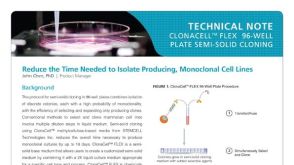 技术公告Protocol for Producing Monoclonal Cell Lines Using ClonaCell™ FLEX Semi-Solid Medium


 沪公网安备31010102008431号