Lee J-HJBJH et al. (APR 2015)
Stem Cells 33 4 1142--1152
Reversible lineage-specific priming of human embryonic stem cells can be exploited to optimize the yield of differentiated cells.
The clinical use of human embryonic stem cells (hESCs) requires efficient cellular expansion that must be paired with an ability to generate specialized progeny through differentiation. Self-renewal and differentiation are deemed inherent hallmarks of hESCs and a growing body of evidence suggests that initial culture conditions dictate these two aspects of hESC behavior. Here,we reveal that defined culture conditions using commercial mTeSR1 media augment the expansion of hESCs and enhance their capacity for neural differentiation at the expense of hematopoietic lineage competency without affecting pluripotency. This culture-induced modification was shown to be reversible,as culture in mouse embryonic fibroblast-conditioned media (MEF-CM) in subsequent passages allowed mTeSR1-expanded hESCs to re-establish hematopoietic differentiation potential. Optimal yield of hematopoietic cells can be achieved by expansion in mTeSR1 followed by a recovery period in MEF-CM. Furthermore,the lineage propensity to hematopoietic and neural cell types could be predicted via analysis of surrogate markers expressed by hESCs cultured in mTeSR1 versus MEF-CM,thereby circumventing laborious in vitro differentiation assays. Our study reveals that hESCs exist in a range of functional states and balance expansion with differentiation potential,which can be modulated by culture conditions in a predictive and quantitative manner. Stem Cells 2015;33:1142-1152.
View Publication
产品类型:
产品号#:
04230
05850
05857
05870
05875
85850
85857
85870
85875
产品名:
MethoCult™ H4230
mTeSR™1
mTeSR™1
Kennah E et al. (MAY 2009)
Blood 113 19 4646--55
Identification of tyrosine kinase, HCK, and tumor suppressor, BIN1, as potential mediators of AHI-1 oncogene in primary and transformed CTCL cells.
AHI-1 is an oncogene often targeted by provirus insertional mutagenesis in murine leukemias and lymphomas. Aberrant expression of human AHI-1 occurs in cutaneous T-cell lymphoma (CTCL) cells and in CD4(+)CD7(-) Sezary cells from patients with Sezary syndrome. Stable knockdown of AHI-1 using retroviral-mediated RNA interference in CTCL cells inhibits their transforming activity in vitro and in vivo. To identify genes involved in AHI-1-mediated transformation,microarray analysis was performed to identify differentially expressed genes in AHI-1-suppressed CTCL cells. Fifteen up-regulated and 6 down-regulated genes were identified and confirmed by quantitative reverse transcription-polymerase chain reaction. Seven were further confirmed in a microarray analysis of CD4(+)CD7(-) Sezary cells from Sezary syndrome patients. HCK and BIN1 emerged as new candidate cooperative genes,with differential protein expression,which correlates with observed transcript changes. Interestingly,changes in HCK phosphorylation and biologic response to its inhibitor,dasatinib,were observed in AHI-1-suppressed or -overexpressed cells. The tumor suppressor BIN1 physically interacts with MYC in CTCL cells,which also exhibit differential MYC protein expression. In addition,aberrant expression of alternative splicing forms of BIN1 was observed in primary and transformed CTCL cells. These findings indicate that HCK and BIN1 may play critical roles in AHI-1-mediated leukemic transformation of human CTCL cells.
View Publication
Jaiswal N et al. (FEB 1997)
Journal of cellular biochemistry 64 2 295--312
Osteogenic differentiation of purified, culture-expanded human mesenchymal stem cells in vitro.
Human bone marrow contains a population of cells capable of differentiating along multiple mesenchymal cell lineages. Recently,techniques for the purification and culture-expansion of these human marrow-derived Mesenchymal Stem Cells (MSCs) have been developed. The goals of the current study were to establish a reproducible system for the in vitro osteogenic differentiation of human MSCs,and to characterize the effect of changes in the microenvironment upon the process. MSCs derived from 2nd or 3rd passage were cultured for 16 days in various base media containing 1 to 1000 nM dexamethasone (Dex),0.01 to 4 mM L-ascorbic acid-2-phosphate (AsAP) or 0.25 mM ascorbic acid,and 1 to 10 mM beta-glycerophosphate (beta GP). Optimal osteogenic differentiation,as determined by osteoblastic morphology,expression of alkaline phosphatase (APase),reactivity with anti-osteogenic cell surface monoclonal antibodies,modulation of osteocalcin mRNA production,and the formation of a mineralized extracellular matrix containing hydroxyapatite was achieved with DMEM base medium plus 100 nM Dex,0.05 mM AsAP,and 10 mM beta GP. The formation of a continuously interconnected network of APase-positive cells and mineralized matrix supports the characterization of this progenitor population as homogeneous. While higher initial seeding densities did not affect cell number of APase activity,significantly more mineral was deposited in these cultures,suggesting that events which occur early in the differentiation process are linked to end-stage phenotypic expression. Furthermore,cultures allowed to concentrate their soluble products in the media produced more mineralized matrix,thereby implying a role for autocrine or paracrine factors synthesized by human MSCs undergoing osteoblastic lineage progression. This culture system is responsive to subtle manipulations including the basal nutrient medium,dose of physiologic supplements,cell seeding density,and volume of tissue culture medium. Cultured human MSCs provide a useful model for evaluating the multiple factors responsible for the step-wise progression of cells from undifferentiated precursors to secretory osteoblasts,and eventually terminally differentiated osteocytes.
View Publication
产品类型:
产品号#:
72092
产品名:
地塞米松(Dexamethasone)
Mü et al. (JAN 2013)
Journal of visualized experiments : JoVE 80
Culturing of human nasal epithelial cells at the air liquid interface.
In vitro models using human primary epithelial cells are essential in understanding key functions of the respiratory epithelium in the context of microbial infections or inhaled agents. Direct comparisons of cells obtained from diseased populations allow us to characterize different phenotypes and dissect the underlying mechanisms mediating changes in epithelial cell function. Culturing epithelial cells from the human tracheobronchial region has been well documented,but is limited by the availability of human lung tissue or invasiveness associated with obtaining the bronchial brushes biopsies. Nasal epithelial cells are obtained through much less invasive superficial nasal scrape biopsies and subjects can be biopsied multiple times with no significant side effects. Additionally,the nose is the entry point to the respiratory system and therefore one of the first sites to be exposed to any kind of air-borne stressor,such as microbial agents,pollutants,or allergens. Briefly,nasal epithelial cells obtained from human volunteers are expanded on coated tissue culture plates,and then transferred onto cell culture inserts. Upon reaching confluency,cells continue to be cultured at the air-liquid interface (ALI),for several weeks,which creates more physiologically relevant conditions. The ALI culture condition uses defined media leading to a differentiated epithelium that exhibits morphological and functional characteristics similar to the human nasal epithelium,with both ciliated and mucus producing cells. Tissue culture inserts with differentiated nasal epithelial cells can be manipulated in a variety of ways depending on the research questions (treatment with pharmacological agents,transduction with lentiviral vectors,exposure to gases,or infection with microbial agents) and analyzed for numerous different endpoints ranging from cellular and molecular pathways,functional changes,morphology,etc. In vitro models of differentiated human nasal epithelial cells will enable investigators to address novel and important research questions by using organotypic experimental models that largely mimic the nasal epithelium in vivo.
View Publication
产品类型:
产品号#:
05001
05021
05022
产品名:
PneumaCult™-ALI 培养基
PneumaCult™-ALI 培养基含12 mm Transwell®插件
PneumaCult™-ALI 培养基含6.5 mm Transwell®插件
McIntyre BAS et al. (JAN 2014)
Stem cells translational medicine 3 1 7--17
Expansive generation of functional airway epithelium from human embryonic stem cells.
Production of human embryonic stem cell (hESC)-derived lung progenitors has broad applicability for drug screening and cell therapy; however,this is complicated by limitations in demarcating phenotypic changes with functional validation of airway cell types. In this paper,we reveal the potential of hESCs to produce multipotent lung progenitors using a combined growth factor and physical culture approach,guided by the use of novel markers LIFRα and NRP1. Lung specification of hESCs was achieved by priming differentiation via matrix-specific support,followed by air-liquid interface to allow generation of lung progenitors capable of in vitro maturation into airway epithelial cell types,resulting in functional characteristics such as secretion of pulmonary surfactant,ciliation,polarization,and acquisition of innate immune activity. This approach provided a robust expansion of lung progenitors,allowing in vivo assessment,which demonstrated that only fully differentiated hESC-derived airway cells were retained in the distal airway,where they aided in physiological recovery in immunocompromised mice receiving airway injury. Our study provides a basis for translational applications of hESCs for lung diseases.
View Publication
产品类型:
产品号#:
05850
05857
05870
05875
20110
20120
85850
85857
85870
85875
产品名:
EasySep™ 红细胞裂解缓冲液
EasySep™ 红细胞裂解缓冲液
mTeSR™1
mTeSR™1
Bouchi R et al. (JAN 2014)
Nature communications 5 4242
FOXO1 inhibition yields functional insulin-producing cells in human gut organoid cultures.
Generation of surrogate sources of insulin-producing β-cells remains a goal of diabetes therapy. While most efforts have been directed at differentiating embryonic or induced pluripotent stem (iPS) cells into β-like-cells through endodermal progenitors,we have shown that gut endocrine progenitor cells of mice can be differentiated into glucose-responsive,insulin-producing cells by ablation of transcription factor Foxo1. Here we show that FOXO1 is present in human gut endocrine progenitor and serotonin-producing cells. Using gut organoids derived from human iPS cells,we show that FOXO1 inhibition using a dominant-negative mutant or lentivirus-encoded small hairpin RNA promotes generation of insulin-positive cells that express all markers of mature pancreatic β-cells,release C-peptide in response to secretagogues and survive in vivo following transplantation into mice. The findings raise the possibility of using gut-targeted FOXO1 inhibition or gut organoids as a source of insulin-producing cells to treat human diabetes.
View Publication
产品类型:
产品号#:
05110
05850
05857
05870
05875
85850
85857
85870
85875
产品名:
STEMdiff™定型内胚层检测试剂盒
mTeSR™1
mTeSR™1
Badizadegan K et al. (NOV 2014)
AJP: Gastrointestinal and Liver Physiology 307 10 G1002--G1012
Presence of intramucosal neuroglial cells in normal and aganglionic human colon
The enteric nervous system (ENS) is composed of neural crest-derived neurons (also known as ganglion cells) the cell bodies of which are located in the submucosal and myenteric plexuses of the intestinal wall. Intramucosal ganglion cells are known to exist but are rare and often considered ectopic. Also derived from the neural crest are enteric glial cells that populate the ganglia and the associated nerves,as well as the lamina propria of the intestinal mucosa. In Hirschsprung disease (HSCR),ganglion cells are absent from the distal gut because of a failure of neural crest-derived progenitor cells to complete their rostrocaudal migration during embryogenesis. The fate of intramucosal glial cells in human HSCR is essentially unknown. We demonstrate a network of intramucosal cells that exhibit dendritic morphology typical of neurons and glial cells. These dendritic cells are present throughout the human gut and express Tuj1,S100,glial fibrillary acidic protein,CD56,synaptophysin,and calretinin,consistent with mixed or overlapping neuroglial differentiation. The cells are present in aganglionic colon from patients with HSCR,but with an altered immunophenotype. Coexpression of Tuj1 and HNK1 in this cell population supports a neural crest origin. These findings extend and challenge the current understanding of ENS microanatomy and suggest the existence of an intramucosal population of neural crest-derived cells,present in HSCR,with overlapping immunophenotype of neurons and glia. Intramucosal neuroglial cells have not been previously recognized,and their presence in HSCR poses new questions about ENS development and the pathobiology of HSCR that merit further investigation.
View Publication
产品类型:
产品号#:
05750
产品名:
NeuroCult™ NS-A 基础培养基(人)
Krawetz R et al. (AUG 2010)
Tissue engineering. Part C,Methods 16 4 573--582
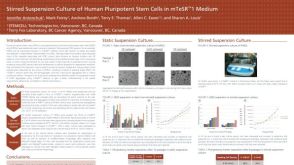
Large-scale expansion of pluripotent human embryonic stem cells in stirred-suspension bioreactors.
Since the derivation of human embryonic stem (hES) cells,their translation to clinical therapies has been met with several challenges,including the need for large-scale expansion and controlled differentiation processes. Suspension bioreactors are an effective alternative to static culture flasks as they enable the generation of clinically relevant cell numbers with greater efficacy in a controlled culture system. We,along with other groups,have developed bioreactor protocols for the expansion of pluripotent murine ES cells. Here we present a novel bioreactor protocol that yields a 25-fold expansion of hES cells over 6 days. Using immunofluorescence,flow cytometry,and teratoma formation assays,we demonstrated that these bioreactor cultures retained high levels of pluripotency and a normal karyotype. Importantly,the use of bioreactors enables the expansion of hES cells in the absence of feeder layers or matrices,which will facilitate the adaptation of good manufacturing process (GMP) standards to the development of hES cell therapies.
View Publication
产品类型:
产品号#:
05850
05857
05870
05875
85850
85857
85870
85875
产品名:
mTeSR™1
mTeSR™1
Zhao X et al. (AUG 2010)
Proceedings of the National Academy of Sciences of the United States of America 107 32 14146--51
Telomerase-immortalized human mammary stem/progenitor cells with ability to self-renew and differentiate.
There is increasing evidence that breast and other cancers originate from and are maintained by a small fraction of stem/progenitor cells with self-renewal properties. Whether such cancer stem/progenitor cells originate from normal stem cells based on initiation of a de novo stem cell program,by reprogramming of a more differentiated cell type by oncogenic insults,or both remains unresolved. A major hurdle in addressing these issues is lack of immortal human stem/progenitor cells that can be deliberately manipulated in vitro. We present evidence that normal and human telomerase reverse transcriptase (hTERT)-immortalized human mammary epithelial cells (hMECs) isolated and maintained in Dana-Farber Cancer Institute 1 (DFCI-1) medium retain a fraction with progenitor cell properties. These cells coexpress basal (K5,K14,and vimentin),luminal (E-cadherin,K8,K18,or K19),and stem/progenitor (CD49f,CD29,CD44,and p63) cell markers. Clonal derivatives of progenitors coexpressing these markers fall into two distinct types--a K5(+)/K19(-) type and a K5(+)/K19(+) type. We show that both types of progenitor cells have self-renewal and differentiation ability. Microarray analyses confirmed the differential expression of components of stem/progenitor-associated pathways,such as Notch,Wnt,Hedgehog,and LIF,in progenitor cells compared with differentiated cells. Given the emerging evidence that stem/progenitor cells serve as precursors for cancers,these cellular reagents represent a timely and invaluable resource to explore unresolved questions related to stem/progenitor origin of breast cancer.
View Publication
产品类型:
产品号#:
01700
01705
01702
产品名:
ALDEFLUOR™ 试剂盒
ALDEFLUOR™ DEAB试剂, 1.5 mM, 1 mL
ALDEFLUOR™检测缓冲液
Kozhukharova IV et al. (JAN 2010)
Tsitologiia 52 10 875--82
[Generation of dopamine neurons from human embryonic stem cells in vitro].
The aim of the study was to generate dopaminergic (DA) neurons from human embryonic stem cells (ESC) in vitro. It was shown that human ESCs are able to differentiated into DA neurons without co-culture with stromal cells. Terminal differentiation into DA neurons was reached by successive application of noggin and bFGF growth factors on collagen and matrigel substrates during 3-4 weeks. Differentiation efficiency was evaluated by the number of colonies with cells expressing tyrosine hydroxylase (TH),a DA neuron marker,and by the number of TH-positive cells in cell suspension using flow cytometry. No cells with pluripotent markers were detected in DA-differentiated cultures. It makes possible to propose that the protocol of human ESC differentiation might be applied to generate DA neurons for their transplantation into the animals modeling neurodegenerative (Parkinson) disease without the risk of tumor growth.
View Publication
产品类型:
产品号#:
05850
05857
05870
05875
85850
85857
85870
85875
产品名:
mTeSR™1
mTeSR™1
Lister R et al. (MAR 2011)
Nature 471 7336 68--73
Hotspots of aberrant epigenomic reprogramming in human induced pluripotent stem cells.
Induced pluripotent stem cells (iPSCs) offer immense potential for regenerative medicine and studies of disease and development. Somatic cell reprogramming involves epigenomic reconfiguration,conferring iPSCs with characteristics similar to embryonic stem (ES) cells. However,it remains unknown how complete the reestablishment of ES-cell-like DNA methylation patterns is throughout the genome. Here we report the first whole-genome profiles of DNA methylation at single-base resolution in five human iPSC lines,along with methylomes of ES cells,somatic cells,and differentiated iPSCs and ES cells. iPSCs show significant reprogramming variability,including somatic memory and aberrant reprogramming of DNA methylation. iPSCs share megabase-scale differentially methylated regions proximal to centromeres and telomeres that display incomplete reprogramming of non-CG methylation,and differences in CG methylation and histone modifications. Lastly,differentiation of iPSCs into trophoblast cells revealed that errors in reprogramming CG methylation are transmitted at a high frequency,providing an iPSC reprogramming signature that is maintained after differentiation.
View Publication


 EasySep™小鼠TIL(CD45)正选试剂盒





 科学海报Stirred Suspension Culture of Human Pluripotent Stem Cells in mTeSR™1 Medium
 沪公网安备31010102008431号