C. Zou et al. (sep 2005)
Journal of biochemical and biophysical methods 64 3 207--15
2-NBDG as a fluorescent indicator for direct glucose uptake measurement.
Evaluation of glucose uptake ability in cells plays a fundamental role in diabetes mellitus research. In this study,we describe a sensitive and non-radioactive assay for direct and rapid measuring glucose uptake in single,living cells. The assay is based on direct incubation of mammalian cells with a fluorescent d-glucose analog 2-[N-(7-nitrobenz-2-oxa-1,3-diazol-4-yl) amino]-2-deoxy-D-glucose (2-NBDG) followed by flow cytometric detection of fluorescence produced by the cells. A series of experiments were conducted to define optimal conditions for this assay. By this technique,it was found that insulin lost its physiological effects on cells in vitro meanwhile some other anti-diabetic drugs facilitated the cell glucose uptake rates with mechanisms which likely to be different from those of insulin or those that were generally accepted of each drug. Our findings show that this technology has potential for applications in both medicine and research.
View Publication
产品类型:
产品号#:
100-0546
100-0547
产品名:
2-NBDG
2-NBDG
Carlo-Stella C et al. (JAN 2007)
Stem cells (Dayton,Ohio) 25 1 252--61
Placental growth factor-1 potentiates hematopoietic progenitor cell mobilization induced by granulocyte colony-stimulating factor in mice and nonhuman primates.
The complex hematopoietic effects of placental growth factor (PlGF) prompted us to test in mice and nonhuman primates the mobilization of peripheral blood progenitor cells (PBPCs) elicited by recombinant mouse PlGF-2 (rmPlGF-2) and recombinant human PlGF-1 (rhPlGF-1). PBPC mobilization was evaluated by assaying colony-forming cells (CFCs),high-proliferative potential-CFCs (HPP-CFCs),and long-term culture-initiating cells (LTC-ICs). In mice,both rmPlGF-2 and rhPlGF-1 used as single agents failed to mobilize PBPCs,whereas the combination of rhPlGF-1 and granulocyte colony-stimulating factor (rhG-CSF) increased CFCs and LTC-ICs per milliliter of blood by four- and eightfold,respectively,as compared with rhG-CSF alone. rhPlGF-1 plus rhG-CSF significantly increased matrix metalloproteinase-9 plasma levels over rhG-CSF alone,suggesting a mechanistic explanation for rhPlGF-1/rhG-CSF synergism. In rhesus monkeys,rhPlGF-1 alone had no mobilization effect,whereas rhPlGF-1 (260 microg/kg per day) plus rhG-CSF (100 microg/kg per day) increased rhG-CSF-elicited mobilization of CFCs,HPP-CFCs,and LTC-ICs per milliliter of blood by 5-,7-,and 15-fold,respectively. No specific toxicity was associated with the administration of rhPlGF-1 alone or in combination. In conclusion,our data demonstrate that rhPlGF-1 significantly increases rhG-CSF-elicited hematopoietic mobilization and provide a preclinical rationale for evaluating rhPlGF-1 in the clinical setting.
View Publication
产品类型:
产品号#:
05150
产品名:
MyeloCult™H5100
Bauer TR et al. (NOV 2006)
Blood 108 10 3313--20
Correction of the disease phenotype in canine leukocyte adhesion deficiency using ex vivo hematopoietic stem cell gene therapy.
Canine leukocyte adhesion deficiency (CLAD) represents the canine counter-part of the human disease leukocyte adhesion deficiency (LAD). Defects in the leukocyte integrin CD18 adhesion molecule in both CLAD and LAD lead to recurrent,life-threatening bacterial infections. We evaluated ex vivo retroviral-mediated gene therapy in CLAD using 2 nonmyeloablative conditioning regimens--200 cGy total body irradiation (TBI) or 10 mg/kg busulfan--with or without posttransplantation immunosuppression. In 6 of 11 treated CLAD dogs,therapeutic levels of CD18(+) leukocytes were achieved. Conditioning with either TBI or busulfan allowed long-term engraftment,and immunosuppression was not required for efficacy. The percentage of CD18(+) leukocytes in the peripheral blood progressively increased over 6 to 8 months after infusion to levels ranging from 1.26% to 8.37% at 1-year follow-up in the 6 dogs. These levels resulted in reversal or moderation of the severe CLAD phenotype. Linear amplification-mediated polymerase chain reaction assays indicated polyclonality of insertion sites. These results describe ex vivo hematopoietic stem cell gene transfer in a disease-specific,large animal model using 2 clinically applicable conditioning regimens,and they provide support for the use of nonmyeloablative conditioning regimens in preclinical protocols of retroviral-mediated gene transfer for nonmalignant hematopoietic diseases such as LAD.
View Publication
产品类型:
产品号#:
09600
09650
产品名:
StemSpan™ SFEM
StemSpan™ SFEM
Qian H et al. (MAY 2006)
Blood 107 9 3503--10
Contribution of alpha6 integrins to hematopoietic stem and progenitor cell homing to bone marrow and collaboration with alpha4 integrins.
The laminin receptor integrin alpha6 chain is ubiquitously expressed in human and mouse hematopoietic stem and progenitor cells. We have studied its role for homing of stem and progenitor cells to mouse hematopoietic tissues in vivo. A function-blocking anti-integrin alpha6 antibody significantly reduced progenitor cell homing to bone marrow (BM) of lethally irradiated mice,with a corresponding retention of progenitors in blood. Remarkably,the anti-integrin alpha6 antibody profoundly inhibited BM homing of long-term multilineage engrafting stem cells,studied by competitive repopulation assay and analysis of donor-derived lymphocytes and myeloid cells in blood 16 weeks after transplantation. A similar profound inhibition of long-term stem cell homing was obtained by using a function-blocking antibody against alpha4 integrin,studied in parallel. Furthermore,the anti-integrin alpha6 and alpha4 antibodies synergistically inhibited homing of short-term repopulating stem cells. Intravenous injection of anti-integrin alpha6 antibodies,in contrast to antibodies against alpha4 integrin,did not mobilize progenitors or enhance cytokine-induced mobilization by G-CSF. Our results provide the first evidence for a distinct functional role of integrin alpha6 receptor during hematopoietic stem and progenitor cell homing and collaboration of alpha6 integrin with alpha4 integrin receptors during homing of short-term stem cells.
View Publication
H. Derricott et al. (feb 2019)
Cell and tissue research 375 2 409--424
Developing a 3D intestinal epithelium model for livestock species.
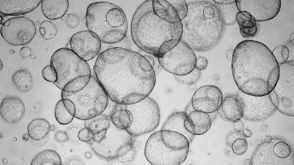
The in vitro 3D culture of intestinal epithelium is a valuable resource in the study of its function. Organoid culture exploits stem cells' ability to regenerate and produce differentiated epithelium. Intestinal organoid models from rodent or human tissue are widely available whereas large animal models are not. Livestock enteric and zoonotic diseases elicit significant morbidity and mortality in animal and human populations. Therefore,livestock species-specific models may offer novel insights into host-pathogen interactions and disease responses. Bovine and porcine jejunum were obtained from an abattoir and their intestinal crypts isolated,suspended in Matrigel,cultured,cryopreserved and resuscitated. 'Rounding' of crypts occurred followed by budding and then enlargement of the organoids. Epithelial cells were characterised using immunofluorescent staining and confocal microscopy. Organoids were successfully infected with Toxoplasma gondii or Salmonella typhimurium. This 3D organoid model offers a long-term,renewable resource for investigating species-specific intestinal infections with a variety of pathogens.
View Publication
产品类型:
产品号#:
06005
产品名:
IntestiCult™ 肠道类器官生长培养基 (小鼠)
Ludwig T et al. (SEP 2007)
Current protocols in stem cell biology Chapter 1 September Unit 1C.2
Defined, Feeder-Independent Medium for Human Embryonic Stem Cell Culture
The developmental potential of human ES cells makes them an important tool in developmental,pharmacological,and clinical research. For human ES cell technology to be fully exploited,however,culture efficiency must be improved,large-scale culture enabled,and safety ensured. Traditional human ES cell culture systems have relied on serum products and mouse feeder layers,which limit the scale,present biological variability,and expose the cells to potential contaminants. Defined,feeder-independent culture systems improve the safety and efficiency of ES cell technology,enabling translational research. The protocols herein are designed with the standard research laboratory in mind. They contain recipes for the formulation of mTeSR (a defined medium for human ES cell culture) and detailed protocols for the culture,transfer,and passage of cells grown in these feeder-independent conditions. They provide a basis for routine feeder-independent culture,and a starting point for additional optimization of culture conditions.
View Publication
产品类型:
产品号#:
05850
05857
05870
05875
85850
85857
85870
85875
产品名:
mTeSR™1
mTeSR™1
Hyman JM et al. (AUG 2009)
Proceedings of the National Academy of Sciences of the United States of America 106 33 14132--7
Small-molecule inhibitors reveal multiple strategies for Hedgehog pathway blockade.
Inappropriate activation of the Hedgehog (Hh) signaling pathway has been implicated in a diverse spectrum of cancers,and its pharmacological blockade has emerged as an anti-tumor strategy. While nearly all known Hh pathway antagonists target the transmembrane protein Smoothened (Smo),small molecules that suppress downstream effectors could more comprehensively remediate Hh pathway-dependent tumors. We report here four Hh pathway antagonists that are epistatic to the nucleocytoplasmic regulator Suppressor of Fused [Su(fu)],including two that can inhibit Hh target gene expression induced by overexpression of the Gli transcription factors. Each inhibitor has a unique mechanism of action,and their phenotypes reveal that Gli processing,Gli activation,and primary cilia formation are pharmacologically targetable. We further establish the ability of certain compounds to block the proliferation of cerebellar granule neuron precursors expressing an oncogenic form of Smo,and we demonstrate that Hh pathway inhibitors can have tissue-specific activities. These antagonists therefore constitute a valuable set of chemical tools for interrogating downstream Hh signaling mechanisms and for developing chemotherapies against Hh pathway-related cancers.
View Publication
Multiscale computational models for optogenetic control of cardiac function
The ability to stimulate mammalian cells with light has significantly changed our understanding of electrically excitable tissues in health and disease,paving the way toward various novel therapeutic applications. Here,we demonstrate the potential of optogenetic control in cardiac cells using a hybrid experimental/computational technique. Experimentally,we introduced channelrhodopsin-2 into undifferentiated human embryonic stem cells via a lentiviral vector,and sorted and expanded the genetically engineered cells. Via directed differentiation,we created channelrhodopsin-expressing cardiomyocytes,which we subjected to optical stimulation. To quantify the impact of photostimulation,we assessed electrical,biochemical,and mechanical signals using patch-clamping,multielectrode array recordings,and video microscopy. Computationally,we introduced channelrhodopsin-2 into a classic autorhythmic cardiac cell model via an additional photocurrent governed by a light-sensitive gating variable. Upon optical stimulation,the channel opens and allows sodium ions to enter the cell,inducing a fast upstroke of the transmembrane potential. We calibrated the channelrhodopsin-expressing cell model using single action potential readings for different photostimulation amplitudes,pulse widths,and frequencies. To illustrate the potential of the proposed approach,we virtually injected channelrhodopsin-expressing cells into different locations of a human heart,and explored its activation sequences upon optical stimulation. Our experimentally calibrated computational toolbox allows us to virtually probe landscapes of process parameters,and identify optimal photostimulation sequences toward pacing hearts with light. ?? 2011 Biophysical Society.
View Publication
F. Qian et al. (jan 2023)
Journal of visualized experiments : JoVE 191
Intra-Peritoneal Transplantation for Generating Acute Myeloid Leukemia in Mice.
There is an unmet need for novel therapies to treat acute myeloid leukemia (AML) and the associated relapse that involves persistent leukemia stem cells (LSCs). An experimental AML rodent model to test therapies based on successfully transplanting these cells via retro-orbital injections in recipient mice is fraught with challenges. The aim of this study was to develop an easy,reliable,and consistent method to generate a robust murine model of AML using an intra-peritoneal route. In the present protocol,bone marrow cells were transduced with a retrovirus expressing human MLL-AF9 fusion oncoprotein. The efficiency of lineage negative (Lin-) and Lin-Sca-1+c-Kit+ (LSK) populations as donor LSCs in the development of primary AML was tested,and intra-peritoneal injection was adopted as a new method to generate AML. Comparison between intra-peritoneal and retro-orbital injections was done in serial transplantations to compare and contrast the two methods. Both Lin- and LSK cells transduced with human MLL-AF9 virus engrafted well in the bone marrow and spleen of recipients,leading to a full-blown AML. The intra-peritoneal injection of donor cells established AML in recipients upon serial transplantation,and the infiltration of AML cells was detected in the blood,bone marrow,spleen,and liver of recipients by flow cytometry,qPCR,and histological analyses. Thus,intra-peritoneal injection is an efficient method of AML induction using serial transplantation of donor leukemic cells.
View Publication