A. Mansurov et al. ( 2020)
Nature biomedical engineering 4 5 531--543
Collagen-binding IL-12 enhances tumour inflammation and drives the complete remission of established immunologically cold mouse tumours.
Checkpoint-inhibitor (CPI) immunotherapy has achieved remarkable clinical success,yet its efficacy in 'immunologically cold' tumours has been modest. Interleukin-12 (IL-12) is a powerful cytokine that activates the innate and adaptive arms of the immune system; however,the administration of IL-12 has been associated with immune-related adverse events. Here we show that,after intravenous administration of a collagen-binding domain fused to IL-12 (CBD-IL-12) in mice bearing aggressive mouse tumours,CBD-IL-12 accumulates in the tumour stroma due to exposed collagen in the disordered tumour vasculature. In comparison with the administration of unmodified IL-12,CBD-IL-12 induced sustained intratumoural levels of interferon-$\gamma$,substantially reduced its systemic levels as well as organ damage and provided superior anticancer efficacy,eliciting complete regression of CPI-unresponsive breast tumours. Furthermore,CBD-IL-12 potently synergized with CPI to eradicate large established melanomas,induced antigen-specific immunological memory and controlled tumour growth in a genetically engineered mouse model of melanoma. CBD-IL-12 may potentiate CPI immunotherapy for immunologically cold tumours.
View Publication
High-efficiency induction of neural conversion in human ESCs and human induced pluripotent stem cells with a single chemical inhibitor of transforming growth factor beta superfamily receptors.
Chemical compounds have emerged as powerful tools for modulating ESC functions and deriving induced pluripotent stem cells (iPSCs),but documentation of compound-induced efficient directed differentiation in human ESCs (hESCs) and human iPSC (hiPSCs) is limited. By screening a collection of chemical compounds,we identified compound C (also denoted as dorsomorphin),a protein kinase inhibitor,as a potent regulator of hESC and hiPSC fate decisions. Compound C suppresses mesoderm,endoderm,and trophoectoderm differentiation and induces rapid and high-efficiency neural conversion in both hESCs and hiPSCs,88.7% and 70.4%,respectively. Interestingly,compound C is ineffective in inducing neural conversion in mouse ESCs (mESCs). Large-scale kinase assay revealed that compound C targets at least seven transforming growth factor beta (TGF-β) superfamily receptors,including both type I and type II receptors,and thereby blocks both the Activin and bone morphogenesis protein (BMP) signaling pathways in hESCs. Dual inhibition of Activin and BMP signaling accounts for the effects of compound C on hESC differentiation and neural conversion. We also identified muscle segment homeobox gene 2 (MSX2) as a downstream target gene of compound C and a key signaling intermediate of the BMP pathway in hESCs. Our findings provide a single-step cost-effective method for efficient derivation of neural progenitor cells in adherent culture from human pluripotent stem cells. Therefore,it will be uniquely suitable for the production of neural progenitor cells in large scale and should facilitate the use of stem cells in drug screening and regenerative medicine and study of early human neural development.
View Publication
产品类型:
产品号#:
05850
05857
05870
05875
72102
85850
85857
85870
85875
100-0246
产品名:
Dorsomorphin
mTeSR™1
mTeSR™1
白消安(Busulfan)
Reshkin SJ et al. ( 2003)
Clinical cancer research : an official journal of the American Association for Cancer Research 9 6 2366--2373
Paclitaxel induces apoptosis via protein kinase A- and p38 mitogen-activated protein-dependent inhibition of the Na+/H+ exchanger (NHE) NHE isoform 1 in human breast cancer cells.
PURPOSE: The molecular signal components essential to paclitaxel-dependent apoptosis in breast cancers are potential targets for combined therapy. However,the signal mechanisms underlying paclitaxel action still need to be better defined. EXPERIMENTAL DESIGN: In a breast cancer cell line,pharmacological agents and transient transfection with dominant interfering and constitutive active mutants were used to identify the signal transduction module involved in the regulation of paclitaxel-induced apoptosis and to evaluate its potential as a therapeutic target. RESULTS: In MDA-MB-435 cells,paclitaxel treatment stimulated the activity of both protein kinase A and p38,and inhibited the activity of the Na(+)/H(+) exchanger isoform 1 (NHE1) with similar IC(50) concentrations as for its activation of apoptosis. Activation and inhibition experiments demonstrated that protein kinase A and p38 participate sequentially upstream of the NHE1 in regulating the paclitaxel-induced apoptotic pathway. Importantly,concurrent specific inhibition of the NHE1 with paclitaxel treatment resulted in a synergistic induction of apoptosis and a reduction in the paclitaxel IC(50) for apoptosis. This sensitization of paclitaxel apoptotic action by specific inhibition of NHE1 was verified in breast cancer cell lines with different paclitaxel sensitivity. CONCLUSIONS: We have,for the first time,identified NHE1 as an essential component of paclitaxel-induced apoptosis in breast cancer cells and,importantly,identified that simultaneous inhibition of the NHE1 results in a synergistic potentiation of low-dose paclitaxel apoptotic action. As specific NHE1 inhibitors have finished Phase II/Phase III clinical trials for myocardial protection,there is the possibility for a rapid biological translation of this novel therapeutic strategy to a clinical setting.
View Publication
产品类型:
产品号#:
73312
73314
产品名:
紫杉醇
紫杉醇
Capron C et al. (AUG 2010)
Blood 116 8 1244--53
A major role of TGF-beta1 in the homing capacities of murine hematopoietic stem cell/progenitors.
Transforming growth factor-beta1 (TGF-beta1) is a pleiotropic cytokine with major in vitro effects on hematopoietic stem cells (HSCs) and lymphocyte development. Little is known about hematopoiesis from mice with constitutive TGF-beta1 inactivation largely because of important embryonic lethality and development of a lethal inflammatory disorder in TGF-beta1(-/-) pups,making these studies difficult. Here,we show that no sign of the inflammatory disorder was detectable in 8- to 10-day-old TGF-beta1(-/-) neonates as judged by both the number of T-activated and T-regulator cells in secondary lymphoid organs and the level of inflammatory cytokines in sera. After T-cell depletion,the inflammatory disease was not transplantable in recipient mice. Bone marrow cells from 8- to 10-day-old TGF-beta1(-/-) neonates showed strikingly impaired short- and long-term reconstitutive activity associated with a parallel decreased in vivo homing capacity of lineage negative (Lin(-)) cells. In addition an in vitro-reduced survival of immature progenitors (Lin(-) Kit(+) Sca(+)) was observed. Similar defects were found in liver cells from TGF-beta1(-/-) embryos on day 14 after vaginal plug. These data indicate that TGF-beta1 is a critical regulator for in vivo homeostasis of the HSCs,especially for their homing potential.
View Publication
产品类型:
产品号#:
03234
09600
09650
产品名:
MethoCult™ M3234
StemSpan™ SFEM
StemSpan™ SFEM
Das I et al. (SEP 2013)
Science translational medicine 5 201 201ra120
Hedgehog agonist therapy corrects structural and cognitive deficits in a Down syndrome mouse model.
Down syndrome (DS) is among the most frequent genetic causes of intellectual disability,and ameliorating this deficit is a major goal in support of people with trisomy 21. The Ts65Dn mouse recapitulates some major brain structural and behavioral phenotypes of DS,including reduced size and cellularity of the cerebellum and learning deficits associated with the hippocampus. We show that a single treatment of newborn mice with the Sonic hedgehog pathway agonist SAG 1.1 (SAG) results in normal cerebellar morphology in adults. Further,SAG treatment at birth rescued phenotypes associated with hippocampal deficits that occur in untreated adult Ts65Dn mice. This treatment resulted in behavioral improvements and normalized performance in the Morris water maze task for learning and memory. SAG treatment also produced physiological effects and partially rescued both N-methyl-d-aspartate (NMDA) receptor-dependent synaptic plasticity and NMDA/AMPA receptor ratio,physiological measures associated with memory. These outcomes confirm an important role for the hedgehog pathway in cerebellar development and raise the possibility for its direct influence in hippocampal function. The positive results from this approach suggest a possible direction for therapeutic intervention to improve cognitive function for this population.
View Publication
产品类型:
产品号#:
73412
73414
产品名:
SAG
SAG
Dorrell C et al. (JUN 2011)
Molecular and Cellular Endocrinology 339 1-2 144--150
Isolation of mouse pancreatic alpha, beta, duct and acinar populations with cell surface markers
Tools permitting the isolation of live pancreatic cell subsets for culture and/or molecular analysis are limited. To address this,we developed a collection of monoclonal antibodies with selective surface labeling of endocrine and exocrine pancreatic cell types. Cell type labeling specificity and cell surface reactivity were validated on mouse pancreatic sections and by gene expression analysis of cells isolated using FACS. Five antibodies which marked populations of particular interest were used to isolate and study viable populations of purified pancreatic ducts,acinar cells,and subsets of acinar cells from whole pancreatic tissue or of alpha or beta cells from isolated mouse islets. Gene expression analysis showed the presence of known endocrine markers in alpha and beta cell populations and revealed that TTR and DPPIV are primarily expressed in alpha cells whereas DGKB and GPM6A have a beta cell specific expression profile.
View Publication
产品类型:
产品号#:
03800
03801
03802
03803
03804
03805
03806
03831
产品名:
ClonaCell™-HY杂交瘤试剂盒
ClonaCell™-HY培养基A
ClonaCell™-HY 培养基 B
ClonaCell™-HY 培养基 C
ClonaCell™-HY 培养基 D
ClonaCell™-HY 培养基 E
ClonaCell™-HY PEG
ClonaCell™-HY 液体 HAT 筛选培养基
Zheng X et al. (MAY 2012)
Stem Cells 30 5 910--922
Cnot1, Cnot2, and Cnot3 maintain mouse and human ESC identity and inhibit extraembryonic differentiation
Embryonic stem cell (ESC) identity and self-renewal is maintained by extrinsic signaling pathways and intrinsic gene regulatory networks. Here,we show that three members of the Ccr4-Not complex,Cnot1,Cnot2,and Cnot3,play critical roles in maintaining mouse and human ESC identity as a protein complex and inhibit differentiation into the extraembryonic lineages. Enriched in the inner cell mass of blastocysts,these Cnot genes are highly expressed in ESC and downregulated during differentiation. In mouse ESCs,Cnot1,Cnot2,and Cnot3 are important for maintenance in both normal conditions and the 2i/LIF medium that supports the ground state pluripotency. Genetic analysis indicated that they do not act through known self-renewal pathways or core transcription factors. Instead,they repress the expression of early trophectoderm (TE) transcription factors such as Cdx2. Importantly,these Cnot genes are also necessary for the maintenance of human ESCs,and silencing them mainly lead to TE and primitive endoderm differentiation. Together,our results indicate that Cnot1,Cnot2,and Cnot3 represent a novel component of the core self-renewal and pluripotency circuitry conserved in mouse and human ESCs.
View Publication
产品类型:
产品号#:
05850
05857
05870
05875
85850
85857
85870
85875
产品名:
mTeSR™1
mTeSR™1
M. J. Bailey et al. (NOV 2018)
Nature communications 9 1 4560
Human antibodies targeting Zika virus NS1 provide protection against disease in a mouse model.
Zika virus is a mosquito-borne flavivirus closely related to dengue virus that can cause severe disease in humans,including microcephaly in newborns and Guillain-Barr{\'{e}} syndrome in adults. Specific treatments and vaccines for Zika virus are not currently available. Here,we isolate and characterize four monoclonal antibodies (mAbs) from an infected patient that target the non-structural protein NS1. We show that while these antibodies are non-neutralizing,NS1-specific mAbs can engage Fc$\gamma$R without inducing antibody dependent enhancement (ADE) of infection in vitro. Moreover,we demonstrate that mAb AA12 has protective efficacy against lethal challenges of African and Asian lineage strains of Zika virus in Stat2-/- mice. Protection is Fc-dependent,as a mutated antibody unable to activate known Fc effector functions or complement is not protective in vivo. This study highlights the importance of the ZIKV NS1 protein as a potential vaccine antigen.
View Publication
产品类型:
产品号#:
17955
17955RF
100-0960
产品名:
EasySep™人NK细胞分选试剂盒
RoboSep™ 人NK细胞分选试剂盒
EasySep™人NK细胞分离试剂盒
(Oct 2024)
Nature Communications 15
Sensory neurons regulate stimulus-dependent humoral immunity in mouse models of bacterial infection and asthma
Sensory neurons sense pathogenic infiltration to drive innate immune responses,but their role in humoral immunity is unclear. Here,using mouse models of Streptococcus pneumoniae infection and Alternaria alternata asthma,we show that sensory neurons are required for B cell recruitment and antibody production. In response to S. pneumoniae,sensory neuron depletion increases bacterial burden and reduces B cell numbers,IgG release,and neutrophil stimulation. Meanwhile,during A. alternata-induced airway inflammation,sensory neuron depletion decreases B cell population sizes,IgE levels,and asthmatic characteristics. Mechanistically,during bacterial infection,sensory neurons preferentially release vasoactive intestinal polypeptide (VIP). In response to asthma,sensory neurons release substance P. Administration of VIP into sensory neuron-depleted mice suppresses bacterial burden,while VIPR1 deficiency increases infection. Similarly,exogenous substance P delivery aggravates asthma in sensory neuron-depleted mice,while substance P deficiency ameliorates asthma. Our data,thus demonstrate that sensory neurons release select neuropeptides which target B cells dependent on the immunogen. Sensory neurons may regulate innate immune cells,but their roles in humoral immunity is still unclear. Here the authors show that bacterial infection and asthma induction induce sensory neuron production of distinct neurotransmitters to dampen B cell responses but differentially target IgG and IgE,respectively,to specifically modulate the symptoms.
View Publication
产品类型:
产品号#:
18957
18957RF
产品名:
EasySep™小鼠CD138正选试剂盒
RoboSep™ 小鼠CD138正选试剂盒
Z. Chen et al. (nov 2019)
Gastroenterology 156 4 1127--1139.e8
Integrated Analysis of Mouse and Human Gastric Neoplasms Identifies Conserved microRNA Networks in Gastric Carcinogenesis.
BACKGROUND AIMS microRNAs (miRNAs) are small non-coding RNAs that bind to 3'UTR regions of mRNAs to promote their degradation or block their translation. Mice with disruption of the trefoil factor 1 gene (Tff1) develop gastric neoplasms. We studied these mice to identify conserved miRNA networks involved in gastric carcinogenesis. METHODS We performed next-generation miRNA sequencing analysis of normal gastric tissues (based on histology) from subjects without evidence of gastric neoplasm from patients (n=64) and TFF1-knockout mice (n=22). We validated our findings using 270 normal gastric tissues (including 61 samples from patients without evidence of neoplastic lesions) and 234 gastric tumor tissues from 3 separate cohorts of patients and from mice. We performed molecular and functional assays using cell lines (MKN28,MKN45,STKM2,and AGS cells),gastric organoids,and mice with xenograft tumors. RESULTS We identified 117 miRNAs that were significantly deregulated in mouse and human gastric tumor tissues,compared with non-tumor tissues. We validated changes in levels of 6 miRNAs by quantitative real-time PCR analyses of neoplastic gastric tissues from mice (n=39) and 3 independent cohorts patients (332 patients total). We found levels of MIR135B-5p,MIR196B-5p,and MIR92A-5p to be increased in tumor tissues whereas levels of MIR143-3p,MIR204-5p,and MIR133-3p were decreased in tumor tissues. Levels of MIR143-3p were reduced not only in gastric cancer tissues,but also in normal tissues adjacent to tumors in humans and low-grade dysplasia in mice. Transgenic expression of MIR143-3p in gastric cancer cell lines reduced their proliferation and restored their sensitivity to cisplatin. AGS cells with stable transgenic expression of MIR143-3p grew more slowly as xenograft tumors in mice than control AGS cells; tumor growth from AGS cells that expressed MIR143-3p,but not control cells,was sensitive to cisplatin. We identified and validated bromodomain containing 2 (BRD2) as a direct target of MIR143-3p; increased levels of BRD2 in gastric tumors associated with shorter survival times of patients. CONCLUSIONS In an analysis of miRNA profiles of gastric tumors from mice and human patients,we identified a conserved signature associated with early stages of gastric tumorigenesis. Strategies to restore MIR143-3p or inhibit BRD2 might be developed for treatment of gastric cancer.
View Publication
产品类型:
产品号#:
06005
产品名:
IntestiCult™ 类器官生长培养基 (小鼠)
C. Yan et al. (Jul 2025)
Journal of Neuroinflammation 22 2
Sex differences on laser-induced choroidal neovascularization and short-chain fatty acid treatment in a mouse model
Age-related macular degeneration (AMD) is a leading cause of blindness worldwide,with a clinical presentation that varies between sexes. In late-stage AMD,choroidal neovascularization (CNV) triggers retinal inflammation and degeneration,processes that are exacerbated by an overactive response of retinal microglial cells. Short-chain fatty acids (SCFAs) have emerged as potential treatments for AMD due to their anti-inflammatory properties. In this study,we investigate the effects of SCFA treatment in a laser-induced CNV mouse model,focusing on sex-dependent differences in disease progression and microglial response. Our findings demonstrate distinct sex-specific patterns in the development of CNV and associated pathological hallmarks. SCFA treatment resulted in a slight increase in density of Iba1 + microglial cells in females at 3 days post-laser (3dpl),while it prevented an increase in males at 7 dpl,with both sexes showing enhanced microglial ramification. The dynamics of microglial density were likely linked to protective effects on CNV lesion,leakage size,and inflammation,which occurred earlier in females and later in males. At transcriptional level,SCFA showed mixed effects,mainly targeting inflammation resolution,mitochondrial support,and neuronal repair in a sex-dependent manner. In vitro,SCFAs reduced microglial phagocytosis of retinal debris,suggesting a potential anti-inflammatory action. This study underscores the importance of considering sex-specific responses in the development of AMD treatments,such as SCFAs,and highlights the need for personalized therapeutic strategies. The online version contains supplementary material available at 10.1186/s12974-025-03508-1.
View Publication


 EasySep™小鼠TIL(CD45)正选试剂盒





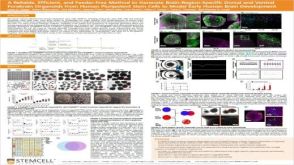 科学海报A Reliable, Efficient, and Feeder-Free Method to Generate Brain-Region-Specific Dorsal and Ventral Forebrain Organoids From Human Pluripotent Stem Cells to Model Early Human Brain Development
 沪公网安备31010102008431号