S. Tamiya et al. (Dec 2024)
Open Forum Infectious Diseases 12 1
H and B Blood Antigens Are Essential for In Vitro Replication of GII.2 Human Norovirus
Human norovirus (HuNoV) is a major cause of enteric infectious gastroenteritis and is classified into several genotypes based on its capsid protein amino acid sequence and nucleotide sequence of the polymerase gene. Among these,GII.4 is the major genotype worldwide. Epidemiological studies have highlighted the prevalence of GII.2. Although recent advances using human tissue– and induced pluripotent stem cell (iPSC)–derived intestinal epithelial cells (IECs) have enabled in vitro replication of multiple HuNoV genotypes,GII.2 HuNoV could replicate only in tissue-derived IECs and not in iPSC-derived IECs. We investigated the factors influencing GII.2 HuNoV replication in IECs,focusing on histo-blood group antigens. We also assessed the immunogenicity of GII.2 virus-like particles (VLPs) and their ability to induce neutralizing antibodies. Antibody cross-reactivity was tested to determine whether GII.2 VLPs could neutralize other HuNoV genotypes,including GII.4,GII.3,GII.6,and GII.17. Our findings indicated that GII.2 HuNoV replication in vitro requires the presence of both H and B antigens. Moreover,GII.2 VLPs generated neutralizing antibodies effective against both GII.2 and GII.4 but not against GII.3,GII.6,or GII.17. Comparatively,GII.2 and GII.17 VLPs induced broader neutralizing responses than GII.4 VLPs. The findings of this study suggests that GII.2 and GII.17 VLPs may be advantageous as HuNoV vaccine candidates because they elicit neutralizing antibodies against the predominant GII.4 genotype,which could be particularly beneficial for infants without prior HuNoV exposure. These insights will contribute to the development of effective HuNoV vaccines.
View Publication
Jeong J et al. (OCT 2014)
Experimental and Molecular Pathology 97 2 253--258
Patient-tailored application for Duchene muscular dystrophy on mdx mice based induced mesenchymal stem cells
Mesenchymal stem cells (MSCs) may be used as powerful tools for the repair and regeneration of damaged tissues. However,isolating tissue specific-derived MSCs may cause pain and increased infection rates in patients,and repetitive isolations may be required. To overcome these difficulties,we have examined alternative methods for MSC production. Here,we show that induced pluripotent stem cells (iPSCs) may be differentiated into mesenchymal stem cells (iMSCs) following exposure to SB431542. Purified iMSCs were administered to mdx mice to study skeletal muscle regeneration in a murine model of muscular dystrophy. Purified iMSCs displayed fibroblast-like morphology,formed three-dimensional spheroid structures,and expressed characteristic mesenchymal stem cell surface markers such as CD29,CD33,CD73,CD90,and CD105. Moreover,iMSCs were capable of differentiating into adipogenic,osteogenic,and chondrogenic lineages. Transplanting iMSC cells to tibialis anterior skeletal muscle tissue in mdx mice lowered oxidative damage as evidenced by a reduction in nitrotyrosine levels,and normal dystrophin expression levels were restored. This study demonstrates the therapeutic potential of purified iMSCs in skeletal muscle regeneration in mdx mice,and suggests that iPSCs are a viable alternate source for deriving MSCs as needed. textcopyright 2014 Elsevier Inc.
View Publication
产品类型:
产品号#:
05850
05857
05870
05875
85850
85857
85870
85875
产品名:
mTeSR™1
mTeSR™1
A. Renner et al. (Apr 2024)
Gene Therapy 31 7-8
Development of KoRV-pseudotyped lentiviral vectors for efficient gene transfer into freshly isolated immune cells
Allogeneic cell therapies,such as those involving macrophages or Natural Killer (NK) cells,are of increasing interest for cancer immunotherapy. However,the current techniques for genetically modifying these cell types using lenti- or gamma-retroviral vectors present challenges,such as required cell pre-activation and inefficiency in transduction,which hinder the assessment of preclinical efficacy and clinical translation. In our study,we describe a novel lentiviral pseudotype based on the Koala Retrovirus (KoRV) envelope protein,which we identified based on homology to existing pseudotypes used in cell therapy. Unlike other pseudotyped viral vectors,this KoRV-based envelope demonstrates remarkable efficiency in transducing freshly isolated primary human NK cells directly from blood,as well as freshly obtained monocytes,which were differentiated to M1 macrophages as well as B cells from multiple donors,achieving up to 80% reporter gene expression within three days post-transduction. Importantly,KoRV-based transduction does not compromise the expression of crucial immune cell receptors,nor does it impair immune cell functionality,including NK cell viability,proliferation,cytotoxicity as well as phagocytosis of differentiated macrophages. Preserving immune cell functionality is pivotal for the success of cell-based therapeutics in treating various malignancies. By achieving high transduction rates of freshly isolated immune cells before expansion,our approach enables a streamlined and cost-effective automated production of off-the-shelf cell therapeutics,requiring fewer viral particles and less manufacturing steps. This breakthrough holds the potential to significantly reduce the time and resources required for producing e.g. NK cell therapeutics,expediting their availability to patients in need. Subject terms: Genetic transduction,Tumour immunology,Immunotherapy,Genetic vectors,Innate immune cells
View Publication
产品类型:
产品号#:
15024
15025
15028
15064
15065
15068
产品名:
RosetteSep™人B细胞富集抗体混合物
RosetteSep™人NK细胞富集抗体混合物
RosetteSep™人单核细胞富集抗体混合物
RosetteSep™人B细胞富集抗体混合物
RosetteSep™人NK细胞富集抗体混合物
RosetteSep™人单核细胞富集抗体混合物
G. M. Robbins et al. (Dec 2025)
Molecular Therapy Oncology 34 1
Non-viral TcBuster transposon engineering of CD70-CAR natural killer cells for the treatment of osteosarcoma
Osteosarcoma (OSA) is the most common primary bone tumor in children and adolescents,yet outcomes have remained largely unchanged for over 40 years. While chimeric antigen receptor (CAR) T cell therapy has shown success in blood cancers,it faces major limitations in solid tumors due to immune evasion,antigen loss,and immunosuppressive tumor microenvironments. Natural killer (NK) cells offer several advantages over T cells,including multiple killing mechanisms and lower risks of graft-versus-host disease,neurotoxicity,and cytokine release syndrome,making them promising candidates for off-the-shelf cell therapies. However,unmodified NK cells have shown limited efficacy in clinical settings due to poor engraftment,persistence,and tumor-mediated suppression. To overcome these barriers,we developed a cost-effective method to engineer CAR NK cells targeting CD70,a tumor antigen overexpressed in relapsed and metastatic OSA. We further enhanced these cells by incorporating soluble interleukin-15 (IL-15) and a dominant-negative TGF-β receptor,creating “armored” CAR NK cells. These engineered cells resist transforming growth factor β (TGF-β) suppression,secrete IL-15,and demonstrate improved cytotoxicity,persistence,and tumor homing in both in vitro and in vivo models. Our findings support CD70 CAR NK cells as a promising immunotherapeutic strategy for relapsed and metastatic OSA. Graphical abstract Engineered “armored” CAR NK cells targeting CD70 overcome immune suppression in osteosarcoma,enhancing persistence,tumor homing,and cytotoxicity. This study presents a promising off-the-shelf immunotherapy approach for relapsed and metastatic OSA,offering a potential advance where current treatments have stagnated for decades.
View Publication
产品类型:
产品号#:
100-0960
17955
17955RF
产品名:
EasySep™人NK细胞分离试剂盒
EasySep™人NK细胞分选试剂盒
RoboSep™ 人NK细胞分选试剂盒
Kuroki MM et al. ( 2005)
Anticancer Research 25 6A 3733--9
Preparation of human IgG and IgM monoclonal antibodies for MK-1/Ep-CAM by using human immunoglobulin gene-transferred mouse and gene cloning of their variable regions.
For antibody-based therapy of cancer,monoclonal antibodies (mAbs) of human origin are superior to mouse,mouse/human chimeric or humanized mAbs,because of their minimum immunogenicity to humans and their efficient collaboration with human effector cells. In the present study,human mAbs were prepared against a pancarcinoma antigen,MK-1 (Ep-CAM),using a genetically-engineered mouse (KM mouse) that contains the human immunoglobulin genes. Spleen cells from KM mice,immunized with recombinant MK-1,were fused with P3-U1 mouse myeloma cells. Of 44 anti-MK-1 clones analyzed,two were of IgG4 and the others of IgM clones. Although the two IgG4 clones were suggested to recognize the same antigenic determinant or two closely located determinants,their VK regions were encoded by different light-chain genes while their VH sequences were identical. The two IgG4 and one of the IgM clones tested revealed antibody-dependent cell-mediated cytotoxicity and complement-dependent cytotoxicity,respectively,against MK-1-expressing cells in vitro,suggesting that these fully human mAbs produced against MK-1 and their V-region genes,which are applicable for the preparation of engineered antibody fragments that may be useful for antibody-based therapy of cancer.
View Publication
产品类型:
产品号#:
03800
03801
03802
03803
03804
03805
03806
产品名:
ClonaCell™-HY杂交瘤试剂盒
ClonaCell™-HY培养基A
ClonaCell™-HY 培养基 B
ClonaCell™-HY 培养基 C
ClonaCell™-HY 培养基 D
ClonaCell™-HY 培养基 E
ClonaCell™-HY PEG
Zhang Y et al. (JUN 2013)
Blood 121 24 4906--16
AML1-ETO mediates hematopoietic self-renewal and leukemogenesis through a COX/β-catenin signaling pathway.
Developing novel therapies that suppress self-renewal of leukemia stem cells may reduce the likelihood of relapses and extend long-term survival of patients with acute myelogenous leukemia (AML). AML1-ETO (AE) is an oncogene that plays an important role in inducing self-renewal of hematopoietic stem/progenitor cells (HSPCs),leading to the development of leukemia stem cells. Previously,using a zebrafish model of AE and a whole-organism chemical suppressor screen,we have discovered that AE induces specific hematopoietic phenotypes in embryonic zebrafish through a cyclooxygenase (COX)-2 and β-catenin-dependent pathway. Here,we show that AE also induces expression of the Cox-2 gene and activates β-catenin in mouse bone marrow cells. Inhibition of COX suppresses β-catenin activation and serial replating of AE(+) mouse HSPCs. Genetic knockdown of β-catenin also abrogates the clonogenic growth of AE(+) mouse HSPCs and human leukemia cells. In addition,treatment with nimesulide,a COX-2 selective inhibitor,dramatically suppresses xenograft tumor formation and inhibits in vivo progression of human leukemia cells. In summary,our data indicate an important role of a COX/β-catenin-dependent signaling pathway in tumor initiation,growth,and self-renewal,and in providing the rationale for testing potential benefits from common COX inhibitors as a part of AML treatments.
View Publication
产品类型:
产品号#:
70002
70002.1
70002.2
70002.3
70002.4
70002.5
产品名:
Carlsten M et al. (OCT 2009)
Journal of immunology (Baltimore,Md. : 1950) 183 8 4921--30
Primary human tumor cells expressing CD155 impair tumor targeting by down-regulating DNAM-1 on NK cells.
The activating NK cell receptor DNAX accessory molecule-1 (DNAM-1) contributes to tumor immune surveillance and plays a crucial role in NK cell-mediated recognition of several types of human tumors,including ovarian carcinoma. Here,we have analyzed the receptor repertoire and functional integrity of NK cells in peritoneal effusions from patients with ovarian carcinoma. Relative to autologous peripheral blood NK cells,tumor-associated NK cells expressed reduced levels of the DNAM-1,2B4,and CD16 receptors and were hyporesponsive to HLA class I-deficient K562 cells and to coactivation via DNAM-1 and 2B4. Moreover,tumor-associated NK cells were also refractory to CD16 receptor stimulation,resulting in diminished Ab-dependent cellular cytotoxicity against autologous tumor cells. Coincubation of NK cells with ovarian carcinoma cells expressing the DNAM-1 ligand CD155 led to reduction of DNAM-1 expression. Therefore,NK cell-mediated rejection of ovarian carcinoma may be limited by perturbed DNAM-1 expression on tumor-associated NK cells induced by chronic ligand exposure. Thus,these data support the notion that tumor-induced alterations of activating NK cell receptor expression may hamper immune surveillance and promote tumor progression.
View Publication
产品类型:
产品号#:
18259
18259RF
18289
18289RF
18551
18551RF
18561
产品名:
Wu X et al. (JAN 2010)
PloS one 5 12 e15549
Selective induction of DNA repair pathways in human B cells activated by CD4+ T cells.
Greater than 75% of all hematologic malignancies derive from germinal center (GC) or post-GC B cells,suggesting that the GC reaction predisposes B cells to tumorigenesis. Because GC B cells acquire expression of the highly mutagenic enzyme activation-induced cytidine deaminase (AID),GC B cells may require additional DNA repair capacity. The goal of this study was to investigate whether normal human B cells acquire enhanced expression of DNA repair factors upon AID induction. We first demonstrated that several DNA mismatch repair,homologous recombination,base excision repair,and ATR signaling genes were overexpressed in GC B cells relative to naïve and memory B cells,reflecting activation of a process we have termed somatic hyperrepair (SHR). Using an in vitro system,we next characterized activation signals required to induce AID expression and SHR. Although AID expression was induced by a variety of polyclonal activators,SHR induction strictly required signals provided by contact with activated CD4+ T cells,and B cells activated in this manner displayed reduced levels of DNA damage-induced apoptosis. We further show the induction of SHR is independent of AID expression,as GC B cells from AID-/-mice retained heightened expression of SHR proteins. In consideration of the critical role that CD4+ T cells play in inducing the SHR process,our data suggest a novel role for CD4+ T cells in the tumor suppression of GC/post-GC B cells.
View Publication
产品类型:
产品号#:
19054
19054RF
产品名:
EasySep™人B细胞富集试剂盒
RoboSep™ 人B细胞富集试剂盒含滤芯吸头
Leonova KI et al. (APR 2010)
Cell cycle (Georgetown,Tex.) 9 7 1434--43
A small molecule inhibitor of p53 stimulates amplification of hematopoietic stem cells but does not promote tumor development in mice.
It has been shown that genetic inhibition of p53 leads to enhanced proliferation of hematopoietic stem cells (HSCs). This could,in theory,contribute to the increased frequency of tumor development observed in p53-deficient mice and humans. In our previous work,we identified chemical p53 inhibitors (PFTs) that suppress the transactivation function of p53 and protect cultured cells and mice from death induced by gamma irradiation (IR). Here we found that when applied to bone marrow cells in vitro or injected into mice,PFTb impeded IR-induced reduction of hematopoietic stem cell (HSC) and hematopoietic progenitor cell (HPC) population sizes. In addition,we showed that PFTb stimulated HSC and HPC proliferation in the absence of IR in vitro and in vivo and mobilized HSCs to the peripheral blood. Importantly,however,PFTb treatment did not affect the timing or frequency of tumor development in irradiated p53 heterozygous mice used as a model for determination of carcinogenicity. Thus,although PFTb administration led to increased numbers of HSCs and HPCs,it was not carcinogenic in mice. These findings suggest that chemical p53 inhibitors may be clinically useful as safe and effective stimulators of hematopoiesis.
View Publication
产品类型:
产品号#:
72062
72064
产品名:
环状 Pifithrin-α(Cyclic Pifithrin-Alpha)
环状 Pifithrin-α (Hydrobromide)
Zimmerman Z et al. (AUG 2005)
Biology of Blood and Marrow Transplantation 11 8 576--86
Effector cells derived from host CD8 memory T cells mediate rapid resistance against minor histocompatibility antigen-mismatched allogeneic marrow grafts without participation of perforin, Fas ligand, and the simultaneous inhibition of 3 tumor necrosis Fa
Reduced-intensity conditioning regimens for transplant recipients have heightened awareness of immunologic resistance to allogeneic bone marrow transplants (BMT). Although T cell-mediated cytotoxicity has been assumed to play a role in the resistance against donor allogeneic hematopoietic stem and progenitor cell grafts,several studies have reported relatively unimpaired resistance by recipients who lack perforin,Fas ligand (FasL),and other cytotoxic mediators. This study compared the early kinetics of T cell-mediated resistance in B6 (H2b) cytotoxically normal versus deficient recipients after transplantation with major histocompatibility complex-matched,minor histocompatibility antigen (MiHA)-mismatched allogeneic marrow grafts. Wild-type B6 or cytotoxic double-deficient perforin-/-/ gld+/+ (B6-cdd) mice were sensitized against major histocompatibility complex-matched BALB.B or C3H.SW (H2b) MiHA and transplanted with a high dose (1 ?? 107) of T cell-depleted bone marrow. CD8 T memory cells were shown to be present in recipients before BMT,and anti-CD8 monoclonal antibody infusion abolished resistance,thus demonstrating that CD8 T cells are the host effector population. Donor-committed and high proliferative potential progenitor numbers were markedly diminished by 48 hours after transplantation in both wild-type B6 and B6-cdd anti-donor MiHA-sensitized recipients. These observations indicate that the resistance pathway used in the cytotoxic deficient mice was both potent and rapidly induced - consistent with a CD8 memory T-cell response. To examine the role of Tumor necrosis factor-like weak inducer of apoptosis (TWEAK)- and TL1A-mediated cytotoxicity in this strong resistance,newly generated monoclonal antibodies specific for these ligands were administered to B6-cdd recipients sensitized to donor antigens. Recipients of syngeneic B6-gfp bone marrow exhibited significant donor colony-forming unit numbers after BMT. In contrast,low or absent colony-forming unit levels were detected in allogeneic recipients,including those that lacked perforin and FasL and that received anti-TWEAK,anti-tumor necrosis factor-related apoptosis-inducing ligand,and anti-TL1A monoclonal antibodies. These findings extend previous observations by demonstrating the existence of a rapidly effected resistance pathway mediated by memory CD8 effector T cells independent of the 2 major pathways of cytotoxicity. Together with previous findings,these results support the notion that effector cells derived from memory CD8 T-cell populations can mediate strong resistance against donor allogeneic MiHA-disparate hematopoietic engraftment by using a mechanism that is independent of the contribution of perforin,FasL,and the known death ligand receptor pathways. ?? 2005 American Society for Blood and Marrow Transplantation.
View Publication


 EasySep™小鼠TIL(CD45)正选试剂盒





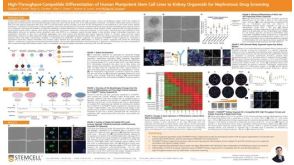 科学海报High-Throughput-Compatible Differentiation of Human Pluripotent Stem Cell Lines to Kidney Organoids for Nephrotoxic Drug Screening
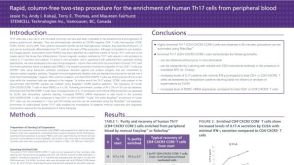 科学海报Column-Free Cell Enrichment of Human Th17 Cells from Peripheral Blood
 沪公网安备31010102008431号