L. Sun et al. (Jun 2025)
Signal Transduction and Targeted Therapy 10
TSC22 domain family member 3 links natural killer cells to CD8+ T cell-mediated drug hypersensitivity
Severe cutaneous adverse drug reactions (SCARs) are life-threatening diseases,which are associated with human leukocyte antigen ( HLA ) risk variants. However,the low positive predictive values of HLA variants suggest additional factors influence disease susceptibility. Using dapsone hypersensitivity syndrome (DHS) as a paradigm for SCARs,we show that the DHS patients harbor a sex-related global reduction in blood NK cells,contributing to the higher incidence of reactions in females. Single-cell RNA sequencing revealed a decrease in the immunoregulatory CD56 low XCL1/2 low NK cell subset and an expansion of CD56 high XCL1/2 high NK cell subsets with an effector phenotype in DHS patients compared to dapsone-tolerant individuals. Functionally,interleukin-15 superagonist-induced activation of NK cells exacerbated SCARs-like symptoms in a murine model. Mechanistically,TSC22 domain family member 3 (TSC22D3) deficiency enhanced NK cell effector function,shifting the immune response from CD4+ T cell to CD8+ T cell function. These results demonstrate that TSC22D3-regulated NK cells play a critical role in predisposing to drug hypersensitivity reactions,bridging innate and adaptive immune dysregulation in SCARs pathogenesis. Our study highlights the importance of NK cell heterogeneity and TSC22D3 in immune-mediated hypersensitivity disorders,offering potential therapeutic targets for SCARs and related conditions. Subject terms: Innate immunity,Innate immunity
View Publication
Cantu' C et al. (JAN 2011)
Nucleic acids research 39 2 486--501
A highly conserved SOX6 double binding site mediates SOX6 gene downregulation in erythroid cells.
The Sox6 transcription factor plays critical roles in various cell types,including erythroid cells. Sox6-deficient mice are anemic due to impaired red cell maturation and show inappropriate globin gene expression in definitive erythrocytes. To identify new Sox6 target genes in erythroid cells,we used the known repressive double Sox6 consensus within the εy-globin promoter to perform a bioinformatic genome-wide search for similar,evolutionarily conserved motifs located within genes whose expression changes during erythropoiesis. We found a highly conserved Sox6 consensus within the Sox6 human gene promoter itself. This sequence is bound by Sox6 in vitro and in vivo,and mediates transcriptional repression in transient transfections in human erythroleukemic K562 cells and in primary erythroblasts. The binding of a lentiviral transduced Sox6FLAG protein to the endogenous Sox6 promoter is accompanied,in erythroid cells,by strong downregulation of the endogenous Sox6 transcript and by decreased in vivo chromatin accessibility of this region to the PstI restriction enzyme. These observations suggest that the negative Sox6 autoregulation,mediated by the double Sox6 binding site within its own promoter,may be relevant to control the Sox6 transcriptional downregulation that we observe in human erythroid cultures and in mouse bone marrow cells in late erythroid maturation.
View Publication
产品类型:
产品号#:
09600
09650
09850
产品名:
StemSpan™ SFEM
StemSpan™ SFEM
Ma N et al. (NOV 2013)
Journal of Biological Chemistry 288 48 34671--34679
$\$-Thalassemia ($\$-Thal) is a group of life-threatening blood disorders caused by either point mutations or deletions of nucleotides in $\$-globin gene (HBB). It is estimated that 4.5% of the population in the world carry $\$-Thal mutants (1),posing a persistent threat to public health. The generation of patient-specific induced pluripotent stem cells (iPSCs) and subsequent correction of the disease-causing mutations offer an ideal therapeutic solution to this problem. However,homologous recombination-based gene correction in human iPSCs remains largely inefficient. Here,we describe a robust process combining efficient generation of integration-free $\$-Thal iPSCs from the cells of patients and transcription activator-like effector nuclease (TALEN)-based universal correction of HBB mutations in situ. We generated integration-free and gene-corrected iPSC lines from two patients carrying different types of homozygous mutations and showed that these iPSCs are pluripotent and have normal karyotype. We showed that the correction process did not generate TALEN-induced off targeting mutations by sequencing. More importantly,the gene-corrected $\$-Thal iPS cell lines from each patient can be induced to differentiate into hematopoietic progenitor cells and then further to erythroblasts expressing normal $\$-globin. Our studies provide an efficient and universal strategy to correct different types of $\$-globin mutations in $\$-Thal iPSCs for disease modeling and applications.
View Publication
产品类型:
产品号#:
05850
05857
05870
05875
85850
85857
85870
85875
产品名:
mTeSR™1
mTeSR™1
Ortega FJ et al. (FEB 2014)
Glia 62 2 247--258
Blockade of microglial K ATP-channel abrogates suppression of inflammatory-mediated inhibition of neural precursor cells
Microglia positively affect neural progenitor cell physiology through the release of inflammatory mediators or trophic factors. We demonstrated previously that reactive microglia foster K(ATP) -channel expression and that blocking this channel using glibenclamide administration enhances striatal neurogenesis after stroke. In this study,we investigated whether the microglial K(ATP) -channel directly influences the activation of neural precursor cells (NPCs) from the subventricular zone using transgenic Csf1r-GFP mice. In vitro exposure of NPCs to lipopolysaccharide and interferon-gamma resulted in a significant decrease in precursor cell number. The complete removal of microglia from the culture or exposure to enriched microglia culture also decreased the precursor cell number. The addition of glibenclamide rescued the negative effects of enriched microglia on neurosphere formation and promoted a 20% improvement in precursor cell number. Similar results were found using microglial-conditioned media from isolated microglia. Using primary mixed glial and pure microglial cultures,glibenclamide specifically targeted reactive microglia to restore neurogenesis and increased the microglial production of the chemokine monocyte chemoattractant protein-1 (MCP-1). These findings provide the first direct evidence that the microglial K(ATP) -channel is a regulator of the proliferation of NPCs under inflammatory conditions.
View Publication
Stadtfeld M et al. (MAR 2008)
Cell stem cell 2 3 230--40
Defining molecular cornerstones during fibroblast to iPS cell reprogramming in mouse.
Ectopic expression of the transcription factors Oct4,Sox2,c-Myc,and Klf4 in fibroblasts generates induced pluripotent stem (iPS) cells. Little is known about the nature and sequence of molecular events accompanying nuclear reprogramming. Using doxycycline-inducible vectors,we have shown that exogenous factors are required for about 10 days,after which cells enter a self-sustaining pluripotent state. We have identified markers that define cell populations prior to and during this transition period. While downregulation of Thy1 and subsequent upregulation of SSEA-1 occur at early time points,reactivation of endogenous Oct4,Sox2,telomerase,and the silent X chromosome mark late events in the reprogramming process. Cell sorting with these markers allows for a significant enrichment of cells with the potential to become iPS cells. Our results suggest that factor-induced reprogramming is a gradual process with defined intermediate cell populations that contain the majority of cells poised to become iPS cells.
View Publication
产品类型:
产品号#:
72742
产品名:
强力霉素(盐酸盐)
Ingersoll MA et al. (JAN 2010)
Blood 115 3 e10--9
Comparison of gene expression profiles between human and mouse monocyte subsets.
Blood of both humans and mice contains 2 main monocyte subsets. Here,we investigated the extent of their similarity using a microarray approach. Approximately 270 genes in humans and 550 genes in mice were differentially expressed between subsets by 2-fold or more. More than 130 of these gene expression differences were conserved between mouse and human monocyte subsets. We confirmed numerous of these differences at the cell surface protein level. Despite overall conservation,some molecules were conversely expressed between the 2 species' subsets,including CD36,CD9,and TREM-1. Other differences included a prominent peroxisome proliferator-activated receptor gamma (PPARgamma) signature in mouse monocytes,which is absent in humans,and strikingly opposed patterns of receptors involved in uptake of apoptotic cells and other phagocytic cargo between human and mouse monocyte subsets. Thus,whereas human and mouse monocyte subsets are far more broadly conserved than currently recognized,important differences between the species deserve consideration when models of human disease are studied in mice.
View Publication
产品类型:
产品号#:
15028
15068
产品名:
RosetteSep™人单核细胞富集抗体混合物
RosetteSep™人单核细胞富集抗体混合物
Nemeth MJ et al. (SEP 2006)
Proceedings of the National Academy of Sciences of the United States of America 103 37 13783--8
Hmgb3 regulates the balance between hematopoietic stem cell self-renewal and differentiation.
Hmgb3 is an X-linked member of a family of sequence-independent chromatin-binding proteins that is preferentially expressed in hematopoietic stem cells (HSC). Hmgb3-deficient mice (Hmgb3(-/Y)) contain normal numbers of HSCs,capable of self-renewal and hematopoietic repopulation,but fewer common lymphoid (CLP) and common myeloid progenitors (CMP). In this study,we tested the hypothesis that Hmgb3(-/Y) HSCs are biased toward self-renewal at the expense of progenitor production. Wild-type and Hmgb3(-/Y) CLPs and CMPs proliferate and differentiate equally in vitro,indicating that CLP and CMP function normally in Hmgb3(-/Y) mice. Hmgb3(-/Y) HSCs exhibit constitutive activation of the canonical Wnt signaling pathway,which regulates stem cell self-renewal. Increased Wnt signaling in Hmgb3(-/Y) HSCs corresponds to increased expression of Dvl1,a positive regulator of the canonical Wnt pathway. To induce hematopoietic stress and a subsequent response from HSCs,we treated Hmgb3(-/Y) mice with 5-fluorouracil. Hmgb3(-/Y) mice exhibit a faster recovery of functional HSCs after administration of 5-fluorouracil compared with wild-type mice,which may be due to the increased Wnt signaling. Furthermore,the recovery of HSC number in Hmgb3(-/Y) mice occurs more rapidly than CLP and CMP recovery. From these data,we propose a model in which Hmgb3 is required for the proper balance between HSC self-renewal and differentiation.
View Publication
Gö et al. (DEC 2001)
The EMBO journal 20 24 6969--78
Valproic acid defines a novel class of HDAC inhibitors inducing differentiation of transformed cells.
Histone deacetylases (HDACs) play important roles in transcriptional regulation and pathogenesis of cancer. Thus,HDAC inhibitors are candidate drugs for differentiation therapy of cancer. Here,we show that the well-tolerated antiepileptic drug valproic acid is a powerful HDAC inhibitor. Valproic acid relieves HDAC-dependent transcriptional repression and causes hyperacetylation of histones in cultured cells and in vivo. Valproic acid inhibits HDAC activity in vitro,most probably by binding to the catalytic center of HDACs. Most importantly,valproic acid induces differentiation of carcinoma cells,transformed hematopoietic progenitor cells and leukemic blasts from acute myeloid leukemia patients. More over,tumor growth and metastasis formation are significantly reduced in animal experiments. Therefore,valproic acid might serve as an effective drug for cancer therapy.
View Publication
产品类型:
产品号#:
72292
产品名:
丙戊酸(钠盐)
Borchin B et al. (DEC 2013)
Stem Cell Reports 1 6 620--631
Derivation and FACS-Mediated Purification of PAX3+/PAX7+ Skeletal Muscle Precursors from Human Pluripotent Stem Cells
Human pluripotent stem cells (hPSCs) constitute a promising resource for use in cell-based therapies and a valuable in vitro model for studying early human development and disease. Despite significant advancements in the derivation of specific fates from hPSCs,the generation of skeletal muscle remains challenging and is mostly dependent on transgene expression. Here,we describe a method based on the use of a small-molecule GSK3?? inhibitor to derive skeletal muscle from several hPSC lines. We show that early GSK3?? inhibition is sufficient to create the conditions necessary for highly effective derivation of muscle cells. Moreover,we developed a strategy for stringent fluorescence-activated cell sorting-based purification of emerging PAX3+/PAX7+ muscle precursors that are able to differentiate in postsort cultures into mature myocytes. This transgene-free,efficient protocol provides an essential tool for producing myogenic cells for in vivo preclinical studies,in vitro screenings,and disease modeling. ?? 2013 The Authors.
View Publication


 EasySep™小鼠TIL(CD45)正选试剂盒





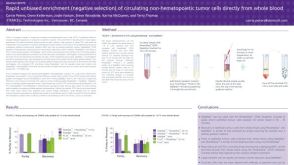 科学海报Rapid Unbiased Enrichment (Negative Selection) of Circulating Non-Hematopoietic Tumor Cells Directly from Whole Blood
 产品手册STEMvision™ Automated and Standardized Counting of Mouse Bone Marrow CFU Assays
 产品手册Evaluating Hematopoietic Cell Therapy Product Potency Using the CFU Assay
 沪公网安备31010102008431号