Scharenberg CW et al. (JAN 2002)
Blood 99 2 507--12
The ABCG2 transporter is an efficient Hoechst 33342 efflux pump and is preferentially expressed by immature human hematopoietic progenitors.
A promising and increasingly exploited property of hematopoietic stem cells is their ability to efflux the fluorescent dye Hoechst 33342. The Hoechst-negative cells are isolated by fluorescence-activated cell sorting as a so-called side population" (SP) of bone marrow. This SP from bone marrow�
View Publication
产品类型:
产品号#:
产品名:
Haddad EA et al. (SEP 2009)
Journal of immunology (Baltimore,Md. : 1950) 183 6 3608--15
An accessory role for B cells in the IL-12-induced activation of resting mouse NK cells.
IL-12 is a potent proinflammatory cytokine. The effects of IL-12 are thought to be mediated by IFN-gamma production by NK,NKT,and T cells. In this study,we show that although IL-12 stimulates NK and NK1.1(+) T cells in bulk mouse splenocytes,it does not significantly stimulate purified NK cells,indicating that other cells are required. IL-12 stimulates T cell-deficient spleen cells and those depleted of macrophages. Unexpectedly,the depletion of dendritic cells also has little effect on the stimulation of spleen cells with IL-12. In contrast,B cell depletion almost completely inhibits IL-12-induced IFN-gamma production and B cell-deficient spleen cells are poorly stimulated with IL-12. Furthermore,purified NK cells are stimulated with IL-12 in the presence of purified B cells. Thus,B cells are necessary and also sufficient for the stimulation of purified NK cells with IL-12. Whereas spleen cells from IL-18-deficient mice are not stimulated with IL-12,NK cells purified from IL-18-deficient mice are stimulated with IL-12 in the presence of wild-type (WT) B cells,and WT NK cells are not stimulated with IL-12 in the presence of IL-18-deficient B cells. Cell contact between B and NK cells is also required for IL-12-induced IFN-gamma production. Finally,B cell-deficient mice injected with IL-12 produce significantly less IFN-gamma and IL-18 in the sera than WT mice do. Thus,stimulation of NK cells with IL-12 requires B cell cooperation in vitro as well as in vivo.
View Publication
产品类型:
产品号#:
18758
18758RF
18768
18768RF
产品名:
L. Chicaybam et al. ( 2016)
Frontiers in bioengineering and biotechnology 4 99
An Efficient Electroporation Protocol for the Genetic Modification of Mammalian Cells.
Genetic modification of cell lines and primary cells is an expensive and cumbersome approach,often involving the use of viral vectors. Electroporation using square-wave generating devices,like Lonza's Nucleofector,is a widely used option,but the costs associated with the acquisition of electroporation kits and the transient transgene expression might hamper the utility of this methodology. In the present work,we show that our in-house developed buffers,termed Chicabuffers,can be efficiently used to electroporate cell lines and primary cells from murine and human origin. Using the Nucleofector II device,we electroporated 14 different cell lines and also primary cells,like mesenchymal stem cells and cord blood CD34+,providing optimized protocols for each of them. Moreover,when combined with sleeping beauty-based transposon system,long-term transgene expression could be achieved in all types of cells tested. Transgene expression was stable and did not interfere with CD34+ differentiation to committed progenitors. We also show that these buffers can be used in CRISPR-mediated editing of PDCD1 gene locus in 293T and human peripheral blood mononuclear cells. The optimized protocols reported in this study provide a suitable and cost-effective platform for the genetic modification of cells,facilitating the widespread adoption of this technology.
View Publication
产品类型:
产品号#:
04034
04044
22001
22005
22006
22007
22008
22009
22011
22012
22013
产品名:
MethoCult™ H4034 Optimum
MethoCult™ H4034 Optimum
STEMvision™ 人脐带血7-天CFU分析包
STEMvision™ 彩色人脐带血14-天CFU分析包
STEMvision™ 彩色人骨髓14-天CFU分析包
STEMvision™ 彩色人动员外周血14-天CFU分析包
STEMvision™ 小鼠总CFU分析包
STEMvision™ 小鼠髓系CFU分析包
STEMvision™ 小鼠红系CFU分析包
STEMvision™ 小鼠CFU分析包(髓系和红系)
Inagi R et al. (NOV 2007)
Nephrology,dialysis,transplantation : official publication of the European Dialysis and Transplant Association - European Renal Association 22 11 3311--7
Establishment of a sandwich ELISA for human megsin, a kidney-specific serine protease inhibitor.
BACKGROUND: We previously identified a novel serine protease inhibitor (serpin),megsin,which is predominantly expressed in the kidney. Megsin expression is up-regulated in human and experimental renal diseases associated with mesangial proliferation and expansion,suggesting that urinary megsin may be a novel diagnostic marker for some renal diseases. METHODS: We established a specific and sensitive sandwich enzyme-linked immunosorbent assay (ELISA) for megsin and measured urinary megsin of patients with various renal diseases. RESULTS: Megsin ELISA specifically detected megsin but not other serpins. The detection limit was 0.04 ng/ml,which allowed detection of urinary megsin in 3.6% of healthy individuals. The antigenic epitope in the urine detected by the ELISA was confirmed as megsin protein by time-of-flight mass spectrometry. Among patients with rapidly progressive glomerulonephritis (n = 18),55.6% were urinary megsin-positive,while 24.1% in IgA nephropathy (n = 112) and 15.1% in chronic non-IgA glomerulonephritis (n = 245) were urinary megsin-positive,respectively. Among patients with chronic renal failure due to unknown causes (n = 74),18.9% were positive for urinary megsin. In diabetic patients with or without nephropathy (n = 1073),12.3% were urinary megsin-positive,while positivity of urinary megsin in patients with non-renal diseases (n = 768) was equivalent (3.3%) to that of healthy individuals. Of note,when urinary megsin-positive patients with diabetic nephropathy (n = 71) were classified into four stages by their proteinuria and estimated glomerular filtration rate,urinary megsin excretion increased as the stage progressed up to stage 3A,suggesting correlation of that with mesangial expansion level. Urinary megsin decreased in the advanced stage,probably reflecting development of glomerulosclerosis. CONCLUSION: We established a high-sensitive megsin ELISA,which detects urinary megsin in some patients with renal diseases and in only a few healthy subjects. Megsin ELISA may be a novel diagnostic tool for renal diseases.
View Publication
产品类型:
产品号#:
03800
03801
03802
03803
03804
03805
03806
产品名:
ClonaCell™-HY杂交瘤试剂盒
ClonaCell™-HY培养基A
ClonaCell™-HY 培养基 B
ClonaCell™-HY 培养基 C
ClonaCell™-HY 培养基 D
ClonaCell™-HY 培养基 E
ClonaCell™-HY PEG
Rodrigues G et al. (APR 2014)
Stem Cell Reviews and Reports 10 2 151--161
Integrated Platform for Production and Purification of Human Pluripotent Stem Cell-Derived Neural Precursors
Human pluripotent stem cells (hPSCs) are a promising source of cells for clinical applications,such as transplantation of clinically engineered tissues and organs,and drug discovery programs due to their ability to self-renew and to be differentiated into cells from the three embryonic germ layers. In this study,the differentiation of two hPSC-lines into neural precursors (NPs) was accomplished with more than 80 % efficiency,by means of the dual-SMAD inhibition protocol,based on the use of two small molecules (SB431542 and LDN193189) to generate Pax6 and Nestin-positive neural entities. One of the major hurdles related to the in vitro generation of PSC-derived populations is the tumorigenic potential of cells that remain undifferentiated. These remaining hPSCs have the potential to generate teratomas after being transplanted,and may interfere with the outcome of in vitro differentiation protocols. One strategy to tackle this problem is to deplete these contaminating" cells during the differentiation process. Magnetic activated cell sorting (MACS) was used for the first time for purification of hPSC-derived NPs after the neural commitment stage using anti-Tra-1-60 micro beads for negative selection of the unwanted hPSCs. The depletion had an average efficiency of 80.4 ± 5 % and less than 1.5 % of Tra-1-60 positive cells were present in the purified populations. After re-plating�
View Publication
产品类型:
产品号#:
05850
05857
05870
05875
85850
85857
85870
85875
产品名:
mTeSR™1
mTeSR™1
L. Baert et al. (Oct 2025)
PLOS Neglected Tropical Diseases 19 10
Induced pluripotent stem cell-derived human macrophages as an infection model for Trypanosoma cruzi
Chagas disease,caused by the parasite Trypanosoma cruzi,affects millions of people globally. Unfortunately,the available treatment options,especially for the chronic stage of the disease,are suboptimal. Given the chronic nature of the disease and the elusive nature of the parasite,there is a high need for new and safer drugs that deliver sterile cure. Posaconazole was a promising lead in the drug discovery pipeline but ultimately failed in clinical trials due to patient relapses. This failure illustrates the need for a drug screening assay that can predict sterile cure by assessing recrudescence after treatment. Here,we used human induced pluripotent stem cell (iPSC)-derived macrophages (iMACs) as host cells for T. cruzi. The iMACs were highly susceptible to infection by the parasites. By combining red fluorescent protein (RFP)-expressing iMACs with mNeonGreen-expressing T. cruzi,we were able to monitor the dynamics of the infection through live cell imaging. The activity of the compounds benznidazole and posaconazole was consistent with the results of an established infection system using mouse primary macrophages. The post-mitotic nature of iMACs makes them suitable host cells for long-term assays needed to assess recrudescence of parasites. Moreover,their human origin,stable genetic background,and capacity for genetic modification make the iMACs excellent host cells for studying host-pathogen interaction. Author summaryThe parasite Trypanosoma cruzi,the causative agent of Chagas disease,is a global health concern affecting millions each year. Infection with T. cruzi can cause chronic disease,often remaining asymptomatic for decades before resulting in severe cardiac or gastro-intestinal pathologies. To date,only benznidazole and nifurtimox are used for treatment of the infection,but both drugs are suboptimal for curing the chronic stage. Posaconazole showed great promise in preclinical studies but failed to achieve sterile cure in clinical trials,causing patient relapses. These disappointing results underline the need for drug screening assays able to predict sterile cure by evaluating recrudescence post-treatment. We used human induced pluripotent stem cell derived macrophages as host cells for T. cruzi and testing of trypanocidal compounds. This model can be used for long-term in vitro screening assays to find new drug candidates against Chagas disease. The human origin of these cells combined with the possibility of upscaling their production make them great host cells for drug screening campaigns.
View Publication
Promoter trapping reveals significant differences in integration site selection between MLV and HIV vectors in primary hematopoietic cells.
Recent reports have indicated that human immunodeficiency virus (HIV) and murine leukemia virus (MLV) vectors preferentially integrate into active genes. Here,we used a novel approach based on genetic trapping to rapidly score several thousand integration sites and found that MLV vectors trapped cellular promoters more efficiently than HIV vectors. Remarkably,1 in 5 MLV integrations trapped an active promoter in different cell lines and primary hematopoietic cells. Such frequency was even higher in growth-stimulated lymphocytes. We show that the different behavior of MLV and HIV vectors was dependent on a different integration pattern within transcribed genes. Whereas MLV-based traps showed a strong bias for promoter-proximal integration leading to efficient reporter expression,HIV-based traps integrated throughout transcriptional units and were limited for expression by the distance from the promoter and the reading frame of the targeted gene. Our results indicate a strong propensity of MLV to establish transcriptional interactions with cellular promoters,a behavior that may have evolved to enhance proviral expression and may increase the insertional mutagenesis risk. Promoter trapping efficiency provides a convenient readout to assess transcriptional interactions between the vector and its flanking genes at the integration site and to compare integration site selection among different cell types and in different growth conditions.
View Publication
Guan X et al. (MAR 2014)
Stem Cell Research 12 2 467--480
Dystrophin-deficient cardiomyocytes derived from human urine: New biologic reagents for drug discovery
The ability to extract somatic cells from a patient and reprogram them to pluripotency opens up new possibilities for personalized medicine. Induced pluripotent stem cells (iPSCs) have been employed to generate beating cardiomyocytes from a patient's skin or blood cells. Here,iPSC methods were used to generate cardiomyocytes starting from the urine of a patient with Duchenne muscular dystrophy (DMD). Urine was chosen as a starting material because it contains adult stem cells called urine-derived stem cells (USCs). USCs express the canonical reprogramming factors c-myc and klf4,and possess high telomerase activity. Pluripotency of urine-derived iPSC clones was confirmed by immunocytochemistry,RT-PCR and teratoma formation. Urine-derived iPSC clones generated from healthy volunteers and a DMD patient were differentiated into beating cardiomyocytes using a series of small molecules in monolayer culture. Results indicate that cardiomyocytes retain the DMD patient's dystrophin mutation. Physiological assays suggest that dystrophin-deficient cardiomyocytes possess phenotypic differences from normal cardiomyocytes. These results demonstrate the feasibility of generating cardiomyocytes from a urine sample and that urine-derived cardiomyocytes retain characteristic features that might be further exploited for mechanistic studies and drug discovery. ?? 2013.
View Publication
产品类型:
产品号#:
05850
05857
05870
05875
85850
85857
85870
85875
产品名:
mTeSR™1
mTeSR™1
Chen KG et al. (JUL 2014)
Journal of visualized experiments : JoVE 89 1--10
Alternative cultures for human pluripotent stem cell production, maintenance, and genetic analysis.
Human pluripotent stem cells (hPSCs) hold great promise for regenerative medicine and biopharmaceutical applications. Currently,optimal culture and efficient expansion of large amounts of clinical-grade hPSCs are critical issues in hPSC-based therapies. Conventionally,hPSCs are propagated as colonies on both feeder and feeder-free culture systems. However,these methods have several major limitations,including low cell yields and generation of heterogeneously differentiated cells. To improve current hPSC culture methods,we have recently developed a new method,which is based on non-colony type monolayer (NCM) culture of dissociated single cells. Here,we present detailed NCM protocols based on the Rho-associated kinase (ROCK) inhibitor Y-27632. We also provide new information regarding NCM culture with different small molecules such as Y-39983 (ROCK I inhibitor),phenylbenzodioxane (ROCK II inhibitor),and thiazovivin (a novel ROCK inhibitor). We further extend our basic protocol to cultivate hPSCs on defined extracellular proteins such as the laminin isoform 521 (LN-521) without the use of ROCK inhibitors. Moreover,based on NCM,we have demonstrated efficient transfection or transduction of plasmid DNAs,lentiviral particles,and oligonucleotide-based microRNAs into hPSCs in order to genetically modify these cells for molecular analyses and drug discovery. The NCM-based methods overcome the major shortcomings of colony-type culture,and thus may be suitable for producing large amounts of homogeneous hPSCs for future clinical therapies,stem cell research,and drug discovery.
View Publication
产品类型:
产品号#:
05850
05857
05870
05875
85850
85857
85870
85875
产品名:
mTeSR™1
mTeSR™1
Chen Y et al. (FEB 2011)
Biochemical and biophysical research communications 405 2 173--9
Aldehyde dehydrogenase 1B1 (ALDH1B1) is a potential biomarker for human colon cancer.
Aldehyde dehydrogenases (ALDHs) belong to a superfamily of NAD(P)+-dependent enzymes,which catalyze the oxidation of endogenous and exogenous aldehydes to their corresponding acids. Increased expression and/or activity of ALDHs,particularly ALDH1A1,have been reported to occur in human cancers. It is proposed that the metabolic function of ALDH1A1 confers the stemness" properties to normal and cancer stem cells. Nevertheless�
View Publication


 EasySep™小鼠TIL(CD45)正选试剂盒





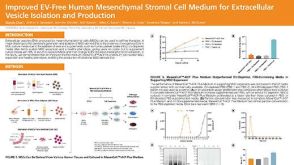 科学海报Improved EV-Free Human Mesenchymal Stromal Cell Medium for Extracellular Vesicle Isolation and Production
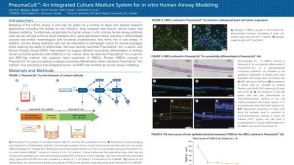 科学海报PneumaCult™: An Integrated Culture Medium System for in vitro Human Airway Modeling
 沪公网安备31010102008431号