Kitsos CM et al. (SEP 2005)
The Journal of biological chemistry 280 39 33101--8
Calmodulin-dependent protein kinase IV regulates hematopoietic stem cell maintenance.
The hematopoietic stem cell (HSC) gives rise to all mature,terminally differentiated cells of the blood. Here we show that calmodulin-dependent protein kinase IV (CaMKIV) is present in c-Kit+ ScaI+ Lin(-/low) hematopoietic progenitor cells (KLS cells) and that its absence results in hematopoietic failure,characterized by a diminished KLS cell population and by an inability of these cells to reconstitute blood cells upon serial transplantation. KLS cell failure in the absence of CaMKIV is correlated with increased apoptosis and proliferation of these cells in vivo and in vitro. In turn,these cell biological defects are correlated with decreases in CREB-serine 133 phosphorylation as well as in CREB-binding protein (CBP) and Bcl-2 levels. Re-expression of CaMKIV in Camk4-/- KLS cells results in the rescue of the proliferation defects in vitro as well as in the restoration of CBP and Bcl-2 to wild type levels. These studies show that CaMKIV is a regulator of HSC homeostasis and suggest that its effects may be in part mediated via regulation of CBP and Bcl-2.
View Publication
产品类型:
产品号#:
03434
03444
产品名:
MethoCult™ GF M3434
MethoCult™ GF M3434
Doyonnas R et al. (SEP 2004)
Proceedings of the National Academy of Sciences of the United States of America 101 37 13507--12
Hematopoietic contribution to skeletal muscle regeneration by myelomonocytic precursors.
Adult bone marrow-derived cells can participate in muscle regeneration after bone marrow transplantation. In recent studies a single hematopoietic stem cell (HSC) was shown to give rise to cells that not only reconstituted all of the lineages of the blood,but also contributed to mature muscle fibers. However,the relevant HSC derivative with this potential has not yet been definitively identified. Here we use fluorescence-activated cell sorter-based protocols to test distinct hematopoietic fractions and show that only fractions containing c-kit(+) immature myelomonocytic precursors are capable of contributing to muscle fibers after i.m. injection. Although these cells belong to the myeloid lineage,they do not include mature CD11b(+) myelomonocytic cells,such as macrophages. Of the four sources of mature macrophages tested that were derived either from monocytic culture,bone marrow,peripheral blood after granulocyte colony-stimulating factor mobilization,or injured muscle,none contributed to muscle. In addition,after transplantation of bone marrow isolated from CD11b-Cre-transgenic mice into the Cre-reporter strain (Z/EG),no GFP myofibers were detected,demonstrating that macrophages expressing CD11b do not fuse with myofibers. Irrespective of the underlying mechanisms,these data suggest that the HSC derivatives that integrate into regenerating muscle fibers exist in the pool of hematopoietic cells known as myelomonocytic progenitors.
View Publication
产品类型:
产品号#:
03434
03444
产品名:
MethoCult™ GF M3434
MethoCult™ GF M3434
Krummey SM et al. (MAR 2016)
Journal of Immunology 196 6 2838--46
Low-Affinity Memory CD8+ T Cells Mediate Robust Heterologous Immunity.
Heterologous immunity is recognized as a significant barrier to transplant tolerance. Whereas it has been established that pathogen-elicited memory T cells can have high or low affinity for cross-reactive allogeneic peptide-MHC,the role of TCR affinity during heterologous immunity has not been explored. We established a model with which to investigate the impact of TCR-priming affinity on memory T cell populations following a graft rechallenge. In contrast to high-affinity priming,low-affinity priming elicited fully differentiated memory T cells with a CD45RB(hi) status. High CD45RB status enabled robust secondary responses in vivo,as demonstrated by faster graft rejection kinetics and greater proliferative responses. CD45RB blockade prolonged graft survival in low affinity-primed mice,but not in high affinity-primed mice. Mechanistically,low affinity-primed memory CD8(+) T cells produced more IL-2 and significantly upregulated IL-2Rα expression during rechallenge. We found that CD45RB(hi) status was also a stable marker of priming affinity within polyclonal CD8(+) T cell populations. Following high-affinity rechallenge,low affinity-primed CD45RB(hi) cells became CD45RB(lo),demonstrating that CD45RB status acts as an affinity-based differentiation switch on CD8(+) T cells. Thus,these data establish a novel mechanism by which CD45 isoforms tune low affinity-primed memory CD8(+) T cells to become potent secondary effectors following heterologous rechallenge. These findings have direct implications for allogeneic heterologous immunity by demonstrating that despite a lower precursor frequency,low-affinity priming is sufficient to generate memory cells that mediate potent secondary responses against a cross-reactive graft challenge.
View Publication
产品类型:
产品号#:
19853
19853RF
产品名:
EasySep™小鼠CD8+ T细胞分选试剂盒
RoboSep™ 小鼠CD8+ T细胞分选试剂盒
(Jun 2025)
BMJ Oncology 4 1
Osteoclast-expanded supercharged NK cells perform superior antitumour effector functions
AbstractObjectiveNatural killer (NK) cells are the largest innate lymphocyte subset with potent antitumour and antiviral functions. However,clinical utilisation of human NK cells is hampered due to a lack of reliable methods to augment their antitumour potential. We demonstrated technology in which human NK cells were cocultured with osteoclasts in the presence of probiotic bacteria. This approach significantly augmented the antitumour cytotoxicity and polyfunctionality of human NK cells,resulting in the generation of supercharged NK (sNK) cells.Methods and analysisWe explored the proteomic,transcriptomic and functional characterisation of sNK cells using cell imaging,flow cytometric analysis,51-chromium release cytotoxicity assay,ELISA,ELIspot,IsoPLexis single-cell secretome analysis,proteomic analysis,RNA analysis,western blot and enzyme kinetics.ResultsWe found that sNK cells were less susceptible to split anergy and tumour-induced exhaustion. Proteomic analyses revealed that sNK cells significantly increased their cell motility and proliferation. Single-cell transcriptomes uncovered sNK cells undertaking a unique differentiation trajectory and turning on STAT1,JUN,BHLHE40,ELF1,MAX and MYC regulons essential for augmenting antitumour effector functions and proliferation,respectively. Both proteomic and single-cell transcriptomes revealed that an increase in Cathepsin C helped to augment the quantity and function of Granzyme B.ConclusionsThese results support that this unique method produces potent NK cells for clinical utilisation and delineate the molecular mechanisms associated with this process.
View Publication
Sulforaphane targets pancreatic tumour-initiating cells by NF-kappaB-induced antiapoptotic signalling.
BACKGROUND AND AIMS: Emerging evidence suggests that highly treatment-resistant tumour-initiating cells (TICs) play a central role in the pathogenesis of pancreatic cancer. Tumour necrosis factor-related apoptosis-inducing ligand (TRAIL) is considered to be a novel anticancer agent; however,recent studies have shown that many pancreatic cancer cells are resistant to apoptosis induction by TRAIL due to TRAIL-activated nuclear factor-kappaB (NF-kappaB) signalling. Several chemopreventive agents are able to inhibit NF-kappaB,and favourable results have been obtained--for example,for the broccoli compound sulforaphane-in preventing metastasis in clinical studies. The aim of the study was to identify TICs in pancreatic carcinoma for analysis of resistance mechanisms and for definition of sensitising agents. METHODS: TICs were defined by expression patterns of a CD44(+)/CD24(-),CD44(+)/CD24(+) or CD44(+)/CD133(+) phenotype and correlation to growth in immunodeficient mice,differentiation grade,clonogenic growth,sphere formation,aldehyde dehydrogenase (ALDH) activity and therapy resistance. RESULTS: Mechanistically,specific binding of transcriptionally active cRel-containing NF-kappaB complexes in TICs was observed. Sulforaphane prevented NF-kappaB binding,downregulated apoptosis inhibitors and induced apoptosis,together with prevention of clonogenicity. Gemcitabine,the chemopreventive agents resveratrol and wogonin,and the death ligand TRAIL were less effective. In a xenograft model,sulforaphane strongly blocked tumour growth and angiogenesis,while combination with TRAIL had an additive effect without obvious cytotoxicity in normal cells. Freshly isolated patient tumour cells expressing markers for TICs could be sensitised by sulforaphane for TRAIL-induced cytotoxicity. CONCLUSION: The data provide new insights into resistance mechanisms of TICs and suggest the combination of sulforaphane with TRAIL as a promising strategy for targeting of pancreatic TICs.
View Publication
产品类型:
产品号#:
01700
01705
05751
01702
产品名:
ALDEFLUOR™ 试剂盒
ALDEFLUOR™ DEAB试剂, 1.5 mM, 1 mL
NeuroCult™ NS-A 扩增试剂盒(人)
ALDEFLUOR™检测缓冲液
Dunford JE et al. ( 2001)
The Journal of pharmacology and experimental therapeutics 296 2 235--242
Structure-activity relationships for inhibition of farnesyl diphosphate synthase in vitro and inhibition of bone resorption in vivo by nitrogen-containing bisphosphonates.
It has long been known that small changes to the structure of the R(2) side chain of nitrogen-containing bisphosphonates can dramatically affect their potency for inhibiting bone resorption in vitro and in vivo,although the reason for these differences in antiresorptive potency have not been explained at the level of a pharmacological target. Recently,several nitrogen-containing bisphosphonates were found to inhibit osteoclast-mediated bone resorption in vitro by inhibiting farnesyl diphosphate synthase,thereby preventing protein prenylation in osteoclasts. In this study,we examined the potency of a wider range of nitrogen-containing bisphosphonates,including the highly potent,heterocycle-containing zoledronic acid and minodronate (YM-529). We found a clear correlation between the ability to inhibit farnesyl diphosphate synthase in vitro,to inhibit protein prenylation in cell-free extracts and in purified osteoclasts in vitro,and to inhibit bone resorption in vivo. The activity of recombinant human farnesyl diphosphate synthase was inhibited at concentrations textgreater or = 1 nM zoledronic acid or minodronate,the order of potency (zoledronic acid approximately equal to minodronate textgreater risedronate textgreater ibandronate textgreater incadronate textgreater alendronate textgreater pamidronate) closely matching the order of antiresorptive potency. Furthermore,minor changes to the structure of the R(2) side chain of heterocycle-containing bisphosphonates,giving rise to less potent inhibitors of bone resorption in vivo,also caused a reduction in potency up to approximately 300-fold for inhibition of farnesyl diphosphate synthase in vitro. These data indicate that farnesyl diphosphate synthase is the major pharmacological target of these drugs in vivo,and that small changes to the structure of the R(2) side chain alter antiresorptive potency by affecting the ability to inhibit farnesyl diphosphate synthase.
View Publication
产品类型:
产品号#:
73572
产品名:
唑来膦酸 (Hydrate)
Wang W et al. (MAY 2016)
Cell 165 5 1092--105
Effector T Cells Abrogate Stroma-Mediated Chemoresistance in Ovarian Cancer.
Effector T cells and fibroblasts are major components in the tumor microenvironment. The means through which these cellular interactions affect chemoresistance is unclear. Here,we show that fibroblasts diminish nuclear accumulation of platinum in ovarian cancer cells,resulting in resistance to platinum-based chemotherapy. We demonstrate that glutathione and cysteine released by fibroblasts contribute to this resistance. CD8(+) T cells abolish the resistance by altering glutathione and cystine metabolism in fibroblasts. CD8(+) T-cell-derived interferon (IFN)γ controls fibroblast glutathione and cysteine through upregulation of gamma-glutamyltransferases and transcriptional repression of system xc(-) cystine and glutamate antiporter via the JAK/STAT1 pathway. The presence of stromal fibroblasts and CD8(+) T cells is negatively and positively associated with ovarian cancer patient survival,respectively. Thus,our work uncovers a mode of action for effector T cells: they abrogate stromal-mediated chemoresistance. Capitalizing upon the interplay between chemotherapy and immunotherapy holds high potential for cancer treatment.
View Publication
产品类型:
产品号#:
17953
17953RF
15022
15062
100-0710
产品名:
EasySep™人CD8+ T细胞分选试剂盒
RoboSep™ 人CD8+ T细胞分选试剂盒
RosetteSep™人CD4+ T细胞富集抗体混合物
RosetteSep™人CD4+ T细胞富集抗体混合物
EasySep™人CD8+ T细胞分选试剂盒
Wilson HK et al. (DEC 2016)
Tissue engineering. Part C,Methods 22 12 1085--1094
Cryopreservation of Brain Endothelial Cells Derived from Human Induced Pluripotent Stem Cells Is Enhanced by Rho-Associated Coiled Coil-Containing Kinase Inhibition.
The blood-brain barrier (BBB) maintains brain homeostasis but also presents a major obstacle to brain drug delivery. Brain microvascular endothelial cells (BMECs) form the principal barrier and therefore represent the major cellular component of in vitro BBB models. Such models are often used for mechanistic studies of the BBB in health and disease and for drug screening. Recently,human induced pluripotent stem cells (iPSCs) have emerged as a new source for generating BMEC-like cells for use in in vitro human BBB studies. However,the inability to cryopreserve iPSC-BMECs has impeded implementation of this model by requiring a fresh differentiation to generate cells for each experiment. Cryopreservation of differentiated iPSC-BMECs would have a number of distinct advantages,including enabling production of larger scale lots,decreasing lead time to generate purified iPSC-BMEC cultures,and facilitating use of iPSC-BMECs in large-scale screening. In this study,we demonstrate that iPSC-BMECs can be successfully cryopreserved at multiple differentiation stages. Cryopreserved iPSC-BMECs retain high viability,express standard endothelial and BBB markers,and reach a high transendothelial electrical resistance (TEER) of ∼3000 Ωtextperiodcenteredcm(2),equivalent to nonfrozen controls. Rho-associated coiled coil-containing kinase (ROCK) inhibitor Y-27632 substantially increased survival and attachment of cryopreserved iPSC-BMECs,as well as stabilized TEER above 800 Ωtextperiodcenteredcm(2) out to 7 days post-thaw. Overall,cryopreservation will ease handling and storage of high-quality iPSC-BMECs,reducing a key barrier to greater implementation of these cells in modeling the human BBB.
View Publication
产品类型:
产品号#:
05850
05857
05870
05875
85850
85857
85870
85875
产品名:
mTeSR™1
mTeSR™1
Ghandour H et al. (NOV 2007)
Blood 110 10 3682--90
Essential role for Rap1 GTPase and its guanine exchange factor CalDAG-GEFI in LFA-1 but not VLA-4 integrin mediated human T-cell adhesion.
Regulated adhesion of T cells by the integrins LFA-1 (lymphocyte function-associated antigen-1) and VLA-4 (very late antigen-4) is essential for T-cell trafficking. The small GTPase Rap1 is a critical activator of both integrins in murine lymphocytes and T-cell lines. Here we examined the contribution of the Rap1 regulatory pathway in integrin activation in primary CD3(+) human T cells. We demonstrate that inactivation of Rap1 GTPase in human T cells by expression of SPA1 or Rap1GAP blocked stromal cell-derived factor-1alpha (SDF-1alpha)-stimulated LFA-1-ICAM-1 (intercellular adhesion molecule-1) interactions and LFA-1 affinity modulation but unexpectedly did not significantly affect binding of VLA-4 to its ligand VCAM-1 (vascular cell adhesion molecule 1). Importantly,silencing of the Rap1 guanine exchange factor CalDAG-GEFI inhibited SDF-1alpha- and phorbol 12-myristate 13-acetate (PMA)-induced adhesion to ICAM-1 while having no effect on adhesion to VCAM-1. Pharmacologic inhibition of Phospholipase C (PLC) blocked Rap1 activation and inhibited cell adhesion and polarization on ICAM-1 and VCAM-1. Protein kinase C (PKC) inhibition led to enhanced levels of active Rap1 concomitantly with increased T-cell binding to ICAM-1,whereas adhesion to VCAM-1 was reduced. Thus,PLC/CalDAG-GEFI regulation of Rap1 is selectively required for chemokine- and PMA-induced LFA-1 activation in human T cells,whereas alternate PLC- and PKC-dependent mechanisms are involved in the regulation of VLA-4.
View Publication


 EasySep™小鼠TIL(CD45)正选试剂盒





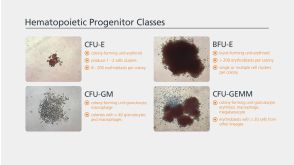
 挂图Identification of Colonies Derived from Human Hematopoietic Progenitors Representative colony images and tips for identifying progenitor subtypes in CFU assays

 沪公网安备31010102008431号