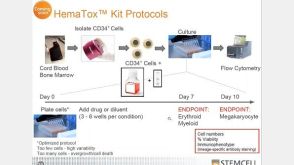
Kim H et al. (JAN 2013)
Nature communications 4 2403
Modulation of β-catenin function maintains mouse epiblast stem cell and human embryonic stem cell self-renewal.
Wnt/β-catenin signalling has a variety of roles in regulating stem cell fates. Its specific role in mouse epiblast stem cell self-renewal,however,remains poorly understood. Here we show that Wnt/β-catenin functions in both self-renewal and differentiation in mouse epiblast stem cells. Stabilization and nuclear translocation of β-catenin and its subsequent binding to T-cell factors induces differentiation. Conversely,retention of stabilized β-catenin in the cytoplasm maintains self-renewal. Cytoplasmic retention of β-catenin is effected by stabilization of Axin2,a downstream target of β-catenin,or by genetic modifications to β-catenin that prevent its nuclear translocation. We also find that human embryonic stem cell and mouse epiblast stem cell fates are regulated by β-catenin through similar mechanisms. Our results elucidate a new role for β-catenin in stem cell self-renewal that is independent of its transcriptional activity and will have broad implications in understanding the molecular regulation of stem cell fate.
View Publication
产品类型:
产品号#:
72052
72054
72562
72564
产品名:
CHIR99021
CHIR99021
IWR-1-endo
IWR-1-endo
文献
Qu Q et al. (JUN 1999)
Journal of cellular biochemistry 73 4 500--7
Comparative effects of estrogen and antiestrogens on differentiation of osteoblasts in mouse bone marrow culture.
Estrogens as well as some antiestrogens have been shown to prevent bone loss in postmenopausal women. These compounds seem to inhibit bone resorption,but their anabolic effects have been less explored. In this study,bone marrow cultures were used to compare the effect of 17beta-estradiol (E2),and two triphenylethylene derivatives,tamoxifen (TAM),and FC1271a,and a benzothiophene derivative raloxifene (RAL) on differentiation of osteoblasts. All enhanced osteoblastic differentiation of 21-day cultures as indicated by increased mineralization and bone nodule formation. All,except RAL,stimulated cell proliferation during the first 6 days of the culture. However,in the presence of RAL the content of total protein was increased in 13-day cultures. SDS-PAGE and autoradiography of [14C]-proline labeled proteins revealed elevated level of the newly synthesized collagen type I. The pure antiestrogen ICI 182,780 abolished the increase of the specific activity of alkaline phosphatase by E2,TAM,and FC1271a but not the effect of RAL on protein synthesis. Our results show that E2 as well as TAM,FC1271a,and RAL stimulate bone formation in vitro but the mechanism of the anabolic action of RAL in bone clearly differs from that of E2,TAM,and FC1271a.
View Publication
产品类型:
产品号#:
72852
72854
产品名:
文献
Fiorenzano A et al. (SEP 2016)
Nature communications 7 12589
Cripto is essential to capture mouse epiblast stem cell and human embryonic stem cell pluripotency.
Known molecular determinants of developmental plasticity are mainly transcription factors,while the extrinsic regulation of this process has been largely unexplored. Here we identify Cripto as one of the earliest epiblast markers and a key extracellular determinant of the naive and primed pluripotent states. We demonstrate that Cripto sustains mouse embryonic stem cell (ESC) self-renewal by modulating Wnt/β-catenin,whereas it maintains mouse epiblast stem cell (EpiSC) and human ESC pluripotency through Nodal/Smad2. Moreover,we provide unprecedented evidence that Cripto controls the metabolic reprogramming in ESCs to EpiSC transition. Remarkably,Cripto deficiency attenuates ESC lineage restriction in vitro and in vivo,and permits ESC transdifferentiation into trophectoderm lineage,suggesting that Cripto has earlier functions than previously recognized. All together,our studies provide novel insights into the current model of mammalian pluripotency and contribute to the understanding of the extrinsic regulation of the first cell lineage decision in the embryo.
View Publication
产品类型:
产品号#:
85850
85857
产品名:
mTeSR™1
mTeSR™1
文献
Paul SR et al. (OCT 1990)
Proceedings of the National Academy of Sciences of the United States of America 87 19 7512--6
Molecular cloning of a cDNA encoding interleukin 11, a stromal cell-derived lymphopoietic and hematopoietic cytokine.
Hematopoiesis occurs in close association with a complex network of cells loosely termed the hematopoietic microenvironment. Analysis of the mechanisms of microenvironmental regulation of hematopoiesis has been hindered by the complexity of the microenvironment as well as the heterogeneity of hematopoietic stem cells and early progenitor cells. We have established immortalized primate bone marrow-derived stromal cell lines to facilitate analysis of the interactions of hematopoietic cells with the microenvironment in a large animal species. One such line,PU-34,was found to produce a variety of growth factors,including an activity that stimulates the proliferation of an interleukin 6-dependent murine plasmacytoma cell line. A cDNA encoding the plasmacytoma stimulatory activity was isolated through functional expression cloning in mammalian cells. The nucleotide sequence contained a single long reading frame of 597 nucleotides encoding a predicted 199-amino acid polypeptide. The amino acid sequence of this cytokine,designated interleukin 11 (IL-11),did not display significant similarity with any other sequence in the GenBank data base. Preliminary biological characterization indicates that in addition to stimulating plasmacytoma proliferation,IL-11 stimulates the T-cell-dependent development of immunoglobulin-producing B cells and synergizes with IL-3 in supporting murine megakaryocyte colony formation. These properties implicate IL-11 as an additional multifunctional regulator in the hematopoietic microenvironment.
View Publication
产品类型:
产品号#:
产品名:
文献
Cron RQ et al. (JAN 2006)
Journal of immunology (Baltimore,Md. : 1950) 176 2 811--8
Early growth response-1 is required for CD154 transcription.
CD154 (CD40 ligand) expression on CD4 T cells is normally tightly controlled,but abnormal or dysregulated expression of CD154 has been well documented in autoimmune diseases,such as systemic lupus erythematosus. Beyond regulation by NFAT proteins,little is known about the transcriptional activation of the CD154 promoter. We identified a species-conserved purine-rich sequence located adjacent to the CD154 transcriptional promoter proximal NFAT site,which binds early growth response (Egr) transcription factors. Gel shift assays and chromatin immunoprecipitation assays reveal that Egr-1,Egr-3,and NFAT1 present in primary human CD4 T cells are capable of binding this combinatorial site in vitro and in vivo,respectively. Multimerization of this NFAT/Egr sequence in the context of a reporter gene demonstrates this sequence is transcriptionally active upon T cell activation in primary human CD4 T cells. Overexpression of Egr-1,but not Egr-3,is capable of augmenting transcription of this reporter gene as well as that of an intact CD154 promoter. Conversely,overexpression of small interfering RNA specific for Egr-1 in primary human CD4 T cells inhibits CD154 expression. Similarly,upon activation,CD154 message is notably decreased in splenic CD4 T cells from Egr-1-deficient mice compared with wild-type controls. Our data demonstrate that Egr-1 is required for CD154 transcription in primary CD4 T cells. This has implications for selective targeting of Egr family members to control abnormal expression of CD154 in autoimmune diseases such as systemic lupus erythematosus.
View Publication
3D printing of soft lithography mold for rapid production of polydimethylsiloxane-based microfluidic devices for cell stimulation with concentration gradients
Three-dimensional (3D) printing is advantageous over conventional technologies for the fabrication of sophisticated structures such as 3D micro-channels for future applications in tissue engineering and drug screening. We aimed to apply this technology to cell-based assays using polydimethylsiloxane (PDMS),the most commonly used material for fabrication of micro-channels used for cell culture experiments. Useful properties of PDMS include biocompatibility,gas permeability and transparency. We developed a simple and robust protocol to generate PDMS-based devices using a soft lithography mold produced by 3D printing. 3D chemical gradients were then generated to stimulate cells confined to a micro-channel. We demonstrate that concentration gradients of growth factors,important regulators of cell/tissue functions in vivo,influence the survival and growth of human embryonic stem cells. Thus,this approach for generation of 3D concentration gradients could have strong implications for tissue engineering and drug screening.
View Publication
产品类型:
产品号#:
85850
85857
产品名:
mTeSR™1
mTeSR™1
文献
Smith Sa et al. (MAR 2012)
Journal of Virology 86 5 2665--75
Persistence of circulating memory B cell clones with potential for Dengue virus disease enhancement for decades following infection
Symptomatic dengue virus infection ranges in disease severity from an influenza-like illness to life-threatening shock. One model of the mechanism underlying severe disease proposes that weakly neutralizing,dengue serotype cross-reactive antibodies induced during a primary infection facilitate virus entry into Fc receptor-bearing cells during a subsequent secondary infection,increasing viral replication and the release of cytokines and vasoactive mediators,culminating in shock. This process has been termed antibody-dependent enhancement of infection and has significantly hindered vaccine development. Much of our understanding of this process has come from studies using mouse monoclonal antibodies (MAbs); however,antibody responses in mice typically exhibit less complexity than those in humans. A better understanding of the humoral immune response to natural dengue virus infection in humans is sorely needed. Using a high-efficiency human hybridoma technology,we isolated 37 hybridomas secreting human MAbs to dengue viruses from 12 subjects years or even decades following primary or secondary infection. The majority of the human antibodies recovered were broadly cross-reactive,directed against either envelope or premembrane proteins,and capable of enhancement of infection in vitro; few exhibited serotype-specific binding or potent neutralizing activity. Memory B cells encoding enhancing antibodies predominated in the circulation,even two or more decades following infection. Mapping the epitopes and activity of naturally occurring dengue antibodies should prove valuable in determining whether the enhancing and neutralizing activity of antibodies can be separated. Such principles could be used in the rational design of vaccines that enhance the induction of neutralizing antibodies,while lowering the risk of dengue shock syndrome.
View Publication


 EasySep™小鼠TIL(CD45)正选试剂盒




 技术公告Supplementary Protocols for IntestiCult™ Organoid Growth Medium (Human)
 文献
文献 产品手册Lymphoprep™ Density Gradient Medium for Mononuclear Cell Isolation
 产品手册hPSC Differentiation: Tools for Pluripotent Stem Cell-Derived Research