E. Vamva et al. (mar 2022)
STAR protocols 3 1 101228
An optimized measles virus glycoprotein-pseudotyped lentiviral vector production system to promote efficient transduction of human primary B cells.
Measles virus envelope pseudotyped LV (MV-LV) can achieve high B cell transduction rates (up to 50%),but suffers from low titers. To overcome current limitations,we developed an optimized MV-LV production protocol that achieved consistent B cell transduction efficiency up to 75%. We detail this protocol along with analytical assays to assess the results of MV-LV mediated B cell transduction,including flow cytometry for B cell phenotypic characterization and measurement of transduction efficiency,and ddPCR for VCN analysis.
View Publication
Hackett C et al. ( 2014)
American journal of translational research 6 2 119--28
Transplantation of Fas-deficient or wild-type neural stem/progenitor cells (NPCs) is equally efficient in treating experimental autoimmune encephalomyelitis (EAE).
Studies have shown that neural stem/progenitor cell (NPC) transplantation is beneficial in experimental autoimmune encephalomyelitis (EAE),an established animal model of multiple sclerosis (MS). It is unclear whether NPCs have the ability to integrate into the host CNS to replace lost cells or if their main mechanism of action is via bystander immunomodulation. Understanding the mechanisms by which NPCs exert their beneficial effects as well as exploring methods to increase post-transplantation survival and differentiation is critical to advancing this treatment strategy. Using the EAE model and Fas-deficient (lpr) NPCs,we investigated the effects of altering the Fas system in NPC transplantation therapy. We show that transplantation of NPCs into EAE mice ameliorates clinical symptoms with greater efficacy than sham treatments regardless of cell type (wt or lpr). NPC transplantation via retro-orbital injections significantly decreased inflammatory infiltrates at the acute time point,with a similar trend at the chronic time point. Both wt and lpr NPCs injected into mice with EAE were able to home to sites of CNS inflammation in the periventricular brain and lumbar spinal cord. Both wt and lpr NPCs have the same capacity for inducing apoptosis of Th1 and Th17 cells,and minimal numbers of NPCs entered the CNS. These cells did not express terminal differentiation markers,suggesting that NPCs exert their effects mainly via bystander peripheral immunomodulation.
View Publication
产品类型:
产品号#:
05715
产品名:
NeuroCult™成年中枢神经系统(CNS)组织酶解试剂盒(小鼠和大鼠)
文献
F. A. H. Cooles et al. ( 2018)
Frontiers in immunology 9 755
Phenotypic and Transcriptomic Analysis of Peripheral Blood Plasmacytoid and Conventional Dendritic Cells in Early Drug Na\ive Rheumatoid Arthritis."
Objective Dendritic cells (DCs) are key orchestrators of immune function. To date,rheumatoid arthritis (RA) researchers have predominantly focused on a potential pathogenic role for CD1c+ DCs. In contrast,CD141+ DCs and plasmacytoid DCs (pDCs) have not been systematically examined,at least in early RA. In established RA,the role of pDCs is ambiguous and,since disease duration and treatment both impact RA pathophysiology,we examined pDCs,and CD1c+ and CD141+ conventional DCs (cDCs),in early,drug-na{\{i}}ve RA (eRA) patients. Methods We analyzed the frequency and phenotype of pDCs
View Publication
产品类型:
产品号#:
07811
07861
产品名:
Lymphoprep™
Lymphoprep™
文献
Biswas S et al. (OCT 2009)
Journal of immunology (Baltimore,Md. : 1950) 183 8 5050--8
Elevated levels of select gangliosides in T cells from renal cell carcinoma patients is associated with T cell dysfunction.
Increased expression of gangliosides by different tumor types including renal cell carcinoma (RCC) is thought to contribute to the immune suppression observed in cancer patients. In this study,we report an increase in apoptotic T cells from RCC patients compared with T cells from normal donors that coincided with the detection of T cells staining positive for GM2 and that the apoptosis was predominantly observed in the GM2(+) but not the GM2(-) T cell population. Ganglioside shedding from tumor rather than endogenous production accounts for GM2(+) T cells since there was no detectable level of mRNA for GM2 synthase in RCC patient T cells and in T cells from normal healthy donors after incubation with either purified GM2 or supernatant from RCC cell lines despite their staining positive for GM2. Moreover,reactive oxygen species as well as activated caspase 3,8,and 9 were predominantly elevated in GM2(+) but not GM2(-) T cells. Similarly,increased staining for GD2 and GD3 but not GD1a was detected with patient T cells with elevated levels of apoptosis in the GD2(+) and GD3(+) cells. These findings suggest that GM2,GD2,and GD3 play a significant role in immune dysfunction observed in RCC patient T cells.
View Publication
产品类型:
产品号#:
19051
19051RF
产品名:
EasySep™人T细胞富集试剂盒
RoboSep™ 人T细胞富集试剂盒含滤芯吸头
文献
Kim E-O et al. (DEC 2010)
The Journal of biological chemistry 285 53 41755--64
Homotypic cell to cell cross-talk among human natural killer cells reveals differential and overlapping roles of 2B4 and CD2.
Human natural killer (NK) cells express an abundant level of 2B4 and CD2 on their surface. Their counter-receptors,CD48 and CD58,are also expressed on the NK cell surface,raising a question about the functional consequences of potential 2B4/CD48 and CD2/CD58 interactions. Using blocking antibodies specific to each receptor,we demonstrated that both 2B4/CD48 and CD2/CD58 interactions were essential for the development of NK effector functions: cytotoxicity and cytokine secretion. However,only 2B4/CD48,but not CD2/CD58,interactions were shown to be critical for the optimal NK cell proliferation in response to interleukin (IL)-2. IL-2-activated NK cells cultured in the absence of 2B4/CD48 or CD2/CD58 interactions were severely impaired for their ability to induce intracellular calcium mobilization and subsequent ERK activation upon tumor target exposure,suggesting that the early signaling pathway of NK receptors leading to impaired cytolysis and interferon (IFN)-γ secretion was inhibited. Nevertheless,these defects did not fully account for the reduced proliferation of NK cells in the absence of 2B4/CD48 interactions,because anti-CD2 or anti-CD58 monoclonal antibody (mAb)-treated NK cells,showing defective signaling and effector functions,displayed normal proliferation upon IL-2 stimulation. These results propose the signaling divergence between pathways leading to cell proliferation and cytotoxicity/cytokine release,which can be differentially regulated by 2B4 and CD2 during IL-2-driven NK cell activation. Collectively,these results reveal the importance of homotypic NK-to-NK cell cross-talk through 2B4/CD48 and CD2/CD58 pairs and further present their differential and overlapping roles in human NK cells.
View Publication
产品类型:
产品号#:
15025
15065
产品名:
RosetteSep™人NK细胞富集抗体混合物
RosetteSep™人NK细胞富集抗体混合物
文献
Walter DH et al. (FEB 2011)
Circulation. Cardiovascular interventions 4 1 26--37
Intraarterial administration of bone marrow mononuclear cells in patients with critical limb ischemia: a randomized-start, placebo-controlled pilot trial (PROVASA).
BACKGROUND: Critical limb ischemia due to peripheral arterial occlusive disease is associated with a severely increased morbidity and mortality. There is no effective pharmacological therapy available. Injection of autologous bone marrow-derived mononuclear cells (BM-MNC) is a promising therapeutic option in patients with critical limb ischemia,but double-blind,randomized trials are lacking. METHODS AND RESULTS: Forty patients with critical limb ischemia were included in a multicenter,phase II,double-blind,randomized-start trial to receive either intraarterial administration of BM-MNC or placebo followed by active treatment with BM-MNC (open label) after 3 months. Intraarterial administration of BM-MNC did not significantly increase ankle-brachial index and,thus,the trial missed its primary end point. However,cell therapy was associated with significantly improved ulcer healing (ulcer area,3.2±4.7 cm(2) to 1.89±3.5 cm(2) [P=0.014] versus placebo,2.92±3.5 cm(2) to 2.89±4.1 cm(2) [P=0.5]) and reduced rest pain (5.2±1.8 to 2.2±1.3 [P=0.009] versus placebo,4.5±2.4 to 3.9±2.6 [P=0.3]) within 3 months. Limb salvage and amputation-free survival rates did not differ between the groups. Repeated BM-MNC administration and higher BM-MNC numbers and functionality were the only independent predictors of improved ulcer healing. Ulcer healing induced by repeated BM-MNC administration significantly correlated with limb salvage (r=0.8; Ptextless0.001). CONCLUSIONS: Intraarterial administration of BM-MNC is safe and feasible and accelerates wound healing in patients without extensive gangrene and impending amputation. These exploratory findings of this pilot trial need to be confirmed in a larger randomized trial in patients with critical limb ischemia and stable ulcers.
View Publication
产品类型:
产品号#:
04564
产品名:
入门套件MethoCult™H4534经典无EPO
文献
Kim KH et al. (NOV 2015)
PLoS ONE 10 11 e0142693
Transcriptomic analysis of induced pluripotent stem cells derived from patients with bipolar disorder from an old order amish pedigree
Fibroblasts from patients with Type I bipolar disorder (BPD) and their unaffected siblings were obtained from an Old Order Amish pedigree with a high incidence of BPD and reprogrammed to induced pluripotent stem cells (iPSCs). Established iPSCs were subsequently differentiated into neuroprogenitors (NPs) and then to neurons. Transcriptomic microarray analysis was conducted on RNA samples from iPSCs,NPs and neurons matured in culture for either 2 weeks (termed early neurons,E) or 4 weeks (termed late neurons,L). Global RNA profiling indicated that BPD and control iPSCs differentiated into NPs and neurons at a similar rate,enabling studies of differentially expressed genes in neurons from controls and BPD cases. Significant disease-associated differences in gene expression were observed only in L neurons. Specifically,328 genes were differentially expressed between BPD and control L neurons including GAD1,glutamate decarboxylase 1 (2.5 fold) and SCN4B,the voltage gated type IV sodium channel beta subunit (-14.6 fold). Quantitative RT-PCR confirmed the up-regulation of GAD1 in BPD compared to control L neurons. Gene Ontology,GeneGo and Ingenuity Pathway Analysis of differentially regulated genes in L neurons suggest that alterations in RNA biosynthesis and metabolism,protein trafficking as well as receptor signaling pathways may play an important role in the pathophysiology of BPD.
View Publication
产品类型:
产品号#:
85850
85857
产品名:
mTeSR™1
mTeSR™1
文献
Nguyen V et al. ( 2016)
Stem cells international 2016 1346521
A Genomic Study of DNA Alteration Events Caused by Ionizing Radiation in Human Embryonic Stem Cells via Next-Generation Sequencing.
Ionizing radiation (IR) is a known mutagen that is widely employed for medical diagnostic and therapeutic purposes. To study the extent of genetic variations in DNA caused by IR,we used IR-sensitive human embryonic stem cells (hESCs). Four hESC cell lines,H1,H7,H9,and H14,were subjected to IR at 0.2 or 1 Gy dose and then maintained in culture for four days before being harvested for DNA isolation. Irradiation with 1 Gy dose resulted in significant cell death,ranging from 60% to 90% reduction in cell population. Since IR is often implicated as a risk for inducing cancer,a primer pool targeting genomic hotspot" regions that are frequently mutated in human cancer genes was used to generate libraries from irradiated and control samples. Using a semiconductor-based next-generation sequencing approach�
View Publication
产品类型:
产品号#:
07923
85850
85857
产品名:
Dispase (1 U/mL)
mTeSR™1
mTeSR™1
文献
Gutierrez-Ramos JC and Palacios R (OCT 1992)
Proceedings of the National Academy of Sciences of the United States of America 89 19 9171--5
In vitro differentiation of embryonic stem cells into lymphocyte precursors able to generate T and B lymphocytes in vivo.
Embryonic stem cells can be induced in vitro,by coculture with the stromal line RP.0.10 and a mixture of interleukins 3,6,and 7,to differentiate into T (Joro75+) and B (B-220+) lymphocyte progenitors and other (Thy-1+,PgP-1+,c-kit+,Joro75-,B-220-,F4/80-,Mac-1-) hemopoietic precursors. The progeny of in vitro-induced embryonic stem cells can reconstitute the lymphoid compartments of T- and B-lymphocyte-deficient scid mice and generate mature T and B lymphocytes in sublethally irradiated normal mice. Exogenous cytokines can dramatically alter the developmental fate of embryonic stem cells in culture. The in vitro system described here should facilitate the study of molecular events leading to cell-lineage commitment and to the formation of hemopoietic stem cells and their immediate lymphoid progeny.
View Publication
产品类型:
产品号#:
产品名:
文献
Forthal DN et al. (FEB 2005)
Journal of virology 79 4 2042--9
Interactions between natural killer cells and antibody Fc result in enhanced antibody neutralization of human immunodeficiency virus type 1.
Antibodies can prevent lentivirus infections in animals and may play a role in controlling viral burden in established infection. In preventing and particularly in controlling infection,antibodies likely function in the presence of large quantities of virus. In this study,we explored the mechanisms by which antibodies neutralize large inocula of human immunodeficiency virus type 1 (HIV-1) on different target cells. Immunoglobulin G (IgG) from HIV-infected patients was tested for neutralizing activity against primary R5 strains of HIV-1 at inocula ranging from 100 to 20,000 50% tissue culture infective doses. At all virus inocula,inhibition by antibody was enhanced when target cells for virus growth were monocyte-depleted,peripheral blood mononuclear cells (PBMCs) rather than CD4(+) lymphocytes. However,enhanced inhibition on PBMCs was greatest with larger amounts of virus. Depleting PBMCs of natural killer (NK) cells,which express Fc receptors for IgG (FcgammaRs),abrogated the enhanced antibody inhibition,whereas adding NK cells to CD4(+) lymphocytes restored inhibition. There was no enhanced inhibition on PBMCs when F(ab')(2) was used. Further experiments demonstrated that the release of beta-chemokines,most likely through FcgammaR triggering of NK cells,contributed modestly to the antiviral activity of antibody on PBMCs and that antibody-coated virus adsorbed to uninfected cells provided a target for NK cell-mediated inhibition of HIV-1. These results indicate that Fc-FcgammaR interactions enhance the ability of antibody to neutralize HIV-1. Since FcgammaR-bearing cells are always present in vivo,FcgammaR-mediated antibody function may play a role in the ability of antibody to control lentivirus infection.
View Publication
产品类型:
产品号#:
产品名:
文献
Kunath T et al. (AUG 2007)
Development (Cambridge,England) 134 16 2895--902
FGF stimulation of the Erk1/2 signalling cascade triggers transition of pluripotent embryonic stem cells from self-renewal to lineage commitment.
Pluripotent embryonic stem (ES) cells must select between alternative fates of self-replication and lineage commitment during continuous proliferation. Here,we delineate the role of autocrine production of fibroblast growth factor 4 (Fgf4) and associated activation of the Erk1/2 (Mapk3/1) signalling cascade. Fgf4 is the major stimulus activating Erk in mouse ES cells. Interference with FGF or Erk activity using chemical inhibitors or genetic ablations does not impede propagation of undifferentiated ES cells. Instead,such manipulations restrict the ability of ES cells to commit to differentiation. ES cells lacking Fgf4 or treated with FGF receptor inhibitors resist neural and mesodermal induction,and are refractory to BMP-induced non-neural differentiation. Lineage commitment potential of Fgf4-null cells is restored by provision of FGF protein. Thus,FGF enables rather than antagonises the differentiation activity of BMP. The key downstream role of Erk signalling is revealed by examination of Erk2-null ES cells,which fail to undergo either neural or mesodermal differentiation in adherent culture,and retain expression of pluripotency markers Oct4,Nanog and Rex1. These findings establish that Fgf4 stimulation of Erk1/2 is an autoinductive stimulus for naïve ES cells to exit the self-renewal programme. We propose that the Erk cascade directs transition to a state that is responsive to inductive cues for germ layer segregation. Consideration of Erk signalling as a primary trigger that potentiates lineage commitment provides a context for reconciling disparate views on the contribution of FGF and BMP pathways during germ layer specification in vertebrate embryos.
View Publication


 EasySep™小鼠TIL(CD45)正选试剂盒




 文献
文献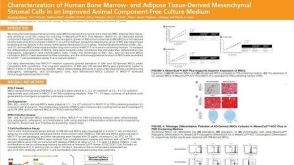 科学海报Characterization of Human Bone Marrow- and Adipose Tissue-Derived Mesenchymal Stromal Cells in an Improved Animal Component-Free Culture Medium
 沪公网安备31010102008431号