Ioannidis P et al. (MAY 2005)
The Journal of biological chemistry 280 20 20086--93
CRD-BP/IMP1 expression characterizes cord blood CD34+ stem cells and affects c-myc and IGF-II expression in MCF-7 cancer cells.
The coding region determinant-binding protein/insulin-like growth factor II mRNA-binding protein (CRD-BP/IMP1) is an RNA-binding protein specifically recognizing c-myc,leader 3' IGF-II and tau mRNAs,and the H19 RNA. CRD-BP/IMP1 is predominantly expressed in embryonal tissues but is de novo activated and/or overexpressed in various human neoplasias. To address the question of whether CRD-BP/IMP1 expression characterizes certain cell types displaying distinct proliferation and/or differentiation properties (i.e. stem cells),we isolated cell subpopulations from human bone marrow,mobilized peripheral blood,and cord blood,all sources known to contain stem cells,and monitored for its expression. CRD-BP/IMP1 was detected only in cord blood-derived CD34(+) stem cells and not in any other cell type of either adult or cord blood origin. Adult BM CD34(+) cells cultured in the presence of 5'-azacytidine expressed de novo CRD-BP/IMP1,suggesting that epigenetic modifications may be responsible for its silencing in adult non-expressing cells. Furthermore,by applying the short interfering RNA methodology in MCF-7 cells,we observed,subsequent to knocking down CRD-BP/IMP1,decreased c-myc expression,increased IGF-II mRNA levels,and reduced cell proliferation rates. These data 1) suggest a normal role for CRD-BP/IMP1 in pluripotent stem cells with high renewal capacity,like the CB CD34(+) cells,2) indicate that altered methylation may directly or indirectly affect its expression in adult cells,3) imply that its de novo activation in cancer cells may affect the expression of c-Myc and insulin-like growth factor II,and 4) indicate that the inhibition of CRD-BP/IMP1 expression might affect cancer cell proliferation.
View Publication
产品类型:
产品号#:
产品名:
文献
Feldmann G et al. (MAR 2007)
Cancer research 67 5 2187--96
Blockade of hedgehog signaling inhibits pancreatic cancer invasion and metastases: a new paradigm for combination therapy in solid cancers.
In the context of pancreatic cancer,metastasis remains the most critical determinant of resectability,and hence survival. The objective of this study was to determine whether Hedgehog (Hh) signaling plays a role in pancreatic cancer invasion and metastasis because this is likely to have profound clinical implications. In pancreatic cancer cell lines,Hh inhibition with cyclopamine resulted in down-regulation of snail and up-regulation of E-cadherin,consistent with inhibition of epithelial-to-mesenchymal transition,and was mirrored by a striking reduction of in vitro invasive capacity (P textless 0.0001). Conversely,Gli1 overexpression in immortalized human pancreatic ductal epithelial cells led to a markedly invasive phenotype (P textless 0.0001) and near total down-regulation of E-cadherin. In an orthotopic xenograft model,cyclopamine profoundly inhibited metastatic spread; only one of seven cyclopamine-treated mice developed pulmonary micrometastases versus seven of seven mice with multiple macrometastases in control animals. Combination of gemcitabine and cyclopamine completely abrogated metastases while also significantly reducing the size of primary" tumors. Gli1 levels were up-regulated in tissue samples of metastatic human pancreatic cancer samples compared with matched primary tumors. Aldehyde dehydrogenase (ALDH) overexpression is characteristic for both hematopoietic progenitors and leukemic stem cells; cyclopamine preferentially reduced "ALDH-high" cells by approximately 3-fold (P = 0.048). We confirm pharmacologic Hh pathway inhibition as a valid therapeutic strategy for pancreatic cancer and show for the first time its particular efficacy against metastatic spread. By targeting specific cellular subpopulations likely involved in tumor initiation at metastatic sites�
View Publication
Chung S-KK et al. (JUL 2014)
Protein and Cell 5 7 544--551
Functional analysis of the acetylation of human p53 in DNA damage responses
As a critical tumor suppressor,p53 is inactivated in human cancer cells by somatic gene mutation or disruption of pathways required for its activation. Therefore,it is critical to elucidate the mechanism underlying p53 activation after genotoxic and cellular stresses. Accumulating evidence has indicated the importance of posttranslational modifications such as acetylation in regulating p53 stability and activity. However,the physiological roles of the eight identified acetylation events in regulating p53 responses remain to be fully understood. By employing homologous recombination,we introduced various combinations of missense mutations (lysine to arginine) into eight acetylation sites of the endogenous p53 gene in human embryonic stem cells (hESCs). By determining the p53 responses to DNA damage in the p53 knock-in mutant hESCs and their derivatives,we demonstrate physiological importance of the acetylation events within the core domain (K120 and K164) and at the C-terminus (K370/372/373/381/382/386) in regulating human p53 responses to DNA damage.
View Publication
产品类型:
产品号#:
85850
85857
产品名:
mTeSR™1
mTeSR™1
文献
Shen W et al. (OCT 2015)
Journal of virology 89 19 10097--10109
Identification and Functional Analysis of Novel Nonstructural Proteins of Human Bocavirus 1.
UNLABELLED: Human bocavirus 1 (HBoV1) is a single-stranded DNA parvovirus that causes lower respiratory tract infections in young children worldwide. In this study,we identified novel splice acceptor and donor sites,namely,A1' and D1',in the large nonstructural protein (NS1)-encoding region of the HBoV1 precursor mRNA. The novel small NS proteins (NS2,NS3,and NS4) were confirmed to be expressed following transfection of an HBoV1 infectious proviral plasmid and viral infection of polarized human airway epithelium cultured at an air-liquid interface (HAE-ALI). We constructed mutant pIHBoV1 infectious plasmids which harbor silent mutations (sm) smA1' and smD1' at the A1' and D1' splice sites,respectively. The mutant infectious plasmids maintained production of HBoV1 progeny virions at levels less than five times lower than that of the wild-type plasmid. Importantly,the smA1' mutant virus that does not express NS3 and NS4 replicated in HAE-ALI as effectively as the wild-type virus; however,the smD1' mutant virus that does not express NS2 and NS4 underwent an abortive infection in HAE-ALI. Thus,our study identified three novel NS proteins,NS2,NS3,and NS4,and suggests an important function of the NS2 protein in HBoV1 replication in HAE-ALI. IMPORTANCE: Human bocavirus 1 infection causes respiratory diseases,including acute wheezing in infants,of which life-threatening cases have been reported. In vitro,human bocavirus 1 infects polarized human bronchial airway epithelium cultured at an air-liquid interface that mimics the environment of human lower respiratory airways. Viral nonstructural proteins are often important for virus replication and pathogenesis in infected tissues or cells. In this report,we identified three new nonstructural proteins of human bocavirus 1 that are expressed during infection of polarized human bronchial airway epithelium. Among them,we proved that one nonstructural protein is critical to the replication of the virus in polarized human bronchial airway epithelium. The creation of nonreplicating infectious HBoV1 mutants may have particular utility in vaccine development for this virus.
View Publication
产品类型:
产品号#:
05001
05021
05022
产品名:
PneumaCult™-ALI 培养基
PneumaCult™-ALI 培养基含12 mm Transwell®插件
PneumaCult™-ALI 培养基含6.5 mm Transwell®插件
文献
Mandegar MA et al. (APR 2016)
Cell Stem Cell 18 4 541--553
CRISPR Interference Efficiently Induces Specific and Reversible Gene Silencing in Human iPSCs
Developing technologies for efficient and scalable disruption of gene expression will provide powerful tools for studying gene function,developmental pathways,and disease mechanisms. Here,we develop clustered regularly interspaced short palindromic repeat interference (CRISPRi) to repress gene expression in human induced pluripotent stem cells (iPSCs). CRISPRi,in which a doxycycline-inducible deactivated Cas9 is fused to a KRAB repression domain,can specifically and reversibly inhibit gene expression in iPSCs and iPSC-derived cardiac progenitors,cardiomyocytes,and T lymphocytes. This gene repression system is tunable and has the potential to silence single alleles. Compared with CRISPR nuclease (CRISPRn),CRISPRi gene repression is more efficient and homogenous across cell populations. The CRISPRi system in iPSCs provides a powerful platform to perform genome-scale screens in a wide range of iPSC-derived cell types,dissect developmental pathways,and model disease.
View Publication
产品类型:
产品号#:
07920
85850
85857
产品名:
ACCUTASE™
mTeSR™1
mTeSR™1
文献
Bhadriraju K et al. (JUL 2016)
Stem Cell Research 17 1 122--129
Large-scale time-lapse microscopy of Oct4 expression in human embryonic stem cell colonies
Identification and quantification of the characteristics of stem cell preparations is critical for understanding stem cell biology and for the development and manufacturing of stem cell based therapies. We have developed image analysis and visualization software that allows effective use of time-lapse microscopy to provide spatial and dynamic information from large numbers of human embryonic stem cell colonies. To achieve statistically relevant sampling,we examined textgreater 680 colonies from 3 different preparations of cells over 5 days each,generating a total experimental dataset of 0.9 terabyte (TB). The 0.5 Giga-pixel images at each time point were represented by multi-resolution pyramids and visualized using the Deep Zoom Javascript library extended to support viewing Giga-pixel images over time and extracting data on individual colonies. We present a methodology that enables quantification of variations in nominally-identical preparations and between colonies,correlation of colony characteristics with Oct4 expression,and identification of rare events.
View Publication
Guilliams M et al. (MAR 2010)
Blood 115 10 1958--68
Skin-draining lymph nodes contain dermis-derived CD103(-) dendritic cells that constitutively produce retinoic acid and induce Foxp3(+) regulatory T cells.
Small intestinal CD103(+) dendritic cells (DCs) have the selective ability to promote de novo generation of regulatory T cells via the production of retinoic acid (RA). Considering that aldehyde dehydrogenase (ALDH) activity controls the production of RA,we used a flow cytometry-based assay to measure ALDH activity at the single-cell level and to perform a comprehensive analysis of the RA-producing DC populations present in lymphoid and nonlymphoid mouse tissues. RA-producing DCs were primarily of the tissue-derived,migratory DC subtype and can be readily found in the skin and in the lungs as well as in their corresponding draining lymph nodes. The RA-producing skin-derived DCs were capable of triggering the generation of regulatory T cells,a finding demonstrating that the presence of RA-producing,tolerogenic DCs is not restricted to the intestinal tract as previously thought. Unexpectedly,the production of RA by skin DCs was restricted to CD103(-) DCs,indicating that CD103 expression does not constitute a universal" marker for RA-producing mouse DCs. Finally�
View Publication


 EasySep™小鼠TIL(CD45)正选试剂盒




 文献
文献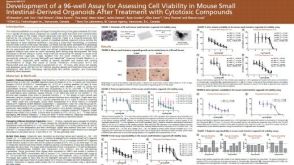 科学海报Development of a 96-well Assay for Assessing Cell Viability in Mouse Small Intestinal-Derived Organoids after Treatment with Cytotoxic Compounds
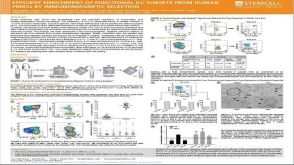 科学海报Efficient Enrichment of Functional ILC Subsets from Human PBMCs by Immunomagnetic Selection
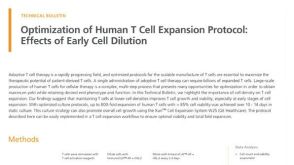 技术公告Optimization of Human T Cell Expansion Protocol: Effects of Early Cell Dilution