Antigen-antibody affinity for dry eye biomarkers by label free biosensing. Comparison with the ELISA technique
The specificity and affinity of antibody-antigen interactions is a fundamental way to achieve reliable biosensing responses. Different proteins involved with dry eye dysfunction: ANXA1,ANXA11,CST4,PRDX5,PLAA and S100A6; were validated as biomarkers. In this work several antibodies were tested for ANXA1,ANXA11 and PRDX5 to select the best candidates for each biomarker. The results were obtained by using Biophotonic Sensing Cells (BICELLs) as an efficient methodology for label-free biosensing and compared with the Enzyme-Linked Immuno Sorbent Assay (ELISA) technique.
View Publication
Ting S et al. (MAY 2014)
Biotechnology journal 9 5 675--683
Time-resolved video analysis and management system for monitoring cardiomyocyte differentiation processes and toxicology assays.
Cardiomyocytes (CM) derived from human embryonic stem cells (hESC) are used for cardio-toxicity evaluation and tested in many preclinical trials for their potential use in regenerative therapeutics. As more efficient CM differentiation protocols are developed,reliable automated platforms for characterization and detection are needed. An automated time-resolved video analysis and management system (TVAMS) has been developed for the evaluation of hESC differentiation to CM. The system was used for monitoring the kinetics of embryoid bodies (EB) generation (numbers and size) and differentiation into beating EBs (percentage beating area and beating EB count) in two differentiation protocols. We show that the percentage beating areas of EBs (from total area of the EBs) is a more sensitive and better predictor of CM differentiation efficiency than percentage of beating EBs (from total EBs) as the percentage beating areas of EBs correlates with cardiac troponin-T and myosin heavy chain expression levels. TVAMS can also be used to evaluate the effect of drugs and inhibitors (e.g. isoproterenol and ZD7288) on CM beating frequency. TVAMS can reliably replace the commonly practiced,time consuming,manual counting of total and beating EBs during CM differentiation. TVAMS is a high-throughput non-invasive video imaging platform that can be applied for the development of new CM differentiation protocols,as well as a tool to conduct CM toxicology assays.
View Publication
产品类型:
产品号#:
85850
85857
产品名:
mTeSR™1
mTeSR™1
Ball CR et al. (SEP 2007)
Blood 110 6 1779--87
Stable differentiation and clonality of murine long-term hematopoiesis after extended reduced-intensity selection for MGMT P140K transgene expression.
Efficient in vivo selection increases survival of gene-corrected hematopoietic stem cells (HSCs) and protects hematopoiesis,even if initial gene transfer efficiency is low. Moreover,selection of a limited number of transduced HSCs lowers the number of cell clones at risk of gene activation by insertional mutagenesis. However,a limited clonal repertoire greatly increases the proliferation stress of each individual clone. Therefore,understanding the impact of in vivo selection on proliferation and lineage differentiation of stem-cell clones is essential for its clinical use. We established minimal cell and drug dosage requirements for selection of P140K mutant O6-methylguanine-DNA-methyltransferase (MGMT P140K)-expressing HSCs and monitored their differentiation potential and clonality under long-term selective stress. Up to 17 administrations of O6-benzylguanine (O6-BG) and 1,3-bis(2-chloroethyl)-1-nitroso-urea (BCNU) did not impair long-term differentiation and proliferation of MGMT P140K-expressing stem-cell clones in mice that underwent serial transplantation and did not lead to clonal exhaustion. Interestingly,not all gene-modified hematopoietic repopulating cell clones were efficiently selectable. Our studies demonstrate that the normal function of murine hematopoietic stem and progenitor cells is not compromised by reduced-intensity long-term in vivo selection,thus underscoring the potential value of MGMT P140K selection for clinical gene therapy.
View Publication
产品类型:
产品号#:
03434
03444
产品名:
MethoCult™GF M3434
MethoCult™GF M3434
Chang Q et al. (SEP 2002)
Infection and Immunity 70 9 4977--86
Structure-function relationships for human antibodies to pneumococcal capsular polysaccharide from transgenic mice with human immunoglobulin Loci.
To investigate the influence of antibody structure and specificity on antibody efficacy against Streptococcus pneumoniae,human monospecific antibodies (MAbs) to serotype 3 pneumococcal capsular polysaccharide (PPS-3) were generated from transgenic mice reconstituted with human immunoglobulin loci (XenoMouse mice) vaccinated with a PPS-3-tetanus toxoid conjugate and their molecular genetic structures,epitope specificities,and protective efficacies in normal and complement-deficient mice were determined. Nucleic acid sequence analysis of three MAbs (A7,1A2,and 7C5) revealed that they use two different V(H)3 genes (A7 and 1A2 both use V3-15) and three different V(kappa) gene segments. The MAbs were found to have similar affinities for PPS-3 but different epitope specificities and CDR3 regions. Both A7 and 7C5 had a lysine at the V(H)-D junction,whereas 1A2 had a threonine. Challenge experiments with serotype 3 S. pneumoniae in BALB/c mice revealed that both 10- and 1- micro g doses of A7 and 7C5 were protective,while only a 10- micro g dose of 1A2 was protective. Both A7 and 7C5 were also protective in mice lacking either an intact alternative (FB(-/-)) or classical (C4(-/-)) complement pathway,but 1A2 was not protective in either strain. Our data suggest that PPS-3 consists of epitopes that can elicit both highly protective and less protective antibodies and that the superior efficacies of certain antibodies may be a function of their structures and/or specificities. Further investigation of relationships between structure,specificity,and efficacy for defined MAbs to PPS may identify antibody features that might be useful surrogates for antibody (and vaccine) efficacy.
View Publication
Lopez-Izquierdo A et al. (NOV 2014)
American journal of physiology. Heart and circulatory physiology 307 9 H1370--7
A near-infrared fluorescent voltage-sensitive dye allows for moderate-throughput electrophysiological analyses of human induced pluripotent stem cell-derived cardiomyocytes.
Human induced pluripotent stem cell-derived cardiomyocyte (iPSC-CM)-based assays are emerging as a promising tool for the in vitro preclinical screening of QT interval-prolonging side effects of drugs in development. A major impediment to the widespread use of human iPSC-CM assays is the low throughput of the currently available electrophysiological tools. To test the precision and applicability of the near-infrared fluorescent voltage-sensitive dye 1-(4-sulfanatobutyl)-4-β[2-(di-n-butylamino)-6-naphthyl]butadienylquinolinium betaine (di-4-ANBDQBS) for moderate-throughput electrophysiological analyses,we compared simultaneous transmembrane voltage and optical action potential (AP) recordings in human iPSC-CM loaded with di-4-ANBDQBS. Optical AP recordings tracked transmembrane voltage with high precision,generating nearly identical values for AP duration (AP durations at 10%,50%,and 90% repolarization). Human iPSC-CMs tolerated repeated laser exposure,with stable optical AP parameters recorded over a 30-min study period. Optical AP recordings appropriately tracked changes in repolarization induced by pharmacological manipulation. Finally,di-4-ANBDQBS allowed for moderate-throughput analyses,increasing throughput textgreater10-fold over the traditional patch-clamp technique. We conclude that the voltage-sensitive dye di-4-ANBDQBS allows for high-precision optical AP measurements that markedly increase the throughput for electrophysiological characterization of human iPSC-CMs.
View Publication


 EasySep™小鼠TIL(CD45)正选试剂盒





 37:09
线上讲座Quick and Easy Isolation of T Cells and Other Immune Cells from Large-Volume Samples发布日期: 05/27/2022
37:09
线上讲座Quick and Easy Isolation of T Cells and Other Immune Cells from Large-Volume Samples发布日期: 05/27/2022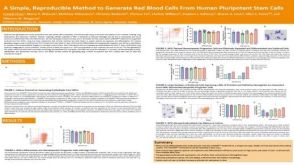 科学海报A Simple, Reproducible Method to Generate Red Blood Cells From Human Pluripotent Stem Cells

 沪公网安备31010102008431号