Carlo-Stella C et al. (JAN 2007)
Stem cells (Dayton,Ohio) 25 1 252--61
Placental growth factor-1 potentiates hematopoietic progenitor cell mobilization induced by granulocyte colony-stimulating factor in mice and nonhuman primates.
The complex hematopoietic effects of placental growth factor (PlGF) prompted us to test in mice and nonhuman primates the mobilization of peripheral blood progenitor cells (PBPCs) elicited by recombinant mouse PlGF-2 (rmPlGF-2) and recombinant human PlGF-1 (rhPlGF-1). PBPC mobilization was evaluated by assaying colony-forming cells (CFCs),high-proliferative potential-CFCs (HPP-CFCs),and long-term culture-initiating cells (LTC-ICs). In mice,both rmPlGF-2 and rhPlGF-1 used as single agents failed to mobilize PBPCs,whereas the combination of rhPlGF-1 and granulocyte colony-stimulating factor (rhG-CSF) increased CFCs and LTC-ICs per milliliter of blood by four- and eightfold,respectively,as compared with rhG-CSF alone. rhPlGF-1 plus rhG-CSF significantly increased matrix metalloproteinase-9 plasma levels over rhG-CSF alone,suggesting a mechanistic explanation for rhPlGF-1/rhG-CSF synergism. In rhesus monkeys,rhPlGF-1 alone had no mobilization effect,whereas rhPlGF-1 (260 microg/kg per day) plus rhG-CSF (100 microg/kg per day) increased rhG-CSF-elicited mobilization of CFCs,HPP-CFCs,and LTC-ICs per milliliter of blood by 5-,7-,and 15-fold,respectively. No specific toxicity was associated with the administration of rhPlGF-1 alone or in combination. In conclusion,our data demonstrate that rhPlGF-1 significantly increases rhG-CSF-elicited hematopoietic mobilization and provide a preclinical rationale for evaluating rhPlGF-1 in the clinical setting.
View Publication
Tareen SU et al. (MAR 2014)
Molecular therapy : the journal of the American Society of Gene Therapy 22 3 575--87
Design of a novel integration-deficient lentivector technology that incorporates genetic and posttranslational elements to target human dendritic cells.
As sentinels of the immune system,dendritic cells (DCs) play an essential role in regulating cellular immune responses. One of the main challenges of developing DC-targeted therapies includes the delivery of antigen to DCs in order to promote the activation of antigen-specific effector CD8 T cells. With the goal of creating antigen-directed immunotherapeutics that can be safely administered directly to patients,Immune Design has developed a platform of novel integration-deficient lentiviral vectors that target and deliver antigen-encoding nucleic acids to human DCs. This platform,termed ID-VP02,utilizes a novel genetic variant of a Sindbis virus envelope glycoprotein with posttranslational carbohydrate modifications in combination with Vpx,a SIVmac viral accessory protein,to achieve efficient targeting and transduction of human DCs. In addition,ID-VP02 incorporates safety features in its design that include two redundant mechanisms to render ID-VP02 integration-deficient. Here,we describe the characteristics that allow ID-VP02 to specifically transduce human DCs,and the advances that ID-VP02 brings to conventional third-generation lentiviral vector design as well as demonstrate upstream production yields that will enable manufacturing feasibility studies to be conducted.
View Publication
Young J et al. (SEP 2015)
Journal of Immunological Methods 424 91--99
A novel immunoassay to measure total serum lymphotoxin�?α levels in the presence of an anti-LTα therapeutic antibody
During drug development,measurement of suitable pharmacodynamic biomarkers is key to establishing in vivo drug activity. Binding of monoclonal antibody (mAb) therapeutics to soluble target proteins often results in elevated serum levels of their target antigen,and measuring total (free and bound) concentration of the target antigen can be an important means of demonstrating that the mAb has reached its specific target. However,accurately measuring soluble circulating antigen in preclinical or clinical samples in the presence of a therapeutic mAb presents a bioanalytical challenge. Particularly in the case of low molecular weight and/or multimeric targets,epitopes for capture and detection of the target by reagent antibodies can be obscured by bound therapeutic mAb. Lymphotoxin-alpha (LTα) is a cytokine in the TNF superfamily that has been implicated in the pathophysiology of autoimmune disease,and is a therapeutic target for neutralizing mAb. During preclinical safety studies in cynomolgus macaques,we encountered difficulties in measuring total LTα in serum of dosed animals. When serum LTα trimer was saturated with the anti-LTα mAb,binding of two reagent antibodies,as required for a classic sandwich ELISA,was not feasible,and dissociation methods were also found to be unsuitable. We therefore developed an approach in which excess anti-LTα mAb was added to the in vitro assay system to fully saturate all binding sites,and an anti-idiotypic antibody was used to detect bound therapeutic antibody. Using this method,total LTα could be accurately measured in cynomolgus macaque serum,and was observed to increase with increasing anti-LTα therapeutic mAb dose. Additional in vitro studies demonstrated that the method worked equally well in human serum. This assay strategy will be useful for quantifying total concentrations of other small and/or multimeric target proteins in the presence of a therapeutic antibody.
View Publication
Schiedlmeier B et al. (MAR 2003)
Blood 101 5 1759--68
High-level ectopic HOXB4 expression confers a profound in vivo competitive growth advantage on human cord blood CD34+ cells, but impairs lymphomyeloid differentiation.
Ectopic retroviral expression of homeobox B4 (HOXB4) causes an accelerated and enhanced regeneration of murine hematopoietic stem cells (HSCs) and is not known to compromise any program of lineage differentiation. However,HOXB4 expression levels for expansion of human stem cells have still to be established. To test the proposed hypothesis that HOXB4 could become a prime tool for in vivo expansion of genetically modified human HSCs,we retrovirally overexpressed HOXB4 in purified cord blood (CB) CD34+ cells together with green fluorescent protein (GFP) as a reporter protein,and evaluated the impact of ectopic HOXB4 expression on proliferation and differentiation in vitro and in vivo. When injected separately into nonobese diabetic-severe combined immunodeficient (NOD/SCID) mice or in competition with control vector-transduced cells,HOXB4-overexpressing cord blood CD34+ cells had a selective growth advantage in vivo,which resulted in a marked enhancement of the primitive CD34+ subpopulation (P =.01). However,high HOXB4 expression substantially impaired the myeloerythroid differentiation program,and this was reflected in a severe reduction of erythroid and myeloid progenitors in vitro (P textless.03) and in vivo (P =.01). Furthermore,HOXB4 overexpression also significantly reduced B-cell output (P textless.01). These results show for the first time unwanted side effects of ectopic HOXB4 expression and therefore underscore the need to carefully determine the therapeutic window of HOXB4 expression levels before initializing clinical trials.
View Publication
产品类型:
产品号#:
04434
04444
09600
09650
产品名:
MethoCult™H4434经典
MethoCult™H4434经典
StemSpan™ SFEM
StemSpan™ SFEM
Flyak AI et al. (FEB 2015)
Cell 160 5 893--903
Mechanism of human antibody-mediated neutralization of Marburg virus
The mechanisms by which neutralizing antibodies inhibit Marburg virus (MARV) are not known. We isolated a panel of neutralizing antibodies from a human MARV survivor that bind to MARV glycoprotein (GP) and compete for binding to a single major antigenic site. Remarkably,several of the antibodies also bind to Ebola virus (EBOV) GP. Single-particle EM structures of antibody-GP complexes reveal that all of the neutralizing antibodies bind to MARV GP at or near the predicted region of the receptor-binding site. The presence of the glycan cap or mucin-like domain blocks binding of neutralizing antibodies to EBOV GP,but not to MARV GP. The data suggest that MARV-neutralizing antibodies inhibit virus by binding to infectious virions at the exposed MARV receptor-binding site,revealing a mechanism of filovirus inhibition.
View Publication


 EasySep™小鼠TIL(CD45)正选试剂盒




 科学海报A Human Pluripotent Stem Cell-Derived Organoid Model for Recapitulation of Central Nervous System (CNS) Barrier and Fluid Secretion Functions of the Choroid Plexus
 科学海报Improved Expansion, Differentiation, and Cystic Fibrosis Transmembrane Regulator Function of Human Nasal Epithelial Cells Supporting Drug Screening
 科学海报Routine Monitoring of Common Genetic Abnormalities in Human Pluripotent Stem Cells Using the hPSC Genetic Analysis Kit
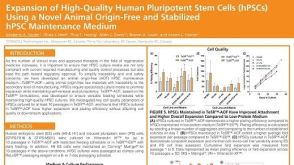 科学海报Expansion of High-Quality Human Pluripotent Stem Cells (hPSCs) Using a Novel Animal Origin-Free and Stabilized hPSC Maintenance Medium
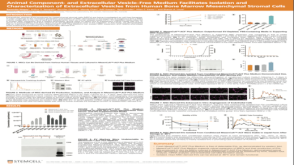 科学海报Animal Component- and Extracellular Vesicle-Free Medium Facilitates Isolation and Characterization of Extracellular Vesicles from Human Bone Marrow Mesenchymal Stromal Cells
 实验方案How to Perform Albumin Detection Assays in Human Hepatic Organoids
 沪公网安备31010102008431号