Pei Y et al. (MAY 2016)
Brain research 1638 Pt A 57--73
Comparative neurotoxicity screening in human iPSC-derived neural stem cells, neurons and astrocytes.
Induced pluripotent stem cells (iPSC) and their differentiated derivatives offer a unique source of human primary cells for toxicity screens. Here,we report on the comparative cytotoxicity of 80 compounds (neurotoxicants,developmental neurotoxicants,and environmental compounds) in iPSC as well as isogenic iPSC-derived neural stem cells (NSC),neurons,and astrocytes. All compounds were tested over a 24-h period at 10 and 100$\$,in duplicate,with cytotoxicity measured using the MTT assay. Of the 80 compounds tested,50 induced significant cytotoxicity in at least one cell type; per cell type,32,38,46,and 41 induced significant cytotoxicity in iPSC,NSC,neurons,and astrocytes,respectively. Four compounds (valinomycin,3,3',5,5'-tetrabromobisphenol,deltamethrin,and triphenyl phosphate) were cytotoxic in all four cell types. Retesting these compounds at 1,10,and 100$\$ using the same exposure protocol yielded consistent results as compared with the primary screen. Using rotenone,we extended the testing to seven additional iPSC lines of both genders; no substantial difference in the extent of cytotoxicity was detected among the cell lines. Finally,the cytotoxicity assay was simplified by measuring luciferase activity using lineage-specific luciferase reporter iPSC lines which were generated from the parental iPSC line. This article is part of a Special Issue entitled SI: PSC and the brain.
View Publication
High-Dose Fluoride Impairs the Properties of Human Embryonic Stem Cells via JNK Signaling
Fluoride is a ubiquitous natural substance that is often used in dental products to prevent dental caries. The biphasic actions of fluoride imply that excessive systemic exposure to fluoride can cause harmful effects on embryonic development in both animal models and humans. However,insufficient information is available on the effects of fluoride on human embryonic stem cells (hESCs),which is a novel in vitro humanized model for analyzing the embryotoxicities of chemical compounds. Therefore,we investigated the effects of sodium fluoride (NaF) on the proliferation,differentiation and viability of H9 hESCs. For the first time,we showed that 1 mM NaF did not significantly affect the proliferation of hESCs but did disturb the gene expression patterns of hESCs during embryoid body (EB) differentiation. Higher doses of NaF (2 mM and above) markedly decreased the viability and proliferation of hESCs. The mode and underlying mechanism of high-dose NaF-induced cell death were further investigated by assessing the sub-cellular morphology,mitochondrial membrane potential (MMP),caspase activities,cellular reactive oxygen species (ROS) levels and activation of mitogen-activated protein kinases (MAPKs). High-dose NaF caused the death of hESCs via apoptosis in a caspase-mediated but ROS-independent pathway,coupled with an increase in the phospho-c-Jun N-terminal kinase (p-JNK) levels. Pretreatment with a pJNK-specific inhibitor (SP600125) could effectively protect hESCs from NaF-induced cell death in a concentration- and time-dependent manner. These findings suggest that NaF might interfere with early human embryogenesis by disturbing the specification of the three germ layers as well as osteogenic lineage commitment and that high-dose NaF could cause apoptosis through a JNK-dependent pathway in hESCs.
View Publication
产品类型:
产品号#:
07920
07922
85850
85857
产品名:
ACCUTASE™
ACCUTASE™
mTeSR™1
mTeSR™1
Kawatsu K et al. (APR 2008)
Journal of clinical microbiology 46 4 1226--31
Development and evaluation of immunochromatographic assay for simple and rapid detection of Campylobacter jejuni and Campylobacter coli in human stool specimens.
An immunochromatographic assay (Campy-ICA) using a newly generated single monoclonal antibody against a 15-kDa cell surface protein of Campylobacter jejuni was developed. When cell suspensions of 86 C. jejuni strains and 27 Campylobacter coli strains were treated with a commercially available bacterial protein extraction reagent and the resulting extracts were tested with the Campy-ICA,they all yielded positive results. The minimum detectable limits for the C. jejuni strains ranged from 1.8 x 10(4) to 8.2 x 10(5) CFU/ml of cell suspension,and those for the C. coli strains ranged from 1.4 x 10(5) to 4.6 x 10(6) CFU/ml of cell suspension. All 26 non-Campylobacter species tested yielded negative results with the Campy-ICA. To evaluate the ability of the Campy-ICA to detect C. jejuni and C. coli in human stool specimens,suspensions of 222 stool specimens from patients with acute gastroenteritis were treated with the bacterial protein extraction reagent,and the resulting extracts were tested with the Campy-ICA. The Campy-ICA results showed a sensitivity of 84.8% (28 of 33 specimens) and a specificity of 100% (189 of 189 specimens) compared to the results of isolation of C. jejuni and C. coli from the stool specimens by a bacterial culture test. The Campy-ICA was simple to perform and was able to detect Campylobacter antigen in a fecal extract within 15 min. These results suggest that Campy-ICA testing of fecal extracts may be useful as a simple and rapid adjunct to stool culture for detecting C. jejuni and C. coli in human stool specimens.
View Publication
产品类型:
产品号#:
03800
03801
03802
03803
03804
03805
03806
产品名:
ClonaCell™-HY 杂交瘤试剂盒
ClonaCell™-HY Medium
ClonaCell™-HY Medium
ClonaCell™-HY Medium
ClonaCell™-HY Medium
ClonaCell™-HY Medium
ClonaCell™-HY PEG (融合)
Khalid O et al. (MAY 2014)
Stem Cell Research 12 3 791--806
Gene expression signatures affected by alcohol-induced DNA methylomic deregulation in human embryonic stem cells
Stem cells,especially human embryonic stem cells (hESCs),are useful models to study molecular mechanisms of human disorders that originate during gestation. Alcohol (ethanol,EtOH) consumption during pregnancy causes a variety of prenatal and postnatal disorders collectively referred to as fetal alcohol spectrum disorders (FASDs). To better understand the molecular events leading to FASDs,we performed a genome-wide analysis of EtOH's effects on the maintenance and differentiation of hESCs in culture. Gene Co-expression Network Analysis showed significant alterations in gene profiles of EtOH-treated differentiated or undifferentiated hESCs,particularly those associated with molecular pathways for metabolic processes,oxidative stress,and neuronal properties of stem cells. A genome-wide DNA methylome analysis revealed widespread EtOH-induced alterations with significant hypermethylation of many regions of chromosomes. Undifferentiated hESCs were more vulnerable to EtOH's effect than their differentiated counterparts,with methylation on the promoter regions of chromosomes 2,16 and 18 in undifferentiated hESCs most affected by EtOH exposure. Combined transcriptomic and DNA methylomic analysis produced a list of differentiation-related genes dysregulated by EtOH-induced DNA methylation changes,which likely play a role in EtOH-induced decreases in hESC pluripotency. DNA sequence motif analysis of genes epigenetically altered by EtOH identified major motifs representing potential binding sites for transcription factors. These findings should help in deciphering the precise mechanisms of alcohol-induced teratogenesis. ?? 2014 Published by Elsevier B.V.
View Publication
Ben-David U et al. (SEP 2014)
Nature communications 5 4825
Aneuploidy induces profound changes in gene expression, proliferation and tumorigenicity of human pluripotent stem cells.
Human pluripotent stem cells (hPSCs) tend to acquire genomic aberrations in culture,the most common of which is trisomy of chromosome 12. Here we dissect the cellular and molecular implications of this trisomy in hPSCs. Global gene expression analyses reveal that trisomy 12 profoundly affects the gene expression profile of hPSCs,inducing a transcriptional programme similar to that of germ cell tumours. Comparison of proliferation,differentiation and apoptosis between diploid and aneuploid hPSCs shows that trisomy 12 significantly increases the proliferation rate of hPSCs,mainly as a consequence of increased replication. Furthermore,trisomy 12 increases the tumorigenicity of hPSCs in vivo,inducing transcriptionally distinct teratomas from which pluripotent cells can be recovered. Last,a chemical screen of 89 anticancer drugs discovers that trisomy 12 raises the sensitivity of hPSCs to several replication inhibitors. Together,these findings demonstrate the extensive effect of trisomy 12 and highlight its perils for successful hPSC applications.
View Publication
产品类型:
产品号#:
07909
85850
85857
产品名:
IV型胶原酶(1mg /mL)
mTeSR™1
mTeSR™1
Arokium H et al. (OCT 2014)
PLoS ONE 9 10 e108682
Deep sequencing reveals low incidence of endogenous LINE-1 retrotransposition in human induced pluripotent stem cells
Long interspersed element-1 (LINE-1 or L1) retrotransposition induces insertional mutations that can result in diseases. It was recently shown that the copy number of L1 and other retroelements is stable in induced pluripotent stem cells (iPSCs). However,by using an engineered reporter construct over-expressing L1,another study suggests that reprogramming activates L1 mobility in iPSCs. Given the potential of human iPSCs in therapeutic applications,it is important to clarify whether these cells harbor somatic insertions resulting from endogenous L1 retrotransposition. Here,we verified L1 expression during and after reprogramming as well as potential somatic insertions driven by the most active human endogenous L1 subfamily (L1Hs). Our results indicate that L1 over-expression is initiated during the reprogramming process and is subsequently sustained in isolated clones. To detect potential somatic insertions in iPSCs caused by L1Hs retotransposition,we used a novel sequencing strategy. As opposed to conventional sequencing direction,we sequenced from the 3' end of L1Hs to the genomic DNA,thus enabling the direct detection of the polyA tail signature of retrotransposition for verification of true insertions. Deep coverage sequencing thus allowed us to detect seven potential somatic insertions with low read counts from two iPSC clones. Negative PCR amplification in parental cells,presence of a polyA tail and absence from seven L1 germline insertion databases highly suggested true somatic insertions in iPSCs. Furthermore,these insertions could not be detected in iPSCs by PCR,likely due to low abundance. We conclude that L1Hs retrotransposes at low levels in iPSCs and therefore warrants careful analyses for genotoxic effects.
View Publication
Gu Z et al. (FEB 2006)
Antimicrobial agents and chemotherapy 50 2 625--31
In vitro antiretroviral activity and in vitro toxicity profile of SPD754, a new deoxycytidine nucleoside reverse transcriptase inhibitor for treatment of human immunodeficiency virus infection.
SPD754 (AVX754) is a deoxycytidine analogue nucleotide reverse transcriptase inhibitor (NRTI) in clinical development. These studies characterized the in vitro activity of SPD754 against NRTI-resistant human immunodeficiency virus type 1 (HIV-1) and non-clade B HIV-1 isolates,its activity in combination with other antiretrovirals,and its potential myelotoxicity and mitochondrial toxicity. SPD754 was tested against 50 clinical HIV-1 isolates (5 wild-type isolates and 45 NRTI-resistant isolates) in MT-4 cells using the Antivirogram assay. SPD754 susceptibility was reduced 1.2- to 2.2-fold against isolates resistant to zidovudine (M41L,T215Y/F,plus a median of three additional nucleoside analogue mutations [NAMs]) and/or lamivudine (M184V) and was reduced 1.3- to 2.8-fold against isolates resistant to abacavir (L74V,Y115F,and M184V plus one other NAM) or stavudine (V75T/M,M41L,T215F/Y,and four other NAMs). Insertions at amino acid position 69 and Q151M mutations (with or without M184V) reduced SPD754 susceptibility 5.2-fold and 14- to 16-fold,respectively (these changes gave values comparable to or less than the corresponding values for zidovudine,lamivudine,abacavir,and didanosine). SPD754 showed similar activity against isolates of group M HIV-1 clades,including A/G,B,C,D,A(E),D/F,F,and H. SPD754 showed additive effects in combination with other NRTIs,tenofovir,nevirapine,or saquinavir. SPD754 had no significant effects on cell viability or mitochondrial DNA in HepG2 or MT-4 cells during 28-day exposure at concentrations up to 200 microM. SPD754 showed a low potential for myelotoxicity against human bone marrow. In vitro,SPD754 retained activity against most NRTI-resistant HIV-1 clinical isolates and showed a low propensity to cause myelotoxicity and mitochondrial toxicity.
View Publication


 EasySep™小鼠TIL(CD45)正选试剂盒





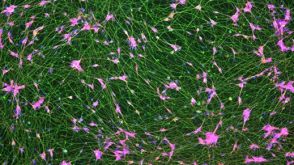 实验方案How to Culture Human Pluripotent Stem Cell (hPSC)-Derived Induced Forebrain Neurons for MEA Analysis Using the Maestro MEA™ System
 科学海报Generation of a Glia-Midbrain Neuron Co-Culture System Derived From Human Pluripotent Stem Cells
 科学海报A Reliable, Efficient, and Matrix-Free Method to Generate Midbrain Organoids from Human Pluripotent Stem Cells
 科学海报Expansion and Differentiation Potential of Human Pluripotent Stem Cells Maintained in cGMP Animal Origin-Free Medium

 沪公网安备31010102008431号