Fenouille N et al. (DEC 2010)
Cancer research 70 23 9659--70
Persistent activation of the Fyn/ERK kinase signaling axis mediates imatinib resistance in chronic myelogenous leukemia cells through upregulation of intracellular SPARC.
SPARC is an extracellular matrix protein that exerts pleiotropic effects on extracellular matrix organization,growth factor availability,cell adhesion,differentiation,and immunity in cancer. Chronic myelogenous leukemia (CML) cells resistant to the BCR-ABL inhibitor imatinib (IM-R cells) were found to overexpress SPARC mRNA. In this study,we show that imatinib triggers SPARC accumulation in a variety of tyrosine kinase inhibitor (TKI)-resistant CML cell lines. SPARC silencing in IM-R cells restored imatinib sensitivity,whereas enforced SPARC expression in imatinib-sensitive cells promoted viability as well as protection against imatinib-mediated apoptosis. Notably,we found that the protective effect of SPARC required intracellular retention inside cells. Accordingly,SPARC was not secreted into the culture medium of IM-R cells. Increased SPARC expression was intimately linked to persistent activation of the Fyn/ERK kinase signaling axis. Pharmacologic inhibition of this pathway or siRNA-mediated knockdown of Fyn kinase resensitized IM-R cells to imatinib. In support of our findings,increased levels of SPARC mRNA were documented in blood cells from CML patients after 1 year of imatinib therapy compared with initial diagnosis. Taken together,our results highlight an important role for the Fyn/ERK signaling pathway in imatinib-resistant cells that is driven by accumulation of intracellular SPARC.
View Publication
Lee WT et al. (DEC 2016)
Developmental & Comparative Immunology 65 114--123
Identification of secreted and membrane-bound bat immunoglobulin using a Microchiropteran-specific mouse monoclonal antibody
Bat immunity has received increasing attention because some bat species are being decimated by the fungal disease,White Nose Syndrome,while other species are potential reservoirs of zoonotic viruses. Identifying specific immune processes requires new specific tools and reagents. In this study,we describe a new mouse monoclonal antibody (mAb) reactive with Eptesicus fuscus immunoglobulins. The epitope recognized by mAb BT1-4F10 was localized to immunoglobulin light (lambda) chains; hence,the mAb recognized serum immunoglobulins and B lymphocytes. The BT1-4F10 epitope appeared to be restricted to Microchiropteran immunoglobulins and absent from Megachiropteran immunoglobulins. Analyses of sera and other E. fuscus fluids showed that most,if not all,secreted immunoglobulins utilized lambda light chains. Finally,mAb BT1-4F10 permitted the identification of B cell follicles in splenic white pulp. This Microchiropteran-specific mAb has potential utility in seroassays; hence,this reagent may have both basic and practical applications for studying immune process.
View Publication
Yano M and Pirofski L-a (JAN 2011)
Clinical and vaccine immunology : CVI 18 1 59--66
Characterization of gene use and efficacy of mouse monoclonal antibodies to Streptococcus pneumoniae serotype 8.
Streptococcus pneumoniae is the most common cause of community-acquired pneumonia in the United States and globally. Despite the availability of pneumococcal capsular polysaccharide (PPS) and protein conjugate-based vaccines,the prevalence of antibiotic-resistant pneumococcal strains,serotype (ST) replacement in nonconjugate vaccine strains,and uncertainty as to whether the PPS vaccine that is used in adults protects against pneumonia emphasize the need for continued efforts to understand the nature of protective PPS antibody responses. In this study,we generated mouse monoclonal antibodies (MAbs) to a conjugate consisting of the PPS of serotype 8 (PPS8) S. pneumoniae and tetanus toxoid. Thirteen MAbs,including four IgMs that bound to PPS8 and phosphorylcholine (PC) and five IgMs and four IgG1s that bound to PPS8 but not PC,were produced,and their nucleotide sequences,epitope and fine specificity,and efficacy against lethal challenge with ST8 S. pneumoniae were determined. MAbs that bound to PPS8 exhibited gene use that was distinct from that exhibited by MAbs that bound to PC. Only PPS8-binding MAbs that did not bind PC were protective in mice. All 13 MAbs used germ line variable-region heavy (V(H)) and light (V(L)) chain genes,with no evidence of somatic hypermutation. Our data reveal a relationship between PPS specificity and V(H) gene use and MAb efficacy in mice. These findings provide insight into the relationship between antibody molecular structure and function and hold promise for the development of novel surrogates for pneumococcal vaccine efficacy.
View Publication
产品类型:
产品号#:
03800
03801
03802
03803
03804
03805
03806
产品名:
ClonaCell™-HY 杂交瘤试剂盒
ClonaCell™-HY Medium
ClonaCell™-HY Medium
ClonaCell™-HY Medium
ClonaCell™-HY Medium
ClonaCell™-HY Medium
ClonaCell™-HY PEG (融合)
Yew CW and Tan YJ ( 2016)
1426 225--33
Generation of mouse monoclonal antibodies specific to Chikungunya virus using ClonaCell-HY hybridoma cloning kit
Monoclonal antibodies offer high specificity and this makes it an important tool for molecular biology,biochemistry and medicine. Typically,monoclonal antibodies are generated by fusing mouse spleen cells that have been immunized with the desired antigen with myeloma cells to create immortalized hybridomas. Here,we describe the generation of monoclonal antibodies that are specific to Chikungunya virus using ClonaCell-HY system.
View Publication
产品类型:
产品号#:
03800
03801
03802
03803
03804
03805
03806
产品名:
ClonaCell™-HY 杂交瘤试剂盒
ClonaCell™-HY Medium
ClonaCell™-HY Medium
ClonaCell™-HY Medium
ClonaCell™-HY Medium
ClonaCell™-HY Medium
ClonaCell™-HY PEG (融合)
Dorrell C et al. (JUN 2011)
Molecular and Cellular Endocrinology 339 1-2 144--150
Isolation of mouse pancreatic alpha, beta, duct and acinar populations with cell surface markers
Tools permitting the isolation of live pancreatic cell subsets for culture and/or molecular analysis are limited. To address this,we developed a collection of monoclonal antibodies with selective surface labeling of endocrine and exocrine pancreatic cell types. Cell type labeling specificity and cell surface reactivity were validated on mouse pancreatic sections and by gene expression analysis of cells isolated using FACS. Five antibodies which marked populations of particular interest were used to isolate and study viable populations of purified pancreatic ducts,acinar cells,and subsets of acinar cells from whole pancreatic tissue or of alpha or beta cells from isolated mouse islets. Gene expression analysis showed the presence of known endocrine markers in alpha and beta cell populations and revealed that TTR and DPPIV are primarily expressed in alpha cells whereas DGKB and GPM6A have a beta cell specific expression profile.
View Publication
Murphy SV et al. (JAN 2013)
Journal of biomedical materials research. Part A 101 1 272--84
Evaluation of hydrogels for bio-printing applications.
In the United States alone,there are approximately 500,000 burn injuries that require medical treatment every year. Limitations of current treatments necessitate the development of new methods that can be applied quicker,result in faster wound regeneration,and yield skin that is cosmetically similar to undamaged skin. The development of new hydrogel biomaterials and bioprinting deposition technologies has provided a platform to address this need. Herein we evaluated characteristics of twelve hydrogels to determine their suitability for bioprinting applications. We chose hydrogels that are either commercially available,or are commonly used for research purposes. We evaluated specific hydrogel properties relevant to bioprinting applications,specifically; gelation time,swelling or contraction,stability,biocompatibility and printability. Further,we described regulatory,commercial and financial aspects of each of the hydrogels. While many of the hydrogels screened may exhibit characteristics suitable for other applications,UV-crosslinked Extracel,a hyaluronic acid-based hydrogel,had many of the desired properties for our bioprinting application. Taken together with commercial availability,shelf life,potential for regulatory approval and ease of use,these materials hold the potential to be further developed into fast and effective wound healing treatments.
View Publication
产品类型:
产品号#:
70025
70025.1
70025.2
70025.3
产品名:
冻存的人外周血单个核细胞
冻存的人外周血单个核细胞
冻存的人外周血单个核细胞
冻存的人外周血单个核细胞
Smith Sa et al. (MAR 2012)
Journal of Virology 86 5 2665--75
Persistence of circulating memory B cell clones with potential for Dengue virus disease enhancement for decades following infection
Symptomatic dengue virus infection ranges in disease severity from an influenza-like illness to life-threatening shock. One model of the mechanism underlying severe disease proposes that weakly neutralizing,dengue serotype cross-reactive antibodies induced during a primary infection facilitate virus entry into Fc receptor-bearing cells during a subsequent secondary infection,increasing viral replication and the release of cytokines and vasoactive mediators,culminating in shock. This process has been termed antibody-dependent enhancement of infection and has significantly hindered vaccine development. Much of our understanding of this process has come from studies using mouse monoclonal antibodies (MAbs); however,antibody responses in mice typically exhibit less complexity than those in humans. A better understanding of the humoral immune response to natural dengue virus infection in humans is sorely needed. Using a high-efficiency human hybridoma technology,we isolated 37 hybridomas secreting human MAbs to dengue viruses from 12 subjects years or even decades following primary or secondary infection. The majority of the human antibodies recovered were broadly cross-reactive,directed against either envelope or premembrane proteins,and capable of enhancement of infection in vitro; few exhibited serotype-specific binding or potent neutralizing activity. Memory B cells encoding enhancing antibodies predominated in the circulation,even two or more decades following infection. Mapping the epitopes and activity of naturally occurring dengue antibodies should prove valuable in determining whether the enhancing and neutralizing activity of antibodies can be separated. Such principles could be used in the rational design of vaccines that enhance the induction of neutralizing antibodies,while lowering the risk of dengue shock syndrome.
View Publication


 EasySep™小鼠TIL(CD45)正选试剂盒





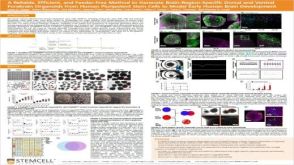 科学海报A Reliable, Efficient, and Feeder-Free Method to Generate Brain-Region-Specific Dorsal and Ventral Forebrain Organoids From Human Pluripotent Stem Cells to Model Early Human Brain Development
 产品手册High Affinity Anti-EPO Reagents for Consistent Results

 沪公网安备31010102008431号