Rosé L et al. (JUL 2002)
Experimental hematology 30 7 729--37
In vitro studies of the combination of imatinib mesylate (Gleevec) and arsenic trioxide (Trisenox) in chronic myelogenous leukemia.
OBJECTIVE: The aim of this study was the preclinical evaluation of imatinib mesylate (Gleevec,formerly STI571) in conjunction with arsenic trioxide (As2O3,Trisenox) for the treatment of chronic myelogenous leukemia (CML). MATERIALS AND METHODS: Tetrazolium-based cell line proliferation assays (MTT assays) were performed to determine the cytotoxicity of As2O3 alone and in combination with imatinib. Cell lines tested in this study were Bcr-Abl-expressing cells (K562,MO7p210,32Dp210) and parental cells (MO7e,32D). Isobologram analysis was performed manually and using the median effect method. In vitro cytotoxicity also was determined in colony-forming assays using CML patient cells. Western blot analysis was performed to detect Bcr-Abl protein levels in K562 cells exposed to As2O3 at graded concentrations. Bcr-Abl protein level kinetics were correlated with cell viability (trypan blue count) and activated caspase-3 detected by flow cytometry. RESULTS: We show additive to synergistic cytotoxicity in Bcr-Abl+ cell lines depending on inhibitory concentrations and cell type. Results obtained by colony-forming assays confirmed the findings in cell line proliferation assays. Flow cytometric detection of activated caspase-3 revealed synergistic activity in K562 cells. Treatment of K562 cells with As2O3 alone led to down-regulation of Bcr-Abl protein within 24 hours,even at low doses. The decline of Bcr-Abl preceded activation of caspase-3 and the loss of viable cells. CONCLUSIONS: Favorable cytotoxicity and proapoptotic activity of imatinib in conjunction with As2O3 and specific down-regulation of Bcr-Abl protein levels by As2O3 in K562 cells indicate that As2O3 in combination with imatinib might be useful for circumventing resistance to imatinib monotherapy.
View Publication
产品类型:
产品号#:
04564
04534
04544
产品名:
入门套件MethoCult™H4534经典无EPO
MethoCult™H4534经典无EPO
MethoCult™H4534经典无EPO
Jatiani SS et al. (APR 2010)
Genes & cancer 1 4 331--45
A Non-ATP-Competitive Dual Inhibitor of JAK2 and BCR-ABL Kinases: Elucidation of a Novel Therapeutic Spectrum Based on Substrate Competitive Inhibition.
Here we report the discovery of ON044580,an α-benzoyl styryl benzyl sulfide that possesses potent inhibitory activity against two unrelated kinases,JAK2 and BCR-ABL,and exhibits cytotoxicity to human tumor cells derived from chronic myelogenous leukemia (CML) and myelodysplasia (MDS) patients or cells harboring a mutant JAK2 kinase. This novel spectrum of activity is explained by the non-ATP-competitive inhibition of JAK2 and BCR-ABL kinases. ON044580 inhibits mutant JAK2 kinase and the proliferation of JAK2(V617F)-positive leukemic cells and blocks the IL-3-mediated phosphorylation of JAK2 and STAT5. Interestingly,this compound also directly inhibits the kinase activity of both wild-type and imatinib-resistant (T315I) forms of the BCR-ABL kinase. Finally,ON044580 effectively induces apoptosis of imatinib-resistant CML patient cells. The apparently unrelated JAK2 and BCR-ABL kinases share a common substrate,STAT5,and such substrate competitive inhibitors represent an alternative therapeutic strategy for development of new inhibitors. The novel mechanism of kinase inhibition exhibited by ON044580 renders it effective against mutant forms of kinases such as the BCR-ABL(T315I) and JAK2(V617F). Importantly,ON044580 selectively reduces the number of aneuploid cells in primary bone marrow samples from monosomy 7 MDS patients,suggesting another regulatory cascade amenable to this agent in these aberrant cells. Data presented suggest that this compound could have multiple therapeutic applications including monosomy 7 MDS,imatinib-resistant CML,and myeloproliferative neoplasms that develop resistance to ATP-competitive agents.
View Publication
产品类型:
产品号#:
03434
03444
产品名:
MethoCult™GF M3434
MethoCult™GF M3434
Chen LS et al. (JUL 2011)
Blood 118 3 693--702
Mechanisms of cytotoxicity to Pim kinase inhibitor, SGI-1776, in acute myeloid leukemia.
Pim kinases are Ser/Thr kinases with multiple substrates that affect survival pathways. These proteins are overexpressed in acute myeloid leukemia (AML) blasts and we hypothesized that Pim kinase inhibition would affect AML cell survival. Imidazo[1,2-b]pyridazine compound,SGI-1776 inhibits Pim-1,Pim-2 and Pim-3,and was evaluated in AML-cell line,-xenograft model,and -primary blasts. Treatment of AML cells with SGI-1776 results in a concentration-dependent induction of apoptosis and we investigated its effect on Pim kinase functions. Phosphorylation of traditional Pim kinase targets,c-Myc(Ser62) and 4E-BP1 (Thr36/Thr47),were both decreased in actively cycling AML cell lines MV-4-11,MOLM-13 and OCI-AML-3. Levels of antiapoptotic proteins Bcl-2,Bcl-x(L),XIAP,and proapoptotic Bak and Bax were unchanged; however,a significant reduction in Mcl-1 was observed. This was correlated with inhibition of global RNA and protein synthesis and MCL-1 transcript decline after SGI-1776 treatment. These data suggest that SGI-1776 mechanism in AML involves Mcl-1 protein reduction. Consistent with cell line data,xenograft model studies with mice bearing MV-4-11 tumors showed efficacy with SGI-1776. Importantly,SGI-1776 was also cytotoxic in AML primary cells,irrespective of FLT3 mutation status and resulted in Mcl-1 protein decline. Pim kinase inhibition may be a new strategy for AML treatment.
View Publication
Immunomodulatory derivative of thalidomide (IMiD CC-4047) induces a shift in lineage commitment by suppressing erythropoiesis and promoting myelopoiesis.
Immunomodulatory derivative (IMiD) CC-4047,a new analog of thalidomide,directly inhibits growth of B-cell malignancies in vivo and in vitro and exhibits stronger antiangiogenic activity than thalidomide. However,there is little information on whether CC-4047 affects normal hematopoiesis. Here we investigated the effect of CC-4047 on lineage commitment and differentiation of hematopoietic stem cells. We found that CC-4047 effectively inhibits erythroid cell colony formation from CD34+ cells and increases the frequency of myeloid colonies. We also demonstrate that development of both erythropoietin-independent and erythropoietin-dependent red cell progenitors was strongly inhibited by CC-4047,while terminal red cell differentiation was unaffected. DNA microarray analysis revealed that red cell transcription factors,including GATA-1,GATA-2,erythroid Kruppel-like factor (EKLF),and growth factor independence-1B (Gfi-1b),were down-regulated in CC-4047-treated CD34+ cells,while myeloid transcription factors such as CCAAT/enhancer binding protein-alpha (C/EBPalpha),C/EBPdelta,and C/EBPepsilon were induced. Analysis of cytokine secretion indicated that CC-4047 induced secretion of cytokines that enhance myelopoiesis and inhibit erythropoiesis. In conclusion,these data indicate that CC-4047 might directly influence lineage commitment of hematopoietic cells by increasing the propensity of stem and/or progenitor cells to undergo myeloid cell development and concomitantly inhibiting red cell development. Therefore,CC-4047 provides a valuable tool to study the mechanisms underlying lineage commitment.
View Publication
产品类型:
产品号#:
04434
04444
09600
09650
28600
产品名:
MethoCult™H4434经典
MethoCult™H4434经典
StemSpan™ SFEM
StemSpan™ SFEM
L-Calc™有限稀释软件
Coleman TR et al. (APR 2006)
Proceedings of the National Academy of Sciences of the United States of America 103 15 5965--70
Cytoprotective doses of erythropoietin or carbamylated erythropoietin have markedly different procoagulant and vasoactive activities.
Recombinant human erythropoietin (rhEPO) is receiving increasing attention as a potential therapy for prevention of injury and restoration of function in nonhematopoietic tissues. However,the minimum effective dose required to mimic and augment these normal paracrine functions of erythropoietin (EPO) in some organs (e.g.,the brain) is higher than for treatment of anemia. Notably,a dose-dependent risk of adverse effects has been associated with rhEPO administration,especially in high-risk groups,including polycythemia-hyperviscosity syndrome,hypertension,and vascular thrombosis. Of note,several clinical trials employing relatively high dosages of rhEPO in oncology patients were recently halted after an increase in mortality and morbidity,primarily because of thrombotic events. We recently identified a heteromeric EPO receptor complex that mediates tissue protection and is distinct from the homodimeric receptor responsible for the support of erythropoiesis. Moreover,we developed receptor-selective ligands that provide tools to assess which receptor isoform mediates which biological consequence of rhEPO therapy. Here,we demonstrate that rhEPO administration in the rat increases systemic blood pressure,reduces regional renal blood flow,and increases platelet counts and procoagulant activities. In contrast,carbamylated rhEPO,a heteromeric receptor-specific ligand that is fully tissue protective,increases renal blood flow,promotes sodium excretion,reduces injury-induced elevation in procoagulant activity,and does not effect platelet production. These preclinical findings suggest that nonerythropoietic tissue-protective ligands,which appear to elicit fewer adverse effects,may be especially useful in clinical settings for tissue protection.
View Publication
产品类型:
产品号#:
04564
04534
04544
产品名:
入门套件MethoCult™H4534经典无EPO
MethoCult™H4534经典无EPO
MethoCult™H4534经典无EPO
Weisberg E et al. (MAR 2007)
Blood 109 5 2112--20
Beneficial effects of combining nilotinib and imatinib in preclinical models of BCR-ABL+ leukemias.
Drug resistance resulting from emergence of imatinib-resistant BCR-ABL point mutations is a significant problem in advanced-stage chronic myelogenous leukemia (CML). The BCR-ABL inhibitor,nilotinib (AMN107),is significantly more potent against BCR-ABL than imatinib,and is active against many imatinib-resistant BCR-ABL mutants. Phase 1/2 clinical trials show that nilotinib can induce remissions in patients who have previously failed imatinib,indicating that sequential therapy with these 2 agents has clinical value. However,simultaneous,rather than sequential,administration of 2 BCR-ABL kinase inhibitors is attractive for many reasons,including the theoretical possibility that this could reduce emergence of drug-resistant clones. Here,we show that exposure of a variety of BCR-ABL+ cell lines to imatinib and nilotinib results in additive or synergistic cytotoxicity,including testing of a large panel of cells expressing BCR-ABL point mutations causing resistance to imatinib in patients. Further,using a highly quantifiable bioluminescent in vivo model,drug combinations were at least additive in antileukemic activity,compared with each drug alone. These results suggest that despite binding to the same site in the same target kinase,the combination of imatinib and nilotinib is highly efficacious in these models,indicating that clinical testing of combinations of BCR-ABL kinase inhibitors is warranted.
View Publication
产品类型:
产品号#:
04434
04444
产品名:
MethoCult™H4434经典
MethoCult™H4434经典
Zhang P et al. (FEB 2009)
Journal of immunology (Baltimore,Md. : 1950) 182 3 1568--76
Acute alcohol intoxication inhibits the lineage- c-kit+ Sca-1+ cell response to Escherichia coli bacteremia.
Alcohol abuse predisposes the host to bacterial infections. In response to bacterial infection,the bone marrow hematopoietic activity shifts toward granulocyte production,which is critical for enhancing host defense. This study investigated the hematopoietic precursor cell response to bacteremia and how alcohol affects this response. Acute alcohol intoxication was induced in BALB/c mice 30 min before initiation of Escherichia coli bacteremia. Bacteremia caused a significant increase in the number of bone marrow lineage (lin(-))-c-kit(+)Sca-1(+) cells. Marrow lin(-)c-kit(+)Sca-1(+) cells isolated from bacteremic mice showed an increase in CFU-granulocyte/macrophage activity compared with controls. In addition to enhanced proliferation of lin(-)c-kit(+)Sca-1(+) cells as reflected by BrdU incorporation,phenotypic inversion of lin(-)c-kit(+)Sca-1(+)Sca-1(-) cells primarily accounted for the rapid increase in marrow lin(-)c-kit(+)Sca-1(+) cells following bacteremia. Bacteremia increased plasma concentration of TNF-alpha. Culture of marrow lin(-)c-kit(+)Sca-1(+)Sca-1(-) cells with murine rTNF-alpha for 24 h caused a dose-dependent increase in conversion of these cells to lin(-)c-kit(+)Sca-1(+) cells. Sca-1 mRNA expression by the cultured cells was also up-regulated following TNF-alpha stimulation. Acute alcohol intoxication inhibited the increase in the number of lin(-)c-kit(+)Sca-1(+) cells in the bone marrow after E. coli infection. Alcohol impeded the increase in BrdU incorporation into marrow lin(-)c-kit(+)Sca-1(+) cells in response to bacteremia. Alcohol also suppressed the plasma TNF-alpha response to bacteremia and inhibited TNF-alpha-induced phenotypic inversion of lin(-)c-kit(+)Sca-1(+)Sca-1(-) cells in vitro. These data show that alcohol inhibits the hematopoietic precursor cell response to bacteremia,which may serve as one mechanism underlying the impaired host defense in alcohol abusers with severe bacterial infections.
View Publication
Synergistic activity of the proteasome inhibitor PS-341 with non-myeloablative 153-Sm-EDTMP skeletally targeted radiotherapy in an orthotopic model of multiple myeloma.
Multiple myeloma is a highly radiosensitive skeletal malignancy,but bone-seeking radionuclides have not yet found their place in disease management. We previously reported that the proteasome inhibitor PS-341 selectively sensitizes myeloma cells to the lethal effects of ionizing radiation. To extend these observations to an in vivo model,we combined PS-341 with the bone-seeking radionuclide 153-Sm-EDTMP. In vitro clonogenic assays demonstrated synergistic killing of myeloma cells exposed to both PS-341 and 153-Sm-EDTMP. Using the orthotopic,syngeneic 5TGM1 myeloma model,the median survivals of mice treated with saline,2 doses of PS-341 (0.5 mg/kg),or a single nonmyeloablative dose of 153-Sm-EDTMP (22.5 MBq) were 21,22,and 28 days,respectively. In contrast,mice treated with combination therapy comprising 2 doses of PS-341 (0.5 mg/kg),1 day prior to and 1 day following 153-Sm-EDTMP (22.5 MBq) showed a significantly prolonged median survival of 49 days (P textless .001). In addition to prolonged survival,this treatment combination yielded reduced clonogenicity of bone marrow-resident 5TGM1 cells,reduced serum myeloma-associated paraprotein levels,and better preservation of bone mineral density. Myelosuppression,determined by peripheral blood cell counts and clonogenicity assays of hematopoietic progenitors,did not differ between animals treated with 153-Sm-EDTMP alone versus those treated with the combination of PS-341 plus 153-Sm-EDTMP. PS-341 is a potent,selective in vivo radiosensitizer that may substantially affect the efficacy of skeletal-targeted radiotherapy in multiple myeloma.
View Publication


 EasySep™小鼠TIL(CD45)正选试剂盒






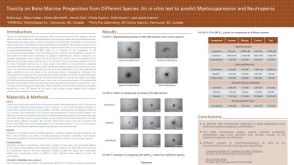 科学海报Toxicity on Bone Marrow Progenitors from Different Species: an In Vitro Test to Predict Myelosuppression and Neutropenia

 沪公网安备31010102008431号