Kulkarni O et al. (FEB 2009)
The Journal of pharmacology and experimental therapeutics 328 2 371--7
Anti-Ccl2 Spiegelmer permits 75% dose reduction of cyclophosphamide to control diffuse proliferative lupus nephritis and pneumonitis in MRL-Fas(lpr) mice.
Cyclophosphamide (CYC) can control diffuse proliferative lupus nephritis (DPLN) by potent immunosuppression but remains associated with serious and life-threatening complications. Drugs that specifically target mediators of DPLN may help to reduce CYC dose and side effects. Monocyte chemoattractant protein (MCP-1)/CCL2 mediates monocyte and T cell recruitment in DPLN and Ccl2-specific l-enantiomeric RNA Spiegelmer mNOX-E36 neutralizes the biological effects of murine Ccl2 in vitro and in vivo. We injected MRL(lpr/lpr) mice with DPLN from 14 weeks of age with vehicle,weekly 30 mg/kg CYC (full dose),monthly 30 mg/kg CYC (one-fourth full dose),pegylated control Spiegelmer,pegylated anti-Ccl2 Spiegelmer (3/week),pegylated anti-Ccl2 Spiegelmer plus CYC one-fourth full dose and mycophenolate mofetil. At week 24,DPLN and autoimmune lung injury were virtually abolished with CYC full dose but not with CYC one-fourth full dose. The CYC one-fourth full dose/Spiegelmer combination was equipotent to CYC full dose on kidney and lung injury. CD3(+)CD4(-)CD8(-) and CD3(+)CD4(+)CD25(+) T cells and serum interleukin-12p40 and tumor necrosis factor-alpha levels were all markedly affected by CYC full dose but not by CYC one-fourth full dose. No additive effects of anti-Ccl2 Spiegelmer were noted on bone marrow colony-forming unit-granulocyte macrophage counts and 7/4(high) monocyte counts,lymphoproliferation,and spleen T cell depletion. In summary,anti-Ccl2 Spiegelmer permits 75% dose reduction of CYC for controlling DPLN and pneumonitis in MRL-Fas(lpr) mice,sparing suppressive effects of full-dose CYC on myelosuppression and T cell depletion. We propose anti-Ccl2 Spiegelmer therapy as a novel strategy to reduce CYC toxicity in the treatment of severe lupus.
View Publication
产品类型:
产品号#:
03134
产品名:
MethoCult™M3134
Hassane DC et al. (DEC 2010)
Blood 116 26 5983--90
Chemical genomic screening reveals synergism between parthenolide and inhibitors of the PI-3 kinase and mTOR pathways.
We have previously shown that the plant-derived compound parthenolide (PTL) can impair the survival and leukemogenic activity of primary human acute myeloid leukemia (AML) stem cells. However,despite the activity of this agent,PTL also induces cellular protective responses that likely function to reduce its overall cytotoxicity. Thus,we sought to identify pharmacologic agents that enhance the antileukemic potential of PTL. Toward this goal,we used the gene expression signature of PTL to identify compounds that inhibit cytoprotective responses by performing chemical genomic screening of the Connectivity Map database. This screen identified compounds acting along the phosphatidylinositol 3-kinase and mammalian target of rapamycin pathways. Compared with single agent treatment,exposure of AML cells to the combination of PTL and phosphatidylinositol 3-kinase/mammalian target of rapamycin inhibitors significantly decreased viability of AML cells and reduced tumor burden in vitro and in murine xenotransplantation models. Taken together,our data show that rational drug combinations can be identified using chemical genomic screening strategies and that inhibition of cytoprotective functions can enhance the eradication of primary human AML cells.
View Publication
产品类型:
产品号#:
04534
04544
产品名:
MethoCult™H4534经典无EPO
MethoCult™H4534经典无EPO
Yang Y et al. (JUN 2011)
Experimental biology and medicine (Maywood,N.J.) 236 6 729--35
Protective effect of dammarane sapogenins against chemotherapy-induced myelosuppression in mice.
Chemotherapy is the most common way to treat malignancies,but myelosuppression,one of its common side-effects,is a formidable problem. The present study described the protective role of dammarane sapogenins (DS),an active fraction from oriental ginseng,on myelosuppression induced by cyclophosphamide (CP) in mice. DS was orally administered at different dosages (37.5,75,and 150 mg/kg) for 10 d after CP administration (200 mg/kg intraperitoneally). The results showed that DS increased the number of white blood cells (WBC) on day 3 and day 7 (P textless 0.05),such that WBC levels were increased by 105.7 ± 29.5% at 75 mg/kg of DS on day 3 (P textless 0.05,compared with the CP group). Similar results were observed in red blood cells and platelets in DS-treated groups. The colony-forming assay demonstrated that the depressed numbers of CFU-GM (colony-forming unit-granulocyte and macrophage),CFU-E (colony-forming unit-erythroid),BFU-E (burst-forming unit-erythroid),CFU-Meg (colony-forming unit-megakaryocyte) and CFU-GEMM (colony-forming unit-granulocyte,-erythrocyte,-monocyte and -megakaryocyte) induced by CP were significantly reversed after DS treatment. Moreover,the ameliorative effect of DS on myelosuppression was also observed in the femur by hematoxylin/eosin staining. In DS-treated groups,ConA-induced splenocyte proliferation was enhanced significantly at all the doses (37.5,75,150 mg/kg) on day 3 at the rate of 50.3 ± 8.0%,77.6 ± 8.5% and 44.5 ± 8.4%,respectively,while lipopolysaccharide-induced proliferation was increased mainly on day 7 (P textless 0.01),with an increased rate of 39.8 ± 5.6%,34.9 ± 6.6% and 38.3 ± 7.3%,respectively. The thymus index was also markedly increased by 70.4% and 36.6% at 75 mg/kg on days 3 and 7,respectively,as compared with the CP group. In summary,DS has a protective function against CP-induced myelosuppression. Its mechanism might be related to stimulating hematopoiesis recovery,as well as enhancing the immunological function.
View Publication
Rosé L et al. (JUL 2002)
Experimental hematology 30 7 729--37
In vitro studies of the combination of imatinib mesylate (Gleevec) and arsenic trioxide (Trisenox) in chronic myelogenous leukemia.
OBJECTIVE: The aim of this study was the preclinical evaluation of imatinib mesylate (Gleevec,formerly STI571) in conjunction with arsenic trioxide (As2O3,Trisenox) for the treatment of chronic myelogenous leukemia (CML). MATERIALS AND METHODS: Tetrazolium-based cell line proliferation assays (MTT assays) were performed to determine the cytotoxicity of As2O3 alone and in combination with imatinib. Cell lines tested in this study were Bcr-Abl-expressing cells (K562,MO7p210,32Dp210) and parental cells (MO7e,32D). Isobologram analysis was performed manually and using the median effect method. In vitro cytotoxicity also was determined in colony-forming assays using CML patient cells. Western blot analysis was performed to detect Bcr-Abl protein levels in K562 cells exposed to As2O3 at graded concentrations. Bcr-Abl protein level kinetics were correlated with cell viability (trypan blue count) and activated caspase-3 detected by flow cytometry. RESULTS: We show additive to synergistic cytotoxicity in Bcr-Abl+ cell lines depending on inhibitory concentrations and cell type. Results obtained by colony-forming assays confirmed the findings in cell line proliferation assays. Flow cytometric detection of activated caspase-3 revealed synergistic activity in K562 cells. Treatment of K562 cells with As2O3 alone led to down-regulation of Bcr-Abl protein within 24 hours,even at low doses. The decline of Bcr-Abl preceded activation of caspase-3 and the loss of viable cells. CONCLUSIONS: Favorable cytotoxicity and proapoptotic activity of imatinib in conjunction with As2O3 and specific down-regulation of Bcr-Abl protein levels by As2O3 in K562 cells indicate that As2O3 in combination with imatinib might be useful for circumventing resistance to imatinib monotherapy.
View Publication
产品类型:
产品号#:
04564
04534
04544
产品名:
入门套件MethoCult™H4534经典无EPO
MethoCult™H4534经典无EPO
MethoCult™H4534经典无EPO
Sekimoto E et al. (FEB 2007)
Cancer research 67 3 1184--92
A single-chain Fv diabody against human leukocyte antigen-A molecules specifically induces myeloma cell death in the bone marrow environment.
Cross-linked human leukocyte antigen (HLA) class I molecules have been shown to mediate cell death in neoplastic lymphoid cells. However,clinical application of an anti-HLA class I antibody is limited by possible side effects due to widespread expression of HLA class I molecules in normal tissues. To reduce the unwanted Fc-mediated functions of the therapeutic antibody,we have developed a recombinant single-chain Fv diabody (2D7-DB) specific to the alpha2 domain of HLA-A. Here,we show that 2D7-DB specifically induces multiple myeloma cell death in the bone marrow environment. Both multiple myeloma cell lines and primary multiple myeloma cells expressed HLA-A at higher levels than normal myeloid cells,lymphocytes,or hematopoietic stem cells. 2D7-DB rapidly induced Rho activation and robust actin aggregation that led to caspase-independent death in multiple myeloma cells. This cell death was completely blocked by Rho GTPase inhibitors,suggesting that Rho-induced actin aggregation is crucial for mediating multiple myeloma cell death. Conversely,2D7-DB neither triggered Rho-mediated actin aggregation nor induced cell death in normal bone marrow cells despite the expression of HLA-A. Treatment with IFNs,melphalan,or bortezomib enhanced multiple myeloma cell death induced by 2D7-DB. Furthermore,administration of 2D7-DB resulted in significant tumor regression in a xenograft model of human multiple myeloma. These results indicate that 2D7-DB acts on multiple myeloma cells differently from other bone marrow cells and thus provide the basis for a novel HLA class I-targeting therapy against multiple myeloma.
View Publication
产品类型:
产品号#:
04034
04044
产品名:
MethoCult™H4034 Optimum
MethoCult™H4034 Optimum
Jatiani SS et al. (APR 2010)
Genes & cancer 1 4 331--45
A Non-ATP-Competitive Dual Inhibitor of JAK2 and BCR-ABL Kinases: Elucidation of a Novel Therapeutic Spectrum Based on Substrate Competitive Inhibition.
Here we report the discovery of ON044580,an α-benzoyl styryl benzyl sulfide that possesses potent inhibitory activity against two unrelated kinases,JAK2 and BCR-ABL,and exhibits cytotoxicity to human tumor cells derived from chronic myelogenous leukemia (CML) and myelodysplasia (MDS) patients or cells harboring a mutant JAK2 kinase. This novel spectrum of activity is explained by the non-ATP-competitive inhibition of JAK2 and BCR-ABL kinases. ON044580 inhibits mutant JAK2 kinase and the proliferation of JAK2(V617F)-positive leukemic cells and blocks the IL-3-mediated phosphorylation of JAK2 and STAT5. Interestingly,this compound also directly inhibits the kinase activity of both wild-type and imatinib-resistant (T315I) forms of the BCR-ABL kinase. Finally,ON044580 effectively induces apoptosis of imatinib-resistant CML patient cells. The apparently unrelated JAK2 and BCR-ABL kinases share a common substrate,STAT5,and such substrate competitive inhibitors represent an alternative therapeutic strategy for development of new inhibitors. The novel mechanism of kinase inhibition exhibited by ON044580 renders it effective against mutant forms of kinases such as the BCR-ABL(T315I) and JAK2(V617F). Importantly,ON044580 selectively reduces the number of aneuploid cells in primary bone marrow samples from monosomy 7 MDS patients,suggesting another regulatory cascade amenable to this agent in these aberrant cells. Data presented suggest that this compound could have multiple therapeutic applications including monosomy 7 MDS,imatinib-resistant CML,and myeloproliferative neoplasms that develop resistance to ATP-competitive agents.
View Publication
产品类型:
产品号#:
03434
03444
产品名:
MethoCult™GF M3434
MethoCult™GF M3434
Chen LS et al. (JUL 2011)
Blood 118 3 693--702
Mechanisms of cytotoxicity to Pim kinase inhibitor, SGI-1776, in acute myeloid leukemia.
Pim kinases are Ser/Thr kinases with multiple substrates that affect survival pathways. These proteins are overexpressed in acute myeloid leukemia (AML) blasts and we hypothesized that Pim kinase inhibition would affect AML cell survival. Imidazo[1,2-b]pyridazine compound,SGI-1776 inhibits Pim-1,Pim-2 and Pim-3,and was evaluated in AML-cell line,-xenograft model,and -primary blasts. Treatment of AML cells with SGI-1776 results in a concentration-dependent induction of apoptosis and we investigated its effect on Pim kinase functions. Phosphorylation of traditional Pim kinase targets,c-Myc(Ser62) and 4E-BP1 (Thr36/Thr47),were both decreased in actively cycling AML cell lines MV-4-11,MOLM-13 and OCI-AML-3. Levels of antiapoptotic proteins Bcl-2,Bcl-x(L),XIAP,and proapoptotic Bak and Bax were unchanged; however,a significant reduction in Mcl-1 was observed. This was correlated with inhibition of global RNA and protein synthesis and MCL-1 transcript decline after SGI-1776 treatment. These data suggest that SGI-1776 mechanism in AML involves Mcl-1 protein reduction. Consistent with cell line data,xenograft model studies with mice bearing MV-4-11 tumors showed efficacy with SGI-1776. Importantly,SGI-1776 was also cytotoxic in AML primary cells,irrespective of FLT3 mutation status and resulted in Mcl-1 protein decline. Pim kinase inhibition may be a new strategy for AML treatment.
View Publication


 EasySep™小鼠TIL(CD45)正选试剂盒







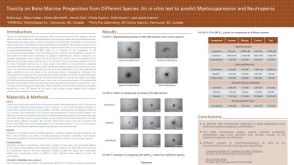 科学海报Toxicity on Bone Marrow Progenitors from Different Species: an In Vitro Test to Predict Myelosuppression and Neutropenia

 沪公网安备31010102008431号