Maes C et al. (MAY 2006)
The Journal of clinical investigation 116 5 1230--42
Placental growth factor mediates mesenchymal cell development, cartilage turnover, and bone remodeling during fracture repair.
Current therapies for delayed- or nonunion bone fractures are still largely ineffective. Previous studies indicated that the VEGF homolog placental growth factor (PlGF) has a more significant role in disease than in health. Therefore we investigated the role of PlGF in a model of semi-stabilized bone fracture healing. Fracture repair in mice lacking PlGF was impaired and characterized by a massive accumulation of cartilage in the callus,reminiscent of delayed- or nonunion fractures. PlGF was required for the early recruitment of inflammatory cells and the vascularization of the fracture wound. Interestingly,however,PlGF also played a role in the subsequent stages of the repair process. Indeed in vivo and in vitro findings indicated that PlGF induced the proliferation and osteogenic differentiation of mesenchymal progenitors and stimulated cartilage turnover by particular MMPs. Later in the process,PlGF was required for the remodeling of the newly formed bone by stimulating osteoclast differentiation. As PlGF expression was increased throughout the process of bone repair and all the important cell types involved expressed its receptor VEGFR-1,the present data suggest that PlGF is required for mediating and coordinating the key aspects of fracture repair. Therefore PlGF may potentially offer therapeutic advantages for fracture repair.
View Publication
Avior Y et al. (JUL 2015)
Hepatology 62 1 265--278
Microbial-Derived Lithocholic Acid and Vitamin Ktextlessinftextgreater2textless/inftextgreater Drive the Metabolic Maturation of Pluripotent Stem Cells-Derived and Fetal Hepatocytes
The liver is the main organ responsible for the modification,clearance,and transformational toxicity of most xenobiotics owing to its abundance in cytochrome P450 (CYP450) enzymes. However,the scarcity and variability of primary hepatocytes currently limits their utility. Human pluripotent stem cells (hPSCs) represent an excellent source of differentiated hepatocytes; however,current protocols still produce fetal-like hepatocytes with limited mature function. Interestingly,fetal hepatocytes acquire mature CYP450 expression only postpartum,suggesting that nutritional cues may drive hepatic maturation. We show that vitamin K2 and lithocholic acid,a by-product of intestinal flora,activate pregnane X receptor (PXR) and subsequent CYP3A4 and CYP2C9 expression in hPSC-derived and isolated fetal hepatocytes. Differentiated cells produce albumin and apolipoprotein B100 at levels equivalent to primary human hepatocytes,while demonstrating an 8-fold induction of CYP450 activity in response to aryl hydrocarbon receptor (AhR) agonist omeprazole and a 10-fold induction in response to PXR agonist rifampicin. Flow cytometry showed that over 83% of cells were albumin and hepatocyte nuclear factor 4 alpha (HNF4α) positive,permitting high-content screening in a 96-well plate format. Analysis of 12 compounds showed an R(2) correlation of 0.94 between TC50 values obtained in stem cell-derived hepatocytes and primary cells,compared to 0.62 for HepG2 cells. Finally,stem cell-derived hepatocytes demonstrate all toxicological endpoints examined,including steatosis,apoptosis,and cholestasis,when exposed to nine known hepatotoxins. CONCLUSION: Our work provides fresh insights into liver development,suggesting that microbial-derived cues may drive the maturation of CYP450 enzymes postpartum. Addition of these cues results in the first functional,inducible,hPSC-derived hepatocyte for predictive toxicology. (Hepatology 2015).
View Publication
Wendel H-G et al. (MAY 2006)
Proceedings of the National Academy of Sciences of the United States of America 103 19 7444--9
Loss of p53 impedes the antileukemic response to BCR-ABL inhibition.
Targeted cancer therapies exploit the continued dependence of cancer cells on oncogenic mutations. Such agents can have remarkable activity against some cancers,although antitumor responses are often heterogeneous,and resistance remains a clinical problem. To gain insight into factors that influence the action of a prototypical targeted drug,we studied the action of imatinib (STI-571,Gleevec) against murine cells and leukemias expressing BCR-ABL,an imatinib target and the initiating oncogene for human chronic myelogenous leukemia (CML). We show that the tumor suppressor p53 is selectively activated by imatinib in BCR-ABL-expressing cells as a result of BCR-ABL kinase inhibition. Inactivation of p53,which can accompany disease progression in human CML,impedes the response to imatinib in vitro and in vivo without preventing BCR-ABL kinase inhibition. Concordantly,p53 mutations are associated with progression to imatinib resistance in some human CMLs. Our results identify p53 as a determinant of the response to oncogene inhibition and suggest one way in which resistance to targeted therapy can emerge during the course of tumor evolution.
View Publication
产品类型:
产品号#:
03534
产品名:
MethoCult™GF M3534
Tan W et al. (MAY 2006)
Journal of immunology (Baltimore,Md. : 1950) 176 10 6186--93
IL-17 receptor knockout mice have enhanced myelotoxicity and impaired hemopoietic recovery following gamma irradiation.
IL-17A is a T cell-derived proinflammatory cytokine required for microbial host defense. In vivo expression profoundly stimulates granulopoiesis. At baseline,the hemopoietic system of IL-17R knockout mice (IL-17Ra(-/-)) is,with the exception of increased splenic progenitor numbers,indistinguishable from normal control mice. However,when challenged with gamma irradiation,hemopoietic toxicity is significantly more pronounced in IL-17Ra(-/-) animals,with the gamma irradiation-associated LD(50) being reduced by 150 rad. In spleen-derived T cells,gamma irradiation induces significant murine IL-17A expression in vivo but not in vitro. After sublethal radiation injury (500 rad),the infusion of purified CD4(+) T cells enhances hemopoietic recovery. This recovery is significantly impaired in IL-17Ra(-/-) animals or after in vivo blockade of IL-17Ra in normal mice,resulting in a reduction of hemopoietic precursors by 50% and of neutrophils by 43%. Following sublethal radiation-induced myelosuppression,in vivo overexpression of murine IL-17A in normal mice substantially enhanced granulopoietic restoration in mice with a 4-fold increase in neutrophils and splenic precursors on day 8 (CFU-granulocyte-macrophage/granulocyte-erythrocyte-megakaryocyte-monocyte,CFU-high proliferative potential),as well as 2- and 3-fold increases of bone marrow precursors,respectively. This establishes IL-17A as a hemopoietic response cytokine to radiation injury in mice and an inducible mechanism that is required for recovery of granulopoiesis after radiation injury.
View Publication
产品类型:
产品号#:
03434
03444
产品名:
MethoCult™GF M3434
MethoCult™GF M3434
Zhou L et al. (OCT 2008)
Blood 112 8 3434--43
Inhibition of the TGF-beta receptor I kinase promotes hematopoiesis in MDS.
MDS is characterized by ineffective hematopoiesis that leads to peripheral cytopenias. Development of effective treatments has been impeded by limited insight into pathogenic pathways governing dysplastic growth of hematopoietic progenitors. We demonstrate that smad2,a downstream mediator of transforming growth factor-beta (TGF-beta) receptor I kinase (TBRI) activation,is constitutively activated in MDS bone marrow (BM) precursors and is overexpressed in gene expression profiles of MDS CD34(+) cells,providing direct evidence of overactivation of TGF-beta pathway in this disease. Suppression of the TGF-beta signaling by lentiviral shRNA-mediated down-regulation of TBRI leads to in vitro enhancement of hematopoiesis in MDS progenitors. Pharmacologic inhibition of TBRI (alk5) kinase by a small molecule inhibitor,SD-208,inhibits smad2 activation in hematopoietic progenitors,suppresses TGF-beta-mediated gene activation in BM stromal cells,and reverses TGF-beta-mediated cell-cycle arrest in BM CD34(+) cells. Furthermore,SD-208 treatment alleviates anemia and stimulates hematopoiesis in vivo in a novel murine model of bone marrow failure generated by constitutive hepatic expression of TGF-beta1. Moreover,in vitro pharmacologic inhibition of TBRI kinase leads to enhancement of hematopoiesis in varied morphologic MDS subtypes. These data directly implicate TGF-beta signaling in the pathobiology of ineffective hematopoiesis and identify TBRI as a potential therapeutic target in low-risk MDS.
View Publication
Cai S et al. (APR 2005)
Cancer research 65 8 3319--27
Mitochondrial targeting of human O6-methylguanine DNA methyltransferase protects against cell killing by chemotherapeutic alkylating agents.
DNA repair capacity of eukaryotic cells has been studied extensively in recent years. Mammalian cells have been engineered to overexpress recombinant nuclear DNA repair proteins from ectopic genes to assess the impact of increased DNA repair capacity on genome stability. This approach has been used in this study to specifically target O(6)-methylguanine DNA methyltransferase (MGMT) to the mitochondria and examine its impact on cell survival after exposure to DNA alkylating agents. Survival of human hematopoietic cell lines and primary hematopoietic CD34(+) committed progenitor cells was monitored because the baseline repair capacity for alkylation-induced DNA damage is typically low due to insufficient expression of MGMT. Increased DNA repair capacity was observed when K562 cells were transfected with nuclear-targeted MGMT (nucl-MGMT) or mitochondrial-targeted MGMT (mito-MGMT). Furthermore,overexpression of mito-MGMT provided greater resistance to cell killing by 1,3-bis (2-chloroethyl)-1-nitrosourea (BCNU) than overexpression of nucl-MGMT. Simultaneous overexpression of mito-MGMT and nucl-MGMT did not enhance the resistance provided by mito-MGMT alone. Overexpression of either mito-MGMT or nucl-MGMT also conferred a similar level of resistance to methyl methanesulfonate (MMS) and temozolomide (TMZ) but simultaneous overexpression in both cellular compartments was neither additive nor synergistic. When human CD34(+) cells were infected with oncoretroviral vectors that targeted O(6)-benzylguanine (6BG)-resistant MGMT (MGMT(P140K)) to the nucleus or the mitochondria,committed progenitors derived from infected cells were resistant to 6BG/BCNU or 6BG/TMZ. These studies indicate that mitochondrial or nuclear targeting of MGMT protects hematopoietic cells against cell killing by BCNU,TMZ,and MMS,which is consistent with the possibility that mitochondrial DNA damage and nuclear DNA damage contribute equally to alkylating agent-induced cell killing during chemotherapy.
View Publication
Scoring CFU-GM colonies in vitro by data fusion: a first account.
OBJECTIVE: In vitro models of hematopoiesis used in investigative hematopathology and in safety studies on candidate drugs,involve clonogenic assays on colony-forming unit granulocyte macrophage (CFU-GM). These assays require live and unstained colonies to be counted. Most laboratories still rely on visual scoring,which is time-consuming and error-prone. As a consequence,automated scoring is highly desired. An algorithm that recognizes and scores CFU-GM colonies by data fusion has been developed. Some preliminary results are presented in this article. METHODS: CFU-GM assays were carried out on hematopoietic progenitors (human umbilical cord blood cells) grown in methylcellulose. Colony images were acquired by a digital camera and stored. RESULTS: The classifier was designed to process images of layers sampled from a three-dimensional (3D) domain and forming a stack. Structure and texture information was extracted from each image. Classifier training was based on a 3D colony model applied to the image stack. The number of scored colonies (assigned class) was required to match the count supplied by the human expert (class of belonging). The trained classifier was validated on one more stack and then applied to a stack with overlapping colonies. Scoring in distortion- and caustic-affected border areas was also successfully demonstrated. Because of hardware limitations,compact colonies in some cases were missed. CONCLUSIONS: The industry's scoring methods all rely on structure alone and process 2D data. Instead,the classifier here fuses data from a whole stack and is capable,in principle,of high-throughput screening.
View Publication


 EasySep™小鼠TIL(CD45)正选试剂盒




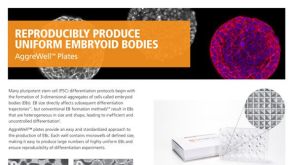 产品手册AggreWell™: Reproducible, Uniform Embryoid Bodies
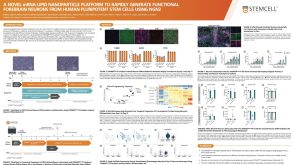 科学海报A Novel mRNA-LNP Platform to Rapidly Generate Functional Forebrain Neurons from hPSCs Using NGN2


 沪公网安备31010102008431号