Tomihara K et al. (JUN 2010)
Journal of immunology (Baltimore,Md. : 1950) 184 11 6151--60
Antigen-specific immunity and cross-priming by epithelial ovarian carcinoma-induced CD11b(+)Gr-1(+) cells.
Both innate and adaptive immune systems are considered important for cancer prevention,immunosurveillance,and control of cancer progression. It is known that,although both systems initially eliminate emerging tumor cells efficiently,tumors eventually escape immune attack by a variety of mechanisms,including differentiation and recruitment of immunosuppressive CD11b(+)Gr-1(+) myeloid suppressor cells into the tumor microenvironment. However,we show that CD11b(+)Gr-1(+) cells found in ascites of epithelial ovarian cancer-bearing mice at advanced stages of disease are immunostimulatory rather than being immunosuppressive. These cells consist of a homogenous population of cells that morphologically resemble neutrophils. Moreover,like dendritic cells,immunostimulatory CD11b(+)Gr-1(+) cells can strongly cross-prime,augmenting the proliferation of functional CTLs via signaling through the expression of costimulatory molecule CD80. Adoptive transfer of these immunostimulatory CD11b(+)Gr-1(+) cells from ascites of ovarian cancer-bearing mice results in the significant regression of s.c. tumors even without being pulsed with exogenous tumor Ag prior to adoptive transfer. We now show for the first time that adaptive immune responses against cancer can be augmented by these cancer-induced granulocyte-like immunostimulatory myeloid (CD11b(+)Gr-1(+)) cells,thereby mediating highly effective antitumor immunity in an adoptive transfer model of immunity.
View Publication
产品类型:
产品号#:
18553
18553RF
18556
18556RF
21000
20119
20155
产品名:
RoboSep™- S
RoboSep™ 吸头组件抛光剂
RoboSep™分选管套装(9个塑料管)
Koga C et al. (DEC 2014)
Annals of surgical oncology 21 Suppl 4 4 591--600
Reprogramming Using microRNA-302 Improves Drug Sensitivity in Hepatocellular Carcinoma Cells.
BACKGROUND Although studies have shown that Oct4,Sox2,Klf4,and c-Myc (OKSM)-mediated induced pluripotent stem cell (iPSC) technology sensitizes cancer cells to drugs,the potential risk of inserting c-Myc and random insertions of exogenous sequences into the genome persists. Several authors,including us,have presented microRNA (miRNA)-mediated reprogramming as an alternative approach. Herein,we evaluated the efficacy of miRNA-mediated reprogramming on hepatocellular carcinoma (HCC) cells. METHODS Among three miRNAs (miR-200c,miR-302s,and miR-369s) that were previously presented for miRNA-mediated reprogramming,miR-302 was expressed at low levels in HCC cells. After transfecting three times with miR-302,the cells were incubated in ES medium for 3 weeks and then characterized. RESULTS iPSC-like spheres were obtained after the 3-week incubation. Spheres presented high NANOG and OCT4 expression,low proliferation,high apoptosis,low epithelial-mesenchymal transition marker expression (N-cadherin,TGFBR2),and sensitization to drugs. Several miRNAs were changed (e.g.,low oncomiR miR-21,high miR-29b). cMyc was decreased,and methylation was elevated on histone 3 at lysine 4 (H3K4). Differentiated cells expressed markers of each germ layer (GFAP,FABP4,and ALB). AOF2 (also known as LSD1 or KDM1),one of the targets for miR-302,was repressed in iPSC-like-spheres. Silencing of AOF2 resulted in similar features of iPSC-like-spheres,including cMyc down-regulation and H3K4 methylation. In drug-resistant cells,sensitization was achieved through miR-302-mediated reprogramming. CONCLUSIONS miR-302-mediated iPSC technology reprogrammed HCC cells and improved drug sensitivity through AOF2 down-regulation,which caused H3K4 methylation and c-Myc repression.
View Publication
Drug-selected human lung cancer stem cells: cytokine network, tumorigenic and metastatic properties.
BACKGROUND: Cancer stem cells (CSCs) are thought to be responsible for tumor regeneration after chemotherapy,although direct confirmation of this remains forthcoming. We therefore investigated whether drug treatment could enrich and maintain CSCs and whether the high tumorogenic and metastatic abilities of CSCs were based on their marked ability to produce growth and angiogenic factors and express their cognate receptors to stimulate tumor cell proliferation and stroma formation. METHODOLOGY/FINDINGS: Treatment of lung tumor cells with doxorubicin,cisplatin,or etoposide resulted in the selection of drug surviving cells (DSCs). These cells expressed CD133,CD117,SSEA-3,TRA1-81,Oct-4,and nuclear beta-catenin and lost expression of the differentiation markers cytokeratins 8/18 (CK 8/18). DSCs were able to grow as tumor spheres,maintain self-renewal capacity,and differentiate. Differentiated progenitors lost expression of CD133,gained CK 8/18 and acquired drug sensitivity. In the presence of drugs,differentiation of DSCs was abrogated allowing propagation of cells with CSC-like characteristics. Lung DSCs demonstrated high tumorogenic and metastatic potential following inoculation into SCID mice,which supported their classification as CSCs. Luminex analysis of human and murine cytokines in sonicated lysates of parental- and CSC-derived tumors revealed that CSC-derived tumors contained two- to three-fold higher levels of human angiogenic and growth factors (VEGF,bFGF,IL-6,IL-8,HGF,PDGF-BB,G-CSF,and SCGF-beta). CSCs also showed elevated levels of expression of human VEGFR2,FGFR2,CXCR1,2 and 4 receptors. Moreover,human CSCs growing in SCID mice stimulated murine stroma to produce elevated levels of angiogenic and growth factors. CONCLUSIONS/SIGNIFICANCE: These findings suggest that chemotherapy can lead to propagation of CSCs and prevention of their differentiation. The high tumorigenic and metastatic potentials of CSCs are associated with efficient cytokine network production that may represent a target for increased efficacy of cancer therapy.
View Publication
产品类型:
产品号#:
04236
产品名:
MethoCult™ SF H4236
Dylla SJ et al. (JAN 2008)
PloS one 3 6 e2428
Colorectal cancer stem cells are enriched in xenogeneic tumors following chemotherapy.
BACKGROUND: Patients generally die of cancer after the failure of current therapies to eliminate residual disease. A subpopulation of tumor cells,termed cancer stem cells (CSC),appears uniquely able to fuel the growth of phenotypically and histologically diverse tumors. It has been proposed,therefore,that failure to effectively treat cancer may in part be due to preferential resistance of these CSC to chemotherapeutic agents. The subpopulation of human colorectal tumor cells with an ESA(+)CD44(+) phenotype are uniquely responsible for tumorigenesis and have the capacity to generate heterogeneous tumors in a xenograft setting (i.e. CoCSC). We hypothesized that if non-tumorigenic cells are more susceptible to chemotherapeutic agents,then residual tumors might be expected to contain a higher frequency of CoCSC. METHODS AND FINDINGS: Xenogeneic tumors initiated with CoCSC were allowed to reach approximately 400 mm(3),at which point mice were randomized and chemotherapeutic regimens involving cyclophosphamide or Irinotecan were initiated. Data from individual tumor phenotypic analysis and serial transplants performed in limiting dilution show that residual tumors are enriched for cells with the CoCSC phenotype and have increased tumorigenic cell frequency. Moreover,the inherent ability of residual CoCSC to generate tumors appears preserved. Aldehyde dehydrogenase 1 gene expression and enzymatic activity are elevated in CoCSC and using an in vitro culture system that maintains CoCSC as demonstrated by serial transplants and lentiviral marking of single cell-derived clones,we further show that ALDH1 enzymatic activity is a major mediator of resistance to cyclophosphamide: a classical chemotherapeutic agent. CONCLUSIONS: CoCSC are enriched in colon tumors following chemotherapy and remain capable of rapidly regenerating tumors from which they originated. By focusing on the biology of CoCSC,major resistance mechanisms to specific chemotherapeutic agents can be attributed to specific genes,thereby suggesting avenues for improving cancer therapy.
View Publication
产品类型:
产品号#:
01700
01705
01701
01702
产品名:
ALDEFLUOR™ 试剂盒
ALDEFLUOR™ DEAB试剂, 1.5 mM, 1 mL
ALDEFLUOR™检测缓冲液
Rasheed ZA et al. (MAR 2010)
Journal of the National Cancer Institute 102 5 340--51
Prognostic significance of tumorigenic cells with mesenchymal features in pancreatic adenocarcinoma.
BACKGROUND: Specific populations of highly tumorigenic cells are thought to exist in many human tumors,including pancreatic adenocarcinoma. However,the clinical significance of these tumor-initiating (ie,cancer stem) cells remains unclear. Aldehyde dehydrogenase (ALDH) activity can identify tumor-initiating cells and normal stem cells from several human tissues. We examined the prognostic significance and functional features of ALDH expression in pancreatic adenocarcinoma. METHODS: ALDH expression was analyzed by immunohistochemistry in 269 primary surgical specimens of pancreatic adenocarcinoma and examined for association with clinical outcomes and in paired primary tumors and metastatic lesions from eight pancreatic cancer patients who had participated in a rapid autopsy program. The clonogenic growth potential of ALDH-positive pancreatic adenocarcinoma cells was assessed in vitro by a colony formation assay and by tumor growth in immunodeficient mice (10-14 mice per group). Mesenchymal features of ALDH-positive pancreatic tumor cells were examined by using quantitative reverse transcription-polymerase chain reaction and an in vitro cell invasion assay. Gene expression levels and the invasive potential of ADLH-positive pancreatic cancer cells relative to the bulk cell population were examined by reverse transcription-polymerase chain reaction and an in vitro invasion assays,respectively. All statistical tests were two-sided. RESULTS: ALDH-positive tumor cells were detected in 90 of the 269 primary surgical specimens,and their presence was associated with worse survival (median survival for patients with ALDH-positive vs ALDH-negative tumors: 14 vs 18 months,hazard ratio of death = 1.28,95% confidence interval = 1.02 to 1.68,P = .05). Six (75%) of the eight patients with matched primary and metastatic tumor samples had ALDH-negative primary tumors,and in four (67%) of these six patients,the matched metastatic lesions (located in liver and lung) contained ALDH-positive cells. ALDH-positive cells were approximately five- to 11-fold more clonogenic in vitro and in vivo compared with unsorted or ALHD-negative cells,expressed genes consistent with a mesenchymal state,and had in vitro migratory and invasive potentials that were threefold greater than those of unsorted cells. CONCLUSIONS: ALDH expression marks pancreatic cancer cells that have stem cell and mesenchymal features. The enhanced clonogenic growth and migratory properties of ALDH-positive pancreatic cancer cells suggest that they play a key role in the development of metastatic disease that negatively affects the overall survival of patients with pancreatic adenocarcinoma.
View Publication
产品类型:
产品号#:
01700
01705
01702
产品名:
ALDEFLUOR™ 试剂盒
ALDEFLUOR™ DEAB试剂, 1.5 mM, 1 mL
ALDEFLUOR™检测缓冲液
Zhu X et al. (JUL 2010)
Molecular cancer therapeutics 9 7 2131--41
Identification of internalizing human single-chain antibodies targeting brain tumor sphere cells.
Glioblastoma multiforme (GBM) is the most common and aggressive form of primary brain tumor for which there is no curative treatment to date. Resistance to conventional therapies and tumor recurrence pose major challenges to treatment and management of this disease,and therefore new therapeutic strategies need to be developed. Previous studies by other investigators have shown that a subpopulation of GBM cells can grow as neurosphere-like cells when cultured in restrictive medium and exhibits enhanced tumor-initiating ability and resistance to therapy. We report here the identification of internalizing human single-chain antibodies (scFv) targeting GBM tumor sphere cells. We selected a large naive phage antibody display library on the glycosylation-dependent CD133 epitope-positive subpopulation of GBM cells grown as tumor spheres and identified internalizing scFvs that target tumor sphere cells broadly,as well as scFvs that target the CD133-positive subpopulation. These scFvs were found to be efficiently internalized by GBM tumor sphere cells. One scFv GC4 inhibited self-renewal of GBM tumor sphere cells in vitro. We have further developed a full-length human IgG1 based on this scFv,and found that it potently inhibits proliferation of GBM tumor sphere cells and GBM cells grown in regular nonselective medium. Taken together,these results show that internalizing human scFvs targeting brain tumor sphere cells can be readily identified from a phage antibody display library,which could be useful for further development of novel therapies that target subpopulations of GBM cells to combat recurrence and resistance to treatment.
View Publication
产品类型:
产品号#:
05751
产品名:
NeuroCult™ NS-A 扩增试剂盒(人)
Pei S et al. (NOV 2013)
The Journal of biological chemistry 288 47 33542--58
Targeting aberrant glutathione metabolism to eradicate human acute myelogenous leukemia cells.
The development of strategies to eradicate primary human acute myelogenous leukemia (AML) cells is a major challenge to the leukemia research field. In particular,primitive leukemia cells,often termed leukemia stem cells,are typically refractory to many forms of therapy. To investigate improved strategies for targeting of human AML cells we compared the molecular mechanisms regulating oxidative state in primitive (CD34(+)) leukemic versus normal specimens. Our data indicate that CD34(+) AML cells have elevated expression of multiple glutathione pathway regulatory proteins,presumably as a mechanism to compensate for increased oxidative stress in leukemic cells. Consistent with this observation,CD34(+) AML cells have lower levels of reduced glutathione and increased levels of oxidized glutathione compared with normal CD34(+) cells. These findings led us to hypothesize that AML cells will be hypersensitive to inhibition of glutathione metabolism. To test this premise,we identified compounds such as parthenolide (PTL) or piperlongumine that induce almost complete glutathione depletion and severe cell death in CD34(+) AML cells. Importantly,these compounds only induce limited and transient glutathione depletion as well as significantly less toxicity in normal CD34(+) cells. We further determined that PTL perturbs glutathione homeostasis by a multifactorial mechanism,which includes inhibiting key glutathione metabolic enzymes (GCLC and GPX1),as well as direct depletion of glutathione. These findings demonstrate that primitive leukemia cells are uniquely sensitive to agents that target aberrant glutathione metabolism,an intrinsic property of primary human AML cells.
View Publication
产品类型:
产品号#:
07930
07931
07940
07955
07956
07959
07954
100-1061
07952
产品名:
CryoStor® CS10
CryoStor® CS10
CryoStor® CS10
CryoStor® CS10
CryoStor® CS10
CryoStor® CS10
CryoStor® CS10
Kryczek I et al. (JAN 2012)
International journal of cancer. Journal international du cancer 130 1 29--39
Expression of aldehyde dehydrogenase and CD133 defines ovarian cancer stem cells.
Identification of cancer stem cells is crucial for advancing cancer biology and therapy. Several markers including CD24,CD44,CD117,CD133,the G subfamily of ATP-binding cassette transporters (ABCG),epithelial specific antigen (ESA) and aldehyde dehydrogenase (ALDH) are used to identify and investigate human epithelial cancer stem cells in the literature. We have now systemically analyzed and compared the expression of these markers in fresh ovarian epithelial carcinomas. Although the expression levels of these markers were unexpectedly variable and partially overlapping in fresh ovarian cancer cells from different donors,we reliably detected important levels of CD133 and ALDH in the majority of fresh ovarian cancer. Furthermore,most of these stem cell markers including CD133 and ALDH were gradually lost following in vitro passage of primary tumor cells. However,the expression of ALDH and CD133,but not CD24,CD44 and CD117,could be partially rescued by the in vitro serum-free and sphere cultures and by the in vivo passage in the immune-deficient xenografts. ALDH+ and CD133+ cells formed three-dimensional spheres more efficiently than their negative counterparts. These sphere-forming cells expressed high levels of stem cell core gene transcripts and could be expanded and form additional spheres in long-term culture. ALDH+,CD133+ and ALDH+ CD133+ cells from fresh tumors developed larger tumors more rapidly than their negative counterparts. This property was preserved in the xenografted tumors. Altogether,the data suggest that ALDH+ and CD133+ cells are enriched with ovarian cancer-initiating (stem) cells and that ALDH and CD133 may be widely used as reliable markers to investigate ovarian cancer stem cell biology.
View Publication
产品类型:
产品号#:
01700
01705
01701
01702
18555
18555RF
18551
18551RF
18561
产品名:
ALDEFLUOR™ 试剂盒
ALDEFLUOR™ DEAB试剂, 1.5 mM, 1 mL
ALDEFLUOR™检测缓冲液
Scappini B et al. (DEC 2001)
Clinical cancer research : an official journal of the American Association for Cancer Research 7 12 3884--93
Effects of signal transduction inhibitor 571 in acute myelogenous leukemia cells.
STI571 is a 2-phenylalaminopyrimidine derivative that inhibits c-abl,Bcr-Abl,and platelet-derived growth factor receptor tyrosine kinases. Recently,inhibition of stem cell factor (SCF)-induced c-kit phosphorylation and cell proliferation by STI571 was reported in the human myeloid cell line MO7e. Because approximately 70% of acute myelogenous leukemia (AML) cases are c-kit positive,we evaluated in vitro effects of STI571 on c-kit-positive cell lines and primary AML blast cells. At concentrations textgreater5 microM,the drug marginally inhibited SCF-independent proliferation of cell lines and most of AML blasts. Treatment of AML cells with cytarabine and STI571 showed synergistic effect at low concentrations. Western blotting analysis documented a distinct band of M(r) 145,000 specific for c-kit in cell lines and in AML samples. There was no correlation between the level of the c-kit expression evaluated by Western blotting and percentage of c-kit-positive blasts as measured by flow cytometry. Neither in cell lines nor in primary AML cells,c-kit autophosphorylation was detectable under standard growth conditions. SCF-induced phosphorylation of c-kit in MO7e cells was inhibited by STI571. In a c-kit-positive AML-4 cell line,as well as in AML samples,c-kit phosphorylation was not induced by SCF exposure,suggesting that in these cases,the receptor could not be functionally activated. In conclusion,with the exception of MO7e,SCF did not induce phosphorylation of c-kit,and cell proliferation was not modulated in the presence of STI571. We did not detect any SCF-independent c-kit phosphorylation in our experimental systems. Consequently,STI571 exerted only a limited inhibitory effect on the cell growth.
View Publication
产品类型:
产品号#:
09600
09650
产品名:
StemSpan™ SFEM
StemSpan™ SFEM
Lambert AW et al. (JAN 2016)
Molecular cancer research : MCR 14 1 103--113
Tumor Cell-Derived Periostin Regulates Cytokines That Maintain Breast Cancer Stem Cells.
UNLABELLED Basal-like breast cancer (BLBC) is an aggressive subtype of breast cancer which is often enriched with cancer stem cells (CSC),but the underlying molecular basis for this connection remains elusive. We hypothesized that BLBC cells are able to establish a niche permissive to the maintenance of CSCs and found that tumor cell-derived periostin (POSTN),a component of the extracellular matrix,as well as a corresponding cognate receptor,integrin $$(v)$$(3),are highly expressed in a subset of BLBC cell lines as well as in CSC-enriched populations. Furthermore,we demonstrated that an intact periostin-integrin $$3 signaling axis is required for the maintenance of breast CSCs. POSTN activates the ERK signaling pathway and regulates NF-$$B-mediated transcription of key cytokines,namely IL6 and IL8,which in turn control downstream activation of STAT3. In summary,these findings suggest that BLBC cells have an innate ability to establish a microenvironmental niche supportive of CSCs. IMPLICATIONS The findings reported here indicate that POSTN produced by CSCs acts to reinforce the stem cell state through the activation of integrin receptors and the production of key cytokines.
View Publication
产品类型:
产品号#:
05620
产品名:
MammoCult™ 人源培养基套装
Nefedova Y et al. (JAN 2004)
Journal of immunology (Baltimore,Md. : 1950) 172 1 464--74
Hyperactivation of STAT3 is involved in abnormal differentiation of dendritic cells in cancer.
Abnormal differentiation of myeloid cells is one of the hallmarks of cancer. However,the molecular mechanisms of this process remain elusive. In this study,we investigated the effect of tumor-derived factors on Janus kinase (Jak)/STAT signaling in myeloid cells during their differentiation into dendritic cells. Tumor cell conditioned medium induced activation of Jak2 and STAT3,which was associated with an accumulation of immature myeloid cells. Jak2/STAT3 activity was localized primarily in these myeloid cells,which prevented the differentiation of immature myeloid cells into mature dendritic cells. This differentiation was restored after removal of tumor-derived factors. Inhibition of STAT3 abrogated the negative effects of these factors on myeloid cell differentiation,and overexpression of STAT3 reproduced the effects of tumor-derived factors. Thus,this is a first demonstration that tumor-derived factors may affect myeloid cell differentiation in cancer via constitutive activation of Jak2/STAT3.
View Publication


 EasySep™小鼠TIL(CD45)正选试剂盒





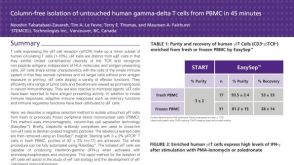 科学海报Immunomagnetic Cell Isolation of Human Gamma-Delta T Cells from PBMC
 沪公网安备31010102008431号