Differentiation of Human Pluripotent Stem Cells to Cardiomyocytes Under Defined Conditions.
Human embryonic stem cells (hESCs) and induced pluripotent stem cells (hiPSCs) can differentiate to cardiomyocytes in vitro,offering unique opportunities to investigate cardiac development and disease as well as providing a platform to perform drug and toxicity tests. Initial cardiac differentiation methods were based on either inductive co-culture or aggregation as embryoid bodies,often in the presence of fetal calf serum. More recently,monolayer differentiation protocols have evolved as feasible alternatives and are often performed in completely defined culture medium and substrates. Thus,our ability to efficiently and reproducibly generate cardiomyocytes from multiple different hESC and hiPSC lines has improved significantly.We have developed a directed differentiation monolayer protocol that can be used to generate cultures comprising ˜50% cardiomyocytes,in which both the culture of the undifferentiated human pluripotent stem cells (hPSCs) and the differentiation procedure itself are defined and serum-free. The differentiation method is also effective for hPSCs maintained in other culture systems. In this chapter,we outline the differentiation protocol and describe methods to assess cardiac differentiation efficiency as well as to identify and quantify the yield of cardiomyocytes.
View Publication
Derivation of Epithelial Cells from Human Embryonic Stem Cells as an In Vitro Model of Vocal Mucosa
Vocal fold epithelial cells are very difficult to study as the vocal fold epithelial cell lines do not exist and they cannot be removed from the healthy larynx without engendering a significant and unacceptable risk to vocal fold function. Here,we describe the procedure to create an engineered vocal fold tissue construct consisting of the scaffold composed of the collagen 1 gel seeded with human fibroblasts and simple epithelial progenitors seeded on the scaffold and cultivated at air-liquid interface for 19-21 days to derive the stratified squamous epithelium. This model of vocal fold mucosa is very similar in morphology,gene expression,and phenotypic characteristics to native vocal fold epithelial cells and the underlying lamina propria and,therefore,offers a promising approach to studying vocal fold biology and biomechanics in health and disease.
View Publication
产品类型:
产品号#:
05850
05857
05870
05875
85850
85857
85870
85875
产品名:
mTeSR™1
mTeSR™1
Wang S et al. (MAR 2015)
Sci Rep 5 9232
Differentiation of human induced pluripotent stem cells to mature functional Purkinje neurons.
It remains a challenge to differentiate human induced pluripotent stem cells (iPSCs) or embryonic stem (ES) cells to Purkinje cells. In this study,we derived iPSCs from human fibroblasts and directed the specification of iPSCs first to Purkinje progenitors,by adding Fgf2 and insulin to the embryoid bodies (EBs) in a time-sensitive manner,which activates the endogenous production of Wnt1 and Fgf8 from EBs that further patterned the cells towards a midbrain-hindbrain-boundary tissue identity. Neph3-positive human Purkinje progenitors were sorted out by using flow cytometry and cultured either alone or with granule cell precursors,in a 2-dimensional or 3-dimensional environment. However,Purkinje progenitors failed to mature further under above conditions. By co-culturing human Purkinje progenitors with rat cerebellar slices,we observed mature Purkinje-like cells with right morphology and marker expression patterns,which yet showed no appropriate membrane properties. Co-culture with human fetal cerebellar slices drove the progenitors to not only morphologically correct but also electrophysiologically functional Purkinje neurons. Neph3-posotive human cells could also survive transplantation into the cerebellum of newborn immunodeficient mice and differentiate to L7- and Calbindin-positive neurons. Obtaining mature human Purkinje cells in vitro has significant implications in studying the mechanisms of spinocerebellar ataxias and other cerebellar diseases.
View Publication
产品类型:
产品号#:
05850
05857
05870
05875
85850
85857
85870
85875
产品名:
mTeSR™1
mTeSR™1
Watson CL et al. (NOV 2014)
Nature Medicine 20 11 1310--4
An in vivo model of human small intestine using pluripotent stem cells.
Differentiation of human pluripotent stem cells (hPSCs) into organ-specific subtypes offers an exciting avenue for the study of embryonic development and disease processes,for pharmacologic studies and as a potential resource for therapeutic transplant. To date,limited in vivo models exist for human intestine,all of which are dependent upon primary epithelial cultures or digested tissue from surgical biopsies that include mesenchymal cells transplanted on biodegradable scaffolds. Here,we generated human intestinal organoids (HIOs) produced in vitro from human embryonic stem cells (ESCs) or induced pluripotent stem cells (iPSCs) that can engraft in vivo. These HIOs form mature human intestinal epithelium with intestinal stem cells contributing to the crypt-villus architecture and a laminated human mesenchyme,both supported by mouse vasculature ingrowth. In vivo transplantation resulted in marked expansion and maturation of the epithelium and mesenchyme,as demonstrated by differentiated intestinal cell lineages (enterocytes,goblet cells,Paneth cells,tuft cells and enteroendocrine cells),presence of functional brush-border enzymes (lactase,sucrase-isomaltase and dipeptidyl peptidase 4) and visible subepithelial and smooth muscle layers when compared with HIOs in vitro. Transplanted intestinal tissues demonstrated digestive functions as shown by permeability and peptide uptake studies. Furthermore,transplanted HIO-derived tissue was responsive to systemic signals from the host mouse following ileocecal resection,suggesting a role for circulating factors in the intestinal adaptive response. This model of the human small intestine may pave the way for studies of intestinal physiology,disease and translational studies.
View Publication
产品类型:
产品号#:
05854
05855
05850
05857
05870
05875
85850
85857
85870
85875
产品名:
mFreSR™
mFreSR™
mTeSR™1
mTeSR™1
Tan H-K et al. (MAY 2014)
Stem cells translational medicine 3 5 586--98
Human finger-prick induced pluripotent stem cells facilitate the development of stem cell banking.
Induced pluripotent stem cells (iPSCs) derived from somatic cells of patients can be a good model for studying human diseases and for future therapeutic regenerative medicine. Current initiatives to establish human iPSC (hiPSC) banking face challenges in recruiting large numbers of donors with diverse diseased,genetic,and phenotypic representations. In this study,we describe the efficient derivation of transgene-free hiPSCs from human finger-prick blood. Finger-prick sample collection can be performed on a do-it-yourself" basis by donors and sent to the hiPSC facility for reprogramming. We show that single-drop volumes of finger-prick samples are sufficient for performing cellular reprogramming�
View Publication
Non-integrating episomal plasmid-based reprogramming of human amniotic fluid stem cells into induced pluripotent stem cells in chemically defined conditions.
Amniotic fluid stem cells (AFSC) represent an attractive potential cell source for fetal and pediatric cell-based therapies. However,upgrading them to pluripotency confers refractoriness toward senescence,higher proliferation rate and unlimited differentiation potential. AFSC were observed to rapidly and efficiently reacquire pluripotency which together with their easy recovery makes them an attractive cell source for reprogramming. The reprogramming process as well as the resulting iPSC epigenome could potentially benefit from the unspecialized nature of AFSC. iPSC derived from AFSC also have potential in disease modeling,such as Down syndrome or $\$-thalassemia. Previous experiments involving AFSC reprogramming have largely relied on integrative vector transgene delivery and undefined serum-containing,feeder-dependent culture. Here,we describe non-integrative oriP/EBNA-1 episomal plasmid-based reprogramming of AFSC into iPSC and culture in fully chemically defined xeno-free conditions represented by vitronectin coating and E8 medium,a system that we found uniquely suited for this purpose. The derived AF-iPSC lines uniformly expressed a set of pluripotency markers Oct3/4,Nanog,Sox2,SSEA-1,SSEA-4,TRA-1-60,TRA-1-81 in a pattern typical for human primed PSC. Additionally,the cells formed teratomas,and were deemed pluripotent by PluriTest,a global expression microarray-based in-silico pluripotency assay. However,we found that the PluriTest scores were borderline,indicating a unique pluripotent signature in the defined condition. In the light of potential future clinical translation of iPSC technology,non-integrating reprogramming and chemically defined culture are more acceptable.
View Publication
产品类型:
产品号#:
05850
05857
05870
05875
05940
07180
07183
07190
27147
07191
07930
07931
07940
07955
07956
07959
07954
85850
85857
85870
85875
100-1061
07952
100-0763
产品名:
Vitronectin XF™
CellAdhere™ 稀释缓冲液
CryoStor® CS10
CryoStor® CS10
CryoStor® CS10
CryoStor® CS10
CryoStor® CS10
mTeSR™1
mTeSR™1
CryoStor® CS10
CryoStor® CS10
Vitronectin XF™
Kawatsu K et al. (APR 2008)
Journal of clinical microbiology 46 4 1226--31
Development and evaluation of immunochromatographic assay for simple and rapid detection of Campylobacter jejuni and Campylobacter coli in human stool specimens.
An immunochromatographic assay (Campy-ICA) using a newly generated single monoclonal antibody against a 15-kDa cell surface protein of Campylobacter jejuni was developed. When cell suspensions of 86 C. jejuni strains and 27 Campylobacter coli strains were treated with a commercially available bacterial protein extraction reagent and the resulting extracts were tested with the Campy-ICA,they all yielded positive results. The minimum detectable limits for the C. jejuni strains ranged from 1.8 x 10(4) to 8.2 x 10(5) CFU/ml of cell suspension,and those for the C. coli strains ranged from 1.4 x 10(5) to 4.6 x 10(6) CFU/ml of cell suspension. All 26 non-Campylobacter species tested yielded negative results with the Campy-ICA. To evaluate the ability of the Campy-ICA to detect C. jejuni and C. coli in human stool specimens,suspensions of 222 stool specimens from patients with acute gastroenteritis were treated with the bacterial protein extraction reagent,and the resulting extracts were tested with the Campy-ICA. The Campy-ICA results showed a sensitivity of 84.8% (28 of 33 specimens) and a specificity of 100% (189 of 189 specimens) compared to the results of isolation of C. jejuni and C. coli from the stool specimens by a bacterial culture test. The Campy-ICA was simple to perform and was able to detect Campylobacter antigen in a fecal extract within 15 min. These results suggest that Campy-ICA testing of fecal extracts may be useful as a simple and rapid adjunct to stool culture for detecting C. jejuni and C. coli in human stool specimens.
View Publication
Temporal impact of substrate mechanics on differentiation of human embryonic stem cells to cardiomyocytes
A significant clinical need exists to differentiate human pluripotent stem cells (hPSCs) into cardiomyocytes,enabling tissue modeling for in vitro discovery of new drugs or cell-based therapies for heart repair in vivo. Chemical and mechanical microenvironmental factors are known to impact the efficiency of stem cell differentiation,but cardiac differentiation protocols in hPSCs are typically performed on rigid tissue culture polystyrene (TCPS) surfaces,which do not present a physiological mechanical setting. To investigate the temporal effects of mechanics on cardiac differentiation,we cultured human embryonic stem cells (hESCs) and their derivatives on polyacrylamide hydrogel substrates with a physiologically relevant range of stiffnesses. In directed differentiation and embryoid body culture systems,differentiation of hESCs to cardiac troponin T-expressing (cTnT+) cardiomyocytes peaked on hydrogels of intermediate stiffness. Brachyury expression also peaked on intermediate stiffness hydrogels at day 1 of directed differentiation,suggesting that stiffness impacted the initial differentiation trajectory of hESCs to mesendoderm. To investigate the impact of substrate mechanics during cardiac specification of mesodermal progenitors,we initiated directed cardiomyocyte differentiation on TCPS and transferred cells to hydrogels at the Nkx2.5/Isl1+ cardiac progenitor cell stage. No differences in cardiomyocyte purity with stiffness were observed on day 15. These experiments indicate that differentiation of hESCs is sensitive to substrate mechanics at early stages of mesodermal induction,and proper application of substrate mechanics can increase the propensity of hESCs to differentiate to cardiomyocytes. textcopyright 2013 Acta Materialia Inc.
View Publication
产品类型:
产品号#:
05850
05857
05870
05875
85850
85857
85870
85875
产品名:
mTeSR™1
mTeSR™1
Qu Q et al. (MAR 2014)
Nature communications 5 3449
High-efficiency motor neuron differentiation from human pluripotent stem cells and the function of Islet-1.
Efficient derivation of large-scale motor neurons (MNs) from human pluripotent stem cells is central to the understanding of MN development,modelling of MN disorders in vitro and development of cell-replacement therapies. Here we develop a method for rapid (20 days) and highly efficient (˜70%) differentiation of mature and functional MNs from human pluripotent stem cells by tightly modulating neural patterning temporally at a previously undefined primitive neural progenitor stage. This method also allows high-yield (textgreater250%) MN production in chemically defined adherent cultures. Furthermore,we show that Islet-1 is essential for formation of mature and functional human MNs,but,unlike its mouse counterpart,does not regulate cell survival or suppress the V2a interneuron fate. Together,our discoveries improve the strategy for MN derivation,advance our understanding of human neural specification and MN development,and provide invaluable tools for human developmental studies,drug discovery and regenerative medicine.
View Publication


 EasySep™小鼠TIL(CD45)正选试剂盒





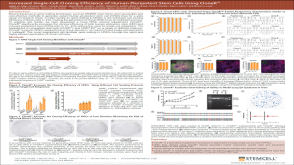 科学海报Increased Single-Cell Cloning Efficiency of Human Pluripotent Stem Cells Using CloneR™
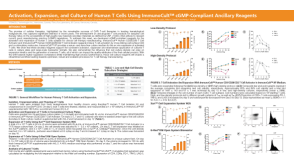 科学海报Activation, Expansion, and Culture of Human T Cells Using ImmunoCult™ cGMP-Compliant Ancillary Reagents

 沪公网安备31010102008431号