Yamaji D et al. (OCT 2009)
Genes & development 23 20 2382--7
Development of mammary luminal progenitor cells is controlled by the transcription factor STAT5A.
Mammary alveologenesis is abrogated in the absence of the transcription factors STAT5A/5B,which mediate cytokine signaling. To reveal the underlying causes for this developmental block,we studied mammary stem and progenitor cells. While loss of STAT5A/5B did not affect the stem cell population and its ability to form mammary ducts,luminal progenitors were greatly reduced and unable to form alveoli during pregnancy. Temporally controlled expression of transgenic STAT5A in mammary epithelium lacking STAT5A/5B restored the luminal progenitor population and rescued alveologenesis in a reversible fashion in vivo. Thus,STAT5A is necessary and sufficient for the establishment of luminal progenitor cells.
View Publication
产品类型:
产品号#:
05610
产品名:
EpiCult™-B 小鼠培养基试剂盒
文献
Maestre-Batlle D et al. (FEB 2017)
Scientific reports 7 42214
Novel flow cytometry approach to identify bronchial epithelial cells from healthy human airways.
Sampling various compartments within the lower airways to examine human bronchial epithelial cells (HBEC) is essential for understanding numerous lung diseases. Conventional methods to identify HBEC in bronchoalveolar lavage (BAL) and wash (BW) have throughput limitations in terms of efficiency and ensuring adequate cell numbers for quantification. Flow cytometry can provide high-throughput quantification of cell number and function in BAL and BW samples,while requiring low cell numbers. To date,a flow cytometric method to identify HBEC recovered from lower human airway samples is unavailable. In this study we present a flow cytometric method identifying HBEC as CD45 negative,EpCAM/pan-cytokeratin (pan-CK) double-positive population after excluding debris,doublets and dead cells from the analysis. For validation,the HBEC panel was applied to primary HBEC resulting in 98.6% of live cells. In healthy volunteers,HBEC recovered from BAL (2.3% of live cells),BW (32.5%) and bronchial brushing samples (88.9%) correlated significantly (p = 0.0001) with the manual microscopy counts with an overall Pearson correlation of 0.96 across the three sample types. We therefore have developed,validated,and applied a flow cytometric method that will be useful to interrogate the role of the respiratory epithelium in multiple lung diseases.
View Publication
Stingl J et al. (MAY 2001)
Breast cancer research and treatment 67 2 93--109
Characterization of bipotent mammary epithelial progenitor cells in normal adult human breast tissue.
The purpose of the present study was to characterize primitive epithelial progenitor populations present in adult normal human mammary tissue using a combination of flow cytometry and in vitro colony assay procedures. Three types of human breast epithelial cell (HBEC) progenitors were identified: luminal-restricted,myoepithelial-restricted and bipotent progenitors. The first type expressed epithelial cell adhesion molecule (EpCAM),alpha6 integrin and MUC1 and generated colonies composed exclusively of cells positive for the luminal-associated markers keratin 8/18,keratin 19,EpCAM and MUC1. Bipotent progenitors produced colonies containing a central core of cells expressing luminal markers surrounded by keratin 14+ myoepithelial-like cells. Single cell cultures confirmed the bipotentiality of these progenitors. Their high expression of alpha6 integrin and low expression of MUC1 suggests a basal position of these cells in the mammary epithelium in vivo. Serial passage in vitro of an enriched population of bipotent progenitors demonstrated that only myoepithelial-restricted progenitors could be readily generated under the culture conditions used. These results support a hierarchical branching model of HBEC progenitor differentiation from a primitive uncommitted cell to luminal- and myoepithelial-restricted progenitors.
View Publication
产品类型:
产品号#:
01700
01705
05601
05610
产品名:
ALDEFLUOR™ 试剂盒
ALDEFLUOR™ DEAB试剂
EpiCult™-B 人培养基
EpiCult™-B 小鼠培养基试剂盒
文献
Shikotra A et al. ( 2017)
Journal of immunology (Baltimore,Md. : 1950) 198 8 3307--3317
A CEACAM6-High Airway Neutrophil Phenotype and CEACAM6-High Epithelial Cells Are Features of Severe Asthma.
Severe asthma represents a major unmet clinical need; understanding the pathophysiology is essential for the development of new therapies. Using microarray analysis,we previously found three immunological clusters in asthma: Th2-high,Th17-high,and Th2/17-low. Although new therapies are emerging for Th2-high disease,identifying molecular pathways in Th2-low disease remains an important goal. Further interrogation of our previously described microarray dataset revealed upregulation of gene expression for carcinoembryonic Ag cell adhesion molecule (CEACAM) family members in the bronchi of patients with severe asthma. Our aim was therefore to explore the distribution and cellular localization of CEACAM6 using immunohistochemistry on bronchial biopsy tissue obtained from patients with mild-to-severe asthma and healthy control subjects. Human bronchial epithelial cells were used to investigate cytokine and corticosteroid in vitro regulation of CEACAM6 gene expression. CEACAM6 protein expression in bronchial biopsies was increased in airway epithelial cells and lamina propria inflammatory cells in severe asthma compared with healthy control subjects. CEACAM6 in the lamina propria was localized to neutrophils predominantly. Neutrophil density in the bronchial mucosa was similar across health and the spectrum of asthma severity,but the percentage of neutrophils expressing CEACAM6 was significantly increased in severe asthma,suggesting the presence of an altered neutrophil phenotype. CEACAM6 gene expression in cultured epithelial cells was upregulated by wounding and neutrophil elastase. In summary,CEACAM6 expression is increased in severe asthma and primarily associated with airway epithelial cells and tissue neutrophils. CEACAM6 may contribute to the pathology of treatment-resistant asthma via neutrophil and airway epithelial cell-dependent pathways.
View Publication
产品类型:
产品号#:
05001
05021
05022
产品名:
PneumaCult™-ALI 培养基
PneumaCult™-ALI 培养基含12 mm Transwell®插件
PneumaCult™-ALI 培养基含6.5 mm Transwell®插件
文献
Calcagno AM et al. (NOV 2010)
Journal of the National Cancer Institute 102 21 1637--52
Prolonged drug selection of breast cancer cells and enrichment of cancer stem cell characteristics.
BACKGROUND: Cancer stem cells are presumed to have virtually unlimited proliferative and self-renewal abilities and to be highly resistant to chemotherapy,a feature that is associated with overexpression of ATP-binding cassette transporters. We investigated whether prolonged continuous selection of cells for drug resistance enriches cultures for cancer stem-like cells. METHODS: Cancer stem cells were defined as CD44+/CD24�?� cells that could self-renew (ie,generate cells with the tumorigenic CD44+/CD24�?� phenotype),differentiate,invade,and form tumors in vivo. We used doxorubicin-selected MCF-7/ADR cells,weakly tumorigenic parental MCF-7 cells,and MCF-7/MDR,an MCF-7 subline with forced expression of ABCB1 protein. Cells were examined for cell surface markers and side-population fractions by microarray and flow cytometry,with in vitro invasion assays,and for ability to form mammospheres. Xenograft tumors were generated in mice to examine tumorigenicity (n = 52). The mRNA expression of multidrug resistance genes was examined in putative cancer stem cells and pathway analysis of statistically significantly differentially expressed genes was performed. All statistical tests were two-sided. RESULTS: Pathway analysis showed that MCF-7/ADR cells express mRNAs from ABCB1 and other genes also found in breast cancer stem cells (eg,CD44,TGFB1,and SNAI1). MCF-7/ADR cells were highly invasive,formed mammospheres,and were tumorigenic in mice. In contrast to parental MCF-7 cells,more than 30% of MCF-7/ADR cells had a CD44+/CD24�?� phenotype,could self-renew,and differentiate (ie,produce CD44+/CD24�?� and CD44+/CD24+ cells) and overexpressed various multidrug resistance-linked genes (including ABCB1,CCNE1,and MMP9). MCF-7/ADR cells were statistically significantly more invasive in Matrigel than parental MCF-7 cells (MCF-7 cells = 0.82 cell per field and MCF-7/ADR = 7.51 cells per field,difference = 6.69 cells per field,95% confidence interval = 4.82 to 8.55 cells per field,P textless .001). No enrichment in the CD44+/CD24�?� or CD133+ population was detected in MCF-7/MDR. CONCLUSION: The cell population with cancer stem cell characteristics increased after prolonged continuous selection for doxorubicin resistance.
View Publication
产品类型:
产品号#:
01700
01705
产品名:
ALDEFLUOR™ 试剂盒
ALDEFLUOR™ DEAB试剂
文献
Solleti SK et al. ( 2017)
Scientific Reports 7 1 1--10
MicroRNA expression profiling defines the impact of electronic cigarettes on human airway epithelial cells
While all forms of tobacco exposure have negative health effects,the significance of exposure to electronic cigarettes (eCig) is not fully understood. Here,we studied the global effects of eCig on the micro RNA (miRNA) transcriptome in human lung epithelial cells. Primary human bronchial epithelial (NHBE) cells differentiated at air-liquid interface were exposed to eCig liquid. Exposure of NHBE to any eCig liquid resulted in the induction of oxidative stress-response genes including GCLM,GCLC,GPX2,NQO1 and HO-1. Vaporization of,and/or the presence of nicotine in,eCig liquid was associated with a greater response. We identified 578 miRNAs dysregulated by eCig exposure in NHBE,and 125 miRNA affected by vaporization of eCig liquid. Nicotine containing eCig vapor displayed the most profound effects upon miRNA expression. We selected 8 miRNAs (29A,140,126,374A,26A-2,147B,941 and 589) for further study. We validated increased expression of multiple miRNAs,including miR126,following eCig exposure. We also found significant reduction in the expression of two miR126 target genes,MYC and MRGPRX3,following exposure. These data demonstrated that eCig exposure has profound effects upon gene expression in human lung epithelial cells,some of which are epigenetically programmed at the level of miRNA regulation.
View Publication
产品类型:
产品号#:
05001
05021
05022
产品名:
PneumaCult™-ALI 培养基
PneumaCult™-ALI 培养基含12 mm Transwell®插件
PneumaCult™-ALI 培养基含6.5 mm Transwell®插件
文献
Nishida S et al. (JUL 2012)
The Journal of urology 188 1 294--9
Gene expression profiles of prostate cancer stem cells isolated by aldehyde dehydrogenase activity assay.
PURPOSE: Prostate cancer cells include a small population of cancer stem-like/cancer initiating cells,which have roles in cancer initiation and progression. Recently aldehyde dehydrogenase activity was used to isolate stem cells of various cancer and normal cells. We evaluated the aldehyde dehydrogenase activity of the human prostate cancer cell line 22Rv1 (ATCC®) with the ALDEFLUOR® assay and determined its potency as prostate cancer stem-like/cancer initiating cells. MATERIALS AND METHODS: The human prostate cancer cell line 22Rv1 was labeled with ALDEFLUOR reagent and analyzed by flow cytometry. ALDH1(high) and ALDH1(low) cells were isolated and tumorigenicity was evaluated by xenograft transplantation into NOD/SCID mice. Tumor sphere forming ability was evaluated by culturing in a floating condition. Invasion capability was evaluated by the Matrigel™ invasion assay. Gene expression profiling was assessed by microarrays and reverse transcriptase-polymerase chain reaction. RESULTS: ALDH1(high) cells were detected in 6.8% of 22Rv1 cells,which showed significantly higher tumorigenicity than ALDH1(low) cells in NOD/SCID mice (p textless 0.05). Gene expression profiling revealed higher expression of the stem cell related genes PROM1 and NKX3-1 in ALDH1(high) cells than in ALDH1(low) cells. ALDH1(high) cells also showed higher invasive capability and sphere forming capability than ALDH1(low) cells. CONCLUSIONS: Results indicate that cancer stem-like/cancer initiating cells are enriched in the ALDH1(high) population of the prostate cancer cell line 22Rv1. This approach may provide a breakthrough to further clarify prostate cancer stem-like/cancer initiating cells. To our knowledge this is the first report of cancer stem-like/cancer initiating cells of 22Rv1 using the aldehyde dehydrogenase activity assay.
View Publication
产品类型:
产品号#:
01700
01705
产品名:
ALDEFLUOR™ 试剂盒
ALDEFLUOR™ DEAB试剂
文献
P. Dey et al. (4 2020)
Cancer Discovery 10 608-625
Oncogenic KRAS-driven metabolic reprogramming in pancreatic cancer cells utilizes cytokines from the tumor microenvironment
A hallmark of pancreatic ductal adenocarcinoma (PDAC) is an exuberant stroma comprised of diverse cell types that enable or suppress tumor progression. Here,we explored the role of oncogenic KRAS in protumorigenic signaling interactions between cancer cells and host cells. We show that KRAS mutation (KRAS) drives cell-autonomous expression of type I cytokine receptor complexes (IL2r?–IL4r? and IL2r?–IL13r?1) in cancer cells that in turn are capable of receiving cytokine growth signals (IL4 or IL13) provided by invading Th2 cells in the microenvironment. Early neoplastic lesions show close proximity of cancer cells harboring KRAS and Th2 cells producing IL4 and IL13. Activated IL2r?–IL4r? and IL2r?–IL13r?1 receptors signal primarily via JAK1-STAT6. Integrated transcriptomic,chromatin occupancy,and metabolomic studies identified MYC as a direct target of activated STAT6 and that MYC drives glycolysis. Thus,paracrine signaling in the tumor microenvironment plays a key role in the KRAS-driven metabolic reprogramming of PDAC. SIGNIFICANCE: Type II cytokines,secreted by Th2 cells in the tumor microenvironment,can stimulate cancer cell-intrinsic MYC transcriptional upregulation to drive glycolysis. This KRAS-driven heterotypic signaling circuit in the early and advanced tumor microenvironment enables cooperative protumorigenic interactions,providing candidate therapeutic targets in the KRAS pathway for this intractable disease.
View Publication
Y. Sei et al. (MAY 2018)
American journal of physiology. Gastrointestinal and liver physiology
Mature Enteroendocrine Cells Contributes to Basal and Pathological Stem Cell Dynamics in the Small Intestine.
Lgr5-expressing intestinal stem cells (ISCs) maintain continuous and rapid generation of the intestinal epithelium. Here we present evidence that dedifferentiation of committed enteroendocrine cells (EECs) contributes to maintenance of the epithelium under both basal conditions and in response to injury. Lineage tracing studies identified a subset of EECs that reside at +4 position for more than 2 weeks,most of which were BrdU-label-retaining cells. Under basal conditions,cells derived from these EECs grow from the bottom of the crypt to generate intestinal epithelium according to neutral drift kinetics that is consistent with dedifferentiation of mature EECs to ISCs. The lineage tracing of EECs demonstrated reserve stem cell properties in response to radiation-induced injury with the generation of reparative EEC-derived epithelial patches. Finally,the enterochromaffin (EC) cell was the predominant EEC type participating in these stem cell dynamics. These results provide novel insights into the +4 reserve ISC hypothesis,stem cell dynamics of the intestinal epithelium and novel insight in the development of EC-derived small intestinal tumors.
View Publication


 EasySep™小鼠TIL(CD45)正选试剂盒




 文献
文献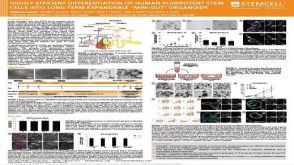 科学海报Highly Efficient Differentiation of Human Pluripotent Stem Cells into Long-term Expandable “Mini-gut” Organoids


 沪公网安备31010102008431号