Chen J and Chen Z-L (MAR 2010)
Chinese journal of cancer 29 3 265--9
Technology update for the sorting and identification of breast cancer stem cells.
Breast cancer stem cells are a group of undifferentiated cells with self-renewal and multidifferentiation potential. Chemotherapeutic and radiotherapeutic resistance,hypoxic resistance,high tumorigenicity,high cell invasion,and metastatic abilities are characteristics of these cells,which are responsible for breast cancer recurrence. Therefore,the correct sorting and identification of breast cancer stem cells is a primary step for research in this field. This article briefly describes the recent progress on sorting and identification technologies for breast cancer stem cells. Sorting technologies include the side population technique,technologies that depend on cell surface markers,ALDEFLUOR assays,and in situ detection. Identification technologies include mammosphere cultures,limited dilution in vitro,and in-vivo animal models. This review provides an important reference for breast cancer stem cell research,which will explore new methods for the treatment of patients with breast cancer.
View Publication
H. Cao et al. (JUN 2018)
Human gene therapy 29 6 643--652
Transducing Airway Basal Cells with a Helper-Dependent Adenoviral Vector for Lung Gene Therapy.
A major challenge in developing gene-based therapies for airway diseases such as cystic fibrosis (CF) is sustaining therapeutic levels of transgene expression over time. This is largely due to airway epithelial cell turnover and the host immunogenicity to gene delivery vectors. Modern gene editing tools and delivery vehicles hold great potential for overcoming this challenge. There is currently not much known about how to deliver genes into airway stem cells,of which basal cells are the major type in human airways. In this study,helper-dependent adenoviral (HD-Ad) vectors were delivered to mouse and pig airways via intranasal delivery,and direct bronchoscopic instillation,respectively. Vector transduction was assessed by immunostaining of lung tissue sections,which revealed that airway basal cells of mice and pigs can be targeted in vivo. In addition,efficient transduction of primary human airway basal cells was verified with an HD-Ad vector expressing green fluorescent protein. Furthermore,we successfully delivered the human CFTR gene to airway basal cells from CF patients,and demonstrated restoration of CFTR channel activity following cell differentiation in air-liquid interface culture. Our results provide a strong rationale for utilizing HD-Ad vectors to target airway basal cells for permanent gene correction of genetic airway diseases.
View Publication
产品类型:
产品号#:
05001
05021
05022
产品名:
PneumaCult™-ALI 培养基
PneumaCult™-ALI 培养基含12 mm Transwell®插件
PneumaCult™-ALI 培养基含6.5 mm Transwell®插件
文献
Allan AL et al. (MAY 2005)
Cytometry. Part A : the journal of the International Society for Analytical Cytology 65 1 4--14
Detection and quantification of circulating tumor cells in mouse models of human breast cancer using immunomagnetic enrichment and multiparameter flow cytometry.
BACKGROUND: Circulating tumor cells (CTCs) in the peripheral blood of breast cancer patients may be an important indicator of metastatic disease and poor prognosis. However,the use of experimental models is required to fully elucidate the functional consequences of CTCs. The purpose of this study was to optimize the sensitivity of multiparameter flow cytometry for detection of human tumor cells in mouse models of breast cancer. METHODS: MDA-MB-468 human breast cancer cells were serially diluted in whole mouse blood. Samples were lysed and incubated with a fluorescein isothiocyanate-conjugated anti-human leukocytic antigen antibody and a phycoerythrin-conjugated anti-mouse pan-leukocyte CD45 antibody. Samples were then immunomagnetically depleted of CD45-positive leukocytes,fixed,permeabilized,and stained with propidium iodide before flow cytometric analysis. RESULTS: Human breast cancer cells could be differentiated from mouse leukocytes based on increased light scatter,cell surface marker expression,and aneuploid DNA content. The method was found to have a lower sensitivity limit of 10(-5) and was effective for detecting human breast cancer cells in vivo in the circulation of experimental mice carrying primary human mammary tumors. CONCLUSIONS: This technique has the potential to be a valuable and sensitive tool for investigating the biological relevance of CTCs in experimental mouse models of breast cancer.
View Publication
产品类型:
产品号#:
产品名:
文献
Eirew P et al. (DEC 2008)
Nature medicine 14 12 1384--9
A method for quantifying normal human mammary epithelial stem cells with in vivo regenerative ability.
Previous studies have demonstrated that normal mouse mammary tissue contains a rare subset of mammary stem cells. We now describe a method for detecting an analogous subpopulation in normal human mammary tissue. Dissociated cells are suspended with fibroblasts in collagen gels,which are then implanted under the kidney capsule of hormone-treated immunodeficient mice. After 2-8 weeks,the gels contain bilayered mammary epithelial structures,including luminal and myoepithelial cells,their in vitro clonogenic progenitors and cells that produce similar structures in secondary transplants. The regenerated clonogenic progenitors provide an objective indicator of input mammary stem cell activity and allow the frequency and phenotype of these human mammary stem cells to be determined by limiting-dilution analysis. This new assay procedure sets the stage for investigations of mechanisms regulating normal human mammary stem cells (and possibly stem cells in other tissues) and their relationship to human cancer stem cell populations.
View Publication
Li T et al. (FEB 2010)
Laboratory investigation; a journal of technical methods and pathology 90 2 234--44
ALDH1A1 is a marker for malignant prostate stem cells and predictor of prostate cancer patients' outcome.
Prostate cancer (PCa) contains a small population of cancer stem cells (CSCs) that contribute to its initiation and progression. The development of specific markers for identification of the CSCs may lead to new diagnostic strategies of PCa. Increased aldehyde dehydrogenase 1A1 (ALDH1A1) activity has been found in the stem cell populations of leukemia and some solid tumors. The aim of the study was to investigate the stem-cell-related function and clinical significance of the ALDH1A1 in human PCa. ALDEFLUOR assay was used to isolate ALDH1A1(+) cells from PCa cell lines. Stem cell characteristics of the ALDH1A1(+) cells were then investigated by in vitro and in vivo approaches. The ALDH1A1 expression was also analyzed by immunohistochemistry in 18 normal prostate and 163 PCa tissues. The ALDH1A1(+) PCa cells showed high clonogenic and tumorigenic capacities,and serially reinitiated transplantable tumors that resembled histopathologic characteristics and heterogeneity of the parental PCa cells in mice. Immunohistochemical analysis of human prostate tissues showed that ALDH1A1(+) cells were sparse and limited to the basal component in normal prostates. However,in tumor specimens,increased ALDH1A1 immunopositivity was found not only in secretory type cancer epithelial cells but also in neuroendocrine tumor populations. Furthermore,the high ALDH1A1 expression in PCa was positively correlated with Gleason score (P=0.01) and pathologic stage (P=0.01),and inversely associated with overall survival and cancer-specific survival of the patients (P=0.00093 and 0.00017,respectively). ALDH1A1 could be a prostate CSC-related marker. Measuring its expression might provide a potential approach to study tumorigenesis of PCa and predict outcome of the disease.
View Publication
Kumar A et al. (JAN 2012)
Breast cancer research : BCR 14 1 R4
Evidence that GTP-binding domain but not catalytic domain of transglutaminase 2 is essential for epithelial-to-mesenchymal transition in mammary epithelial cells.
INTRODUCTION: The expression of proinflammatory protein tissue transglutaminase 2 (TG2) is frequently upregulated in multiple cancer cell types. However,the exact role of TG2 in cancer cells is not well-understood. We recently initiated studies to determine the significance of TG2 in cancer cells and observed that sustained expression of TG2 resulted in epithelial-to-mesenchymal transition (EMT) and promoted cancer stem cell (CSC) traits in mammary epithelial cells. These results suggested that TG2 could serve as a promising therapeutic target for overcoming chemoresistance and inhibiting metastatic spread of cancer cells. METHODS: Using various mutant constructs,we analyzed the activity of TG2 that is essential for promoting the EMT-CSC phenotype. RESULTS: Our results suggest that catalytically inactive TG2 (TG2-C277S) is as effective as wild-type TG2 (TG2-WT) in inducing the EMT-CSC in mammary epithelial cells. In contrast,overexpression of a GTP-binding-deficient mutant (TG2-R580A) was completely incompetent in this regard. Moreover,TG2-dependent activation of the proinflammatory transcription factor NF-κB is deemed essential for promoting the EMT-CSC phenotype in mammary epithelial cells. CONCLUSIONS: Our results suggest that the transamidation activity of TG2 is not essential for promoting its oncogenic functions and provide a strong rationale for developing small-molecule inhibitors to block GTP-binding pockets of TG2. Such inhibitors may have great potential for inhibiting the TG2-regulated pathways,reversing drug resistance and inhibiting the metastasis of cancer cells.
View Publication
产品类型:
产品号#:
05620
产品名:
MammoCult™人培养基试剂盒
文献
Croker AK et al. (AUG 2009)
Journal of cellular and molecular medicine 13 8B 2236--52
High aldehyde dehydrogenase and expression of cancer stem cell markers selects for breast cancer cells with enhanced malignant and metastatic ability.
Cancer stem cells (CSCs) have recently been identified in leukaemia and solid tumours; however,the role of CSCs in metastasis remains poorly understood. This dearth of knowledge about CSCs and metastasis is due largely to technical challenges associated with the use of primary human cancer cells in pre-clinical models of metastasis. Therefore,the objective of this study was to develop suitable pre-clinical model systems for studying stem-like cells in breast cancer metastasis,and to test the hypothesis that stem-like cells play a key role in metastatic behaviour. We assessed four different human breast cancer cell lines (MDA-MB-435,MDA-MB-231,MDA-MB-468,MCF-7) for expression of prospective CSC markers CD44/CD24 and CD133,and for functional activity of aldehyde dehydrogenase (ALDH),an enzyme involved in stem cell self-protection. We then used fluorescence-activated cell sorting and functional assays to characterize differences in malignant/metastatic behaviour in vitro (proliferation,colony-forming ability,adhesion,migration,invasion) and in vivo (tumorigenicity and metastasis). Sub-populations of cells demonstrating stem-cell-like characteristics (high expression of CSC markers and/or high ALDH) were identified in all cell lines except MCF-7. When isolated and compared to ALDH(low)CD44(low/-) cells,ALDH(hi)CD44(+)CD24(-) (MDA-MB-231) and ALDH(hi)CD44(+)CD133(+) (MDA-MB-468) cells demonstrated increased growth (P textless 0.05),colony formation (P textless 0.05),adhesion (P textless 0.001),migration (P textless 0.001) and invasion (P textless 0.001). Furthermore,following tail vein or mammary fat pad injection of NOD/SCID/IL2gamma receptor null mice,ALDH(hi)CD44(+)CD24(-) and ALDH(hi)CD44(+)CD133(+) cells showed enhanced tumorigenicity and metastasis relative to ALDH(low)CD44(low/-) cells (P textless 0.05). These novel results suggest that stem-like ALDH(hi)CD44(+)CD24(-) and ALDH(hi)CD44(+)CD133(+) cells may be important mediators of breast cancer metastasis.
View Publication


 EasySep™小鼠TIL(CD45)正选试剂盒




 实验方案How to Prepare Conditioned Medium for the Expansion of Epithelial Cells
 文献
文献 技术公告A Sphere Culture Method for Mucociliary Differentiation of Primary Human Bronchial Epithelial Cells
 科学海报Culture and Differentiation of Mouse Hepatic Organoids Using Serum-free HepatiCult™ Organoid Growth Medium
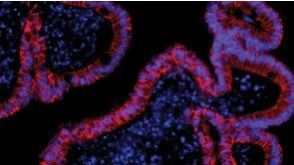 点播Mouse Intestinal Organoid Course Learn how to grow mouse intestinal organoids using the Intestinal Organoid Starter Kit.
 产品手册HepatiCult™ Organoid Growth Medium (Mouse)
 沪公网安备31010102008431号