Guo H-B et al. (DEC 2010)
Proceedings of the National Academy of Sciences of the United States of America 107 49 21116--21
Specific posttranslational modification regulates early events in mammary carcinoma formation.
The expression of an enzyme,GnT-V,that catalyzes a specific posttranslational modification of a family of glycoproteins,namely a branched N-glycan,is transcriptionally up-regulated during breast carcinoma oncogenesis. To determine the molecular basis of how early events in breast carcinoma formation are regulated by GnT-V,we studied both the early stages of mammary tumor formation by using 3D cell culture and a her-2 transgenic mouse mammary tumor model. Overexpression of GnT-V in MCF-10A mammary epithelial cells in 3D culture disrupted acinar morphogenesis with impaired hollow lumen formation,an early characteristic of mammary neoplastic transformation. The disrupted acinar morphogenesis of mammary tumor cells in 3D culture caused by her-2 expression was reversed in tumors that lacked GnT-V expression. Moreover,her-2-induced mammary tumor onset was significantly delayed in the GnT-V null tumors,evidence that the lack of the posttranslational modification catalyzed by GnT-V attenuated tumor formation. Inhibited activation of both PKB and ERK signaling pathways was observed in GnT-V null tumor cells. The proportion of tumor-initiating cells (TICs) in the mammary tumors from GnT-V null mice was significantly reduced compared with controls,and GnT-V null TICs displayed a reduced ability to form secondary tumors in NOD/SCID mice. These results demonstrate that GnT-V expression and its branched glycan products effectively modulate her-2-mediated signaling pathways that,in turn,regulate the relative proportion of tumor initiating cells and the latency of her-2-driven tumor onset.
View Publication
产品类型:
产品号#:
01700
01705
产品名:
ALDEFLUOR™ 试剂盒
ALDEFLUOR™ DEAB试剂
文献
Q. Zhou et al. (4 2023)
Gastroenterology 164 630-641.e34
Catechol-O-Methyltransferase Loss Drives Cell-Specific Nociceptive Signaling via the Enteric Catechol-O-Methyltransferase/microRNA-155/Tumor Necrosis Factor ? Axis
BACKGROUND & AIMS The etiology of abdominal pain in postinfectious,diarrhea-predominant irritable bowel syndrome (PI-IBS-D) is unknown,and few treatment options exist. Catechol-O-methyltransferase (COMT),an enzyme that inactivates and degrades biologically active catecholamines,plays an important role in numerous physiologic processes,including modulation of pain perception. Our objective was to determine the mechanism(s) of how decreased colonic COMT in PI-IBS-D patients contributes to the chronic abdominal pain phenotype after enteric infections. METHODS Colon neurons,epithelial cells,and macrophages were procured with laser capture microdissection from PI-IBS-D patients to evaluate cell-specific colonic COMT,microRNA-155 (miR-155),and tumor necrosis factor (TNF) ? expression levels compared to recovered patients (infection cleared: did not develop PI-IBS-D) and control individuals. COMT-/-,colon-specific COMT-/-,and miR-155-/- mice and human colonoids were used to model phenotypic expression of COMT in PI-IBS-D patients and to investigate signaling pathways linking abdominal pain. Citrobacter rodentium and trinitrobenzene sulfonic acid animal models were used to model postinflammatory changes seen in PI-IBS-D patients. RESULTS Colonic COMT levels were significantly decreased and correlated with increased visual analog scale abdominal pain ratings in PI-IBS-D patients compared to recovered patients and control individuals. Colonic miR-155 and TNF-? were increased in PI-IBS-D patients with diminished colonic COMT. COMT-/- mice had significantly increased expression of miR-155 and TNF-? in both colon tissues and dorsal root ganglia. Introduction of cV1q antibody (anti-TNF-?) into mice reversed visceral hypersensitivity after C rodentium and trinitrobenzene sulfonic acid. CONCLUSIONS Decreased colonic COMT in PI-IBS-D patients drives abdominal pain phenotypes via the COMT/miR-155/TNF-? axis. These important findings will allow new treatment paradigms and more targeted and personalized medicine approaches for gastrointestinal disorders after enteric infections.
View Publication
Ishikawa S and Ito S ( 2016)
Toxicology in Vitro 38 170--178
Repeated whole cigarette smoke exposure alters cell differentiation and augments secretion of inflammatory mediators in air-liquid interface three-dimensional co-culture model of human bronchial tissue
In vitro models of human bronchial epithelium are useful for toxicological testing because of their resemblance to in vivo tissue. We constructed a model of human bronchial tissue which has a fibroblast layer embedded in a collagen matrix directly below a fully-differentiated epithelial cell layer. The model was applied to whole cigarette smoke (CS) exposure repeatedly from an air-liquid interface culture while bronchial epithelial cells were differentiating. The effects of CS exposure on differentiation were determined by histological and gene expression analyses on culture day 21. We found a decrease in ciliated cells and perturbation of goblet cell differentiation. We also analyzed the effects of CS exposure on the inflammatory response,and observed a significant increase in secretion of IL-8,GRO-α,IL-1β,and GM-CSF. Interestingly,secretion of these mediators was augmented with repetition of whole CS exposure. Our data demonstrate the usefulness of our bronchial tissue model for in vitro testing and the importance of exposure repetition in perturbing the differentiation and inflammation processes.
View Publication
产品类型:
产品号#:
05001
05021
05022
产品名:
PneumaCult™-ALI 培养基
PneumaCult™-ALI 培养基含12 mm Transwell®插件
PneumaCult™-ALI 培养基含6.5 mm Transwell®插件
文献
Stevenson C et al. (AUG 2017)
Inflammation research : official journal of the European Histamine Research Society ... [et al.] 66 8 691--700
OBJECTIVE To evaluate the effects of MUC18 on IL-13-mediated airway inflammatory responses in human airway epithelial cells and in mice. MATERIALS Primary normal human tracheobronchial epithelial (HTBE) cells,wild-type (WT) and Muc18 knockout (KO) mice,and mouse tracheal epithelial cells (mTECs) were utilized. TREATMENT Cultured HTBE cells treated with MUC18 siRNA or MUC18 expressing lentivirus were incubated with IL-13 (10 ng/mL) for 24 h. Mice were intranasally instilled with 500 ng of IL-13 for 3 days. mTECs were treated with IL-13 (10 ng/mL) for 3 days. METHODS PCR was used to measure mRNA expression. Western Blot and ELISAs were used to quantify protein expression. Cytospins of bronchoalveolar lavage (BAL) cells were used to obtain leukocyte differentials. RESULTS MUC18 siRNA reduced IL-13-mediated eotaxin-3 (183 ± 44 vs. 380 ± 59 pg/mL,p < 0.05),while MUC18 overexpression increased IL-13-mediated eotaxin-3 (95 ± 3 vs. 58 ± 3 pg/mL,p < 0.05) in HTBE cells. IL-13-treated Muc18 KO mice had a lower percentage of neutrophils in BAL than WT mice (25 ± 3 vs. 35 ± 3%,p = 0.0565). CONCLUSIONS These results implicate MUC18 as a potential enhancer of airway inflammation in a type 2 cytokine (e.g.,IL-13) milieu.
View Publication


 EasySep™小鼠TIL(CD45)正选试剂盒




 文献
文献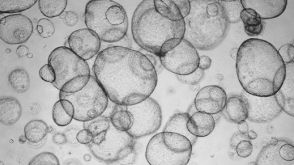 实验方案How to Perform Albumin Detection Assays in Human Hepatic Organoids
 科学海报Modelling Pancreatic Cancer Through Pancreatic Exocrine Organoids Using PancreaCult™ Serum-free Medium
 技术公告Forskolin-Induced Swelling of Human Intestinal Organoids Grown in IntestiCult™

 沪公网安备31010102008431号