Safinia N et al. (FEB 2016)
Oncotarget 7 7 7563--77
Successful expansion of functional and stable regulatory T cells for immunotherapy in liver transplantation.
Strategies to prevent organ transplant rejection whilst minimizing long-term immunosuppression are currently under intense investigation with regulatory T cells (Tregs) nearing clinical application. The clinical trial,ThRIL,recently commenced at King's College London,proposes to use Treg cell therapy to induce tolerance in liver transplant recipients,the success of which has the potential to revolutionize the management of these patients and enable a future of drug-free transplants. This is the first report of the manufacture of clinical grade Tregs from prospective liver transplant recipients via a CliniMACS-based GMP isolation technique and expanded using anti-CD3/CD28 beads,IL-2 and rapamycin. We report the enrichment of a pure,stable population of Tregs (textgreater95% CD4(+)CD25(+)FOXP3(+)),reaching adequate numbers for their clinical application. Our protocol proved successful in,influencing the expansion of superior functional Tregs,as compared to freshly isolated cells,whilst also preventing their conversion to Th17 cells under pro-inflammatory conditions. We conclude with the manufacture of the final Treg product in the clinical research facility (CRF),a prerequisite for the clinical application of these cells. The data presented in this manuscript together with the much-anticipated clinical results from ThRIL,will undoubtedly inform the improved management of the liver transplant recipient.
View Publication
产品类型:
产品号#:
07930
07931
07940
07955
07956
07959
07954
产品名:
CryoStor® CS10
CryoStor® CS10
CryoStor® CS10
CryoStor® CS10
CryoStor® CS10
Kishimoto RK et al. (APR 2016)
Revista brasileira de hematologia e hemoterapia 38 2 113--20
Validation of interphase fluorescence in situ hybridization (iFISH) for multiple myeloma using CD138 positive cells.
BACKGROUND Multiple myeloma is a plasma cell neoplasm with acquired genetic abnormalities of clinical and prognostic importance. Multiple myeloma differs from other hematologic malignancies due to a high fraction of low proliferating malignant plasma cells and the paucity of plasma cells in bone marrow aspiration samples,making cytogenetic analysis a challenge. An abnormal karyotype is found in only one-third of patients with multiple myeloma and interphase fluorescence in situ hybridization is the most useful test for studying the chromosomal abnormalities present in almost 90% of cases. However,it is necessary to study the genetic abnormalities in plasma cells after their identification or selection by morphology,immunophenotyping or sorting. Other challenges are the selection of the most informative FISH panel and determining cut-off levels for FISH probes. This study reports the validation of interphase fluorescence in situ hybridization using CD138 positive cells,according to proposed guidelines published by the European Myeloma Network (EMN) in 2012. METHOD Bone marrow samples from patients with multiple myeloma were used to standardize a panel of five probes [1q amplification,13q14 deletion,17p deletion,t(4;14),and t(14;16)] in CD138(+) cells purified by magnetic cell sorting. RESULTS This test was validated with a low turnaround time and good reproducibility. Five of six samples showed genetic abnormalities. Monosomy/deletion 13 plus t(4;14) were found in two cases. CONCLUSION This technique together with magnetic cell sorting is effective and can be used in the routine laboratory practice. In addition,magnetic cell sorting provides a pure plasma cell population that allows other molecular and genomic studies.
View Publication
产品类型:
产品号#:
18387
18387RF
产品名:
Ng PP et al. (OCT 2006)
Blood 108 8 2745--54
Molecular events contributing to cell death in malignant human hematopoietic cells elicited by an IgG3-avidin fusion protein targeting the transferrin receptor.
We have previously reported that an anti-human transferrin receptor IgG3-avidin fusion protein (anti-hTfR IgG3-Av) inhibits the proliferation of an erythroleukemia-cell line. We have now found that anti-hTfR IgG3-Av also inhibits the proliferation of additional human malignant B and plasma cells. Anti-hTfR IgG3-Av induces internalization and rapid degradation of the TfR. These events can be reproduced in cells treated with anti-hTfR IgG3 cross-linked with a secondary Ab,suggesting that they result from increased TfR cross-linking. Confocal microscopy of cells treated with anti-hTfR IgG3-Av shows that the TfR is directed to an intracellular compartment expressing the lysosomal marker LAMP-1. The degradation of TfR is partially blocked by cysteine protease inhibitors. Furthermore,cells treated with anti-hTfR IgG3-Av exhibit mitochondrial depolarization and activation of caspases 9,8,and 3. The mitochondrial damage and cell death can be prevented by iron supplementation,but cannot be fully blocked by a pan-caspase inhibitor. These results suggest that anti-hTfR IgG3-Av induces lethal iron deprivation,but the resulting cell death does not solely depend on caspase activation. This report provides insights into the mechanism of cell death induced by anti-TfR Abs such as anti-hTfR IgG3-Av,a molecule that may be useful in the treatment of B-cell malignancies such as multiple myeloma.
View Publication
Ayasoufi K et al. (APR 2016)
Journal of Immunology 196 7 3180--90
CD4 T Cell Help via B Cells Is Required for Lymphopenia-Induced CD8 T Cell Proliferation.
Ab-mediated lymphoablation is commonly used in solid organ and hematopoietic cell transplantation. However,these strategies fail to control pathogenic memory T cells efficiently and to improve long-term transplant outcomes significantly. Understanding the mechanisms of T cell reconstitution is critical for enhancing the efficacy of Ab-mediated depletion in sensitized recipients. Using a murine analog of anti-thymocyte globulin (mATG) in a mouse model of cardiac transplantation,we previously showed that peritransplant lymphocyte depletion induces rapid memory T cell proliferation and only modestly prolongs allograft survival. We now report that T cell repertoire following depletion is dominated by memory CD4 T cells. Additional depletion of these residual CD4 T cells severely impairs the recovery of memory CD8 T cells after mATG treatment. The CD4 T cell help during CD8 T cell recovery depends on the presence of B cells expressing CD40 and intact CD40/CD154 interactions. The requirement for CD4 T cell help is not limited to the use of mATG in heart allograft recipients,and it is observed in nontransplanted mice and after CD8 T cell depletion with mAb instead of mATG. Most importantly,limiting helper signals increases the efficacy of mATG in controlling memory T cell expansion and significantly extends heart allograft survival in sensitized recipients. Our findings uncover the novel role for helper memory CD4 T cells during homeostatic CD8 T cell proliferation and open new avenues for optimizing lymphoablative therapies in allosensitized patients.
View Publication
产品类型:
产品号#:
19851
19851RF
产品名:
EasySep™小鼠T细胞分选试剂盒
RoboSep™ 小鼠T细胞分选试剂盒
Foley JF et al. (APR 2005)
Journal of immunology (Baltimore,Md. : 1950) 174 8 4892--900
Roles for CXC chemokine ligands 10 and 11 in recruiting CD4+ T cells to HIV-1-infected monocyte-derived macrophages, dendritic cells, and lymph nodes.
We investigated roles for chemoattractants in dissemination of HIV-1 by examining the induction of T cell-active chemokines in HIV-1-infected human monocyte-derived macrophages and dendritic cells. Of the 12 chemokines analyzed,mRNAs for two,CXCL10 and CXCL11,ligands for the chemokine receptor CXCR3,were up-regulated in both cell types upon infection by HIV-1. Induction of these chemokine genes in infected cultures was dependent on both viral entry and reverse transcriptase activity,but not on the HIV-1 envelope glycoprotein. Conditioned medium from infected cells was chemotactic for freshly isolated human CD4+ T cells,and chemotaxis was abolished by pretreatment with an Ab against CXCR3. A lymph node from an HIV-1-infected individual expressed CXCL10 and CXCL11 mRNAs in the paracortex,including venules,as detected by in situ hybridization,whereas neither mRNA was detected after highly active antiretroviral therapy. Because CCR5 on CD4+ T cells is found predominantly on cells that also express CXCR3,these data implicate CXCL10 and CXCL11 in the recruitment of susceptible T cells to HIV-1-infected lymph nodes,macrophages,and dendritic cells. This recruitment might enhance the sequestration of T cells in infected lymphoid organs and the spread of infection between cells,contributing to the immunopathology of AIDS.
View Publication
产品类型:
产品号#:
15022
15062
产品名:
RosetteSep™人CD4+ T细胞富集抗体混合物
RosetteSep™人CD4+ T细胞富集抗体混合物
Kennah E et al. (MAY 2009)
Blood 113 19 4646--55
Identification of tyrosine kinase, HCK, and tumor suppressor, BIN1, as potential mediators of AHI-1 oncogene in primary and transformed CTCL cells.
AHI-1 is an oncogene often targeted by provirus insertional mutagenesis in murine leukemias and lymphomas. Aberrant expression of human AHI-1 occurs in cutaneous T-cell lymphoma (CTCL) cells and in CD4(+)CD7(-) Sezary cells from patients with Sezary syndrome. Stable knockdown of AHI-1 using retroviral-mediated RNA interference in CTCL cells inhibits their transforming activity in vitro and in vivo. To identify genes involved in AHI-1-mediated transformation,microarray analysis was performed to identify differentially expressed genes in AHI-1-suppressed CTCL cells. Fifteen up-regulated and 6 down-regulated genes were identified and confirmed by quantitative reverse transcription-polymerase chain reaction. Seven were further confirmed in a microarray analysis of CD4(+)CD7(-) Sezary cells from Sezary syndrome patients. HCK and BIN1 emerged as new candidate cooperative genes,with differential protein expression,which correlates with observed transcript changes. Interestingly,changes in HCK phosphorylation and biologic response to its inhibitor,dasatinib,were observed in AHI-1-suppressed or -overexpressed cells. The tumor suppressor BIN1 physically interacts with MYC in CTCL cells,which also exhibit differential MYC protein expression. In addition,aberrant expression of alternative splicing forms of BIN1 was observed in primary and transformed CTCL cells. These findings indicate that HCK and BIN1 may play critical roles in AHI-1-mediated leukemic transformation of human CTCL cells.
View Publication
产品类型:
产品号#:
15021
15061
产品名:
RosetteSep™人T细胞富集抗体混合物
RosetteSep™人T细胞富集抗体混合物
Garnache-Ottou F et al. (FEB 2005)
Blood 105 3 1256--64
Expression of the myeloid-associated marker CD33 is not an exclusive factor for leukemic plasmacytoid dendritic cells.
A new entity of acute leukemia coexpressing CD4(+)CD56(+) markers without any other lineage-specific markers has been identified recently as arising from lymphoid-related plasmacytoid dendritic cells (pDCs). In our laboratory,cells from a patient with such CD4(+)CD56(+) lineage-negative leukemia were unexpectedly found to also express the myeloid marker CD33. To confirm the diagnosis of pDC leukemia despite the CD33 expression,we demonstrated that the leukemic cells indeed exhibited pDC phenotypic and functional properties. In 7 of 8 other patients with CD4(+)CD56(+) pDC malignancies,we were able to confirm that the tumor cells expressed CD33 although with variable expression levels. CD33 expression was shown by flow cytometry,reverse transcriptase-polymerase chain reaction,and immunoblot analysis. Furthermore,CD33 monoclonal antibody stimulation of purified CD4(+)CD56(+) leukemic cells led to cytokine secretion,thus confirming the presence of a functional CD33 on these leukemic cells. Moreover,we found that circulating pDCs in healthy individuals also weakly express CD33. Overall,our results demonstrate that the expression of CD33 on CD4(+)CD56(+) lineage-negative cells should not exclude the diagnosis of pDC leukemia and underline that pDC-specific markers should be used at diagnosis for CD4(+)CD56(+) malignancies.
View Publication
A Cas9 Ribonucleoprotein Platform for Functional Genetic Studies of HIV-Host Interactions in Primary Human T Cells.
New genetic tools are needed to understand the functional interactions between HIV and human host factors in primary cells. We recently developed a method to edit the genome of primary CD4(+) T cells by electroporation of CRISPR/Cas9 ribonucleoproteins (RNPs). Here,we adapted this methodology to a high-throughput platform for the efficient,arrayed editing of candidate host factors. CXCR4 or CCR5 knockout cells generated with this method are resistant to HIV infection in a tropism-dependent manner,whereas knockout of LEDGF or TNPO3 results in a tropism-independent reduction in infection. CRISPR/Cas9 RNPs can furthermore edit multiple genes simultaneously,enabling studies of interactions among multiple host and viral factors. Finally,in an arrayed screen of 45 genes associated with HIV integrase,we identified several candidate dependency/restriction factors,demonstrating the power of this approach as a discovery platform. This technology should accelerate target validation for pharmaceutical and cell-based therapies to cure HIV infection.
View Publication
产品类型:
产品号#:
19052
19052RF
产品名:
EasySep™人CD4+ T细胞富集试剂盒
RoboSep™ 人CD4+ T细胞富集试剂盒含滤芯吸头
Daniels TR et al. (NOV 2007)
Molecular cancer therapeutics 6 11 2995--3008
Conjugation of an anti transferrin receptor IgG3-avidin fusion protein with biotinylated saporin results in significant enhancement of its cytotoxicity against malignant hematopoietic cells.
We have previously developed an antibody fusion protein composed of a mouse/human chimeric IgG3 specific for the human transferrin receptor genetically fused to avidin (anti-hTfR IgG3-Av) as a universal delivery system for cancer therapy. This fusion protein efficiently delivers biotinylated FITC into cancer cells via TfR-mediated endocytosis. In addition,anti-hTfR IgG3-Av alone exhibits intrinsic cytotoxic activity and interferes with hTfR recycling,leading to the rapid degradation of the TfR and lethal iron deprivation in certain malignant B-cell lines. We now report on the cytotoxic effects of a conjugate composed of anti-hTfR IgG3-Av and biotinylated saporin 6 (b-SO6),a toxin derived from the plant Saponaria officinalis that inhibits protein synthesis. Conjugation of anti-hTfR IgG3-Av with b-SO6 enhances the cytotoxic effect of the fusion protein in sensitive cells and also overcomes the resistance of malignant cells that show low sensitivity to the fusion protein alone. Our results show for the first time that loading anti-hTfR IgG3-Av with a biotinylated toxin enhances the cytotoxicity of the fusion protein alone. These results suggest that anti-hTfR IgG3-Av has great potential as a therapeutic agent for a wide range of applications due to its intrinsic cytotoxic activity plus its ability to deliver biotinylated molecules into cancer cells.
View Publication
产品类型:
产品号#:
18357
18357RF
产品名:
Quintarelli C et al. (MAR 2011)
Blood 117 12 3353--62
High-avidity cytotoxic T lymphocytes specific for a new PRAME-derived peptide can target leukemic and leukemic-precursor cells.
The cancer testis antigen (CTA) preferentially expressed antigen of melanoma (PRAME) is overexpressed by many hematologic malignancies,but is absent on normal tissues,including hematopoietic progenitor cells,and may therefore be an appropriate candidate for T cell-mediated immunotherapy. Because it is likely that an effective antitumor response will require high-avidity,PRAME-specific cytotoxic T lymphocytes (CTLs),we attempted to generate such CTLs using professional and artificial antigen-presenting cells loaded with a peptide library spanning the entire PRAME protein and consisting of 125 synthetic pentadecapeptides overlapping by 11 amino acids. We successfully generated polyclonal,PRAME-specific CTL lines and elicited high-avidity CTLs,with a high proportion of cells recognizing a previously uninvestigated HLA-A*02-restricted epitope,P435-9mer (NLTHVLYPV). These PRAME-CTLs could be generated both from normal donors and from subjects with PRAME(+) hematologic malignancies. The cytotoxic activity of our PRAME-specific CTLs was directed not only against leukemic blasts,but also against leukemic progenitor cells as assessed by colony-forming-inhibition assays,which have been implicated in leukemia relapse. These PRAME-directed CTLs did not affect normal hematopoietic progenitors,indicating that this approach may be of value for immunotherapy of PRAME(+) hematologic malignancies.
View Publication
产品类型:
产品号#:
产品名:
Xu MM et al. (AUG 2017)
Immunity 47 2 363--373.e5
Dendritic Cells but Not Macrophages Sense Tumor Mitochondrial DNA for Cross-priming through Signal Regulatory Protein α Signaling.
Inhibition of cytosolic DNA sensing represents a strategy that tumor cells use for immune evasion,but the underlying mechanisms are unclear. Here we have shown that CD47-signal regulatory protein α (SIRPα) axis dictates the fate of ingested DNA in DCs for immune evasion. Although macrophages were more potent in uptaking tumor DNA,increase of DNA sensing by blocking the interaction of SIRPα with CD47 preferentially occurred in dendritic cells (DCs) but not in macrophages. Mechanistically,CD47 blockade enabled the activation of NADPH oxidase NOX2 in DCs,which in turn inhibited phagosomal acidification and reduced the degradation of tumor mitochondrial DNA (mtDNA) in DCs. mtDNA was recognized by cyclic-GMP-AMP synthase (cGAS) in the DC cytosol,contributing to type I interferon (IFN) production and antitumor adaptive immunity. Thus,our findings have demonstrated how tumor cells inhibit innate sensing in DCs and suggested that the CD47-SIRPα axis is critical for DC-driven antitumor immunity.
View Publication


 EasySep™小鼠TIL(CD45)正选试剂盒





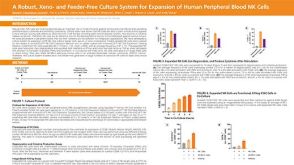 科学海报A Robust, Xeno- and Feeder-Free Culture System for Expansion of Human Peripheral Blood NK Cells
 沪公网安备31010102008431号