Restriction of HIV-1 replication in macrophages and CD4+ T cells from HIV controllers.
How HIV controllers (HICs) maintain undetectable viremia without therapy is unknown. The strong CD8(+) T-cell HIV suppressive capacity found in many,but not all,HICs may contribute to long-lasting viral control. However,other earlier defense mechanisms may be involved. Here,we examined intrinsic HIC cell resistance to HIV-1 infection. After in vitro challenge,monocyte-derived macrophages and anti-CD3-activated CD4(+) T cells from HICs showed low HIV-1 susceptibility. CD4 T-cell resistance was independent of HIV-1 coreceptors and affected also SIVmac infection. CD4(+) T cells from HICs expressed ex vivo higher levels of p21(Waf1/Cip1),which has been involved in the control of HIV-1 replication,than cells from control subjects. However,HIV restriction in anti-CD3-activated CD4(+) T cells and macrophages was not associated with p21 expression. Restriction inhibited accumulation of reverse transcripts,leading to reduction of HIV-1 integrated proviruses. The block could be overcome by high viral inocula,suggesting the action of a saturable mechanism. Importantly,cell-associated HIV-1 DNA load was extremely low in HICs and correlated with CD4(+) T-cell permissiveness to infection. These results point to a contribution of intrinsic cell resistance to the control of infection and the containment of viral reservoir in HICs.
View Publication
产品类型:
产品号#:
21000
20119
20155
产品名:
RoboSep™- S
RoboSep™ 吸头组件抛光剂
RoboSep™分选试管套装(9个塑料管+吸头保护器)
Smalls-Mantey A et al. ( 2013)
PloS one 8 9 e74858
Comparative efficiency of HIV-1-infected T cell killing by NK cells, monocytes and neutrophils.
HIV-1 infected cells are eliminated in infected individuals by a variety of cellular mechanisms,the best characterized of which are cytotoxic T cell and NK cell-mediated killing. An additional antiviral mechanism is antibody-dependent cellular cytotoxicity. Here we use primary CD4(+) T cells infected with the BaL clone of HIV-1 as target cells and autologous NK cells,monocytes,and neutrophils as effector cells,to quantify the cytotoxicity mediated by the different effectors. This was carried out in the presence or absence of HIV-1-specific antiserum to assess antibody-dependent cellular cytotoxicity. We show that at the same effector to target ratio,NK cells and monocytes mediate similar levels of both antibody-dependent and antibody-independent killing of HIV-1-infected T cells. Neutrophils mediated significant antibody-dependent killing of targets,but were less effective than monocytes or NK cells. These data have implications for acquisition and control of HIV-1 in natural infection and in the context of vaccination.
View Publication
产品类型:
产品号#:
19257
19257RF
19055
19055RF
19059
19059RF
产品名:
EasySep™人NK细胞富集试剂盒
RoboSep™ 人NK细胞富集试剂盒含滤芯吸头
EasySep™人单核细胞富集试剂盒
RoboSep™ 人单核细胞富集试剂盒含滤芯吸头
Carter CC et al. (APR 2010)
Nature medicine 16 4 446--51
HIV-1 infects multipotent progenitor cells causing cell death and establishing latent cellular reservoirs.
HIV causes a chronic infection characterized by depletion of CD4(+) T lymphocytes and the development of opportunistic infections. Despite drugs that inhibit viral spread,HIV infection has been difficult to cure because of uncharacterized reservoirs of infected cells that are resistant to highly active antiretroviral therapy (HAART) and the immune response. Here we used CD34(+) cells from infected people as well as in vitro studies of wild-type HIV to show infection and killing of CD34(+) multipotent hematopoietic progenitor cells (HPCs). In some HPCs,we detected latent infection that stably persisted in cell culture until viral gene expression was activated by differentiation factors. A unique reporter HIV that directly detects latently infected cells in vitro confirmed the presence of distinct populations of active and latently infected HPCs. These findings have major implications for understanding HIV bone marrow pathology and the mechanisms by which HIV causes persistent infection.
View Publication
产品类型:
产品号#:
18056
18056RF
产品名:
Walter JE et al. (JUL 2010)
The Journal of experimental medicine 207 7 1541--54
Expansion of immunoglobulin-secreting cells and defects in B cell tolerance in Rag-dependent immunodeficiency.
The contribution of B cells to the pathology of Omenn syndrome and leaky severe combined immunodeficiency (SCID) has not been previously investigated. We have studied a mut/mut mouse model of leaky SCID with a homozygous Rag1 S723C mutation that impairs,but does not abrogate,V(D)J recombination activity. In spite of a severe block at the pro-B cell stage and profound B cell lymphopenia,significant serum levels of immunoglobulin (Ig) G,IgM,IgA,and IgE and a high proportion of Ig-secreting cells were detected in mut/mut mice. Antibody responses to trinitrophenyl (TNP)-Ficoll and production of high-affinity antibodies to TNP-keyhole limpet hemocyanin were severely impaired,even after adoptive transfer of wild-type CD4(+) T cells. Mut/mut mice produced high amounts of low-affinity self-reactive antibodies and showed significant lymphocytic infiltrates in peripheral tissues. Autoantibody production was associated with impaired receptor editing and increased serum B cell-activating factor (BAFF) concentrations. Autoantibodies and elevated BAFF levels were also identified in patients with Omenn syndrome and leaky SCID as a result of hypomorphic RAG mutations. These data indicate that the stochastic generation of an autoreactive B cell repertoire,which is associated with defects in central and peripheral checkpoints of B cell tolerance,is an important,previously unrecognized,aspect of immunodeficiencies associated with hypomorphic RAG mutations.
View Publication
产品类型:
产品号#:
19754
19754RF
产品名:
D. M. Previte et al. (apr 2019)
Cell reports 27 1 129--141.e4
Lymphocyte Activation Gene-3 Maintains Mitochondrial and Metabolic Quiescence in Naive CD4+ T Cells.
Lymphocyte activation gene-3 (LAG-3) is an inhibitory receptor expressed by CD4+ T cells and tempers their homeostatic expansion. Because CD4+ T cell proliferation is tightly coupled to bioenergetics,we investigate the role of LAG-3 in modulating naive CD4+ T cell metabolism. LAG-3 deficiency enhances the metabolic profile of naive CD4+ T cells by elevating levels of mitochondrial biogenesis. In vivo,LAG-3 blockade partially restores expansion and the metabolic phenotype of wild-type CD4+ T cells to levels of Lag3-/- CD4+ T cells,solidifying that LAG-3 controls these processes. Lag3-/- CD4+ T cells also demonstrate greater signal transducer and activator of transcription 5 (STAT5) activation,enabling resistance to interleukin-7 (IL-7) deprivation. These results implicate this pathway as a target of LAG-3-mediated inhibition. Additionally,enhancement of STAT5 activation,as a result of LAG-3 deficiency,contributes to greater activation potential in these cells. These results identify an additional mode of regulation elicited by LAG-3 in controlling CD4+ T cell responses.
View Publication
产品类型:
产品号#:
19852
19852RF
产品名:
EasySep™小鼠CD4+ T细胞分选试剂盒
RoboSep™ 小鼠CD4+ T细胞分选试剂盒
Franç et al. (SEP 2009)
Blood 114 13 2632--8
Mesenchymal stromal cells cross-present soluble exogenous antigens as part of their antigen-presenting cell properties.
Recent studies involving bone marrow mesenchymal stromal cells (MSCs) demonstrated that interferon (IFN)-gamma stimulation induces major histocompatibility complex (MHC) class II-mediated antigen presentation in MSCs both in vitro and in vivo. Concordantly,we investigated the ability of MSCs to present extracellular antigen through their MHC class I molecules,a process known as cross-presentation. Using an in vitro antigen presentation assay,we demonstrated that murine MSCs can cross-present soluble ovalbumin (OVA) to naive CD8(+) T cells from OT-I mice. Cross-presentation by MSC was proteasome dependent and partly dependent on transporter associated with antigen-processing molecules. Pretreatment of MSC with IFN-gamma increased cross-presentation by up-regulating antigen processing and presentation. However,although the transcription of the transporter associated with antigen processing-1 molecules and the immunoproteasome subunit LMP2 induced by IFN-gamma was inhibited by transforming growth factor-beta,the overall cross-presentation capacity of MSCs remained unchanged after transforming growth factor-beta treatment. These observations were validated in vivo by performing an immune reconstitution assay in beta(2)-microglobulin(-/-) mice and show that OVA cross-presentation by MSCs induces the proliferation of naive OVA-specific CD8(+) T cells. In conclusion,we demonstrate that MSCs can cross-present exogenous antigen and induce an effective CD8(+) T-cell immune response,a property that could be exploited as a therapeutic cell-based immune biopharmaceutic for the treatment of cancer or infectious diseases.
View Publication
产品类型:
产品号#:
19753
19753RF
产品名:
Schlecht G et al. (SEP 2004)
Blood 104 6 1808--15
Murine plasmacytoid dendritic cells induce effector/memory CD8+ T-cell responses in vivo after viral stimulation.
Like their human counterparts,mouse plasmacytoid dendritic cells (pDCs) play a central role in innate immunity against viral infections,but their capacity to prime T cells in vivo remains unknown. We show here that virus-activated pDCs differentiate into antigen-presenting cells able to induce effector/memory CD8(+) T-cell responses in vivo against both epitopic peptides and endogenous antigen,whereas pDCs activated by synthetic oligodeoxynucleotides containing unmethylated cytosine-guanine motifs (CpG) acquire only the ability to recall antigen-experienced T-cell responses. We also show that immature pDCs are unable to induce effector or regulatory CD8(+) T-cell responses. Thus,murine pDCs take part in both innate and adaptive immune responses by directly priming naive CD8(+) T cells during viral infection.
View Publication
产品类型:
产品号#:
09600
09650
产品名:
StemSpan™ SFEM
StemSpan™ SFEM
Blanco J et al. (DEC 2004)
The Journal of biological chemistry 279 49 51305--14
High level of coreceptor-independent HIV transfer induced by contacts between primary CD4 T cells.
Cell-to-cell virus transmission is one of the most efficient mechanisms of human immunodeficiency virus (HIV) spread,requires CD4 and coreceptor expression in target cells,and may also lead to syncytium formation and cell death. Here,we show that in addition to this classical coreceptor-mediated transmission,the contact between HIV-producing cells and primary CD4 T cells lacking the appropriate coreceptor induced the uptake of HIV particles by target cells in the absence of membrane fusion or productive HIV replication. HIV uptake by CD4 T cells required cellular contacts mediated by the binding of gp120 to CD4 and intact actin cytoskeleton. HIV antigens taken up by CD4 T cells were rapidly endocytosed to trypsin-resistant compartments inducing a partial disappearance of CD4 molecules from the cell surface. Once the cellular contact was stopped,captured HIV were released as infectious particles. Electron microscopy revealed that HIV particles attached to the surface of target cells and accumulated in large (0.5-1.0 microm) intracellular vesicles containing 1-14 virions,without any evidence for massive clathrin-mediated HIV endocytosis. The capture of HIV particles into trypsin-resistant compartments required the availability of the gp120 binding site of CD4 but was independent of the intracytoplasmic tail of CD4. In conclusion,we describe a novel mechanism of HIV transmission,activated by the contact of infected and uninfected primary CD4 T cells,by which HIV could exploit CD4 T cells lacking the appropriate coreceptor as an itinerant virus reservoir.
View Publication
产品类型:
产品号#:
15022
15062
产品名:
RosetteSep™人CD4+ T细胞富集抗体混合物
RosetteSep™人CD4+ T细胞富集抗体混合物
Hou TZ et al. ( 2015)
The Journal of Immunology 194 5 2148--2159
A Transendocytosis Model of CTLA-4 Function Predicts Its Suppressive Behavior on Regulatory T Cells
Manipulation of the CD28/CTLA-4 pathway is at the heart of a number of immunomodulatory approaches used in both autoimmunity and cancer. Although it is clear that CTLA-4 is a critical regulator of T cell responses,the immunological contexts in which CTLA-4 controls immune responses are not well defined. In this study,we show that whereas CD80/CD86-dependent activation of resting human T cells caused extensive T cell proliferation and robust CTLA-4 expression,in this context CTLA-4 blocking Abs had no impact on the response. In contrast,in settings where CTLA-4(+) cells were present as regulators�
View Publication
产品类型:
产品号#:
18062
18062RF
17951
17951RF
19155
19155RF
19232
19232RF
19052
19052RF
19059
19059RF
产品名:
EasySep™人T细胞分选试剂盒
RoboSep™ 人T细胞分选试剂盒
EasySep™ 人CD4+CD127lowCD49d-调节性T细胞富集试剂盒
RoboSep™ CD4+ CD127low CD49d-调节性T细胞富集试剂盒
EasySep™人CD4+ T细胞富集试剂盒
RoboSep™ 人CD4+ T细胞富集试剂盒含滤芯吸头
EasySep™人单核细胞富集试剂盒
RoboSep™ 人单核细胞富集试剂盒含滤芯吸头
M. Epeldegui et al. (jun 2019)
Scientific reports 9 1 9371
Elevated numbers of PD-L1 expressing B cells are associated with the development of AIDS-NHL.
The risk for non-Hodgkin lymphoma (NHL) is markedly increased in persons living with human immunodeficiency virus (HIV) infection,and remains elevated in those on anti-retroviral therapy (cART). Both the loss of immunoregulation of Epstein-Barr virus (EBV) infected cells,as well as chronic B-cell activation,are believed to contribute to the genesis of AIDS-related NHL (AIDS-NHL). However,the mechanisms that lead to AIDS-NHL have not been completely defined. A subset of B cells that is characterized by the secretion of IL10,as well as the expression of the programmed cell death ligand-1 (PD-L1/CD274),was recently described. These PD-L1+ B cells can exert regulatory function,including the dampening of T-cell activation,by interacting with the program cell death protein (PD1) on target cells. The role of PD-L1+ B cells in the development of AIDS-NHL has not been explored. We assessed B cell PD-L1 expression on B cells preceding AIDS-NHL diagnosis in a nested case-control study of HIV+ subjects who went on to develop AIDS-NHL,as well as HIV+ subjects who did not,using multi-color flow cytometry. Archival frozen viable PBMC were obtained from the UCLA Multicenter AIDS Cohort Study (MACS). It was seen that the number of CD19+CD24++CD38++and CD19+PD-L1+cells was significantly elevated in cases 1-4 years prior to AIDS-NHL diagnosis,compared to controls,raising the possibility that these cells may play a role in the etiology of AIDS-NHL. Interestingly,most PD-L1+ expression on CD19+ cells was seen on CD19+CD24++CD38++ cells. In addition,we showed that HIV can directly induce PD-L1 expression on B cells through interaction of virion-associated CD40L with CD40 on B cells.
View Publication


 EasySep™小鼠TIL(CD45)正选试剂盒




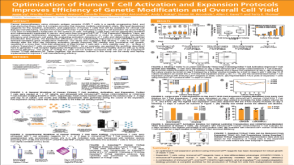 科学海报Optimization of Human T Cell Activation and Expansion Protocols Improves Efficiency of Genetic Modification and Overall Cell Yield


 沪公网安备31010102008431号