Hoxa3 promotes the differentiation of hematopoietic progenitor cells into proangiogenic Gr-1+CD11b+ myeloid cells.
Injury induces the recruitment of bone marrow-derived cells (BMDCs) that contribute to the repair and regeneration process. The behavior of BMDCs in injured tissue has a profound effect on repair,but the regulation of BMDC behavior is poorly understood. Aberrant recruitment/retention of these cells in wounds of diabetic patients and animal models is associated with chronic inflammation and impaired healing. BMD Gr-1(+)CD11b(+) cells function as immune suppressor cells and contribute significantly to tumor-induced neovascularization. Here we report that Gr-1(+)CD11b(+) cells also contribute to injury-induced neovascularization,but show altered recruitment/retention kinetics in the diabetic environment. Moreover,diabetic-derived Gr-1(+)CD11b(+) cells fail to stimulate neovascularization in vivo and have aberrant proliferative,chemotaxis,adhesion,and differentiation potential. Previously we demonstrated that gene transfer of HOXA3 to wounds of diabetic mice is taken up by and expressed by recruited BMDCs. This is associated with a suppressed inflammatory response,enhanced neovascularization,and accelerated wound healing. Here we show that sustained expression of Hoxa3 in diabetic-derived BMD Gr-1(+)CD11b(+) cells reverses their diabetic phenotype. These findings demonstrate that manipulation of adult stem/progenitor cells ex vivo could be used as a potential therapy in patients with impaired wound healing.
View Publication
产品类型:
产品号#:
03434
03444
产品名:
MethoCult™GF M3434
MethoCult™GF M3434
文献
Trotta R et al. (SEP 2008)
Journal of immunology (Baltimore,Md. : 1950) 181 6 3784--92
TGF-beta utilizes SMAD3 to inhibit CD16-mediated IFN-gamma production and antibody-dependent cellular cytotoxicity in human NK cells.
TGF-beta can be a potent suppressor of lymphocyte effector cell functions and can mediate these effects via distinct molecular pathways. The role of TGF-beta in regulating CD16-mediated NK cell IFN-gamma production and antibody-dependent cellular cytotoxicity (ADCC) is unclear,as are the signaling pathways that may be utilized. Treatment of primary human NK cells with TGF-beta inhibited IFN-gamma production induced by CD16 activation with or without IL-12 or IL-2,and it did so without affecting the phosphorylation/activation of MAP kinases ERK and p38,as well as STAT4. TGF-beta treatment induced SMAD3 phosphorylation,and ectopic overexpression of SMAD3 resulted in a significant decrease in IFN-gamma gene expression following CD16 activation with or without IL-12 or IL-2. Likewise,NK cells obtained from smad3(-/-) mice produced more IFN-gamma in response to CD16 activation plus IL-12 when compared with NK cells obtained from wild-type mice. Coactivation of human NK cells via CD16 and IL-12 induced expression of T-BET,the positive regulator of IFN-gamma,and T-BET was suppressed by TGF-beta and by SMAD3 overexpression. An extended treatment of primary NK cells with TGF-beta was required to inhibit ADCC,and it did so by inhibiting granzyme A and granzyme B expression. This effect was accentuated in cells overexpressing SMAD3. Collectively,our results indicate that TGF-beta inhibits CD16-mediated human NK cell IFN-gamma production and ADCC,and these effects are mediated via SMAD3.
View Publication
产品类型:
产品号#:
15025
15065
产品名:
RosetteSep™人NK细胞富集抗体混合物
RosetteSep™人NK细胞富集抗体混合物
文献
Goldman FD et al. (MAY 2008)
Blood 111 9 4523--31
Characterization of primitive hematopoietic cells from patients with dyskeratosis congenita.
Dyskeratosis congenita (DC) is an inherited bone marrow (BM) failure syndrome associated with mutations in telomerase genes and the acquisition of shortened telomeres in blood cells. To investigate the basis of the compromised hematopoiesis seen in DC,we analyzed cells from granulocyte colony-stimulating factor mobilized peripheral blood (mPB) collections from 5 members of a family with autosomal dominant DC with a hTERC mutation. Premobilization BM samples were hypocellular,and percentages of CD34(+) cells in marrow and mPB collections were significantly below values for age-matched controls in 4 DC subjects. Directly clonogenic cells,although present at normal frequencies within the CD34(+) subset,were therefore absolutely decreased. In contrast,even the frequency of long-term culture-initiating cells within the CD34(+) DC mPB cells was decreased,and the telomere lengths of these cells were also markedly reduced. Nevertheless,the different lineages of mature cells were produced in normal numbers in vitro. These results suggest that marrow failure in DC is caused by a reduction in the ability of hematopoietic stem cells to sustain their numbers due to telomere impairment rather than a qualitative defect in their commitment to specific lineages or in the ability of their lineage-restricted progeny to execute normal differentiation programs.
View Publication
Kabanova A et al. (APR 2016)
Cell Reports 15 1 9--18
Human Cytotoxic T Lymphocytes Form Dysfunctional Immune Synapses with B Cells Characterized by Non-Polarized Lytic Granule Release.
Suppression of the cytotoxic T cell (CTL) immune response has been proposed as one mechanism for immune evasion in cancer. In this study,we have explored the underlying basis for CTL suppression in the context of B cell malignancies. We document that human B cells have an intrinsic ability to resist killing by freshly isolated cytotoxic T cells (CTLs),but are susceptible to lysis by IL-2 activated CTL blasts and CTLs isolated from immunotherapy-treated patients with chronic lymphocytic leukemia (CLL). Impaired killing was associated with the formation of dysfunctional non-lytic immune synapses characterized by the presence of defective linker for activation of T cells (LAT) signaling and non-polarized release of the lytic granules transported by ADP-ribosylation factor-like protein 8 (Arl8). We propose that non-lytic degranulation of CTLs are a key regulatory mechanism of evasion through which B cells may interfere with the formation of functional immune synapses by CTLs.
View Publication
产品类型:
产品号#:
15024
15064
15023
15063
产品名:
RosetteSep™ 人B细胞富集抗体混合物
RosetteSep™人B细胞富集抗体混合物
RosetteSep™ 人CD8+ T细胞富集抗体混合物
RosetteSep™人CD8+ T细胞富集抗体混合物
文献
Akoto C et al. (MAR 2017)
Clinical and experimental allergy : journal of the British Society for Allergy and Clinical Immunology 47 3 351--360
Mast cells are permissive for rhinovirus replication: potential implications for asthma exacerbations.
BACKGROUND Human rhinoviruses (HRVs) are a major trigger of asthma exacerbations,with the bronchial epithelium being the major site of HRV infection and replication. Mast cells (MCs) play a key role in asthma where their numbers are increased in the bronchial epithelium with increasing disease severity. OBJECTIVE In view of the emerging role of MCs in innate immunity and increased localization to the asthmatic bronchial epithelium,we investigated whether HRV infection of MCs generated innate immune responses which were protective against infection. METHODS The LAD2 MC line or primary human cord blood-derived MCs (CBMCs) were infected with HRV or UV-irradiated HRV at increasing multiplicities of infection (MOI) without or with IFN-β or IFN-λ. After 24 h,innate immune responses were assessed by RT-qPCR and IFN protein release by ELISA. Viral replication was determined by RT-qPCR and virion release by TCID50 assay. RESULTS HRV infection of LAD2 MCs induced expression of IFN-β,IFN-λ and IFN-stimulated genes. However,LAD2 MCs were permissive for HRV replication and release of infectious HRV particles. Similar findings were observed with CBMCs. Neutralization of the type I IFN receptor had minimal effects on viral shedding,suggesting that endogenous type I IFN signalling offered limited protection against HRV. However,augmentation of these responses by exogenous IFN-β,but not IFN-λ,protected MCs against HRV infection. CONCLUSION AND CLINICAL RELEVANCE MCs are permissive for the replication and release of HRV,which is prevented by exogenous IFN-β treatment. Taken together,these findings suggest a novel mechanism whereby MCs may contribute to HRV-induced asthma exacerbations.
View Publication
产品类型:
产品号#:
70008
70008.1
70008.2
70008.3
70008.4
70008.5
70008.6
200-0000
200-0001
200-0002
产品名:
冻存的人脐带血CD34+细胞
冻存的人脐带血CD34+细胞
冻存的人脐带血CD34+细胞
冻存的人脐带血CD34+细胞
冻存的人脐带血CD34+细胞
冻存的人脐带血CD34+细胞
冻存的人脐带血CD34+细胞
冻存的人脐带血CD34+细胞
冻存的人脐带血CD34+细胞
文献
Hosszu KK et al. ( 2012)
Blood 120 6 1228--1237
DC-SIGN, C1q and gC1qR forge a trimolecular receptor complex on the surface of human monocyte-derived immature dendritic cells
C1q modulates the differentiation and function of cells committed to the monocyte-derived dendritic cell (DC) lineage. Because the two C1q receptors found on the DC surface - gC1qR and cC1qR - lack a direct conduit into intracellular elements,we postulated that the receptors must form complexes with transmembrane partners. Here we show that DC-SIGN,a C-type lectin expressed on DCs,binds directly to C1q,as assessed by ELISA,flow cytometry and immuno-precipitation experiments. Surface plasmon resonance analysis revealed that the interaction was specific,and intact C1q,as well as the globular portion of C1q,bound to DC-SIGN. While IgG significantly reduced the binding; the Arg residues (162-163) of the C1q-A-chain,considered to contribute to C1q-IgG interaction,were not required for C1q binding to DC-SIGN. Binding was significantly reduced in the absence of Ca(2+) and by pre-incubation of DC-SIGN with mannan,suggesting that C1q binds to DC-SIGN at its principal Ca(2+)-binding pocket,which has increased affinity for mannose residues. Antigen-capture ELISA and immunofluorescence microscopy revealed that C1q and gC1qR associate with DC-SIGN on blood DC precursors and immature DCs. Thus the data suggest that C1q/gC1qR may regulate DC differentiation and function through DC-SIGN-mediated induction of cell signaling pathways.
View Publication
L. Starck et al. ( 2014)
The Journal of Immunology 192 206-213
Immunotherapy with TCR-Redirected T Cells: Comparison of TCR-Transduced and TCR-Engineered Hematopoietic Stem Cell-Derived T Cells
Redirecting Ag specificity by transfer of TCR genes into PBLs is an attractive method to generate large numbers of cytotoxic T cells for immunotherapy of cancer and viral diseases. However,transferred TCR chains can pair with endogenous TCR chains,resulting in the formation of mispaired TCR dimers and decreased or unspecific reactivity. TCR gene transfer into hematopoietic stem cells (HSCs) is an alternative to create T cells with desired Ag specificity,because in this case expression of endogenous TCR chains is then less likely owing to allelic exclusion. We generated TCR-transduced T cells from peripheral T cells using the lymphocytic choriomeningitis virus-specific P14 TCR. After transfer of the P14 TCR genes into HSCs and subsequent reconstitution of irradiated mice,TCR-engineered HSC-derived T cells were produced. We then compared the Ag-specific T cell populations with P14 TCR-transgenic T cells for their therapeutic efficiency in three in vivo models. In this study,we demonstrate that TCR-transduced T cells and TCR-engineered HSC-derived T cells are comparable in controlling lymphocytic choriomeningitis virus infection in mice and suppress growth of B16 tumor cells expressing the cognate Ag in a comparable manner.
View Publication
产品类型:
产品号#:
18756
产品名:
EasySep™小鼠SCA1正选试剂盒
文献
Liu Z et al. (JUN 2011)
The Journal of biological chemistry 286 23 20606--14
Multiple apoptotic defects in hematopoietic cells from mice lacking lipocalin 24p3.
The lipocalin mouse 24p3 has been implicated in diverse physiological processes,including apoptosis,iron trafficking,development and innate immunity. Studies from our laboratory as well as others demonstrated the proapoptotic activity of 24p3 in a variety of cultured models. However,a general role for the lipocalin 24p3 in the hematopoietic system has not been tested in vivo. To study the role of 24p3,we derived 24p3 null mice and back-crossed them onto C57BL/6 and 129/SVE backgrounds. Homozygous 24p3(-/-) mice developed a progressive accumulation of lymphoid,myeloid,and erythroid cells,which was not due to enhanced hematopoiesis because competitive repopulation and recovery from myelosuppression were the same as for wild type. Instead,apoptotic defects were unique to many mature hematopoietic cell types,including neutrophils,cytokine-dependent mast cells,thymocytes,and erythroid cells. Thymocytes isolated from 24p3 null mice also displayed resistance to apoptosis-induced by dexamethasone. Bim response to various apoptotic stimuli was attenuated in 24p3(-/-) cells,thus explaining their resistance to the ensuing cell death. The results of these studies,in conjunction with those of previous studies,reveal 24p3 as a regulator of the hematopoietic compartment with important roles in normal physiology and disease progression. Interestingly,these functions are limited to relatively mature blood cell compartments.
View Publication
产品类型:
产品号#:
03234
产品名:
MethoCult™M3234
文献
Doehle BP et al. (OCT 2009)
Journal of virology 83 20 10395--405
Human immunodeficiency virus type 1 mediates global disruption of innate antiviral signaling and immune defenses within infected cells.
Interferon regulatory factor 3 (IRF-3) is essential for innate intracellular immune defenses that limit virus replication,but these defenses fail to suppress human immunodeficiency virus (HIV) infection,which can ultimately associate with opportunistic coinfections and the progression to AIDS. Here,we examined antiviral defenses in CD4+ cells during virus infection and coinfection,revealing that HIV type 1 (HIV-1) directs a global disruption of innate immune signaling and supports a coinfection model through suppression of IRF-3. T cells responded to paramyxovirus infection to activate IRF-3 and interferon-stimulated gene expression,but they failed to mount a response against HIV-1. The lack of response associated with a marked depletion of IRF-3 but not IRF-7 in HIV-1-infected cells,which supported robust viral replication,whereas ectopic expression of active IRF-3 suppressed HIV-1 infection. IRF-3 depletion was dependent on a productive HIV-1 replication cycle and caused the specific disruption of Toll-like receptor and RIG-I-like receptor innate immune signaling that rendered cells permissive to secondary virus infection. IRF-3 levels were reduced in vivo within CD4+ T cells from patients with acute HIV-1 infection but not from long-term nonprogressors. Our results indicate that viral suppression of IRF-3 promotes HIV-1 infection by disrupting IRF-3-dependent signaling pathways and innate antiviral defenses of the host cell. IRF-3 may direct an innate antiviral response that regulates HIV-1 replication and viral set point while governing susceptibility to opportunistic virus coinfections.
View Publication


 EasySep™小鼠TIL(CD45)正选试剂盒




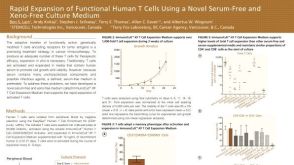 科学海报Rapid Expansion of Functional Human T Cells Using a Novel Serum-Free and Xeno-Free Culture Medium
 文献
文献 产品手册Isolate Human Immune Cells

 沪公网安备31010102008431号