B. L. Jamison et al. (jul 2019)
Journal of immunology (Baltimore,Md. : 1950) 203 1 48--57
Nanoparticles Containing an Insulin-ChgA Hybrid Peptide Protect from Transfer of Autoimmune Diabetes by Shifting the Balance between Effector T Cells and Regulatory T Cells.
CD4 T cells play a critical role in promoting the development of autoimmunity in type 1 diabetes. The diabetogenic CD4 T cell clone BDC-2.5,originally isolated from a NOD mouse,has been widely used to study the contribution of autoreactive CD4 T cells and relevant Ags to autoimmune diabetes. Recent work from our laboratory has shown that the Ag for BDC-2.5 T cells is a hybrid insulin peptide (2.5HIP) consisting of an insulin C-peptide fragment fused to a peptide from chromogranin A (ChgA) and that endogenous 2.5HIP-reactive T cells are major contributors to autoimmune pathology in NOD mice. The objective of this study was to determine if poly(lactide-co-glycolide) (PLG) nanoparticles (NPs) loaded with the 2.5HIP Ag (2.5HIP-coupled PLG NPs) can tolerize BDC-2.5 T cells. Infusion of 2.5HIP-coupled PLG NPs was found to prevent diabetes in an adoptive transfer model by impairing the ability of BDC-2.5 T cells to produce proinflammatory cytokines through induction of anergy,leading to an increase in the ratio of Foxp3+ regulatory T cells to IFN-gamma+ effector T cells. To our knowledge,this work is the first to use a hybrid insulin peptide,or any neoepitope,to re-educate diabetogenic T cells and may have significant implications for the development of an Ag-specific therapy for type 1 diabetes patients.
View Publication
产品类型:
产品号#:
19852
19852RF
18783
18783RF
产品名:
EasySep™小鼠CD4+ T细胞分选试剂盒
RoboSep™ 小鼠CD4+ T细胞分选试剂盒
EasySep™ 小鼠CD4+CD25+调节性T细胞分选试剂盒 II
RoboSep™ 小鼠CD4+CD25+调节性T细胞分选试剂盒II
文献
Wognum AW et al. ( )
Archives of medical research 34 6 461--75
Identification and isolation of hematopoietic stem cells.
Hematopoietic stem cells (HSCs) are defined by their ability to repopulate all of the hematopoietic lineages in vivo and sustain the production of these cells for the life span of the individual. In the absence of reliable direct markers for HSCs,their identification and enumeration depends on functional long-term,multilineage,in vivo repopulation assays. The extremely low frequency of HSCs in any tissue and the absence of a specific HSC phenotype have made their purification and characterization a highly challenging goal. HSCs and primitive hematopoietic cells can be distinguished from mature blood cells by their lack of lineage-specific markers and presence of certain other cell-surface antigens,such as CD133 (for human cells) and c-kit and Sca-1 (for murine cells). Functional analyses of purified subpopulations of primitive hematopoietic cells have led to the development of several procedures for isolating cell populations that are highly enriched in cells with in vivo stem cell activity. Simplified methods for obtaining these cells at high yield have been important to the practical exploitation of such advances. This article reviews recent progress in identifying human and mouse HSCs and current techniques for their purification.
View Publication
产品类型:
产品号#:
18056
18056RF
产品名:
文献
Christopher MJ et al. (FEB 2011)
The Journal of experimental medicine 208 2 251--60
Expression of the G-CSF receptor in monocytic cells is sufficient to mediate hematopoietic progenitor mobilization by G-CSF in mice.
Granulocyte colony-stimulating factor (G-CSF),the prototypical mobilizing cytokine,induces hematopoietic stem and progenitor cell (HSPC) mobilization from the bone marrow in a cell-nonautonomous fashion. This process is mediated,in part,through suppression of osteoblasts and disruption of CXCR4/CXCL12 signaling. The cellular targets of G-CSF that initiate the mobilization cascade have not been identified. We use mixed G-CSF receptor (G-CSFR)-deficient bone marrow chimeras to show that G-CSF-induced mobilization of HSPCs correlates poorly with the number of wild-type neutrophils. We generated transgenic mice in which expression of the G-CSFR is restricted to cells of the monocytic lineage. G-CSF-induced HSPC mobilization,osteoblast suppression,and inhibition of CXCL12 expression in the bone marrow of these transgenic mice are intact,demonstrating that G-CSFR signals in monocytic cells are sufficient to induce HSPC mobilization. Moreover,G-CSF treatment of wild-type mice is associated with marked loss of monocytic cells in the bone marrow. Finally,we show that bone marrow macrophages produce factors that support the growth and/or survival of osteoblasts in vitro. Together,these data suggest a model in which G-CSFR signals in bone marrow monocytic cells inhibit the production of trophic factors required for osteoblast lineage cell maintenance,ultimately leading to HSPC mobilization.
View Publication
产品类型:
产品号#:
03434
03444
产品名:
MethoCult™GF M3434
MethoCult™GF M3434
文献
Yeo C et al. (SEP 2009)
Regenerative Medicine 4 5 689--696
Ficoll-Paque™ versus Lymphoprep™: a comparative study of two density gradient media for therapeutic bone marrow mononuclear cell preparations
AIMS Contradictory outcomes from recent clinical trials investigating the transplantation of autologous bone marrow mononuclear cell (BM-MNC) fraction containing stem/progenitor cells to damaged myocardium,following acute myocardial infarction,may be,in part,due to the different cell isolation protocols used. We compared total BM-MNC numbers and its cellular subsets obtained following isolation using Ficoll-Paque and Lymphoprep - two different density gradient media used in the clinical trials. MATERIALS & METHODS Bone marrow samples were taken from patients entered into the REGENERATE-IHD clinical trial after 5 days of subcutaneous granulocyte colony-stimulating factor injections. Each sample was divided equally for BM-MNC isolation using Ficoll-Paque and Lymphoprep,keeping all other procedural steps constant. Isolated fractions were characterized for hematopoietic stem cells,endothelial progenitor cells,T lymphocytes,B lymphocytes and NK cells using cell surface markers CD34(+),CD133(+)VEGFR2(+),CD45(+)CD3(+),CD45(+)CD19(+) and CD45(+)CD16(+)CD56(+),respectively. There were no significant differences in the absolute numbers and percentage cell recovery of various mononuclear cell types recovered following separation using either density gradient media. Cell viability and the proportion of various cell phenotypes investigated were similar between the two media. They were also equally efficient in excluding unwanted red blood cells,granulocytes and platelets from the final cell products. CONCLUSION We demonstrated that the composition and quantity of cell types found within therapeutic BM-MNC preparations for use in clinical trials of cardiac stem cell transplantation are not influenced by the type of density gradient media used when comparing Ficoll-Paque and Lymphoprep.
View Publication
产品类型:
产品号#:
07801
07811
07851
07861
产品名:
Lymphoprep™
Lymphoprep™
文献
Fortin G et al. (AUG 2009)
The Journal of experimental medicine 206 9 1995--2011
A role for CD47 in the development of experimental colitis mediated by SIRPalpha+CD103- dendritic cells.
Mesenteric lymph node (mLN) CD103 (alphaE integrin)(+) dendritic cells (DCs) induce regulatory T cells and gut tolerance. However,the function of intestinal CD103(-) DCs remains to be clarified. CD47 is the ligand of signal regulatory protein alpha (SIRPalpha) and promotes SIRPalpha(+) myeloid cell migration. We first show that mucosal CD103(-) DCs selectively express SIRPalpha and that their frequency was augmented in the lamina propria and mLNs of mice that developed Th17-biased colitis in response to trinitrobenzene sulfonic acid. In contrast,the percentage of SIRPalpha(+)CD103(-) DCs and Th17 responses were decreased in CD47-deficient (CD47 knockout [KO]) mice,which remained protected from colitis. We next demonstrate that transferring wild-type (WT),but not CD47 KO,SIRPalpha(+)CD103(-) DCs in CD47 KO mice elicited severe Th17-associated wasting disease. CD47 expression was required on the SIRPalpha(+)CD103(-) DCs for efficient trafficking to mLNs in vivo,whereas it was dispensable on both DCs and T cells for Th17 polarization in vitro. Finally,administration of a CD47-Fc molecule resulted in reduced SIRPalpha(+)CD103(-) DC-mediated Th17 responses and the protection of WT mice from colitis. We thus propose SIRPalpha(+)CD103(-) DCs as a pathogenic DC subset that drives Th17-biased responses and colitis,and the CD47-SIRPalpha axis as a potential therapeutic target for inflammatory bowel disease.
View Publication
产品类型:
产品号#:
18556
18556RF
产品名:
文献
Houtenbos I et al. (JUL 2003)
Cancer immunology,immunotherapy : CII 52 7 455--62
Serum-free generation of antigen presenting cells from acute myeloid leukaemic blasts for active specific immunisation.
PURPOSE: Immunotherapy holds promise as a new strategy for the eradication of residual cells in acute myeloid leukaemia (AML). Leukaemic antigen presenting cells (APCs) combining optimal antigen presentation and tumour antigenicity could be used as potent T cell activators. For clinical purposes it is desirable to culture APCs under serum-free conditions. Therefore,we compared morphological,immunophenotypical and functional outcome of the serum-free culture of AML-APCs to their serum-enriched culture. METHODS: AML blasts (n=19) were cultured in the presence of either a cytokine mix or calcium ionophore (CI) for 14 and 2 days,respectively,in FCS-containing medium (FCS),StemSpan serum-free medium (SP) and CellGro serum-free medium (CG). After culture relative yields were calculated and immunophenotypic analysis of APC markers was performed. The mixed leukocyte reaction (MLR) was used to determine T cell stimulating capacity. RESULTS: Serum-free culture of AML-APCs resulted in comparable morphology,relative yields and immunophenotype to serum-enriched culture. By comparing both serum-free media we observed a trend towards a more mature phenotype of CI-cultured AML-APCs in SP. MLR showed that serum-free cultured cells have equal T cell stimulatory capacity in comparison with serum-enriched culture. CONCLUSION: These data show that the serum-free culture of AML-APCs is feasible and that these APCs are comparable to serum-enriched cultured AML-APCs with regard to morphological,immunophenotypical and functional characteristics. These AML-APCs are suitable for the development of active specific immunisation protocols which meet the criteria for good clinical practise (GCP).
View Publication
产品类型:
产品号#:
09600
09650
产品名:
StemSpan™ SFEM
StemSpan™ SFEM
文献
A. A. Titov et al. (jul 2019)
Journal of immunology (Baltimore,Md. : 1950) 203 2 338--348
Metformin Inhibits the Type 1 IFN Response in Human CD4+ T Cells.
In systemic lupus erythematosus,defective clearance of apoptotic debris and activation of innate cells result in a chronically activated type 1 IFN response,which can be measured in PBMCs of most patients. Metformin,a widely used prescription drug for Type 2 diabetes,has a therapeutic effect in several mouse models of lupus through mechanisms involving inhibition of oxidative phosphorylation and a decrease in CD4+ T cell activation. In this study,we report that in CD4+ T cells from human healthy controls and human systemic lupus erythematosus patients,metformin inhibits the transcription of IFN-stimulated genes (ISGs) after IFN-alpha treatment. Accordingly,metformin inhibited the phosphorylation of pSTAT1 (Y701) and its binding to IFN-stimulated response elements that control ISG expression. These effects were independent of AMPK activation or mTORC1 inhibition but were replicated using inhibitors of the electron transport chain respiratory complexes I,III,and IV. This indicates that mitochondrial respiration is required for ISG expression in CD4+ T cells and provides a novel mechanism by which metformin may exert a therapeutic effect in autoimmune diseases.
View Publication
产品类型:
产品号#:
19052
19052RF
15622
15662
产品名:
EasySep™人CD4+ T细胞富集试剂盒
RoboSep™ 人CD4+ T细胞富集试剂盒含滤芯吸头
RosetteSep™ 人CD4去除抗体混合物
RosetteSep™人CD4去除抗体混合物
文献
Nettenstrom L et al. (JAN 2013)
Journal of immunological methods 387 2-Jan 81--8
An optimized multi-parameter flow cytometry protocol for human T regulatory cell analysis on fresh and viably frozen cells, correlation with epigenetic analysis, and comparison of cord and adult blood.
Multi-parameter flow cytometry analysis of T regulatory (Treg) cells is a widely used approach in basic and translational research studies. This approach has been complicated by a lack of specific markers for Treg cells and lack of uniformity in the quantification of Treg cells. Given the central role of Treg cells in the inception and perpetuation of diverse immune responses as well as its target as a therapeutic,it is imperative to have established methodologies for Treg cell analysis that are robust and usable for studies with multiple subjects as well as multicenter studies. In this study,we describe an optimized multi-parameter flow cytometry protocol for the quantification of human Treg cells from freshly obtained and viably frozen samples and correlations with epigenetic Treg cell analysis (TSDR demethylation). We apply these two methodologies to characterize Treg cell differences between cord blood and adult peripheral blood. In summary,the optimized protocol appears to be robust for Treg cell quantification from freshly isolated or viably frozen cells and the multi-parameter flow cytometry findings are strongly positively correlated with TSDR demethylation thus providing several options for the characterization of Treg cell frequency and function in large translational or clinical studies.
View Publication
产品类型:
产品号#:
07930
07931
07940
07955
07956
07959
07954
产品名:
CryoStor® CS10
CryoStor® CS10
CryoStor® CS10
CryoStor® CS10
CryoStor® CS10
文献
Mahdipour E et al. (JAN 2011)
Blood 117 3 815--26
Hoxa3 promotes the differentiation of hematopoietic progenitor cells into proangiogenic Gr-1+CD11b+ myeloid cells.
Injury induces the recruitment of bone marrow-derived cells (BMDCs) that contribute to the repair and regeneration process. The behavior of BMDCs in injured tissue has a profound effect on repair,but the regulation of BMDC behavior is poorly understood. Aberrant recruitment/retention of these cells in wounds of diabetic patients and animal models is associated with chronic inflammation and impaired healing. BMD Gr-1(+)CD11b(+) cells function as immune suppressor cells and contribute significantly to tumor-induced neovascularization. Here we report that Gr-1(+)CD11b(+) cells also contribute to injury-induced neovascularization,but show altered recruitment/retention kinetics in the diabetic environment. Moreover,diabetic-derived Gr-1(+)CD11b(+) cells fail to stimulate neovascularization in vivo and have aberrant proliferative,chemotaxis,adhesion,and differentiation potential. Previously we demonstrated that gene transfer of HOXA3 to wounds of diabetic mice is taken up by and expressed by recruited BMDCs. This is associated with a suppressed inflammatory response,enhanced neovascularization,and accelerated wound healing. Here we show that sustained expression of Hoxa3 in diabetic-derived BMD Gr-1(+)CD11b(+) cells reverses their diabetic phenotype. These findings demonstrate that manipulation of adult stem/progenitor cells ex vivo could be used as a potential therapy in patients with impaired wound healing.
View Publication
产品类型:
产品号#:
03434
03444
产品名:
MethoCult™GF M3434
MethoCult™GF M3434
文献
Ghandour H et al. (NOV 2007)
Blood 110 10 3682--90
Essential role for Rap1 GTPase and its guanine exchange factor CalDAG-GEFI in LFA-1 but not VLA-4 integrin mediated human T-cell adhesion.
Regulated adhesion of T cells by the integrins LFA-1 (lymphocyte function-associated antigen-1) and VLA-4 (very late antigen-4) is essential for T-cell trafficking. The small GTPase Rap1 is a critical activator of both integrins in murine lymphocytes and T-cell lines. Here we examined the contribution of the Rap1 regulatory pathway in integrin activation in primary CD3(+) human T cells. We demonstrate that inactivation of Rap1 GTPase in human T cells by expression of SPA1 or Rap1GAP blocked stromal cell-derived factor-1alpha (SDF-1alpha)-stimulated LFA-1-ICAM-1 (intercellular adhesion molecule-1) interactions and LFA-1 affinity modulation but unexpectedly did not significantly affect binding of VLA-4 to its ligand VCAM-1 (vascular cell adhesion molecule 1). Importantly,silencing of the Rap1 guanine exchange factor CalDAG-GEFI inhibited SDF-1alpha- and phorbol 12-myristate 13-acetate (PMA)-induced adhesion to ICAM-1 while having no effect on adhesion to VCAM-1. Pharmacologic inhibition of Phospholipase C (PLC) blocked Rap1 activation and inhibited cell adhesion and polarization on ICAM-1 and VCAM-1. Protein kinase C (PKC) inhibition led to enhanced levels of active Rap1 concomitantly with increased T-cell binding to ICAM-1,whereas adhesion to VCAM-1 was reduced. Thus,PLC/CalDAG-GEFI regulation of Rap1 is selectively required for chemokine- and PMA-induced LFA-1 activation in human T cells,whereas alternate PLC- and PKC-dependent mechanisms are involved in the regulation of VLA-4.
View Publication


 EasySep™小鼠TIL(CD45)正选试剂盒




 文献
文献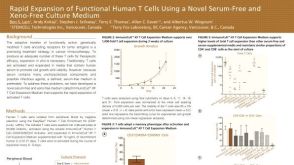 科学海报Rapid Expansion of Functional Human T Cells Using a Novel Serum-Free and Xeno-Free Culture Medium

 沪公网安备31010102008431号