Muthuswamy R et al. (JUL 2008)
Cancer research 68 14 5972--8
Ability of mature dendritic cells to interact with regulatory T cells is imprinted during maturation.
Preferential activation of regulatory T (Treg) cells limits autoimmune tissue damage during chronic immune responses but can also facilitate tumor growth. Here,we show that tissue-produced inflammatory mediators prime maturing dendritic cells (DC) for the differential ability of attracting anti-inflammatory Treg cells. Our data show that prostaglandin E(2) (PGE(2)),a factor overproduced in chronic inflammation and cancer,induces stable Treg-attracting properties in maturing DC,mediated by CCL22. The elevated production of CCL22 by PGE(2)-matured DC persists after the removal of PGE(2) and is further elevated after secondary stimulation of DC in a neutral environment. This PGE(2)-induced overproduction of CCL22 and the resulting attraction of FOXP3(+) Tregs are counteracted by IFN alpha,a mediator of acute inflammation,which also restores the ability of the PGE(2)-exposed DC to secrete the Th1-attracting chemokines: CXCL9,CXCL10,CXCL11,and CCL5. In accordance with these observations,different DCs clinically used as cancer vaccines show different Treg-recruiting abilities,with PGE(2)-matured DC,but not type 1-polarized DC,generated in the presence of type I and type II IFNs,showing high Treg-attracting activity. The current data,showing that the ability of mature DC to interact with Treg cells is predetermined at the stage of DC maturation,pave the way to preferentially target the regulatory versus proinflammatory T cells in autoimmunity and transplantation,as opposed to intracellular infections and cancer.
View Publication
产品类型:
产品号#:
19052
19052RF
产品名:
EasySep™人CD4+ T细胞富集试剂盒
RoboSep™ 人CD4+ T细胞富集试剂盒含滤芯吸头
Bemark M et al. ( 2016)
Nature communications 7 12698
Limited clonal relatedness between gut IgA plasma cells and memory B cells after oral immunization.
Understanding how memory B cells are induced and relate to long-lived plasma cells is important for vaccine development. Immunity to oral vaccines has been considered short-lived because of a poor ability to develop IgA B-cell memory. Here we demonstrate that long-lived mucosal IgA memory is readily achieved by oral but not systemic immunization in mouse models with NP hapten conjugated with cholera toxin and transfer of B1-8(high)/GFP(+) NP-specific B cells. Unexpectedly,memory B cells are poorly related to long-lived plasma cells and less affinity-matured. They are α4β7-integrin(+)CD73(+)PD-L2(+)CD80(+) and at systemic sites mostly IgM(+),while 80% are IgA(+) in Peyer's patches. On reactivation,most memory B cells in Peyer's patches are GL7(-),but expand in germinal centres and acquire higher affinity and more mutations,demonstrating strong clonal selection. CCR9 expression is found only in Peyer's patches and appears critical for gut homing. Thus,gut mucosal memory possesses unique features not seen after systemic immunization.
View Publication
产品类型:
产品号#:
19854
19854RF
产品名:
EasySep™小鼠B细胞分选试剂盒
RoboSep™ 小鼠B细胞分选试剂盒
S. Fan et al. ( 2019)
NPJ vaccines 4 14
Role of innate lymphoid cells and dendritic cells in intradermal immunization of the enterovirus antigen.
Enterovirus type 71 (EV71) and coxsackievirus A 16 (CA16) are the major pathogens of human hand,foot,and mouth disease (HFMD). In our previous study,intramuscular immunization with the inactivated EV71 vaccine elicited effective immunity,while immunization with the inactivated CA16 vaccine did not. In this report,we focused on innate immune responses elicited by inactivated EV71 and CA16 antigens administered intradermally or intramuscularly. The distributions of the EV71 and CA16 antigens administered intradermally or intramuscularly were not obviously different,but the antigens were detected for a shorter period of time when administered intradermally. The expression levels of NF-kappaB pathway signaling molecules,which were identified as being capable of activating DCs,ILCs,and T cells,were higher in the intradermal group than in the intramuscular group. Antibodies for the EV71 and CA16 antigens colocalized with ILCs and DCs in skin and muscle tissues under fluorescence microscopy. Interestingly,ILC colocalization decreased over time,while DC colocalization increased over time. ELISpot analysis showed that coordination between DCs and ILCs contributed to successful adaptive immunity against vaccine antigens in the skin. EV71 and/or CA16 antigen immunization via the intradermal route was more capable of significantly increasing neutralizing antibody titers and activating specific T cell responses than immunization via the intramuscular route. Furthermore,neonatal mice born to mothers immunized with the EV71 and CA16 antigens were 100{\%} protected against wild-type EV71 or CA16 viral challenge. Together,our results provide new insights into the development of vaccines for HFMD.
View Publication
产品类型:
产品号#:
19851
19851RF
产品名:
EasySep™小鼠T细胞分选试剂盒
RoboSep™ 小鼠T细胞分选试剂盒
Chen S et al. (AUG 2007)
Journal of immunology (Baltimore,Md. : 1950) 179 3 1634--47
Modulatory effects of 1,25-dihydroxyvitamin D3 on human B cell differentiation.
1,25-Dihydroxyvitamin D(3) (1,25(OH)(2)D(3)) can modulate immune responses,but whether it directly affects B cell function is unknown. Patients with systemic lupus erythematosus,especially those with antinuclear Abs and increased disease activity,had decreased 1,25(OH)(2)D(3) levels,suggesting that vitamin D might play a role in regulating autoantibody production. To address this,we examined the effects of 1,25(OH)(2)D(3) on B cell responses and found that it inhibited the ongoing proliferation of activated B cells and induced their apoptosis,whereas initial cell division was unimpeded. The generation of plasma cells and postswitch memory B cells was significantly inhibited by 1,25(OH)(2)D(3),although the up-regulation of genetic programs involved in B cell differentiation was only modestly affected. B cells expressed mRNAs for proteins involved in vitamin D activity,including 1 alpha-hydroxylase,24-hydroxylase,and the vitamin D receptor,each of which was regulated by 1,25(OH)(2)D(3) and/or activation. Importantly,1,25(OH)(2)D(3) up-regulated the expression of p27,but not of p18 and p21,which may be important in regulating the proliferation of activated B cells and their subsequent differentiation. These results indicate that 1,25(OH)(2)D(3) may play an important role in the maintenance of B cell homeostasis and that the correction of vitamin D deficiency may be useful in the treatment of B cell-mediated autoimmune disorders.
View Publication
产品类型:
产品号#:
15024
15064
产品名:
RosetteSep™ 人B细胞富集抗体混合物
RosetteSep™人B细胞富集抗体混合物
Kofanova OA et al. (JUN 2014)
Biopreservation and biobanking 12 3 206--16
Viable mononuclear cell stability study for implementation in a proficiency testing program: impact of shipment conditions.
The impact of shipping temperatures and preservation media used during transport of either peripheral blood mononuclear cells (PBMCs) or Jurkat cells was assessed,in view of implementing of a proficiency testing scheme on mononuclear cell viability. Samples were analyzed before and after shipment at different temperatures (ambient temperature,dry ice,and liquid nitrogen) and in different preservation media (serum with cryoprotectant,commercial cryopreservation solution,and room temperature transport medium). Sample quality was assessed by viability assays (Trypan Blue dye exclusion,flow cytometry,Cell Analysis System cell counting (CASY)),and by ELISpot functional assay. The liquid nitrogen storage and shipment were found to be the most stable conditions to preserve cell viability and functionality. However,we show that alternative high quality shipment conditions for viable cells are dry ice shipment and commercial cryopreservation solution. These were also cost-efficient shipment conditions,satisfying the requirements of a proficiency testing scheme for viable mononuclear cells. Room temperature transport medium dramatically and adversely affected the integrity of mononuclear cells.
View Publication
产品类型:
产品号#:
07930
07931
07940
07955
07956
07959
07954
产品名:
CryoStor® CS10
CryoStor® CS10
CryoStor® CS10
CryoStor® CS10
CryoStor® CS10
El-Far M et al. (MAR 2016)
Scientific Reports 6 22902
Proinflammatory isoforms of IL-32 as novel and robust biomarkers for control failure in HIV-infected slow progressors.
HIV-infected slow progressors (SP) represent a heterogeneous group of subjects who spontaneously control HIV infection without treatment for several years while showing moderate signs of disease progression. Under conditions that remain poorly understood,a subgroup of these subjects experience failure of spontaneous immunological and virological control. Here we determined the frequency of SP subjects who showed loss of HIV control within our Canadian Cohort of HIV(+) Slow Progressors and identified the proinflammatory cytokine IL-32 as a robust biomarker for control failure. Plasmatic levels of the proinflammatory isoforms of IL-32 (mainly β and γ) at earlier clinic visits positively correlated with the decline of CD4 T-cell counts,increased viral load,lower CD4/CD8 ratio and levels of inflammatory markers (sCD14 and IL-6) at later clinic visits. We present here a proof-of-concept for the use of IL-32 as a predictive biomarker for disease progression in SP subjects and identify IL-32 as a potential therapeutic target.
View Publication
Bentley C et al. (NOV 2011)
Nutrition,metabolism,and cardiovascular diseases : NMCD 21 11 871--8
Influence of chylomicron remnants on human monocyte activation in vitro.
BACKGROUND AND AIMS: Atherosclerosis is known to be an inflammatory disease and there is increasing evidence that chylomicron remnants (CMR),the lipoproteins which carry dietary fats in the blood,cause macrophage foam cell formation and inflammation. In early atherosclerosis the frequency of activated monocytes in the peripheral circulation is increased,and clearance of CMR from blood may be delayed,however,whether CMR contribute directly to monocyte activation and subsequent egress into the arterial wall has not been established. Here,the contribution of CMR to activation of monocyte pro-inflammatory pathways was assessed using an in vitro model. METHODS AND RESULTS: Primary human monocytes and CMR-like particles (CRLP) were used to measure several endpoints of monocyte activation. Treatment with CRLP caused rapid and prolonged generation of reactive oxygen species by monocytes. The pro-inflammatory chemokines MCP-1 and IL-8 were secreted in nanogram quantities by the cells in the absence of CRLP. IL-8 secretion was transiently increased after CRLP treatment,and CRLP maintained secretion in the presence of pharmacological inhibitors of IL-8 production. In contrast,exposure to CRLP significantly reduced MCP-1 secretion. Chemotaxis towards MCP-1 was increased in monocytes pre-exposed to CRLP and was reversed by addition of exogenous MCP-1. CONCLUSION: Our findings indicate that CRLP activate human monocytes and augment their migration in vitro by reducing cellular MCP-1 expression. Our data support the current hypothesis that CMR contribute to the inflammatory milieu of the arterial wall in early atherosclerosis,and suggest that this may reflect direct interaction with circulating blood monocytes.
View Publication


 EasySep™小鼠TIL(CD45)正选试剂盒




 科学海报Cell Enrichment of Specific Lymphocyte Populations (T Cells, B Cells, Total Lymphocytes) from Whole Blood
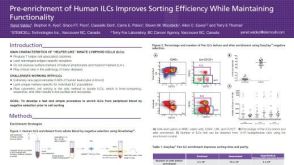 科学海报Pre-enrichment of Human ILCs Improves Sorting Efficiency While Maintaining Functionality

 沪公网安备31010102008431号