Haniffa M et al. (FEB 2009)
The Journal of experimental medicine 206 2 371--85
Differential rates of replacement of human dermal dendritic cells and macrophages during hematopoietic stem cell transplantation.
Animal models of hematopoietic stem cell transplantation have been used to analyze the turnover of bone marrow-derived cells and to demonstrate the critical role of recipient antigen-presenting cells (APC) in graft versus host disease (GVHD). In humans,the phenotype and lineage relationships of myeloid-derived tissue APC remain incompletely understood. It has also been proposed that the risk of acute GVHD,which extends over many months,is related to the protracted survival of certain recipient APC. Human dermis contains three principal subsets of CD45(+)HLA-DR(+) cells: CD1a(+)CD14(-) DC,CD1a(-)CD14(+) DC,and CD1a(-)CD14(+)FXIIIa(+) macrophages. In vitro,each subset has characteristic properties. After transplantation,both CD1a(+) and CD14(+) DC are rapidly depleted and replaced by donor cells,but recipient macrophages can be found in GVHD lesions and may persist for many months. Macrophages isolated from normal dermis secrete proinflammatory cytokines. Although they stimulate little proliferation of naive or memory CD4(+) T cells,macrophages induce cytokine expression in memory CD4(+) T cells and activation and proliferation of CD8(+) T cells. These observations suggest that dermal macrophages and DC are from distinct lineages and that persistent recipient macrophages,although unlikely to initiate alloreactivity,may contribute to GVHD by sustaining the responses of previously activated T cells.
View Publication
产品类型:
产品号#:
19155
19155RF
产品名:
文献
Putnam AL et al. (NOV 2013)
American journal of transplantation : official journal of the American Society of Transplantation and the American Society of Transplant Surgeons 13 11 3010--20
Clinical grade manufacturing of human alloantigen-reactive regulatory T cells for use in transplantation.
Regulatory T cell (Treg) therapy has the potential to induce transplantation tolerance so that immunosuppression and associated morbidity can be minimized. Alloantigen-reactive Tregs (arTregs) are more effective at preventing graft rejection than polyclonally expanded Tregs (PolyTregs) in murine models. We have developed a manufacturing process to expand human arTregs in short-term cultures using good manufacturing practice-compliant reagents. This process uses CD40L-activated allogeneic B cells to selectively expand arTregs followed by polyclonal restimulation to increase yield. Tregs expanded 100- to 1600-fold were highly alloantigen reactive and expressed the phenotype of stable Tregs. The alloantigen-expanded Tregs had a diverse TCR repertoire. They were more potent than PolyTregs in vitro and more effective at controlling allograft injuries in vivo in a humanized mouse model.
View Publication
产品类型:
产品号#:
07930
07931
07940
07955
07956
07959
07954
产品名:
CryoStor® CS10
CryoStor® CS10
CryoStor® CS10
CryoStor® CS10
CryoStor® CS10
文献
Kang L et al. ( 2013)
Frontiers in immunology 4 MAY 101
Characterization and ex vivo Expansion of Human Placenta-Derived Natural Killer Cells for Cancer Immunotherapy.
Recent clinical studies suggest that adoptive transfer of donor-derived natural killer (NK) cells may improve clinical outcome in hematological malignancies and some solid tumors by direct anti-tumor effects as well as by reduction of graft versus host disease (GVHD). NK cells have also been shown to enhance transplant engraftment during allogeneic hematopoietic stem cell transplantation (HSCT) for hematological malignancies. The limited ex vivo expansion potential of NK cells from peripheral blood (PB) or umbilical cord blood (UCB) has however restricted their therapeutic potential. Here we define methods to efficiently generate NK cells from donor-matched,full-term human placenta perfusate (termed Human Placenta-Derived Stem Cell,HPDSC) and UCB. Following isolation from cryopreserved donor-matched HPDSC and UCB units,CD56+CD3- placenta-derived NK cells,termed pNK cells,were expanded in culture for up to 3 weeks to yield an average of 1.2 billion cells per donor that were textgreater80% CD56+CD3-,comparable to doses previously utilized in clinical applications. Ex vivo-expanded pNK cells exhibited a marked increase in anti-tumor cytolytic activity coinciding with the significantly increased expression of NKG2D,NKp46,and NKp44 (p textless 0.001,p textless 0.001,and p textless 0.05,respectively). Strong cytolytic activity was observed against a wide range of tumor cell lines in vitro. pNK cells display a distinct microRNA (miRNA) expression profile,immunophenotype,and greater anti-tumor capacity in vitro compared to PB NK cells used in recent clinical trials. With further development,pNK may represent a novel and effective cellular immunotherapy for patients with high clinical needs and few other therapeutic options.
View Publication
A Cas9 Ribonucleoprotein Platform for Functional Genetic Studies of HIV-Host Interactions in Primary Human T Cells.
New genetic tools are needed to understand the functional interactions between HIV and human host factors in primary cells. We recently developed a method to edit the genome of primary CD4(+) T cells by electroporation of CRISPR/Cas9 ribonucleoproteins (RNPs). Here,we adapted this methodology to a high-throughput platform for the efficient,arrayed editing of candidate host factors. CXCR4 or CCR5 knockout cells generated with this method are resistant to HIV infection in a tropism-dependent manner,whereas knockout of LEDGF or TNPO3 results in a tropism-independent reduction in infection. CRISPR/Cas9 RNPs can furthermore edit multiple genes simultaneously,enabling studies of interactions among multiple host and viral factors. Finally,in an arrayed screen of 45 genes associated with HIV integrase,we identified several candidate dependency/restriction factors,demonstrating the power of this approach as a discovery platform. This technology should accelerate target validation for pharmaceutical and cell-based therapies to cure HIV infection.
View Publication
产品类型:
产品号#:
19052
19052RF
产品名:
EasySep™人CD4+ T细胞富集试剂盒
RoboSep™ 人CD4+ T细胞富集试剂盒含滤芯吸头
文献
Ng PP et al. (OCT 2006)
Blood 108 8 2745--54
Molecular events contributing to cell death in malignant human hematopoietic cells elicited by an IgG3-avidin fusion protein targeting the transferrin receptor.
We have previously reported that an anti-human transferrin receptor IgG3-avidin fusion protein (anti-hTfR IgG3-Av) inhibits the proliferation of an erythroleukemia-cell line. We have now found that anti-hTfR IgG3-Av also inhibits the proliferation of additional human malignant B and plasma cells. Anti-hTfR IgG3-Av induces internalization and rapid degradation of the TfR. These events can be reproduced in cells treated with anti-hTfR IgG3 cross-linked with a secondary Ab,suggesting that they result from increased TfR cross-linking. Confocal microscopy of cells treated with anti-hTfR IgG3-Av shows that the TfR is directed to an intracellular compartment expressing the lysosomal marker LAMP-1. The degradation of TfR is partially blocked by cysteine protease inhibitors. Furthermore,cells treated with anti-hTfR IgG3-Av exhibit mitochondrial depolarization and activation of caspases 9,8,and 3. The mitochondrial damage and cell death can be prevented by iron supplementation,but cannot be fully blocked by a pan-caspase inhibitor. These results suggest that anti-hTfR IgG3-Av induces lethal iron deprivation,but the resulting cell death does not solely depend on caspase activation. This report provides insights into the mechanism of cell death induced by anti-TfR Abs such as anti-hTfR IgG3-Av,a molecule that may be useful in the treatment of B-cell malignancies such as multiple myeloma.
View Publication
A role for interleukin-12/23 in the maturation of human natural killer and CD56+ T cells in vivo.
Natural killer (NK) cells have been originally defined by their naturally occurring" effector function. However�
View Publication
产品类型:
产品号#:
15025
15065
产品名:
RosetteSep™人NK细胞富集抗体混合物
RosetteSep™人NK细胞富集抗体混合物
文献
Grievink HW et al. (OCT 2016)
Biopreservation and biobanking 14 5 410--415
Comparison of Three Isolation Techniques for Human Peripheral Blood Mononuclear Cells: Cell Recovery and Viability, Population Composition, and Cell Functionality.
Routine techniques for the isolation of human peripheral blood mononuclear cells (PBMCs) include density centrifugation with Ficoll-Paque and isolation by cell preparation tubes (CPTs) and SepMate tubes with Lymphoprep. In a series of experiments,these three PBMC isolation techniques were compared for cell recovery and viability,PBMC population composition,and cell functionality,aiming to provide a starting basis for the selection of the most appropriate method of PBMC isolation for a specific downstream application. PBMCs were freshly isolated from venous blood of healthy male donors,applying the different techniques in parallel. Cell recovery and viability were assessed using a hemacytometer and trypan blue. Immunophenotyping was performed by flow cytometry. Cell functionality was assessed in stimulated (100 ng/mL staphylococcal enterotoxin B [SEB]) and unstimulated 24 hours PBMC cultures,with cytokine production and lactate dehydrogenase (LDH) release as readout measures. PBMC isolation by SepMate and CPT resulted in a 70% higher recovery than Ficoll isolation. CPT-isolated populations contained more erythrocyte contamination. Cell viability,assessed by trypan blue exclusion,was 100% for all three isolation techniques. SepMate and CPT isolation gave higher SEB-induced cytokine responses in cell cultures,for IFNγ and for secondary cytokines. IL-6 and IL-8 release in unstimulated cultures was higher for CPT-isolated PBMCs compared to Ficoll- and SepMate-isolated PBMCs. LDH release did not differ between cell isolation techniques. In addition to criteria such as cost and application practicalities,these data may support selection of a specific PBMC isolation technique for downstream analysis.
View Publication
产品类型:
产品号#:
07801
07811
07851
07861
85450
85460
86450
86460
产品名:
Lymphoprep™
Lymphoprep™
SepMate™-50 (IVD)
SepMate™-50 (IVD)
SepMate™-50 (RUO)
SepMate™-50 (RUO)
文献
Allan LL et al. (SEP 2009)
Blood 114 12 2411--6
Apolipoprotein-mediated lipid antigen presentation in B cells provides a pathway for innate help by NKT cells.
Natural killer T (NKT) cells are innate-like lymphocytes that recognize lipid antigens and have been shown to enhance B-cell activation and antibody production. B cells typically recruit T-cell help by presenting internalized antigens recognized by their surface antigen receptor. Here,we demonstrate a highly efficient means whereby human B cells present lipid antigens to NKT cells,capturing the antigen using apolipoprotein E (apoE) and the low-density lipoprotein receptor (LDL-R). ApoE dramatically enhances B-cell presentation of alpha-galactosylceramide (alphaGalCer),an exogenous CD1d presented antigen,inducing activation of NKT cells and the subsequent activation of B cells. B cells express the LDL-R on activation,and the activation of NKT cells by B cells is completely LDL-R dependent,as shown by blocking experiments and the complete lack of presentation when using apoE2,an isoform of apoE incapable of LDL-R binding. The dependence on apoE and the LDL-R is much more pronounced in B cells than we had previously seen in dendritic cells,which can apparently use alternate pathways of lipid antigen uptake. Thus,B cells use an apolipoprotein-mediated pathway of lipid antigen presentation,which constitutes a form of innate help for B cells by NKT cells.
View Publication


 EasySep™小鼠TIL(CD45)正选试剂盒




 文献
文献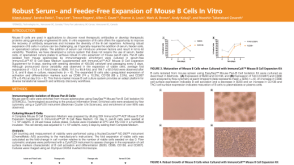 科学海报Robust Serum- and Feeder-Free Expansion of Mouse B Cells In Vitro
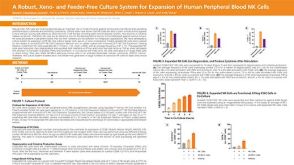 科学海报A Robust, Xeno- and Feeder-Free Culture System for Expansion of Human Peripheral Blood NK Cells
 科学海报Generation of T Cells from Hematopoietic Stem and Progenitor Cells in a Stroma-Free, Serum-Free Culture System

 沪公网安备31010102008431号