Hagness M et al. ( 2012)
The Journal of Immunology 188 11 5459--66
Kinetics and activation requirements of contact-dependent immune suppression by human regulatory T cells
Naturally occurring regulatory T cells (Tregs) maintain self tolerance by dominant suppression of potentially self-reactive T cells in peripheral tissues. However,the activation requirements,the temporal aspects of the suppressive activity,and mode of action of human Tregs are subjects of controversy. In this study,we show that Tregs display significant variability in the suppressive activity ex vivo as 54% of healthy blood donors examined had fully suppressive Tregs spontaneously,whereas in the remaining donors,anti-CD3/CD2/CD28 stimulation was required for Treg suppressive activity. Furthermore,anti-CD3/CD2/CD28 stimulation for 6 h and subsequent fixation in paraformaldehyde rendered the Tregs fully suppressive in all donors. The fixation-resistant suppressive activity of Tregs operated in a contact-dependent manner that was not dependent on APCs,but could be fully obliterated by trypsin treatment,indicating that a cell surface protein is directly involved. By add-back of active,fixed Tregs at different time points after activation of responding T cells,the responder cells were susceptible to Treg-mediated immune suppression up to 24 h after stimulation. This defines a time window in which effector T cells are susceptible to Treg-mediated immune suppression. Lastly,we examined the effect of a set of signaling inhibitors that perturb effector T cell activation and found that none of the examined inhibitors affected Treg activation,indicating pathway redundancy or that Treg activation proceeds by signaling mechanisms distinct from those of effector T cells.
View Publication
Hicar MD et al. (JUL 2010)
Journal of acquired immune deficiency syndromes (1999) 54 3 223--35
Pseudovirion particles bearing native HIV envelope trimers facilitate a novel method for generating human neutralizing monoclonal antibodies against HIV.
Monomeric HIV envelope vaccines fail to elicit broadly neutralizing antibodies or to protect against infection. Neutralizing antibodies against HIV bind to native functionally active Env trimers on the virion surface. Gag-Env pseudovirions recapitulate the native trimer and could serve as an effective epitope presentation platform for study of the neutralizing antibody response in HIV-infected individuals. To address if pseudovirions can recapitulate native HIV virion epitope structures,we carefully characterized these particles,concentrating on the antigenic structure of the coreceptor binding site. By blue native gel shift assays,Gag-Env pseudovirions were shown to contain native trimers that were competent for binding to neutralizing monoclonal antibodies. In enzyme-linked immunosorbent assay,pseudovirions exhibited increased binding of known CD4-induced antibodies after addition of CD4. Using flow cytometric analysis,fluorescently labeled pseudovirions specifically identified a subset of antigen-specific B cells in HIV-infected subjects. Interestingly,the sequence of one of these novel human antibodies,identified during cloning of single HIV-specific B cells and designated 2C6,exhibited homology to mAb 47e,a known anti-CD4-induced coreceptor binding site antibody. The secreted monoclonal antibody 2C6 did not bind monomeric gp120,but specifically bound envelope on pseudovirions. A recombinant form of the antibody 2C6 acted as a CD4-induced epitope-specific antibody in neutralization assays,yet did not bind monomeric gp120. These findings imply specificity against a quaternary epitope presented on the pseudovirion envelope spike. These data demonstrate that Gag-Env pseudovirions recapitulate CD4 and coreceptor binding pocket antigenic structures and can facilitate identification of B-cell clones that secrete neutralizing antibodies.
View Publication
产品类型:
产品号#:
18054
18054RF
产品名:
Fassnacht M et al. (AUG 2005)
Clinical cancer research : an official journal of the American Association for Cancer Research 11 15 5566--71
Induction of CD4(+) and CD8(+) T-cell responses to the human stromal antigen, fibroblast activation protein: implication for cancer immunotherapy.
PURPOSE: The propensity of tumor cells to escape immune elimination could limit,if not defeat,the long-term benefits of effective immunotherapeutic protocols. Immunologic targeting of tumor stroma could significantly reduce the ability of tumors to evade immune elimination. Murine studies have shown that inducing immunity against angiogenesis-associated products engenders potent antitumor immunity without significant pathology. It is,however,not known whether T cells corresponding to stromal products are present in humans. In this study,we describe a method to screen for human stromal products that have not triggered significant tolerance and could therefore serve as candidate antigens for cancer immunotherapy. EXPERIMENTAL DESIGN: To identify candidates for human stromal antigens,we used an in vitro-screening method to determine whether dendritic cells transfected with mRNA encoding products,which are overexpressed in the tumor stroma,are capable of stimulating cytotoxic CD8(+) (CTL) responses from human peripheral blood mononuclear cells. RESULTS: CTL responses could be consistently generated against fibroblast activation protein (FAP) but not against matrix metalloproteinase-9 (MMP-9) or MMP-14. To enhance the immunogenicity of the mRNA-translated FAP product,a lysosomal targeting signal derived from lysosome-associated membrane protein-1 (LAMP-1) was fused to the COOH terminus of FAP to redirect the translated product into the class II presentation pathway. Dendritic cells transfected with mRNA encoding the FAP-LAMP fusion product stimulated enhanced CD4(+) and CD8(+) T-cell responses. CONCLUSION: This study identifies FAP,a protease preferentially expressed in tumor-associated fibroblasts,as a candidate human stromal antigen to target in the setting of cancer immunotherapy,and shows that differential expression of stromal products is not a sufficient criteria to indicate its immunogenicity in a vaccination setting.
View Publication
Bellemare-Pelletier A et al. (JUL 2005)
Journal of leukocyte biology 78 1 95--105
HLA-DO transduced in human monocyte-derived dendritic cells modulates MHC class II antigen processing.
Through the regulation of human leukocyte antigen (HLA)-DM (DM) in B cells,HLA-DO (DO) modulates positively or negatively the presentation of specific peptides. Transduction of DO into human blood monocyte-derived dendritic cells (MoDC) has been proposed as a mean of modifying the peptide repertoire of major histocompatibility complex class II molecules. However,maturation of DC induced by inflammatory stimuli or possibly the adenoviral vector itself triggers acidification of vesicles and shuts down transcription of the class II transactivator gene as well as de novo biosynthesis of class II-related molecules and DM activity. In these conditions,it is unclear that transduced DO could alter the peptide repertoire. Our Western blot and reverse transcriptase-polymerase chain reaction analyses revealed that human DC derived from blood monocytes express small amounts of DOalpha. Transduction of DObeta alone resulted in the accumulation of a small pool of DO in DM(+) CD63(+) vesicles and at the plasma membrane of mature DC. The cell-surface increase in class II-associated invariant chain peptide (CLIP)/class II complexes is in line with an inhibitory role of DO on DM. Cotransduction of DOalpha and DObeta only slightly increased CLIP and DO levels at the cell surface. Together with the fact that a large fraction of transduced DO remains in the endoplasmic reticulum,this suggests that DM is limiting in these conditions. DO expression did not affect a mixed lymphocyte reaction but reduced presentation of the exogenous gp100 antigen to a specific T cell clone. These results show that transduced DO modulates antigen presentation in human mature MoDC,evoking the possible use of this chaperone for immunotherapy.
View Publication
产品类型:
产品号#:
18058
18058RF
19052
19052RF
产品名:
EasySep™人CD4+ T细胞富集试剂盒
RoboSep™ 人CD4+ T细胞富集试剂盒含滤芯吸头
Zeng J et al. (MAY 2012)
The Journal of Immunology 188 9 4297--4304
Enhancing Immunostimulatory Function of Human Embryonic Stem Cell-Derived Dendritic Cells by CD1d Overexpression
Human embryonic stem cell-derived dendritic cells (hESC-DCs) may potentially provide a platform to generate off-the-shelf" therapeutic cancer vaccines. To apply hESC-DCs for cancer immunotherapy in a semiallogeneic setting�
View Publication
产品类型:
产品号#:
05850
05857
05870
05875
09600
09650
70024
70024.1
85850
85857
85870
85875
70025
70025.1
70025.2
70025.3
70047
70047.1
70047.2
70048
70048.1
70048.2
产品名:
StemSpan™ SFEM
StemSpan™ SFEM
冻存的人外周血Pan T细胞
冻存的人外周血Pan T细胞
mTeSR™1
mTeSR™1
冻存的人外周血单个核细胞
冻存的人外周血单个核细胞
冻存的人外周血单个核细胞
冻存的人外周血单个核细胞
Asokan R et al. (JUL 2006)
Journal of immunology (Baltimore,Md. : 1950) 177 1 383--94
Characterization of human complement receptor type 2 (CR2/CD21) as a receptor for IFN-alpha: a potential role in systemic lupus erythematosus.
Human complement receptor type 2 (CR2/CD21) is a B lymphocyte membrane glycoprotein that plays a central role in the immune responses to foreign Ags as well as the development of autoimmunity to nuclear Ags in systemic lupus erythematosus. In addition to these three well-characterized ligands,C3d/iC3b,EBV-gp350,and CD23,a previous study has identified CR2 as a potential receptor for IFN-alpha. IFN-alpha,a multifunctional cytokine important in the innate immune system,has recently been proposed to play a major pathogenic role in the development of systemic lupus erythematosus in humans and mice. In this study,we have shown using surface plasmon resonance and ELISA approaches that CR2 will bind IFN-alpha in the same affinity range as the other three well-characterized ligands studied in parallel. In addition,we show that IFN-alpha interacts with short consensus repeat domains 1 and 2 in a region that serves as the ligand binding site for C3d/iC3b,EBV-gp350,and CD23. Finally,we show that treatment of purified human peripheral blood B cells with the inhibitory anti-CR2 mAb 171 diminishes the induction of IFN-alpha-responsive genes. Thus,IFN-alpha represents a fourth class of extracellular ligands for CR2 and interacts with the same domain as the other three ligands. Defining the role of CR2 as compared with the well-characterized type 1 IFN-alpha receptor 1 and 2 in mediating innate immune and autoimmune roles of this cytokine should provide additional insights into the biologic roles of this interaction.
View Publication
产品类型:
产品号#:
15024
15064
产品名:
RosetteSep™ 人B细胞富集抗体混合物
RosetteSep™人B细胞富集抗体混合物
Uchida N et al. (OCT 2009)
Journal of virology 83 19 9854--62
Development of a human immunodeficiency virus type 1-based lentiviral vector that allows efficient transduction of both human and rhesus blood cells.
Human immunodeficiency virus type 1 (HIV-1) vectors transduce rhesus blood cells poorly due to a species-specific block by TRIM5alpha and APOBEC3G,which target HIV-1 capsid and viral infectivity factor (Vif),respectively. We sought to develop a lentiviral vector capable of transducing both human and rhesus blood cells by combining components of both HIV-1 and simian immunodeficiency virus (SIV),including SIV capsid (sCA) and SIV Vif. A chimeric HIV-1 vector including sCA (chiHIV) was superior to the conventional SIV in transducing a human blood cell line and superior to the conventional HIV-1 vector in transducing a rhesus blood cell line. Among human CD34(+) hematopoietic stem cells (HSCs),the chiHIV and HIV-1 vectors showed similar transduction efficiencies; in rhesus CD34(+) HSCs,the chiHIV vector yielded superior transduction rates. In in vivo competitive repopulation experiments with two rhesus macaques,the chiHIV vector demonstrated superior marking levels over the conventional HIV-1 vector in all blood lineages (first rhesus,15 to 30% versus 1 to 5%; second rhesus,7 to 15% versus 0.5 to 2%,respectively) 3 to 7 months postinfusion. In summary,we have developed an HIV-1-based lentiviral vector system that should allow comprehensive preclinical testing of HIV-1-based therapeutic vectors in the rhesus macaque model with eventual clinical application.
View Publication
产品类型:
产品号#:
04230
产品名:
MethoCult™H4230
Peters PJ et al. (JUL 2006)
Journal of virology 80 13 6324--32
Non-macrophage-tropic human immunodeficiency virus type 1 R5 envelopes predominate in blood, lymph nodes, and semen: implications for transmission and pathogenesis.
Human immunodeficiency virus type 1 (HIV-1) R5 isolates that predominantly use CCR5 as a coreceptor are frequently described as macrophage tropic. Here,we compare macrophage tropism conferred by HIV-1 R5 envelopes that were derived directly by PCR from patient tissue. This approach avoids potentially selective culture protocols used in virus isolation. Envelopes were amplified (i) from blood and semen of adult patients and (ii) from plasma of pediatric patients. The phenotypes of these envelopes were compared to those conferred by an extended panel of envelopes derived from brain and lymph node that we reported previously. Our results show that R5 envelopes vary by up to 1,000-fold in their capacity to confer infection of primary macrophages. Highly macrophage-tropic envelopes were predominate in brain but were infrequent in semen,blood,and lymph node samples. We also confirmed that the presence of N283 in the C2 CD4 binding site of gp120 is associated with HIV-1 envelopes from the brain but absent from macrophage-tropic envelopes amplified from blood and semen. Finally,we compared infection of macrophages,CD4(+) T cells,and peripheral blood mononuclear cells (PBMCs) conferred by macrophage-tropic and non-macrophage-tropic envelopes in the context of full-length replication competent viral clones. Non-macrophage-tropic envelopes conferred low-level infection of macrophages yet infected CD4(+) T cells and PBMCs as efficiently as highly macrophage-tropic brain envelopes. The lack of macrophage tropism for the majority of the envelopes amplified from lymph node,blood,and semen is striking and contrasts with the current consensus that R5 primary isolates are generally macrophage tropic. The extensive variation in R5 tropism reported here is likely to have an important impact on pathogenesis and on the capacity of HIV-1 to transmit.
View Publication
产品类型:
产品号#:
19052
19052RF
产品名:
EasySep™人CD4+ T细胞富集试剂盒
RoboSep™ 人CD4+ T细胞富集试剂盒含滤芯吸头
Gleeson LE et al. (MAR 2016)
Journal of Immunology 196 6 2444--9
Cutting Edge: Mycobacterium tuberculosis Induces Aerobic Glycolysis in Human Alveolar Macrophages That Is Required for Control of Intracellular Bacillary Replication.
Recent advances in immunometabolism link metabolic changes in stimulated macrophages to production of IL-1β,a crucial cytokine in the innate immune response to Mycobacterium tuberculosis. To investigate this pathway in the host response to M. tuberculosis,we performed metabolic and functional studies on human alveolar macrophages,human monocyte-derived macrophages,and murine bone marrow-derived macrophages following infection with the bacillus in vitro. M. tuberculosis infection induced a shift from oxidative phosphorylation to aerobic glycolysis in macrophages. Inhibition of this shift resulted in decreased levels of proinflammatory IL-1β and decreased transcription of PTGS2,increased levels of anti-inflammatory IL-10,and increased intracellular bacillary survival. Blockade or absence of IL-1R negated the impact of aerobic glycolysis on intracellular bacillary survival,demonstrating that infection-induced glycolysis limits M. tuberculosis survival in macrophages through induction of IL-1β. Drugs that manipulate host metabolism may be exploited as adjuvants for future therapeutic and vaccination strategies.
View Publication


 EasySep™小鼠TIL(CD45)正选试剂盒





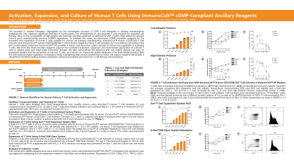 科学海报Activation, Expansion, and Culture of Human T Cells Using ImmunoCult™ cGMP-Compliant Ancillary Reagents
 科学海报Cell Isolation of Human CD4+ Memory T Cells By Column-Free Immunomagnetic Cell Separation
 沪公网安备31010102008431号