A. Reuter et al. ( 2015)
The Journal of Immunology 194 2696-2705
Criteria for Dendritic Cell Receptor Selection for Efficient Antibody-Targeted Vaccination
Ab-targeted vaccination involves targeting a receptor of choice expressed by dendritic cells (DCs) with Ag-coupled Abs. Currently,there is little consensus as to which criteria determine receptor selection to ensure superior Ag presentation and immunity. In this study,we investigated parameters of DC receptor internalization and determined how they impact Ag presentation outcomes. First,using mixed bone marrow chimeras,we established that Ag-targeted,but not nontargeted,DCs are responsible for Ag presentation in settings of Ab-targeted vaccination in vivo. Next,we analyzed parameters of DEC205 (CD205),Clec9A,CD11c,CD11b,and CD40 endocytosis and obtained quantitative measurements of internalization speed,surface turnover,and delivered Ag load. Exploiting these parameters in MHC class I (MHC I) and MHC class II (MHC II) Ag presentation assays,we showed that receptor expression level,proportion of surface turnover,or speed of receptor internalization did not impact MHC I or MHC II Ag presentation efficiency. Furthermore,the Ag load delivered to DCs did not correlate with the efficiency of MHC I or MHC II Ag presentation. In contrast,targeting Ag to CD8(+) or CD8(-) DCs enhanced MHC I or MHC II Ag presentation,respectively. Therefore,receptor expression levels,speed of internalization,and/or the amount of Ag delivered can be excluded as major determinants that dictate Ag presentation efficiency in setting of Ab-targeted vaccination.
View Publication
Miyoshi H et al. (JAN 1999)
Science (New York,N.Y.) 283 5402 682--6
Transduction of human CD34+ cells that mediate long-term engraftment of NOD/SCID mice by HIV vectors.
Efficient gene transfer into human hematopoietic stem cells (HSCs) is an important goal in the study of the hematopoietic system as well as for gene therapy of hematopoietic disorders. A lentiviral vector based on the human immunodeficiency virus (HIV) was able to transduce human CD34+ cells capable of stable,long-term reconstitution of nonobese diabetic/severe combined immunodeficient (NOD/SCID) mice. High-efficiency transduction occurred in the absence of cytokine stimulation and resulted in transgene expression in multiple lineages of human hematopoietic cells for up to 22 weeks after transplantation.
View Publication
Bacigalupo A et al. (JUL 2005)
Experimental hematology 33 7 819--27
T-cell suppression mediated by mesenchymal stem cells is deficient in patients with severe aplastic anemia.
OBJECTIVE: To compare the suppressive effect of mesenchymal stem cells (MSC),derived from normal individuals or severe aplastic anemia patients (SAA),on T-cell activation. PATIENTS AND METHODS: We studied bone marrow MSC from 19 healthy donors and 23 SAA patients in different phases of the disease: at diagnosis (n = 3),following immunosuppressive therapy (IS) (n = 16),or after a bone marrow transplant (BMT) (n = 4). MSC were tested for T-cell suppression in the following assays: mixed lymphocyte reaction (MLR),phytohemaglutinin (PHA)-primed cultures,activation surface markers,gamma-IFN production,hematopoietic colony formation (CFC),production of cyclic ADP-ribose (cADPR). RESULTS: The abnormalities of SAA MSC included: 1) significantly lower suppression of T-cell proliferation induced by alloantigens (p = 0.009) or PHA (p = 0.006); 2) impaired capacity to suppress CD38 expression on PHA-primed T cells (p = 0.001); 3) impaired ability to suppress gamma-IFN production in PHA cultures,resulting in an 11-fold higher gamma-IFN concentration; 4) no preventive effect on T cell-mediated inhibition of CFC; and 5) significantly reduced (p = 0.009) production of cADPR,a universal calcium mobilizer. MSC-mediated suppression of PHA-induced T-cell proliferation was restored to control levels in 3 of 4 patients post-BMT. CONCLUSION: The ability of MSC to downregulate T-cell priming,proliferation,and cytokine release is deficient in patients with SAA,persists indefinitely after immunosuppressive therapy,but seems to be restored after BMT. Whether these abnormalities are relevant to the pathogenesis of aplastic anemia remains to be determined.
View Publication
产品类型:
产品号#:
05401
05402
05411
产品名:
MesenCult™ MSC基础培养基 (人)
MesenCult™ MSC 刺激补充剂(人)
MesenCult™ 增殖试剂盒(人)
Trotta R et al. (SEP 2008)
Journal of immunology (Baltimore,Md. : 1950) 181 6 3784--92
TGF-beta utilizes SMAD3 to inhibit CD16-mediated IFN-gamma production and antibody-dependent cellular cytotoxicity in human NK cells.
TGF-beta can be a potent suppressor of lymphocyte effector cell functions and can mediate these effects via distinct molecular pathways. The role of TGF-beta in regulating CD16-mediated NK cell IFN-gamma production and antibody-dependent cellular cytotoxicity (ADCC) is unclear,as are the signaling pathways that may be utilized. Treatment of primary human NK cells with TGF-beta inhibited IFN-gamma production induced by CD16 activation with or without IL-12 or IL-2,and it did so without affecting the phosphorylation/activation of MAP kinases ERK and p38,as well as STAT4. TGF-beta treatment induced SMAD3 phosphorylation,and ectopic overexpression of SMAD3 resulted in a significant decrease in IFN-gamma gene expression following CD16 activation with or without IL-12 or IL-2. Likewise,NK cells obtained from smad3(-/-) mice produced more IFN-gamma in response to CD16 activation plus IL-12 when compared with NK cells obtained from wild-type mice. Coactivation of human NK cells via CD16 and IL-12 induced expression of T-BET,the positive regulator of IFN-gamma,and T-BET was suppressed by TGF-beta and by SMAD3 overexpression. An extended treatment of primary NK cells with TGF-beta was required to inhibit ADCC,and it did so by inhibiting granzyme A and granzyme B expression. This effect was accentuated in cells overexpressing SMAD3. Collectively,our results indicate that TGF-beta inhibits CD16-mediated human NK cell IFN-gamma production and ADCC,and these effects are mediated via SMAD3.
View Publication
产品类型:
产品号#:
15025
15065
产品名:
RosetteSep™人NK细胞富集抗体混合物
RosetteSep™人NK细胞富集抗体混合物
Abadier M et al. (DEC 2017)
Cell reports 21 13 3885--3899
Effector and Regulatory T Cells Roll at High Shear Stress by Inducible Tether and Sling Formation.
The adaptive immune response involves T cell differentiation and migration to sites of inflammation. T cell trafficking is initiated by rolling on inflamed endothelium. Tethers and slings,discovered in neutrophils,facilitate cell rolling at high shear stress. Here,we demonstrate that the ability to form tethers and slings during rolling is highly inducible in T helper 1 (Th1),Th17,and regulatory T (Treg) cells but less in Th2 cells. In vivo,endogenous Treg cells rolled stably in cremaster venules at physiological shear stress. Quantitative dynamic footprinting nanoscopy of Th1,Th17,and Treg cells uncovered the formation of multiple tethers per cell. Human Th1 cells also showed tethers and slings. RNA sequencing (RNA-seq) revealed the induction of cell migration and cytoskeletal genes in sling-forming cells. We conclude that differentiated CD4 T cells stabilize rolling by inducible tether and sling formation. These phenotypic changes approximate the adhesion phenotype of neutrophils and support CD4 T cell access to sites of inflammation.
View Publication
产品类型:
产品号#:
19762
19762RF
产品名:
EasySep™小鼠中性粒细胞富集试剂盒
RoboSep™ 小鼠中性粒细胞富集试剂盒含滤芯吸头
&Scaron et al. (JUL 2013)
Journal of immunology (Baltimore,Md. : 1950) 191 2 828--36
CD160 activation by herpesvirus entry mediator augments inflammatory cytokine production and cytolytic function by NK cells.
Lymphocyte activation is regulated by costimulatory and inhibitory receptors,of which both B and T lymphocyte attenuator (BTLA) and CD160 engage herpesvirus entry mediator (HVEM). Notably,it remains unclear how HVEM functions with each of its ligands during immune responses. In this study,we show that HVEM specifically activates CD160 on effector NK cells challenged with virus-infected cells. Human CD56(dim) NK cells were costimulated specifically by HVEM but not by other receptors that share the HVEM ligands LIGHT,Lymphotoxin-α,or BTLA. HVEM enhanced human NK cell activation by type I IFN and IL-2,resulting in increased IFN-γ and TNF-α secretion,and tumor cell-expressed HVEM activated CD160 in a human NK cell line,causing rapid hyperphosphorylation of serine kinases ERK1/2 and AKT and enhanced cytolysis of target cells. In contrast,HVEM activation of BTLA reduced cytolysis of target cells. Together,our results demonstrate that HVEM functions as a regulator of immune function that activates NK cells via CD160 and limits lymphocyte-induced inflammation via association with BTLA.
View Publication
产品类型:
产品号#:
19055
19055RF
产品名:
EasySep™人NK细胞富集试剂盒
RoboSep™ 人NK细胞富集试剂盒含滤芯吸头
Kabanova A et al. (APR 2016)
Cell Reports 15 1 9--18
Human Cytotoxic T Lymphocytes Form Dysfunctional Immune Synapses with B Cells Characterized by Non-Polarized Lytic Granule Release.
Suppression of the cytotoxic T cell (CTL) immune response has been proposed as one mechanism for immune evasion in cancer. In this study,we have explored the underlying basis for CTL suppression in the context of B cell malignancies. We document that human B cells have an intrinsic ability to resist killing by freshly isolated cytotoxic T cells (CTLs),but are susceptible to lysis by IL-2 activated CTL blasts and CTLs isolated from immunotherapy-treated patients with chronic lymphocytic leukemia (CLL). Impaired killing was associated with the formation of dysfunctional non-lytic immune synapses characterized by the presence of defective linker for activation of T cells (LAT) signaling and non-polarized release of the lytic granules transported by ADP-ribosylation factor-like protein 8 (Arl8). We propose that non-lytic degranulation of CTLs are a key regulatory mechanism of evasion through which B cells may interfere with the formation of functional immune synapses by CTLs.
View Publication


 EasySep™小鼠TIL(CD45)正选试剂盒





 科学海报Rapid Expansion of Functional Human T Cells Using a Novel Serum-Free and Xeno-Free Culture Medium
 产品手册Antibodies for Immunology Research
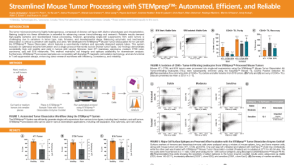 科学海报Streamlined Mouse Tumor Processing with STEMprep™: Automated, Efficient, and Reliable


 沪公网安备31010102008431号